3 days in El Chaltén: The best hikes in Argentina’s trekking capital
Some links on this page may be affiliate links. That means if you follow one, see something you like, and purchase it, I may receive a small commission at no cost to you. For more information, see this site's disclosures.
The best things to do (spoiler: they’re all hikes) with three days in El Chaltén. Hike the two most famous treks as well as a third that’s just as spectacular but a lot less crowded.
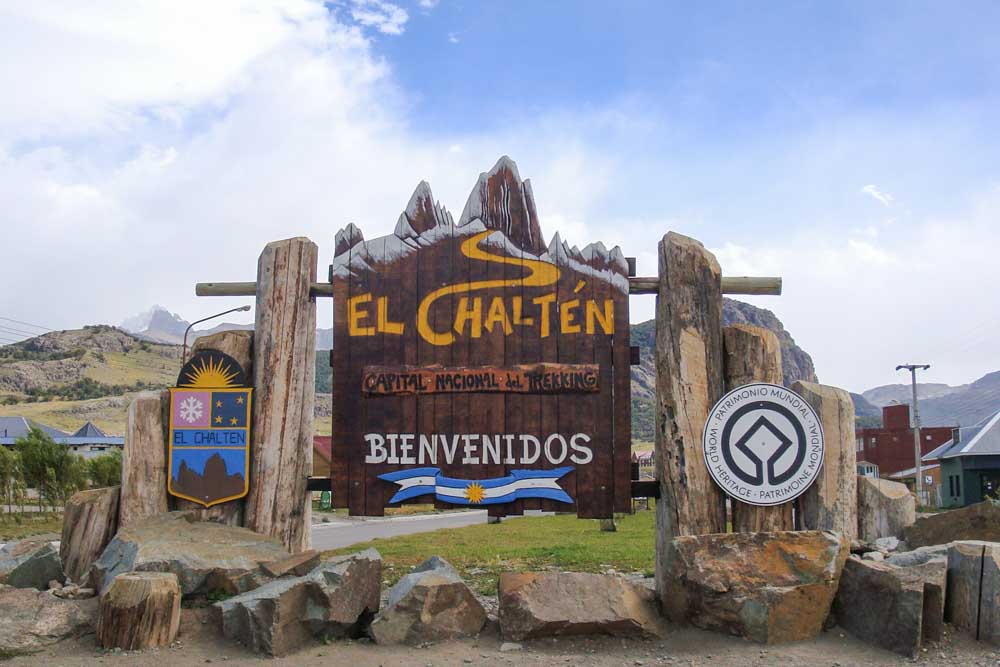
If you’re planning to spend some time in El Chaltén, I’m assuming you appreciate the outdoors. This tiny town, located within Argentina’s incredible Parque Nacional Los Glaciares, is one of the best places in Patagonia (and in South America more generally) for trekking. I can almost guarantee that hiking in El Chaltén will be one of the most memorable things you do in this vast and beautiful country.

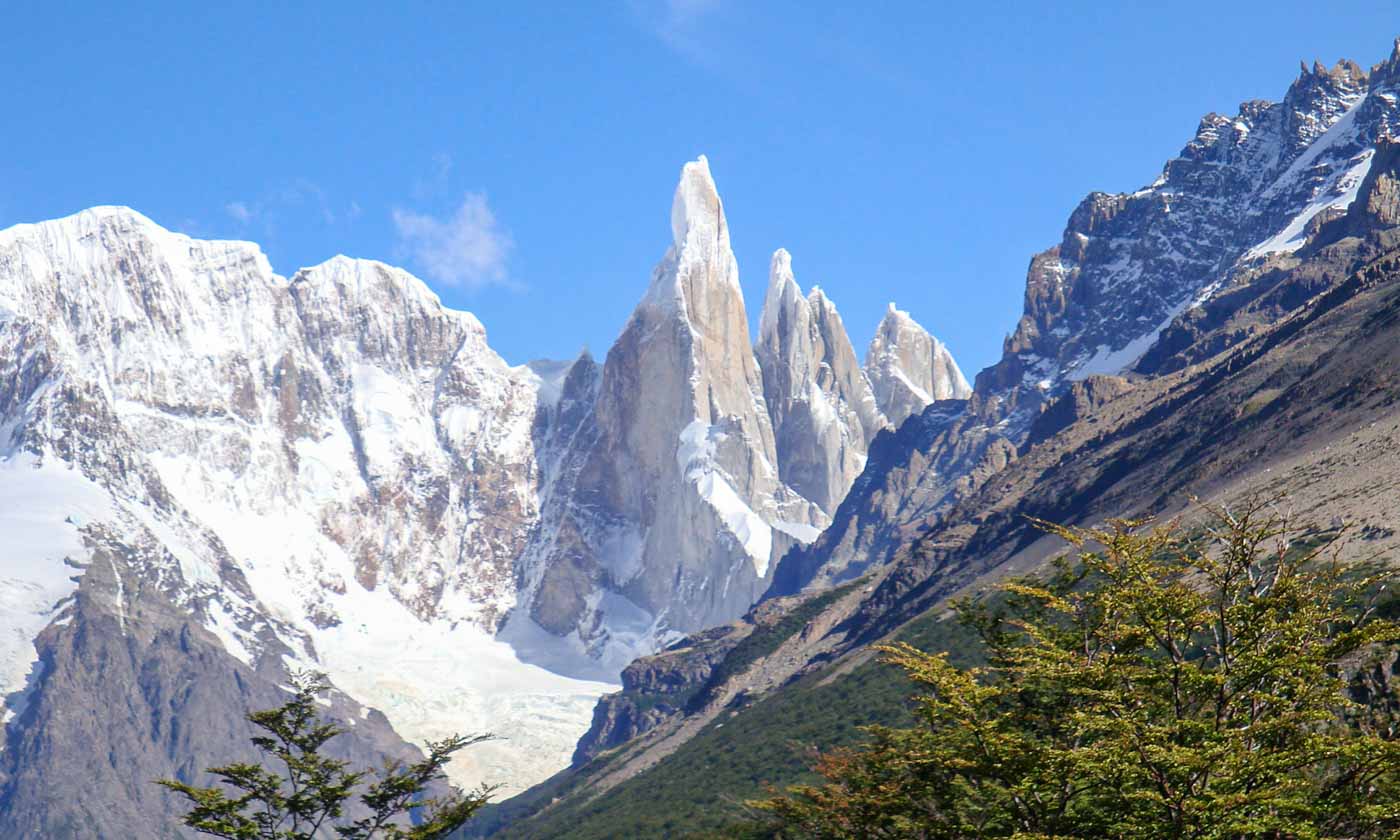
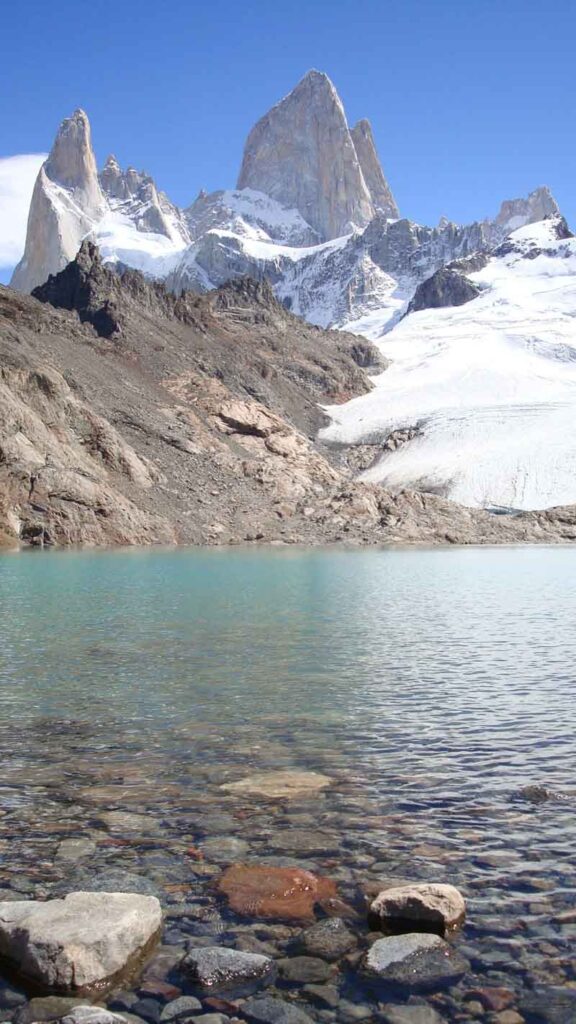
The two most famous treks here, Laguna de los Tres and Laguna Torre, both lead to beautiful mountain lakes. The former takes you to the foot of imposing Mount Fitz Roy, while the latter ends at the base of picture-perfect Cerro Torre. Both mountains are so distinctive and iconic that you may have to pinch yourself when you finally find yourself looking right up at them.
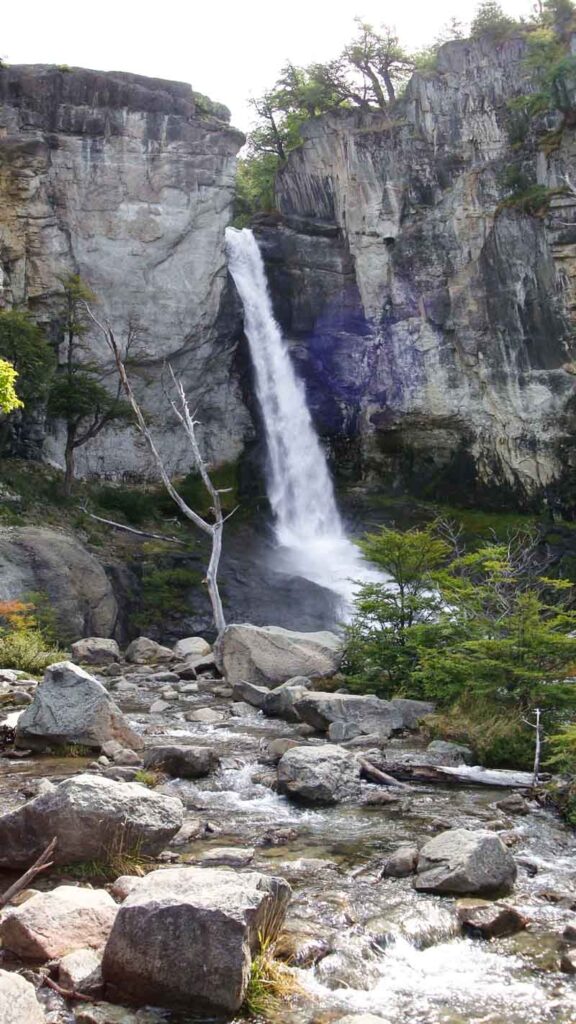
Many people will opt for a shorter hike as well if they’re lucky enough to have three days here. There are a few great options if your body needs a break, such as the Chorrillo del Salto or the Mirador de los Cóndores/Mirador de las Águilas trail.
There is another full-day trek, though, that in my opinion should not be missed if the weather cooperates – the Loma del Pliegue Tumbado. It’s actually my favorite hike in El Chaltén.
Speaking of weather, this should really be your biggest consideration when making trekking plans in Los Glaciares National Park. I’ve listed what I consider to be El Chaltén’s best hikes below, but I wouldn’t get your heart set on doing them in any particular order. The weather in Patagonia is notoriously fickle! Definitely think about which hikes you want to prioritize, but I’d recommend waiting until you can consider the forecast to make your final decisions. And then seize whatever sunny days the weather gods decide to give you!
Day 1 – Hike to Laguna de los Tres
Most people who come to El Chaltén do the trek to Laguna de los Tres on their first full day. It’s the most demanding day hike, so it makes sense to tackle it when you’re feeling fresh. It is also generally considered to be the most impressive trek (and therefore the one most likely to fill you with regret if you miss it).

The hike is about 24 kilometers roundtrip, and it takes most people somewhere between 7-9 hours. (Hopefully it will be warm enough for you to enjoy a nice, long break at the top as well. I spent about 7 hours walking and 2 hours hanging out at the lake.)
The trail starts with a steady uphill and ends with a rather demanding one, but overall it’s only a moderately difficult trek.

There are gentle ascents and descents though the forest with several excellent viewpoints along the way. There is also a particularly delightful section through a wide open marshy valley.
The final kilometer is the steepest by far. It’s challenging in part due to the incline, and in part due to how crowded it can get with people heading up and down the same narrow, rocky sections. (Also note that you may need trekking poles and crampons to navigate this part safely in the colder months.)
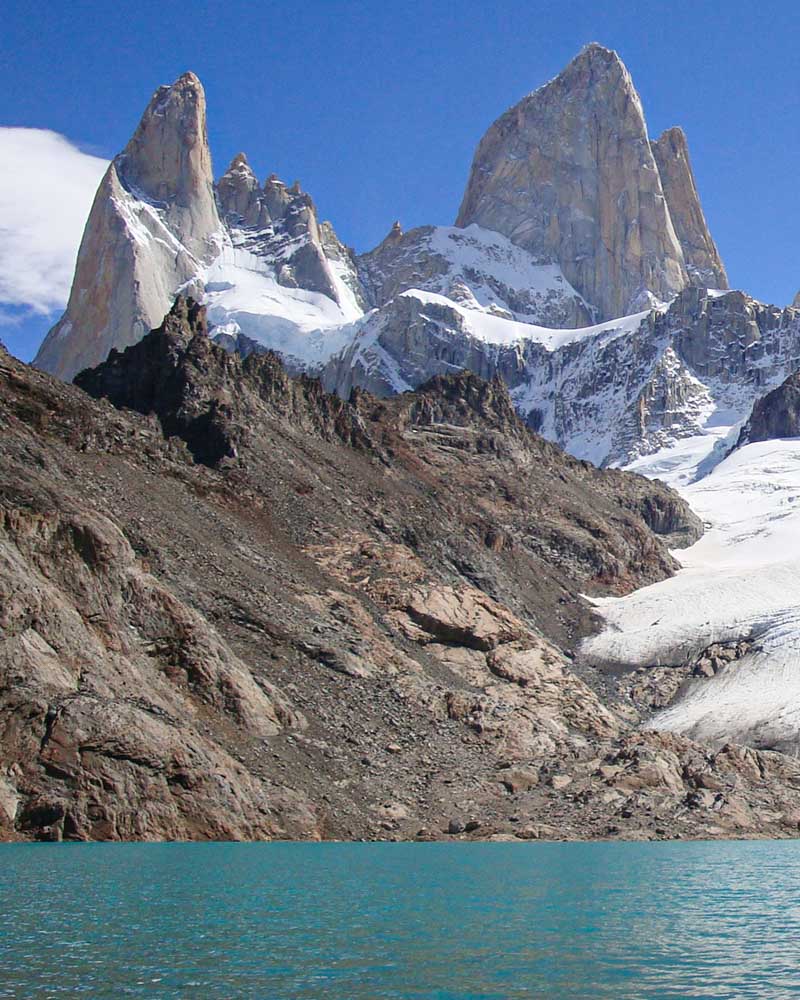
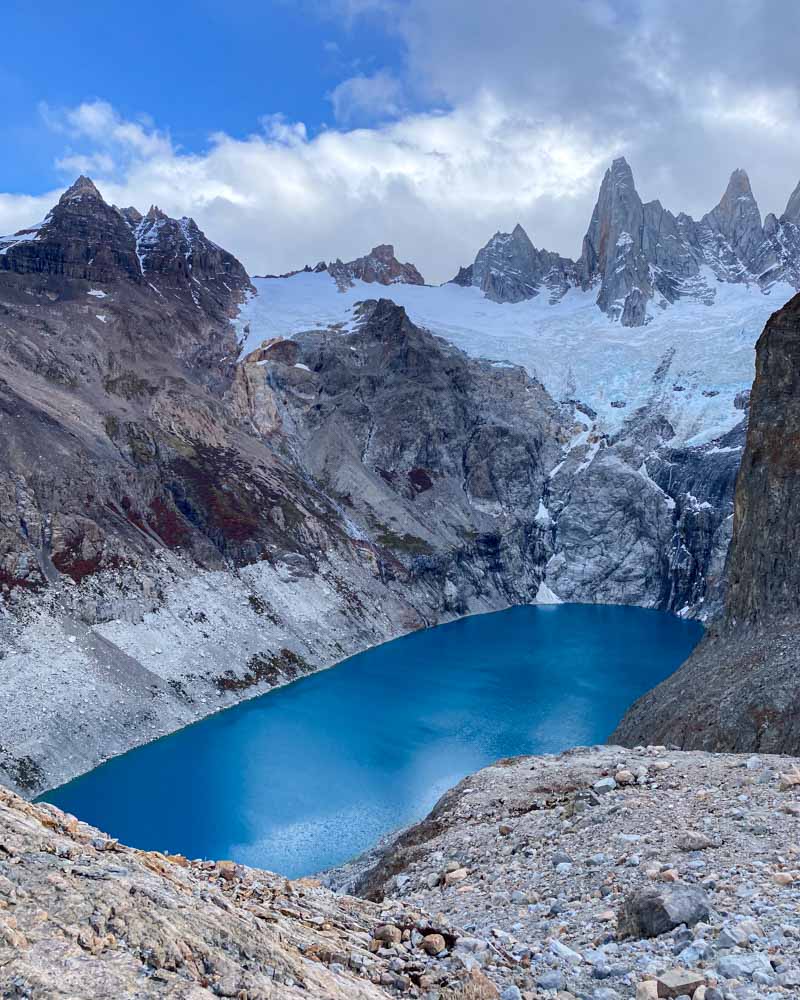
When you reach the top, you’ll hopefully be rewarded with an incredible view of Mount Fitz Roy towering over the lake. Enjoy it and take your time, but don’t head back down until you check out Mirador Laguna Sucia, that second viewpoint up to your left. I promise it’s only another 10 minutes or so, and it’s very worth it.
Also make sure you stop by Laguna Capri on your way back! (See the next section.)
Shorter alternative: Loop to Laguna Capri
If you’re worried about the distance to Laguna de los Tres or that final steep ascent, consider hiking to Laguna Capri instead. It’s about four kilometers from town on the very same trail that heads to Laguna de los Tres – the path actually splits shortly after the three-kilometer mark. Veering right will take you to Mirador Fitz Roy, while heading left will take you to the lake. The two paths meet up again not long after.
I recommend heading right first to take in the view at the lookout point – you never know when that mountain might disappear behind the clouds – and then looping around to your left. (Continue towards Fitz Roy and you’ll see signs directing you to Laguna Capri.)
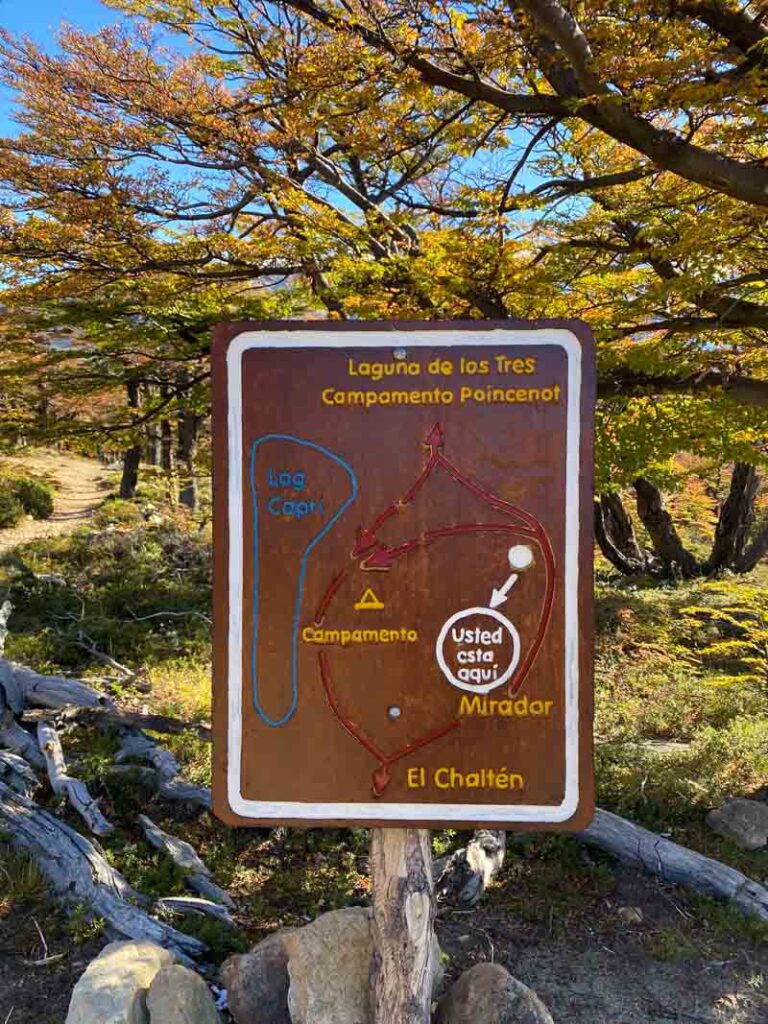
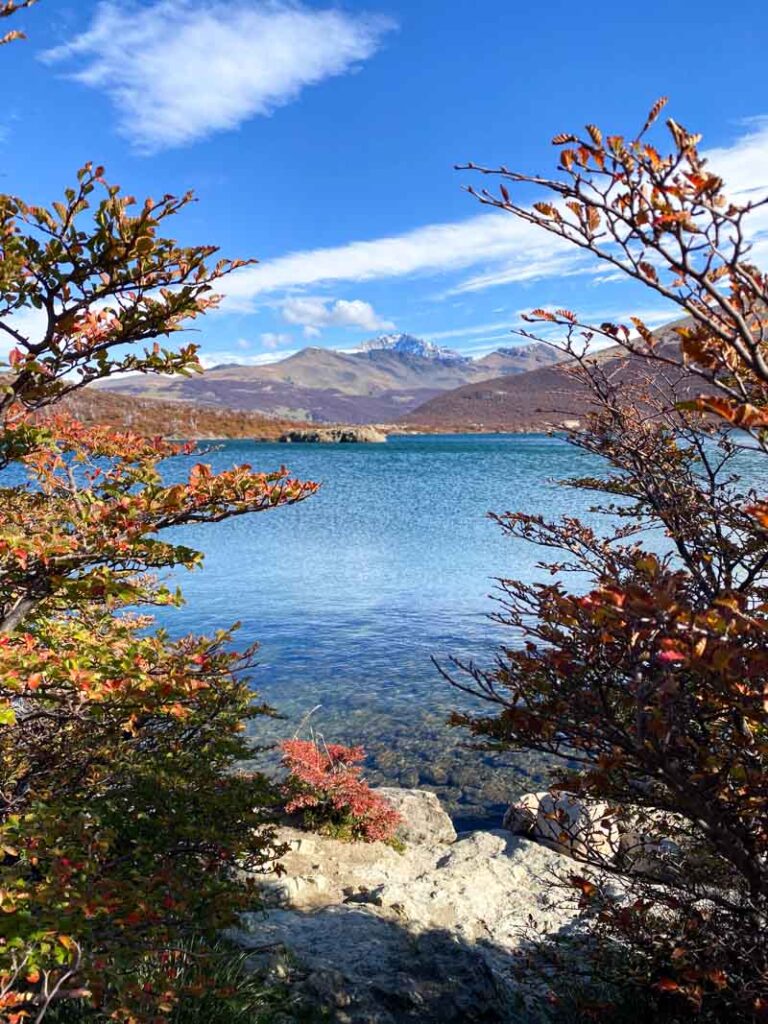
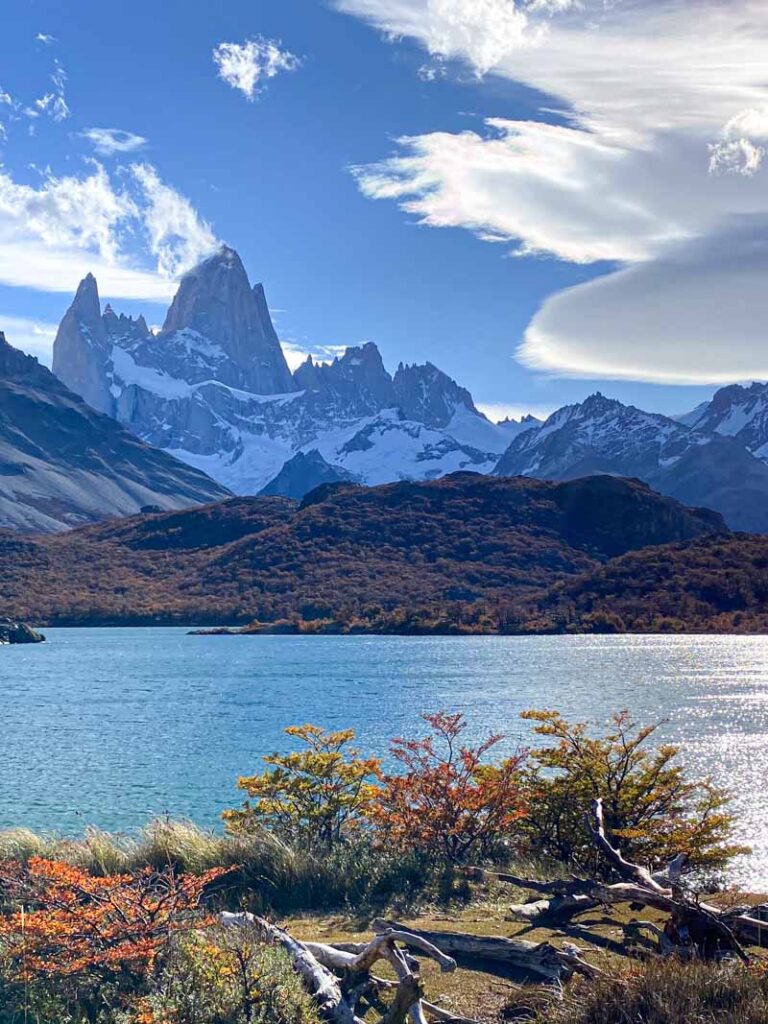
The lake has a couple of benches and lots of lovely spots along the shore to enjoy a leisurely lunch with amazing views of Fitz Roy.
Another option: start from Río Eléctrico trailhead
This is a point-to-point version of the hike that’s only a little shorter than the out-and-back from El Chaltén (about 1.5 km) but a fair bit easier (since you’re cutting out a lot of uphill leaving town).
Another upside is that you get a much closer view of the Piedras Blancas glacier – plus different scenery in general is always nice!
The only drawback is that you can’t just walk out of your door and onto the trail. In high season, it’s fairly easy to book shared shuttles to the trailhead (usually departing at 8:00 and 9:30), and of course you can arrange a taxi any time of year. The ride takes about half an hour.
Most people then return to El Chaltén along the usual route via Laguna Capri.
Day 2 – Hike the Loma del Pliegue Tumbado
So, as I mentioned, I actually think this is El Chaltén’s best hike. That said, I recognize that Laguna de los Tres is the really iconic one, so I’m putting the Loma del Pliegue Tumbado on Day 2. (I don’t want anyone shaking their fist at me if it starts to rain and I told them to save the most famous hike for their second day!)
Also, I’ll confess that my perspective shifted a little bit on my most recent trip to El Chaltén, which I very intentionally timed for peak fall foliage having only visited in the summer previously. I now have to admit that absolutely nothing beats Laguna de los Tres on an autumn day – you spend so much time walking through the forest on that hike, and the fall colors are breathtaking in the most literal sense. I swear I almost cried it was so beautiful.
But any other time outside of, like, ten days in early April, my vote is still for the Loma del Pliegue Tumbado.
This 20-kilometer trek starts south of town near the visitor’s center. As with Laguna de los Tres, the final stretch is the most challenging. Unlike Laguna de los Tres, however, the trail ascends steadily for pretty much the entire hike before that.
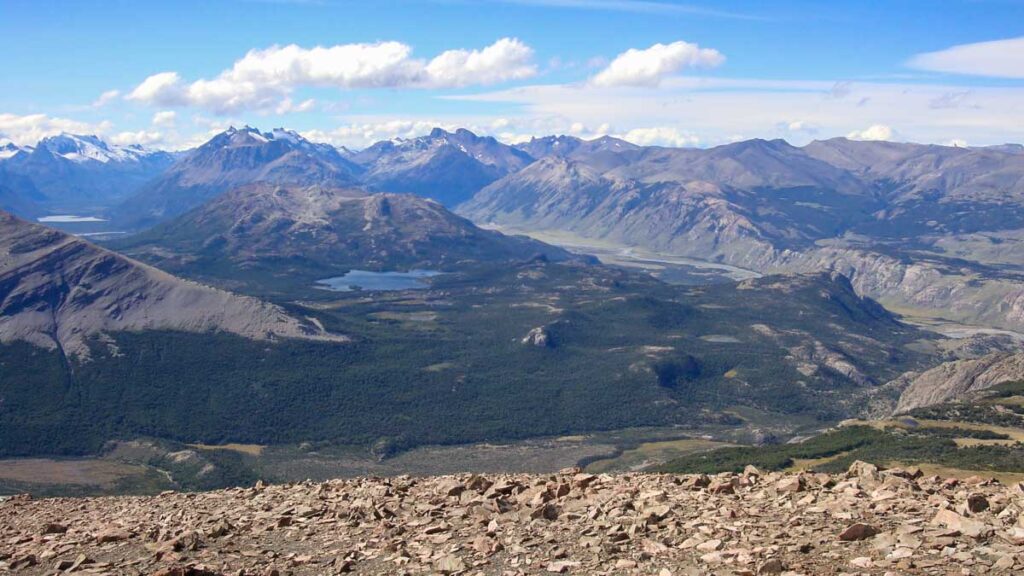
As you might expect, the views get better and better as you gain elevation. At first, you’ll see snow-capped mountains in the distance as the trail meanders through fields and tall grass. As you climb higher, you’ll start to see lakes and rivers winding their way through the valleys below.
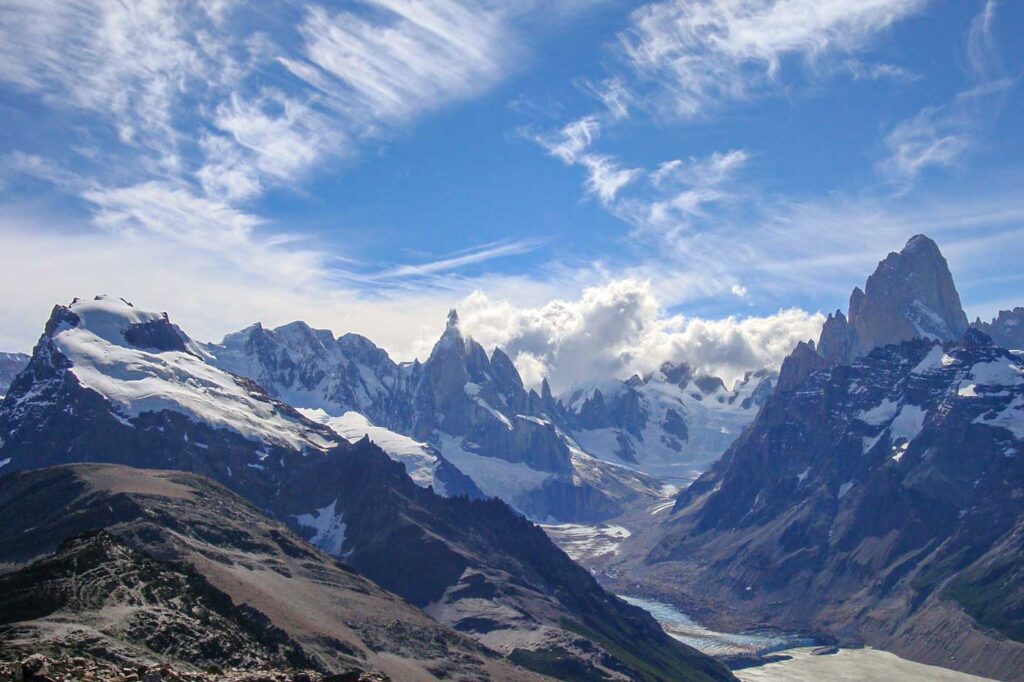
More and more of Fitz Roy and Cerro Torre become visible until you eventually have a clear view of them both, as well as Glaciar Torre and Laguna Torre below. (This is your destination on Day 3! You can trace almost the entire route from up here.) The view on a clear day is nothing short of spectacular.
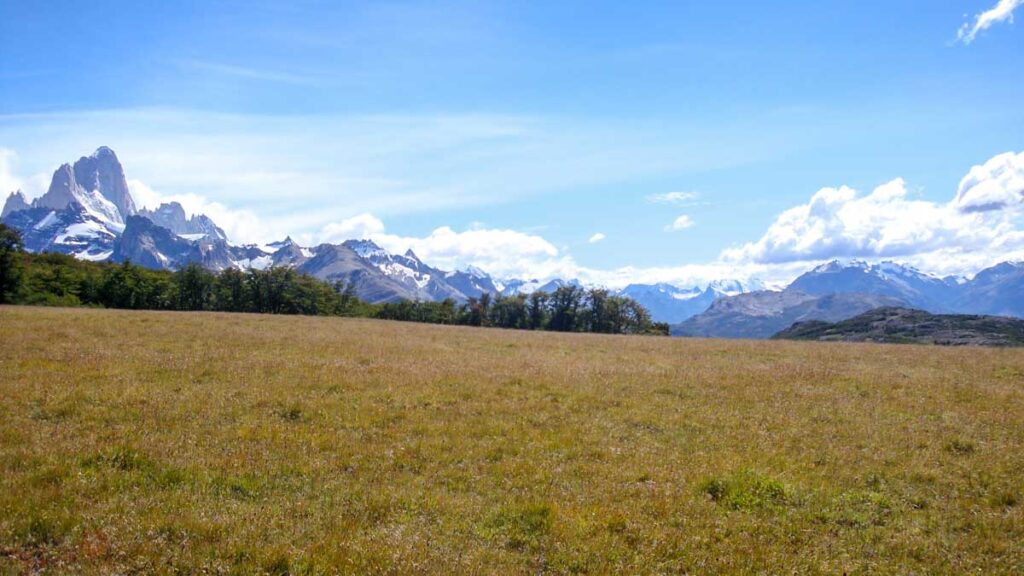
A huge caveat, though: The general consensus is that this hike is really not worth it in bad weather, or even so-so weather. I know most of us would prefer clear days for all of our treks, but the main appeal of this hike is the extraordinary, 360-degree panorama at the top. On a cloudy or rainy day, the first thing to disappear from this impressive scene is the epic, side-by-side view of Fitz Roy and Cerro Torre.
Considering it’s a near-constant uphill effort to get there, the majority of the trail is completely exposed, and you won’t be able to see much of anything… I would opt for a different hike if the sun isn’t shining, ideally one that stays at lower elevation.
Day 3 – Hike to Laguna Torre
The trail to Laguna Torre is 18 kilometers there and back, but it’s considerably easier than the other two treks on this list. It still takes a good 7-8 hours roundtrip, but it doesn’t have the difficult uphills of Laguna de los Tres or the Loma del Pliegue Tumbado. So even though you’ll probably be tired by your third day, it really is worth it to get yourself out on the trail if it’s a nice day.
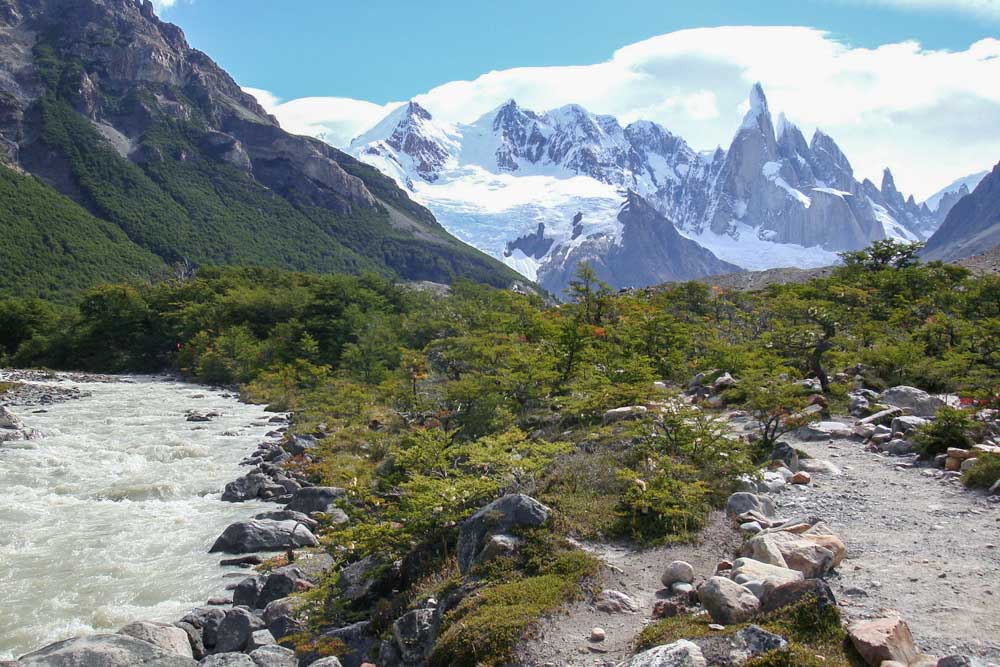
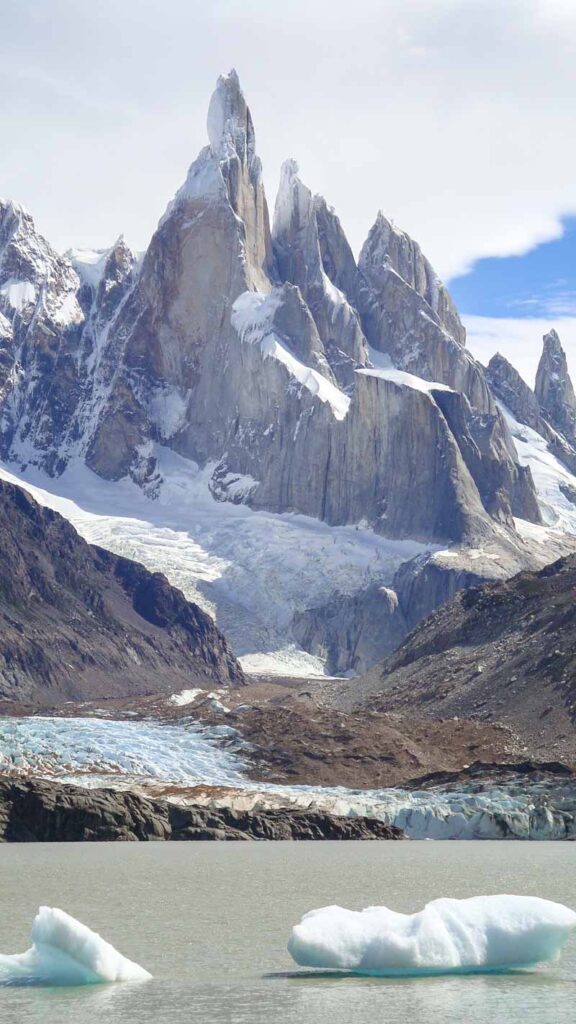
The first third of the trail is the most challenging as you gain elevation leaving town. After that, though, this hike is mostly just a long, pleasant walk through the forest and a beautiful river valley. You’ll get quite a few epic views of Cerro Torre looming in front of you at various miradors along the way.
It ends at the “Playa de los Icebergs” on the shores of Laguna Torre, where you can indeed find large chunks of ice floating around the lake after breaking off from the Torre Glacier.
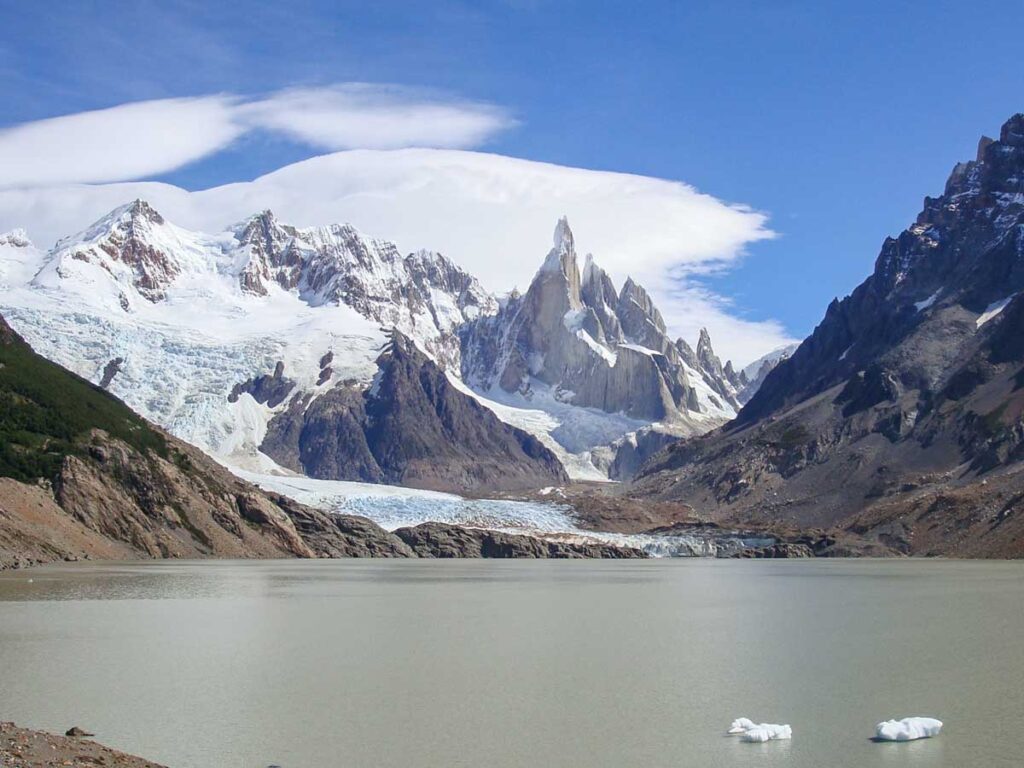
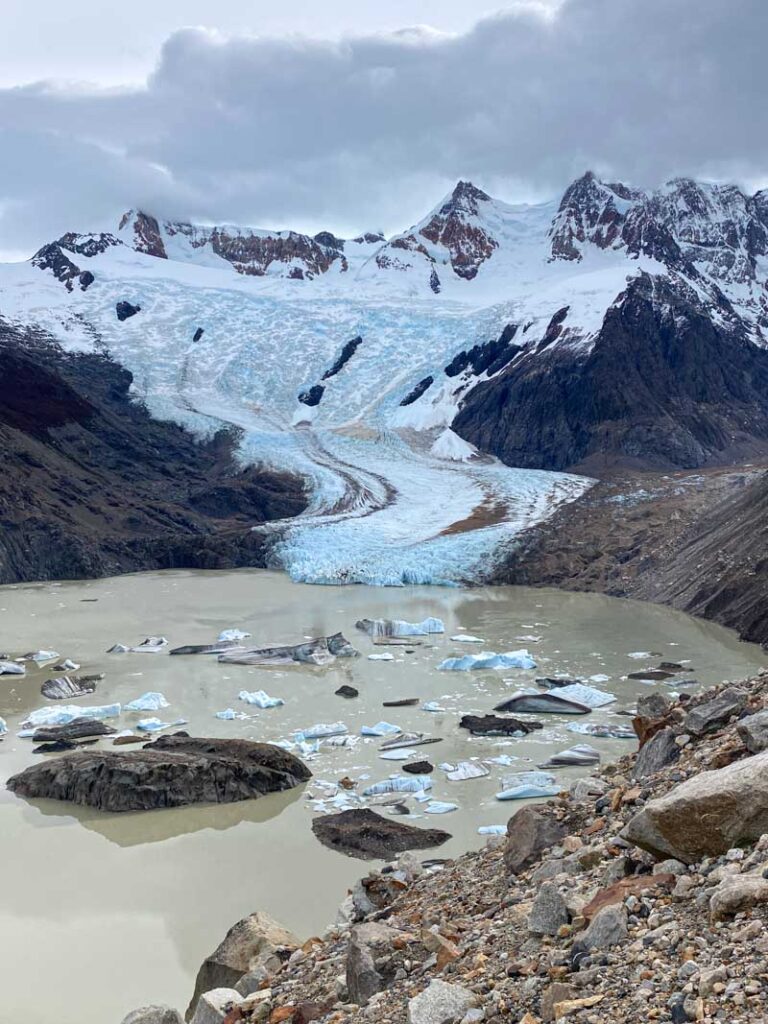
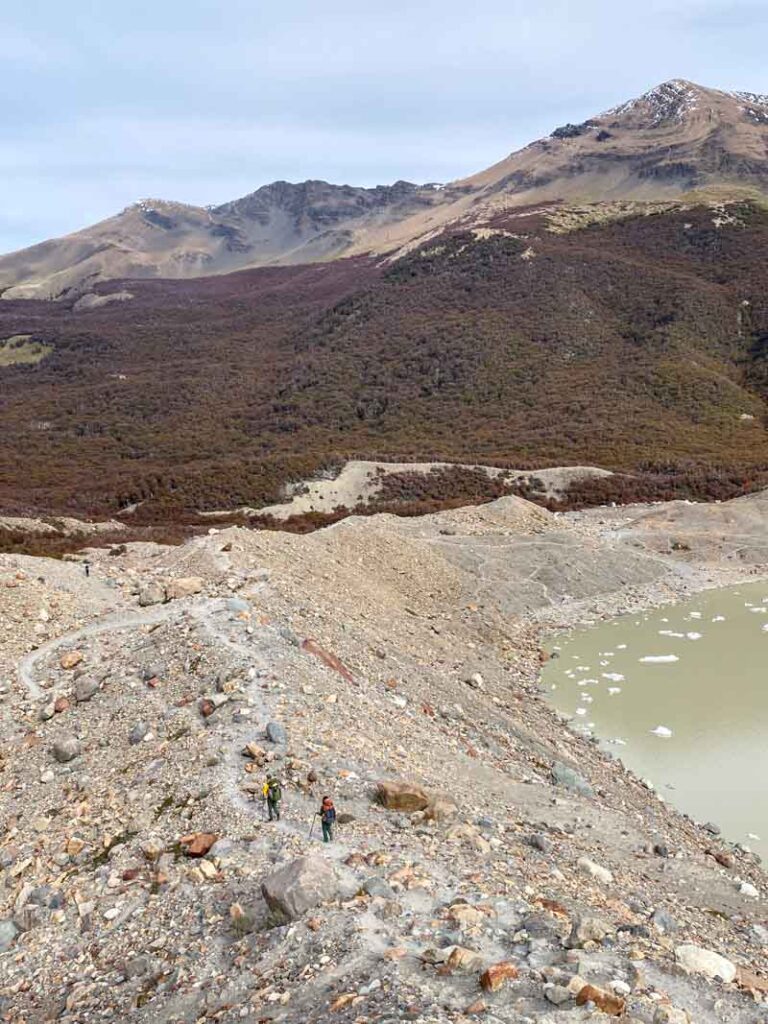
From there, you also have the option to walk an additional two kilometers along the ridge to your right. This trail ends at Mirador Maestri, where you can get a closer look at the glacier from higher up.
Just a quick word of caution about the trail to Mirador Maestri – there were definitely a couple of sections where all I could think about was how dodgy it would have been in high winds. (I was admittedly still a little mentally scarred – and physically bruised – from genuinely scary wind on the O trek in Chile a few days earlier.) So definitely be extra careful if it’s a windy one, and be ready to call it if it feels unsafe.
Shorter alternative: Mirador Cerro Torre and back
If you’re really too tired or sore or blistered from the previous days’ hikes to do the full trail, consider just going as far as the Mirador Cerro Torre lookout point and back. It’s less than an hour from the trailhead, and the view is fantastic. (This is also a good option if bad weather is moving in.)
🛏️ Where to stay
A warning: This town is not cheap! (If you’ve been traveling around Patagonia, you’ve probably already guessed that.)
If you’re on a budget…
There are a ton of hostels with shared dorms and communal kitchens in El Chaltén. I stayed at Aylen-Aike way back when, and it was just the coziest place with such good vibes.
If hostels aren’t your thing (or aren’t your thing anymore)…
Mi Rincón is a great option with clean and comfortable private rooms. There are also a lot of cute little chalets that are priced similarly to hotels but usually have a kitchen, which can save you a lot of money. For example, take a look at Pitihué Aparts.
Food recommendations in El Chaltén
Because El Chaltén is such a small town, I don’t think it makes much sense to make specific dining suggestions for any particular day. (You can walk from one end of town to the other in 20 minutes.) Below are a few recommended restaurants to check out in any order you please!
Empanadas, sandwiches, soup, pasta, and calzones, with yummy vegetarian options. Large portions and rave reviews. A few tables (not exclusively for takeaway as the name suggests), but note that there is often a wait!
Another cozy but very popular place with a few tables and takeout options. Meat dishes, veggie options, stews, pasta, and desserts. They open for lunch at 1:00 and stay open through dinner, so this is a good option for the morning larks who tend to get back (hungry!) from the big hikes in the mid-afternoon.
Vegan restaurant loved by vegans and omnivores alike. Healthy, delicious, large portions. Seriously, look at their Instagram (or even just their Google reviews) and your mouth with start watering. They also make takeaway lunches you can bring on your hike the next day.
If you’re craving pizza, this is the place to go. Nothing like carb loading before a big day on the trail.
Not a dinner recommendation, but rather a post-hike reward (or something to hold you over until restaurants open) recommendation in the form of some of the best alfajores in Argentina. (Maybe take a few for an on-trail snack the next day?)
If you’re getting a later start to your hike (i.e. leaving after 9 a.m.) or having bad luck with the weather, this is a great spot for a hearty breakfast, some coffee, or a gorgeous piece of cake.
When is the best time to go hiking in El Chaltén?
All things considered, I’d say the best times to visit El Chaltén are either late spring (mid-November to mid-December) or early fall (March).
From mid-December to late February, you are really in the thick of high season in Patagonia. The days are long and warm (you know, relatively), but the crowds can really be something else. I don’t think I’ve ever seen as many people on a hiking trail as I did on the bottleneck section just below Laguna de los Tres.
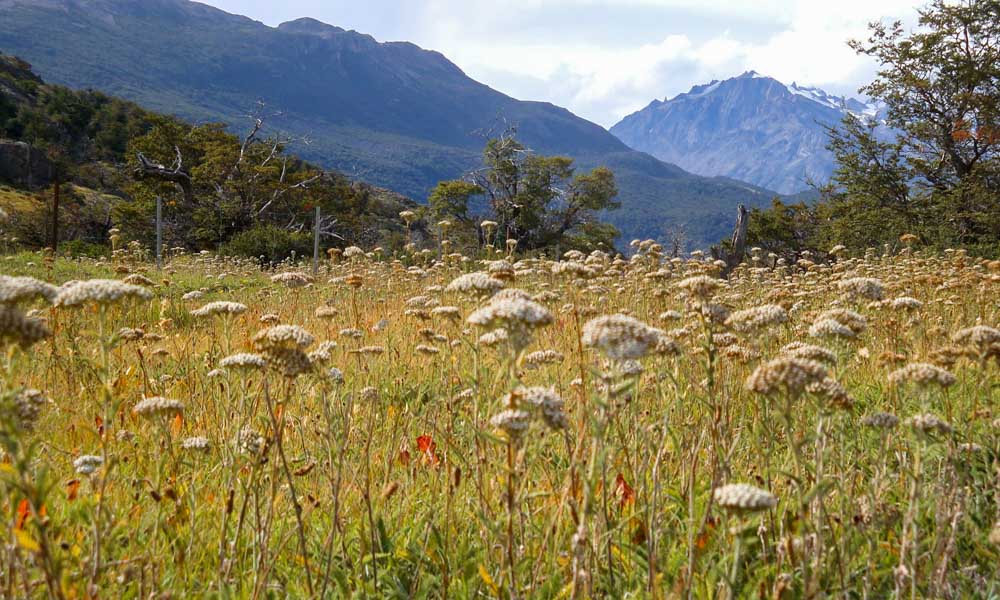
Late spring, on the other hand, can be one of the best times to hike. Most of the snow and ice should be gone from the trails, the temperatures will be warming up, and wildflowers will be in bloom. You certainly won’t be the only hiker around, but you should be able to find some moments of solitude (and a bed in town).
Early fall is also a great time for hiking in El Chaltén. The weather is often still quite summery in March, but the crowds will have thinned considerably compared to their peak in January and February. (Note that it will still be plenty busy, but you’ll avoid the biggest crowds and the highest prices if you aim to visit after South America’s summer holiday season.)
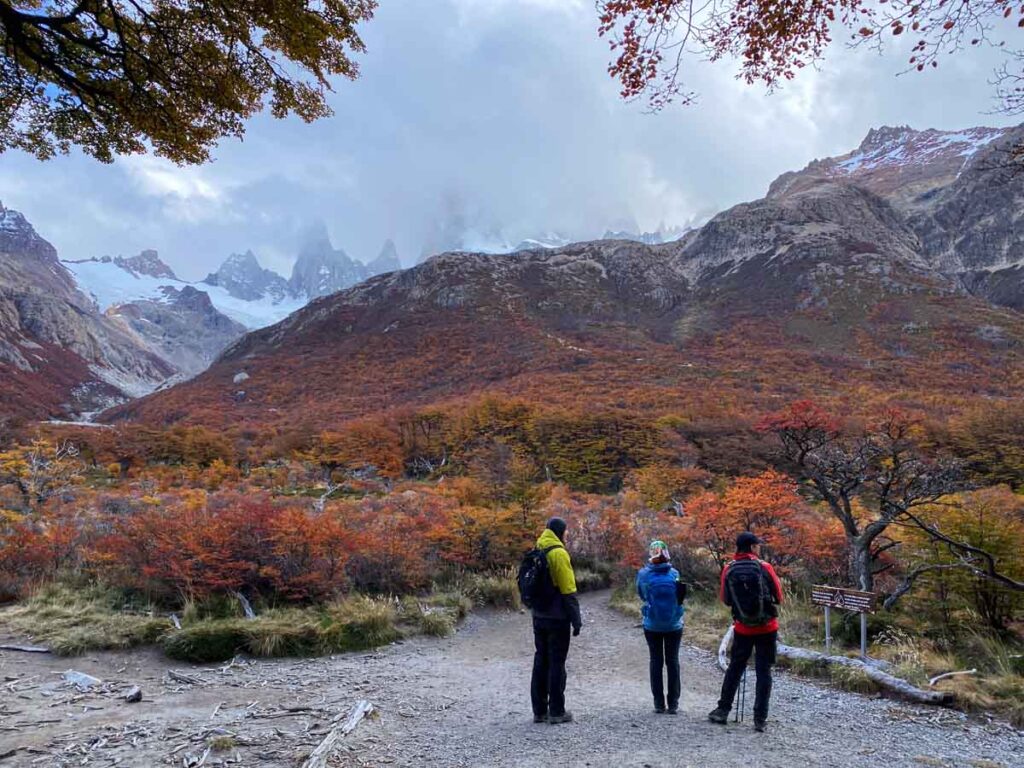
Later in the month and into April, the already-unpredictable weather often gets worse. The undeniable advantage to April, however, is the astonishing fall colors! If you’re not on a tight timeline and have the flexibility to wait out some rain, I don’t think you can beat the first two weeks of April.
What should you bring?
One of the many wonderful things about these three hikes is that they can be reached on foot right from your front door. If you’re spending just 3 days in El Chaltén, there’s no need for a tent or overnight camping gear. You can take a hot shower, sleep in a warm, comfy bed, check your email (ew!), and still find yourself in the midst of some of the world’s most spectacular scenery the very next morning.
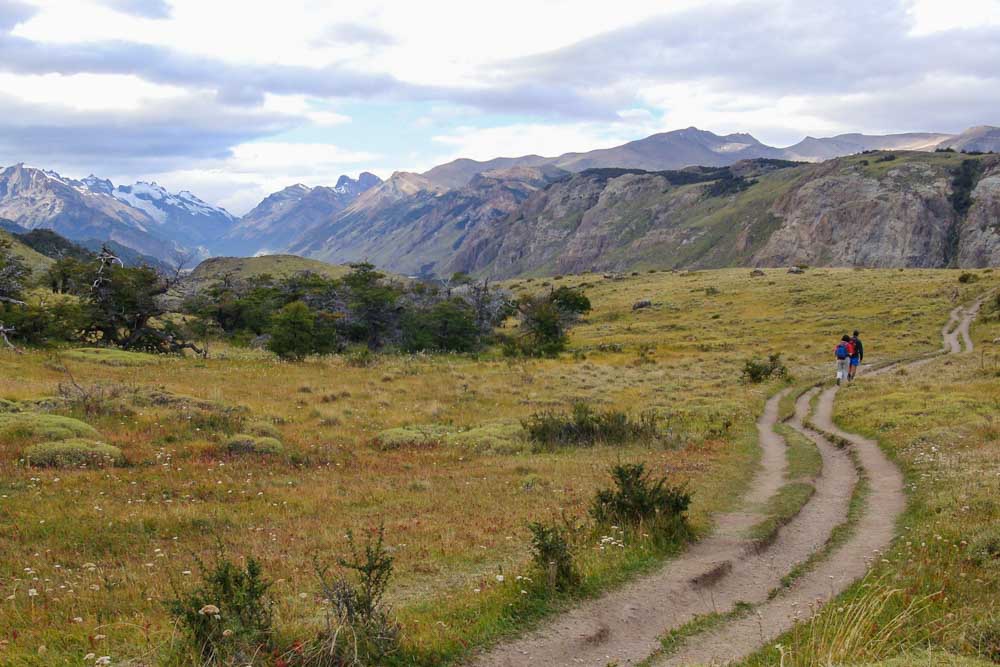
Of course, there are still some things you’ll need to bring on your day hikes.
Always remember that the weather in Patagonia can change in an instant, even in the height of summer. Also keep in mind that the wind can be truly, unbelievably, knock-you-off-your-feet strong, even on a beautiful, sunny day. So make sure to wear/pack a few layers, including something waterproof that will ideally serve as a windbreaker as well. Bring a hat and gloves, even if it seems too warm for them down in town.
Hiking boots are highly recommended. If there is snow or ice on the trail, you may need trekking poles and crampons. (You can rent these in town – I imagine most of us are not traveling around South America with a pair of crampons in our backpacks!)
Even in nice weather, you may appreciate poles for the steep sections, especially if you have any knee trouble.

Of course, these are full day hikes, so you’ll want to pack plenty of water, some lunch, and probably a lot of snacks.
If you’re planning to head out before sunrise to beat the crowds, you’ll definitely want a headlamp.
Finally, don’t forget your sun protection!
How to get to Argentina’s “National Capital of Trekking”
Most people visiting El Chaltén will come from El Calafate, the gateway town to Argentina’s famous Perito Moreno glacier.
By car or bus from El Calafate
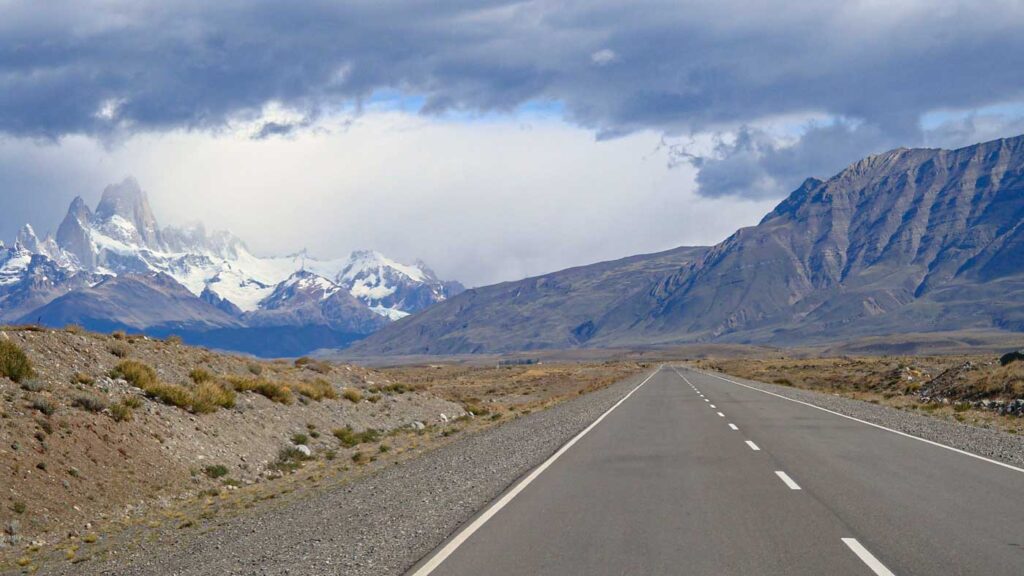
El Chaltén is a three-hour drive north along paved highway from El Calafate. There are several bus departures per day in both the morning and afternoon.
By air from elsewhere in Argentina
El Calafate has an airport with direct flights to Buenos Aires, Bariloche, Ushuaia, and several other cities. From there, you can take the bus or drive to El Chaltén.
By bus From Bariloche
If you’re traveling overland through Argentina, you may have already discovered that many of these bus trips are multiple day affairs. In theory, it’s a 24-hour journey to get from Bariloche to El Chaltén. In reality, it’s anyone’s guess. (When I did this trip, it took over 30 hours.) The buses are usually quite comfortable, but they’re unfortunately not often cheaper than flying.
By bus from Torres del Paine
If you’re exploring Chilean and Argentinean Patagonia on the same trip, it often makes sense to weave back and forth between the two countries.
Traveling from Torres del Paine to El Chaltén by bus generally requires stops in Puerto Natales and El Calafate. (Many people doing multi-day treks in Torres del Paine need to head back to Puerto Natales anyway to return rented gear or pick up their stored luggage. And El Calafate is on the way, so it’s not so bad.)
From Puerto Natales, buses to El Calafate take 6-7 hours, including time at the border. You’ll definitely want to spend a day or two visiting the Perito Moreno (it’s astonishing!) and the surrounding area. Then rent a car or hop on the bus to El Chaltén!
More Argentina travel
The best of Argentina: A three-week itinerary
Itinerary suggestions for four days in Buenos Aires
The best things to do in Buenos Aires (from someone who has lived there!)
Cool, unique, and lesser-known things to do in Buenos Aires
Calle Lanín: A colorful street off the beaten path in Buenos Aires
The 5 best day hikes in Bariloche
Refugio Frey from Cerro Catedral: Bariloche’s best single-day hike
The most underrated hike in El Chaltén: Loma del Pliegue Tumbado