Calle Lanín: A colorful Buenos Aires street without the crowds
Some links on this page may be affiliate links. That means if you follow one, see something you like, and purchase it, I may receive a small commission at no cost to you. For more information, see this site's disclosures.
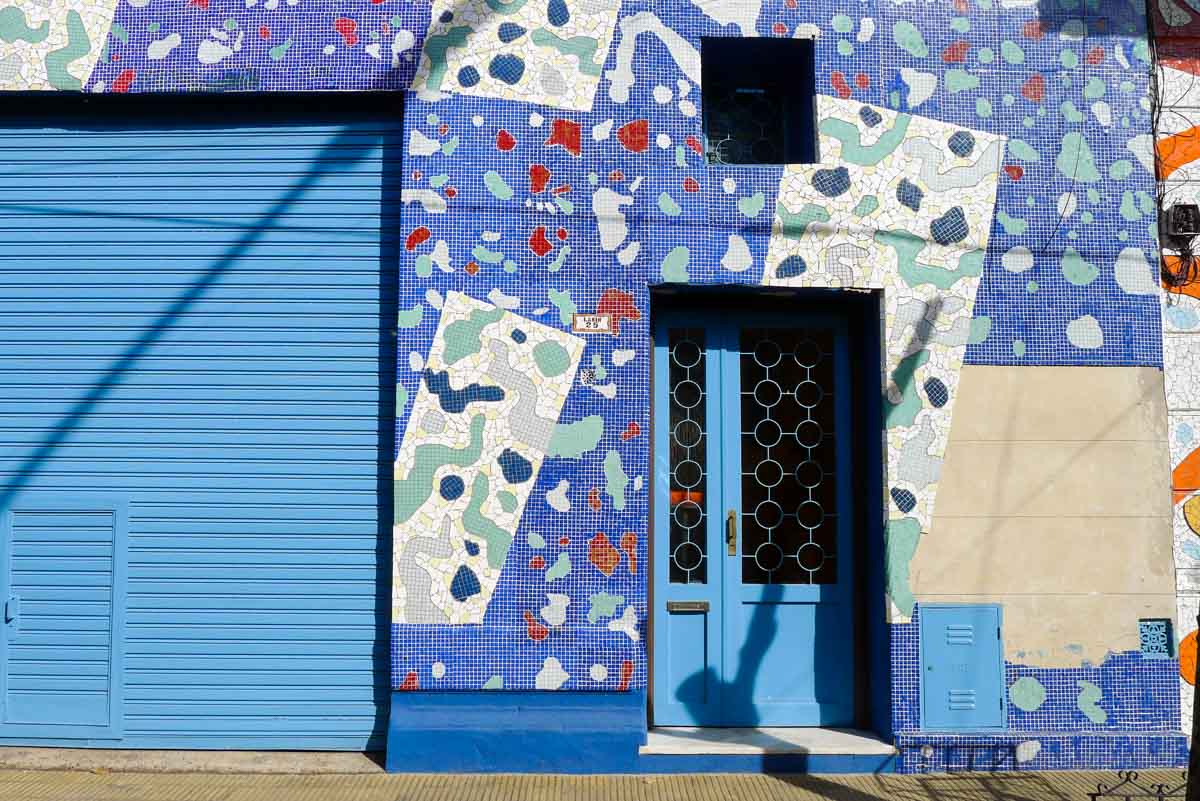
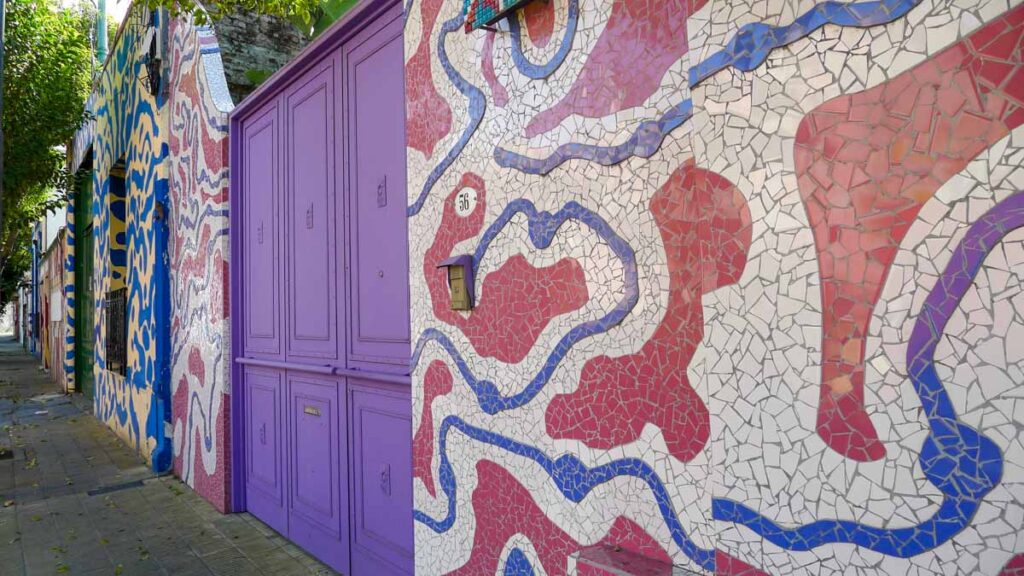
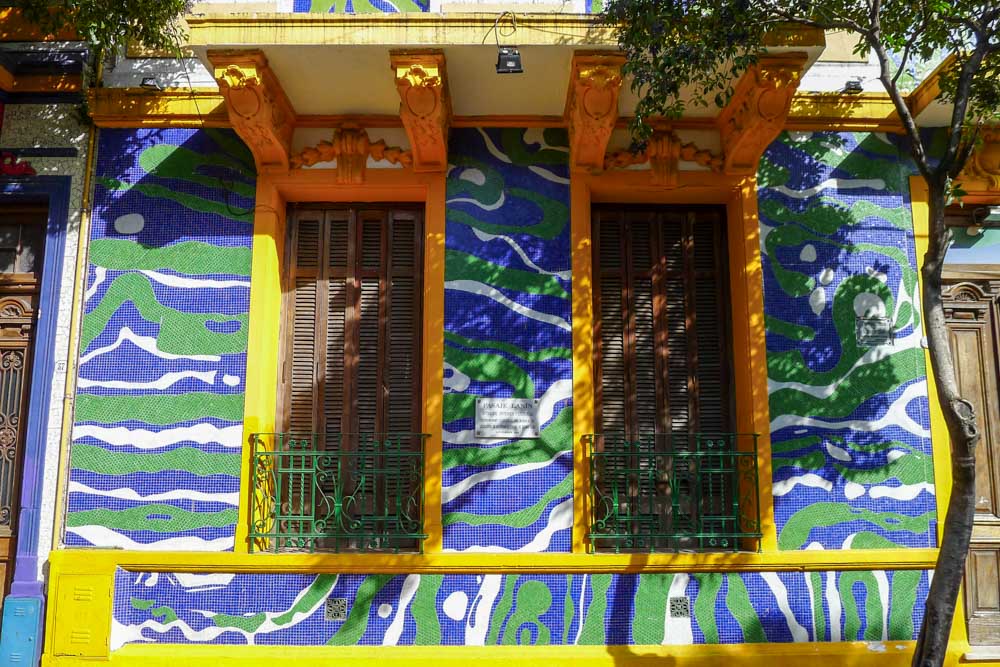
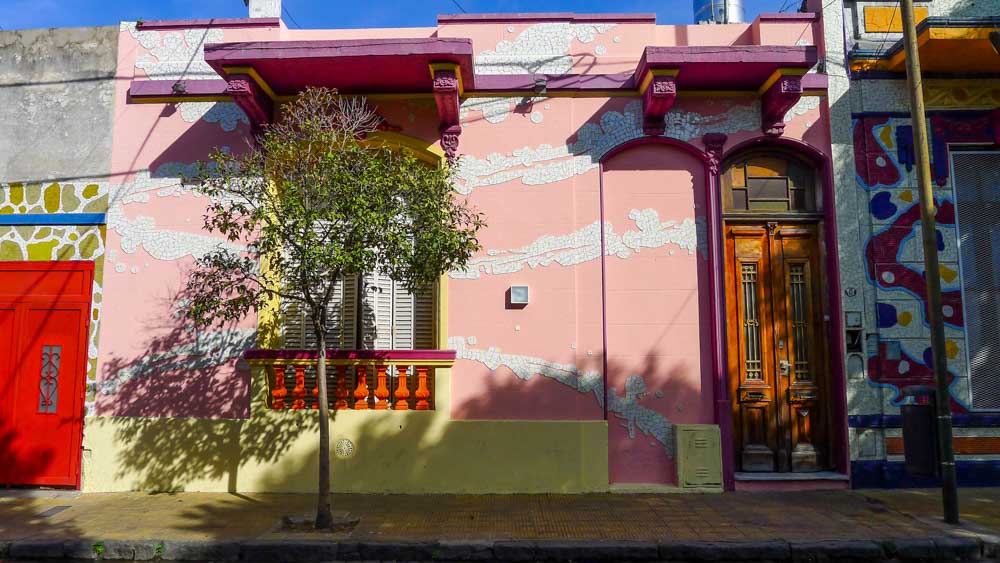
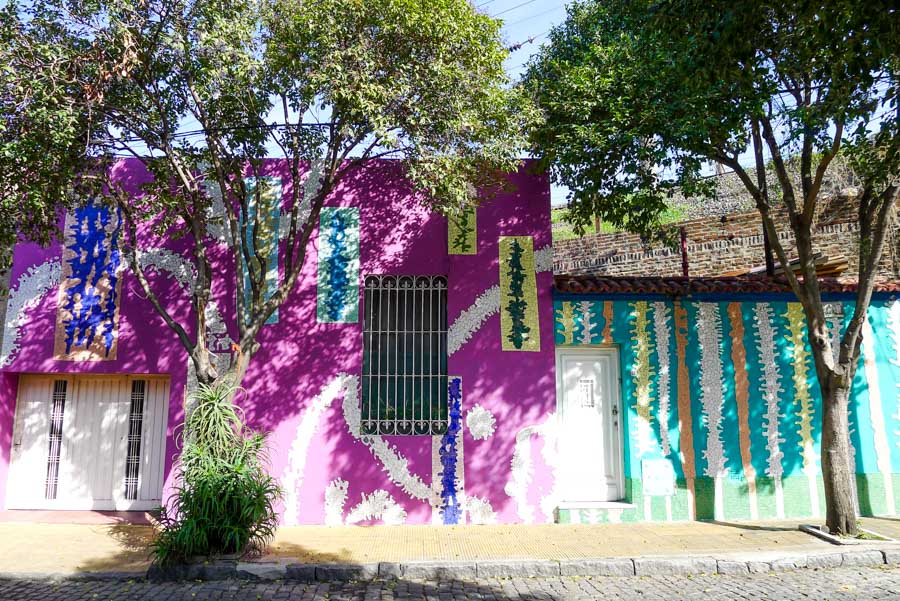
Bright coats of paint and beautiful mosaic tiles adorn the homes of quiet Calle Lanín in Buenos Aires. Pasaje Lanín, as it is also called, is one of the most colorful streets in the Argentine capital, but is feels a world away from the busy Caminito in nearby La Boca. Here is everything you need to know about visiting this little open-air museum, including safety tips and how to get there.
Virtually every visitor to Buenos Aires will visit the Caminito – arguably the city’s biggest tourist trap, but a must-see nonetheless. Behind the brightly painted homes, cheesy overdone restaurants, and endless rows of souvenir stands, there is a lot of history and interesting perspective to be gained.
Still, if you go there hoping to admire the colorful facades in peace, you will be very disappointed. It is typically packed with people, and it’s one of the furthest things from an “authentic” experience you will find in Buenos Aires.
If you’re looking for an “open-air museum” vibe with far fewer people, I suggest heading over to Pasaje Lanín. Here you’ll find a few blocks of homes beautifully decorated with incredible colors, and you might just be the only tourist around.
Why is this little corner of Buenos Aires so colorful?
Calle Lanín is located in the Buenos Aires neighborhood of Barracas, away from the tourist centers of Palermo and San Telmo. (Well, it’s not really that far from San Telmo, but it’s still not somewhere tourists typically stray.)

In the late 1990s, local artist Marino Santa María came up with an idea to reinvigorate the neighborhood with his art. He started with his own studio and found most of his neighbors eager to participate once the city approved funding for the project. Over the next few years, he and his team of volunteers decorated over 30 homes with vibrant colors and unique patterns.
The results were well received and became quite the local attraction. Several years later, he decided to expand on the project by adding the colorful mosaic tiles you can see today. To date, he has beautified 40 homes along Calle Lanín and neighboring streets.
Is Calle Lanín worth visiting?
To be clear, Calle Lanín is not really an “alternative to the Caminito.” There are no souvenir shops; there are no tango shows in the street. (This is part of the appeal, in my opinion.) The decorated buildings are just people’s homes, so this is probably not somewhere you’re going to spend more than 20 minutes.
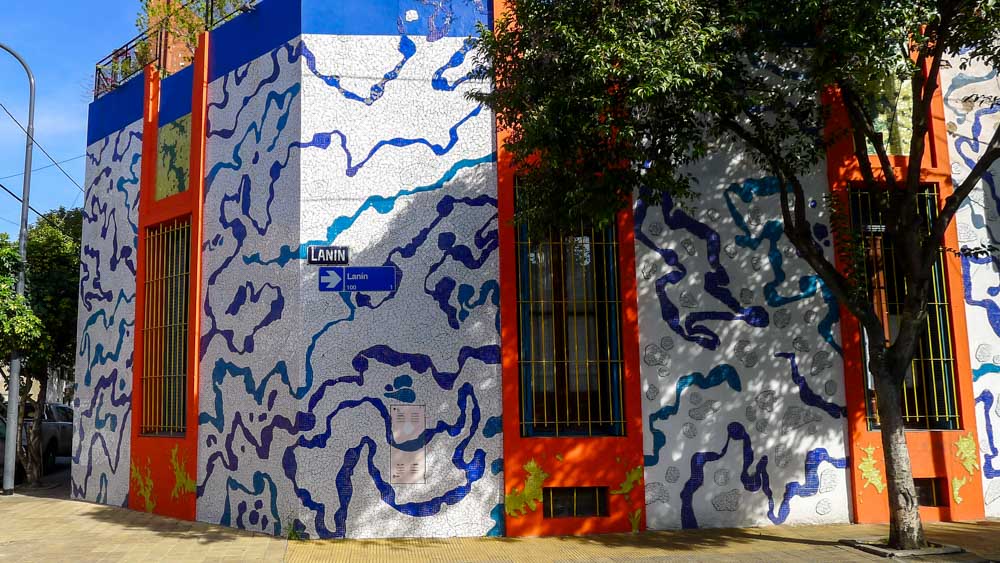
I say this because I know, while Calle Lanín is 100% my kind of thing, some people will shrug and say, “That’s it?” So I just want to preempt that by saying this is for people who enjoy this style of art, exploring less touristy neighborhoods, or finding quirky, uncommon things – like an entire city block covered in mosaic tiles!
It makes sense to tack this on to a trip to La Boca or San Telmo (it makes for a welcome break from the crowds in between the two) since it’s quite close to both neighborhoods. I wouldn’t come out of your way from Palermo or anything, but it’s a nice little stop if you’re already in the area.
Is it safe to visit Calle Lanín?
You will get differing opinions on this. I can count the number of times I’ve taken a taxi in Buenos Aires (rather than the bus or subte) on one hand, but this was one of them – and it was because of all the warnings I’d heard about safety. And I can tell you, despite my insistence, that taxi driver did not want to leave me there.
It’s true that Barracas, the neighborhood where Calle Lanín is located, does not have the best reputation. It’s probably best to avoid wandering around taking pictures after dark. But plenty of people live here and go about their lives here, as they do in other neighborhoods of Buenos Aires (and the world) where tourists are often warned not to go.
All I can offer is my personal experience and the sum of the local advice I’ve gathered over my years in Buenos Aires. Personally, I felt safe walking around here, even though I was the only person around. (It was late afternoon on a Sunday in the middle of winter.) I brought my camera but took it out with discretion, tucking it away before I headed off to San Telmo afterwards. I walked from there to Parque Lezama along busy streets, and nothing felt off or dangerous in any way.
One thing I would advise against is walking between Calle Lanín and the Caminito. La Boca, outside the small network of streets next to the Caminito, is one of the more dangerous areas of Buenos Aires, particularly for tourists. Robberies happen with some frequency and are often violent, so it’s not personally a risk I would take. There’s a decent chance someone will be watching.
How to get to Calle Lanín
Ok, so we’re not walking from La Boca. How are we getting there?
The easiest and safest way is to take a taxi or use the Cabify app. As I mentioned, you’re not going to be spending hours here, so you could even ask your driver to wait for you if you’d like.
If you want to take the bus, Google Maps is pretty reliable for checking the best colectivo route from where you’re staying. I recommend approaching Pasaje Lanín from the southern end, where it meets Avenida Suárez. This is a much larger street with more traffic than Calle Brandsen to the north. There is a bakery on the corner (Panadería “Las 5 Esquinas”) that you can plug into Cabify or your maps app.
If you’d rather walk, it takes about 30 minutes to reach Calle Lanín from Parque Lezama at the southern end of bustling Calle Defensa in San Telmo. Head southwest along Avenida Martín García until it meets Avenida Montes de Oca. Walk south until you reach Avenida Suárez and turn right to head west. You’ll pass under the highway and see one of Marino Santa María’s many murals depicting Carlos Gardel on the next block. The bakery and Calle Lanín are on the next corner.

If you’re following my suggested itinerary for Buenos Aires, I actually recommend doing this in the other direction after visiting La Boca in the morning. From the Caminito or La Bombonera, I would just take a cab. It should be a short and inexpensive ride.
When you’re ready to get back on the beaten path, check out my list of the top things to do in Buenos Aires.
More on Argentina
The best of Argentina: A three-week itinerary
Bariloche’s best day hikes: Top 5 day single-day treks
Cerro Catedral to Refugio Frey: Bariloche’s best day hike
The 3 best hikes for 3 days in El Chaltén
Loma del Pliegue Tumbado: Is this actually the best hike in El Chaltén?


