How to spend 4 days in Buenos Aires: A first-time itinerary
Some links on this page may be affiliate links. That means if you follow one, see something you like, and purchase it, I may receive a small commission at no cost to you. For more information, see this site's disclosures.
If you’re headed to “the Paris of South America” for the first time, this itinerary is for you! These are my suggestions for the best things to do in Buenos Aires with four full days in the city. I’ve included the classic must-sees as well as a couple of slightly off-the-beaten-path activities and areas of the city.
In total, I’ve spent just about two years living in Buenos Aires. My various stints in the city were spread out over a number of years – both working and studying, on a very tight budget and with a little more room to splash out. It’s a city I know like the back of my hand, and consequently I’ve been enlisted to plan quite a few itineraries for visiting family and friends over the years. And now I’m finally pooling those suggestions in one place!
With four days, you can get a good sampling of the city – the grittier side and the high-end, including some of the obligatory tourist stuff and a few lesser-known gems.
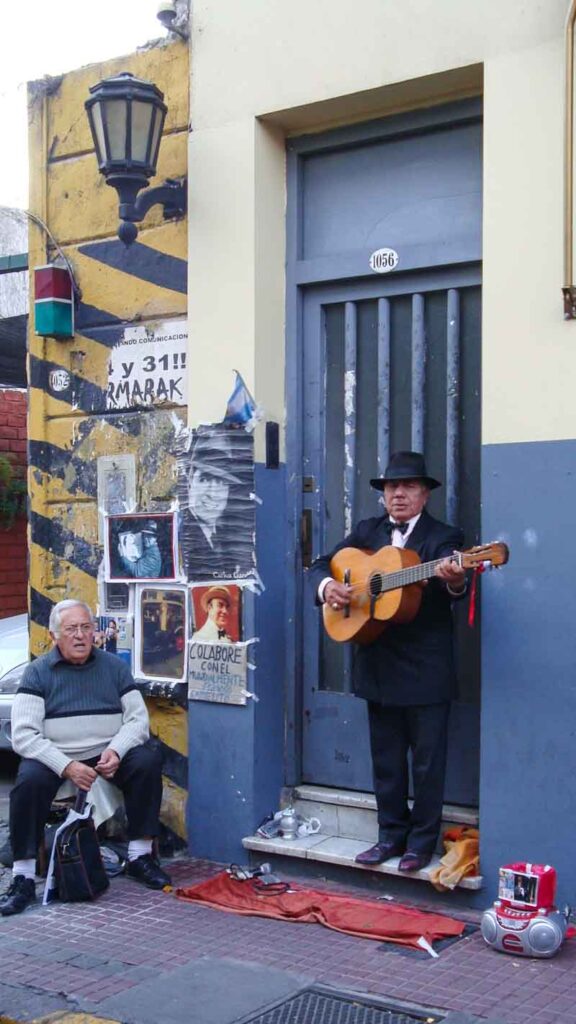
This is intended to be a moderately paced itinerary that leaves time to wander interesting neighborhoods, people-watch in a leafy plaza, or recover from an all-nighter at the boliche. I’ve included alternate suggestions in different barrios for people with varying interests, so don’t feel like you have to see everything.
Also note that I’m a big fan of walking to get to know a city, so I’ve included a lot of walking here. You can always hop on the bus or use a ridesharing app (Cabify, DiDi, and Uber work here) to save some time or energy.
If you just want the quick version…
These are the classic must-dos for your first trip to Buenos Aires:
- Visit La Boca’s colorful Caminito, the San Telmo Fair, Plaza de Mayo, and the Recoleta Cemetery.
- Enjoy an evening asado (Argentinean barbecue) on an outdoor terrace.
- Attend a traditional tango show or a performance at the world-famous Teatro Colón.
- Eat your way through the popular neighborhoods of Palermo and/or San Telmo on a food tour.
- Grab tickets for a soccer/football match with some of the wildest fans in the world.
A quick note about arranging your time
Buenos Aires is a huge city, so I’ve planned each day with its geography in mind. I’ve tried to cluster sights located relatively close to each other on the same day, so you’re not spending hours (literally) of your day crisscrossing the metropolis.
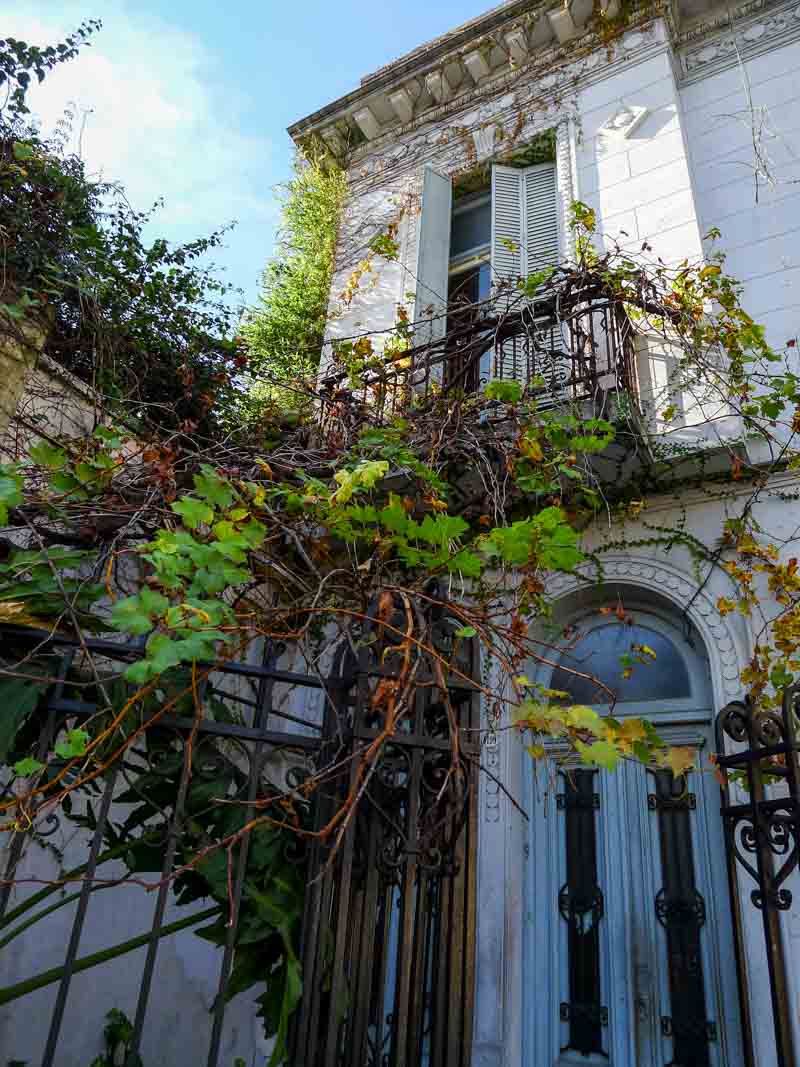
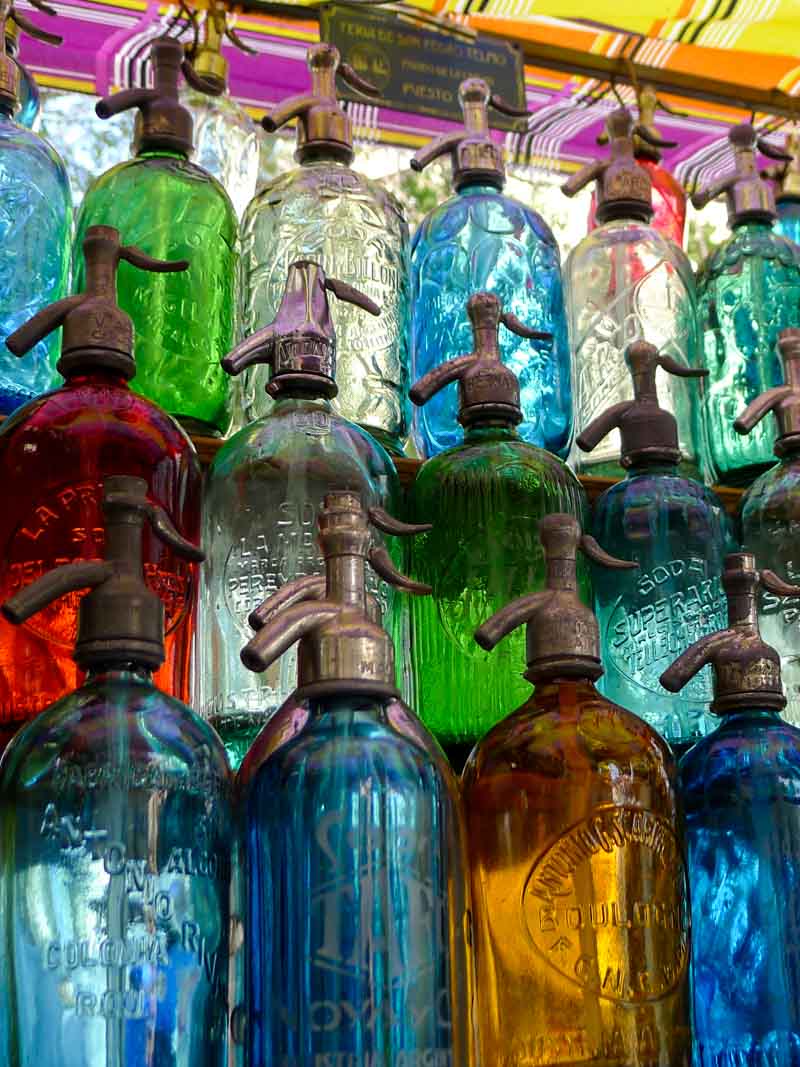
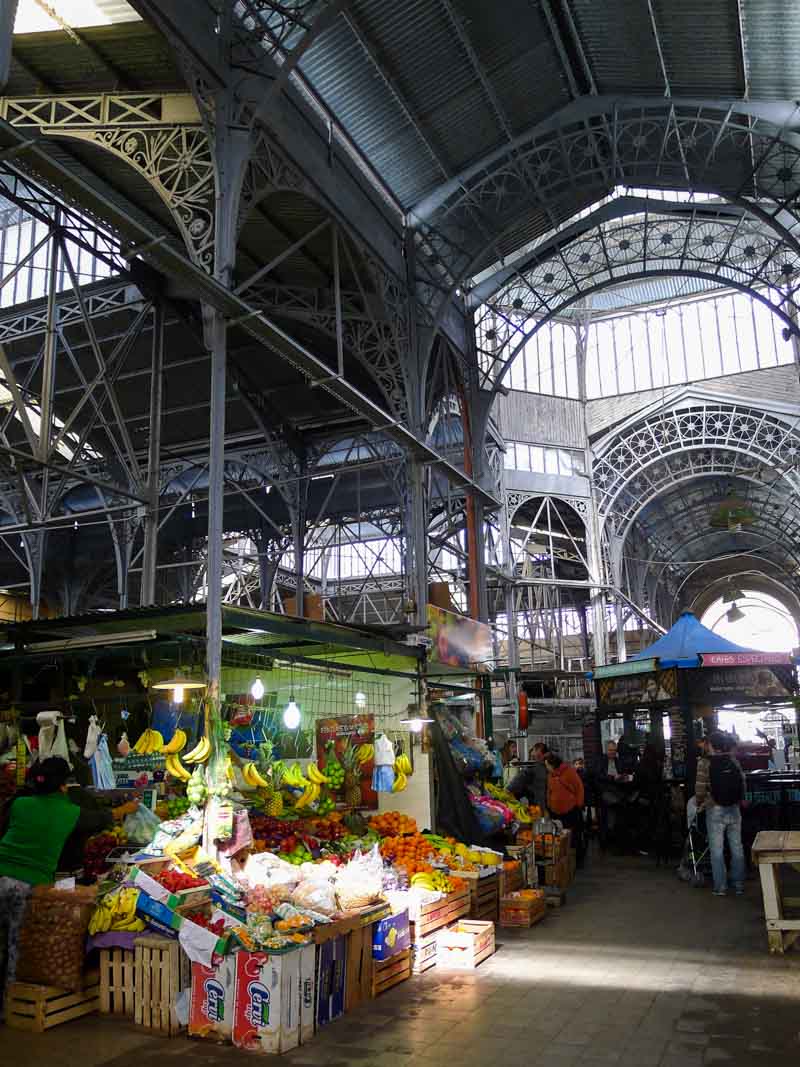
With that said, there are some activities that only take place on certain days. I’ve included weekend fairs, for example, and suggested some tours and activities that need to be reserved in advance and may book up quickly.
Just keep this in mind when deciding how to arrange your schedule. You can reorder these days so you’re in San Telmo for the Sunday feria or visiting museums on a weekday to avoid the weekend crowds.
For now, let’s jump right into your first day!
Day 1: The plazas, parks, and street art of Palermo
If this is your first visit to Buenos Aires, it’s very likely you’re staying in or near Palermo. And even if you’re not, exploring this neighborhood is a great way to spend your first day.
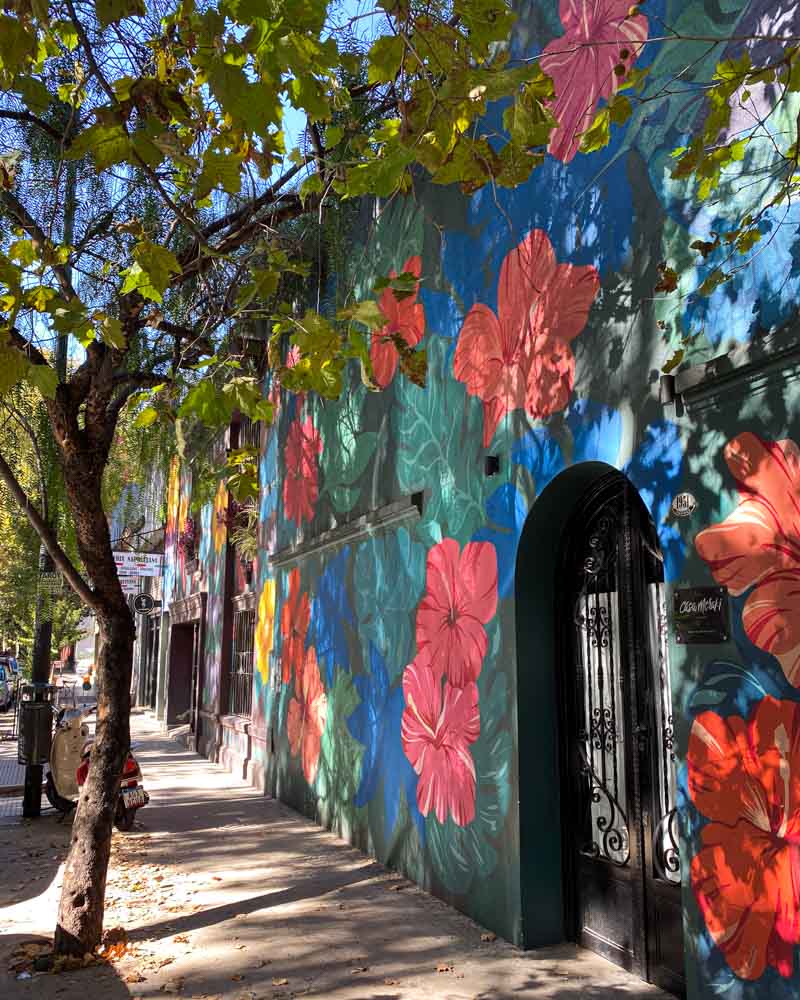
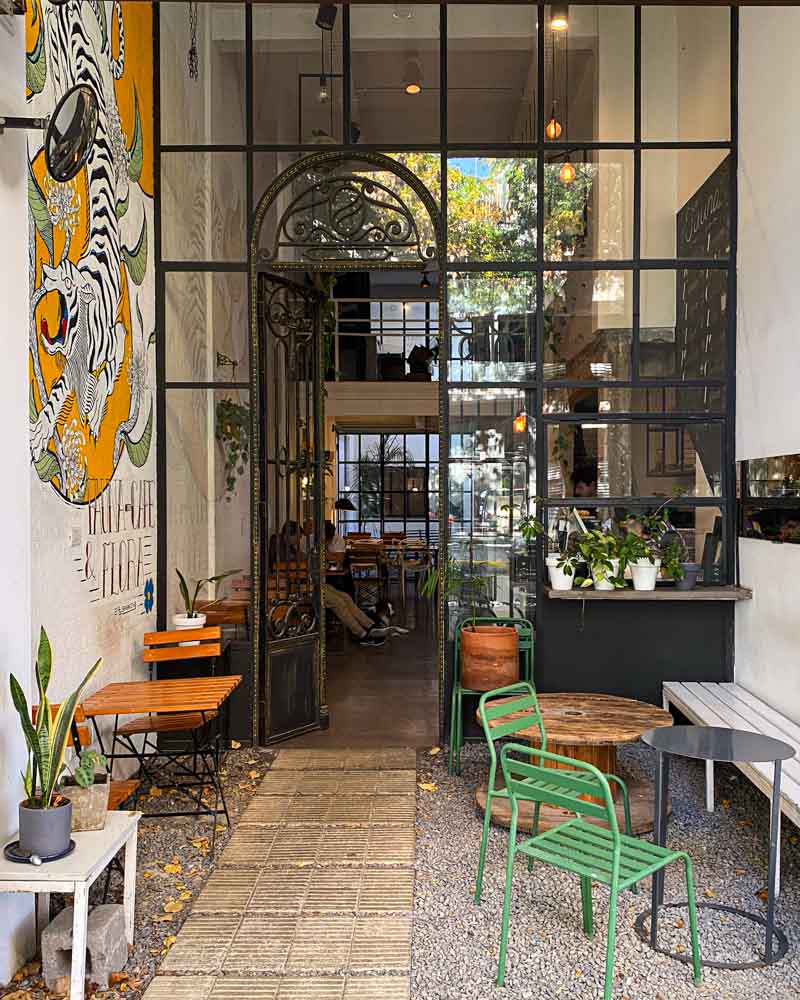
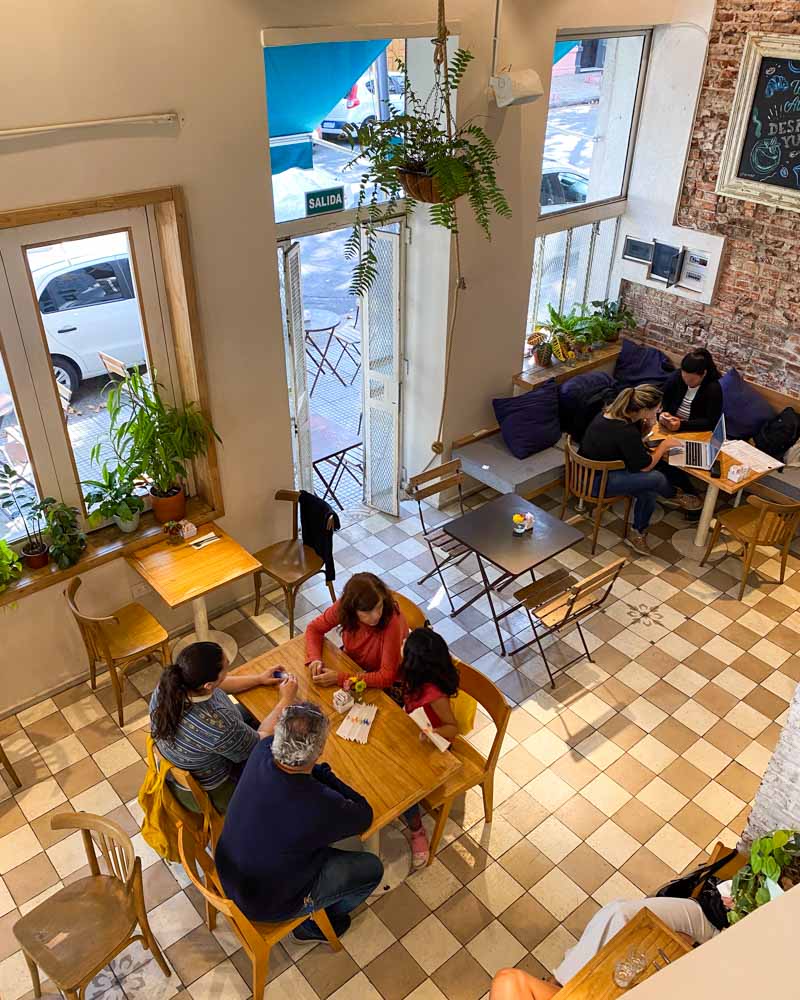
Glance at a map, and you’ll quickly see that Palermo is a massive barrio. Its many different pockets all have their own character and flavor, and I find them all quite charming and beautiful in different ways.
The neighborhood as a whole is leafy, walkable, and generally pretty safe – a nice, easy introduction to the city. Palermo is also home to many of the best cafés, restaurants, and nightlife venues in Buenos Aires – you definitely won’t get bored (or go hungry).
Morning: Walk around Palermo Soho
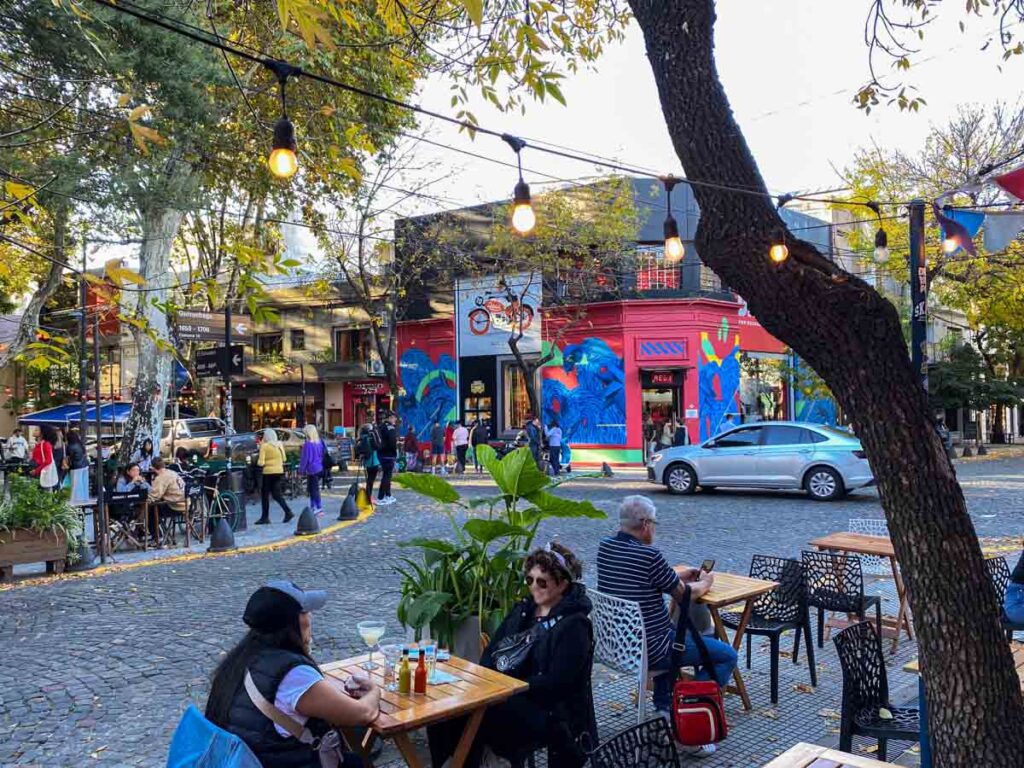
The best way to get oriented is to just go for a walk. I would start with Palermo Soho, as this area has a lot of nice brunch spots, boutiques, and charming cobblestone streets.
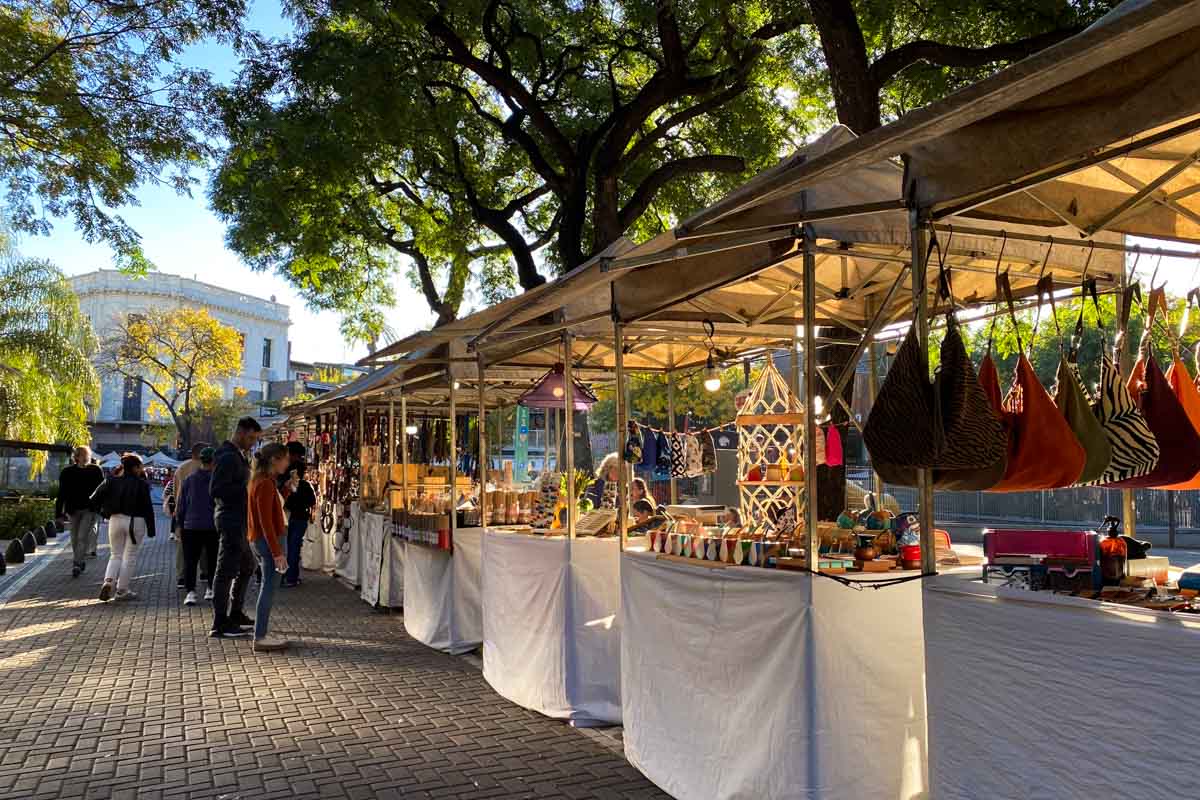
Head first to Plaza Armenia and make your way over to Plaza Serrano, taking time to grab a meal, admire the street art, or do some shopping. Plaza Serrano also hosts a weekend market where you can find clothing, artwork, and other souvenirs.
- Coffee recs: I mean, there are a million. Try Cuervo Café, Barine, or Lattente.
- Famous steakhouses: Don Julio, La Cabrera
- Creative vegetarian food: Puerta
- Yummy brunch: Full City Coffee Roasters, Casa Dingo
- Best helado: Gretta Gelato (great value but nowhere to sit), Rapanui (of Bariloche fame, with a lovely courtyard and terrace)
Afternoon: A few options in and around Palermo
For your afternoon, I have a few different suggestions depending on your interests and energy levels. (I imagine some of you reading this might be tired from a long flight.)
Street art
Option 1 is a street art tour. Buenos Aires has an incredible urban art scene, and many of the best and most famous murals are located in Palermo and neighboring barrios. There are a number of tour companies with really knowledgeable guides who do a great job explaining the history and significance of various pieces. Buenos Aires Free Walks offers an excellent Palermo Graffiti Tour that is not quite free, but very inexpensive.
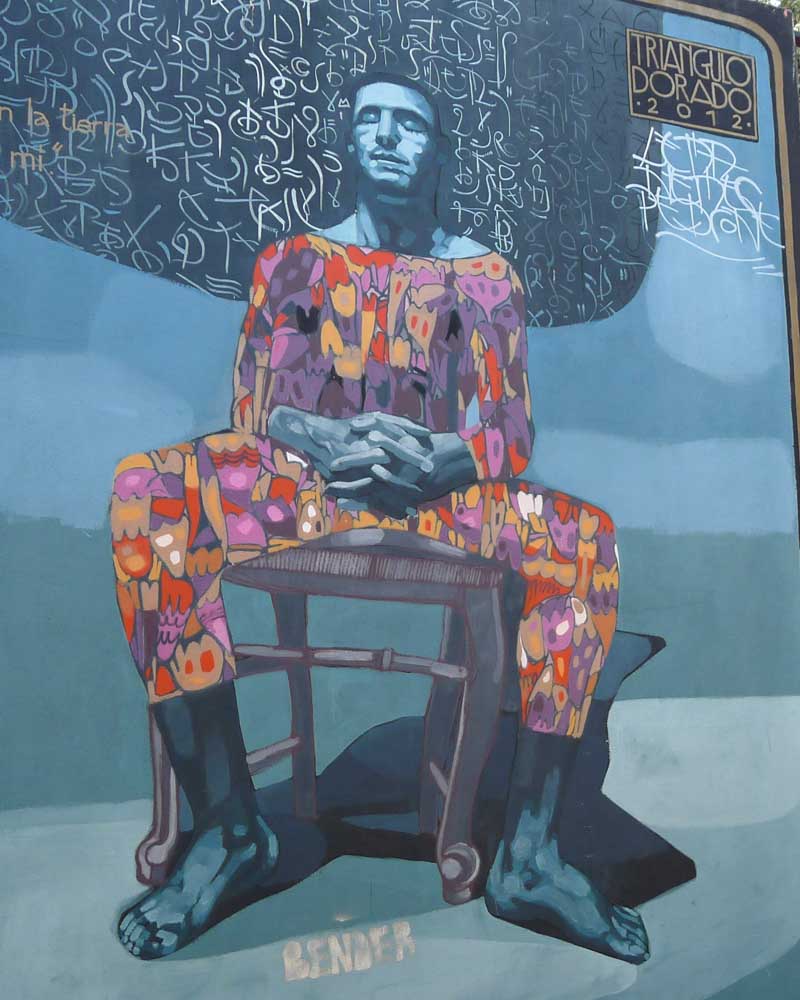
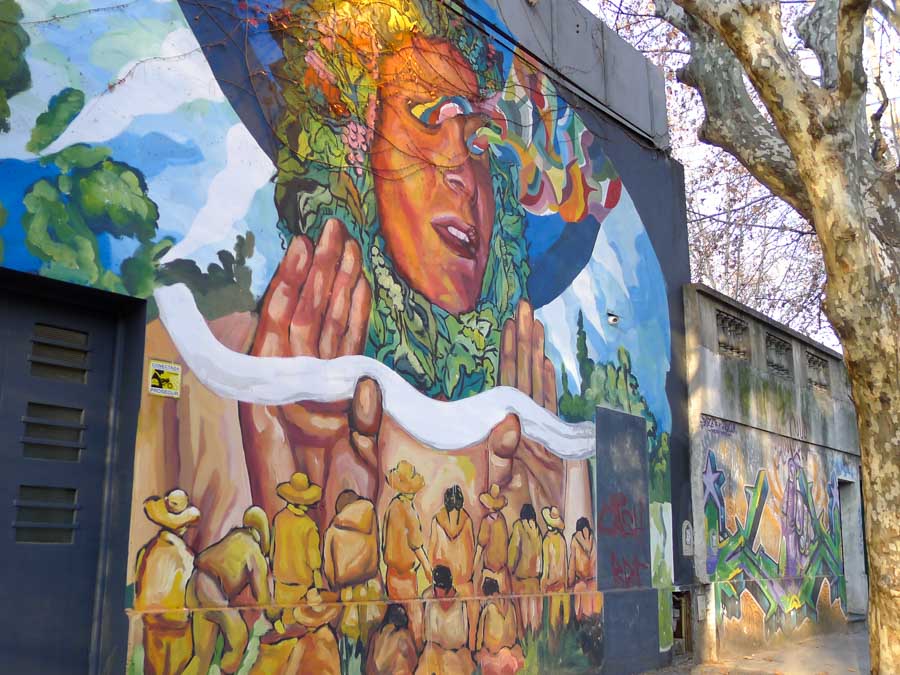
Palermo Hollywood
Option 2 is to head northwest from Palermo Soho and explore its neighbor, Palermo Hollywood. The neighborhoods are pretty similar, but I’d say Palermo Hollywood is a tiny bit quieter. (I mean in terms of the vibe, not the prevalence of noisy construction. That seems to be everywhere, unfortunately!)
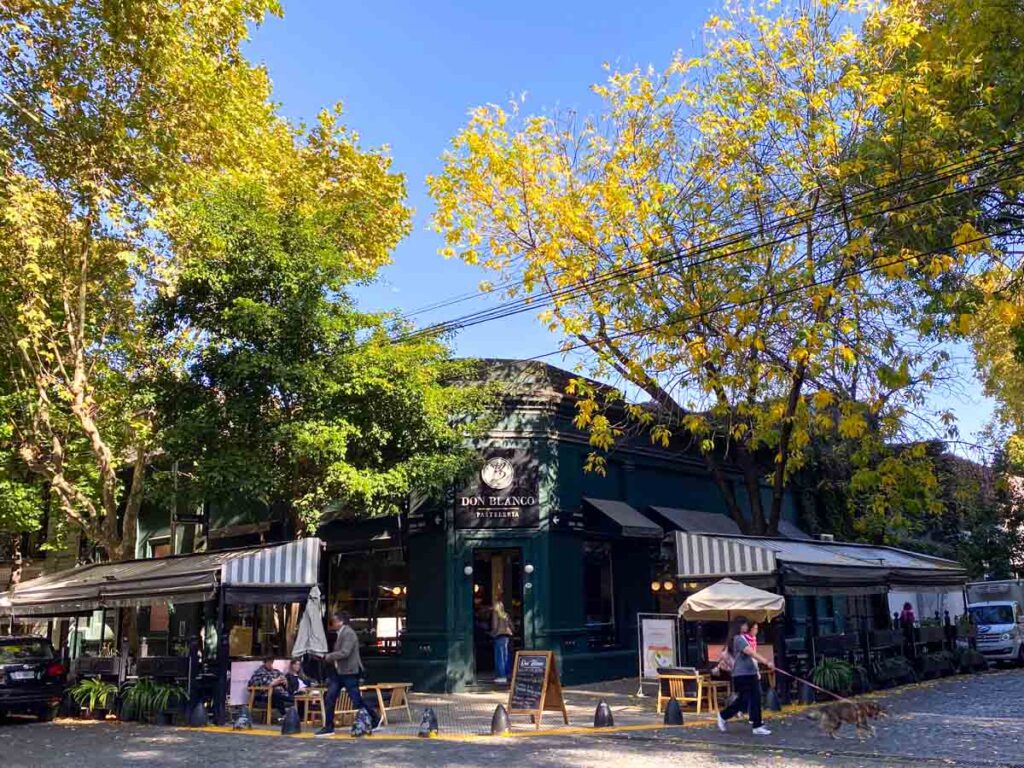
Palermo Hollywood is similarly full of cafés, eateries, and bars, but I’d say it has a bit less shopping and maaaybe a slightly higher ratio of locals to tourists (especially as you move west towards Colegiales).
- My favorite coffee in the entire Ciudad Autónoma de Buenos Aires: Zur Café
If you like flea markets, you can pop into the Mercado de las Pulgas on the western edge of the neighborhood.

Palermo parks and/or MALBA
Option 3 is to relax in Palermo’s large, beautiful parks.
First, head to Plaza Italia. From there, you can choose your adventure. Immediately to the east, you have the peaceful Jardín Botánico Carlos Thays. If you continue instead along Avenue Sarmiento, you’ll reach a large roundabout. Across the street to the right is the lovely Jardín Japonés. Across the street and to the left is Parque Tres de Febrero, commonly known as the Bosques de Palermo, which has a large lake and a beautiful rose garden.
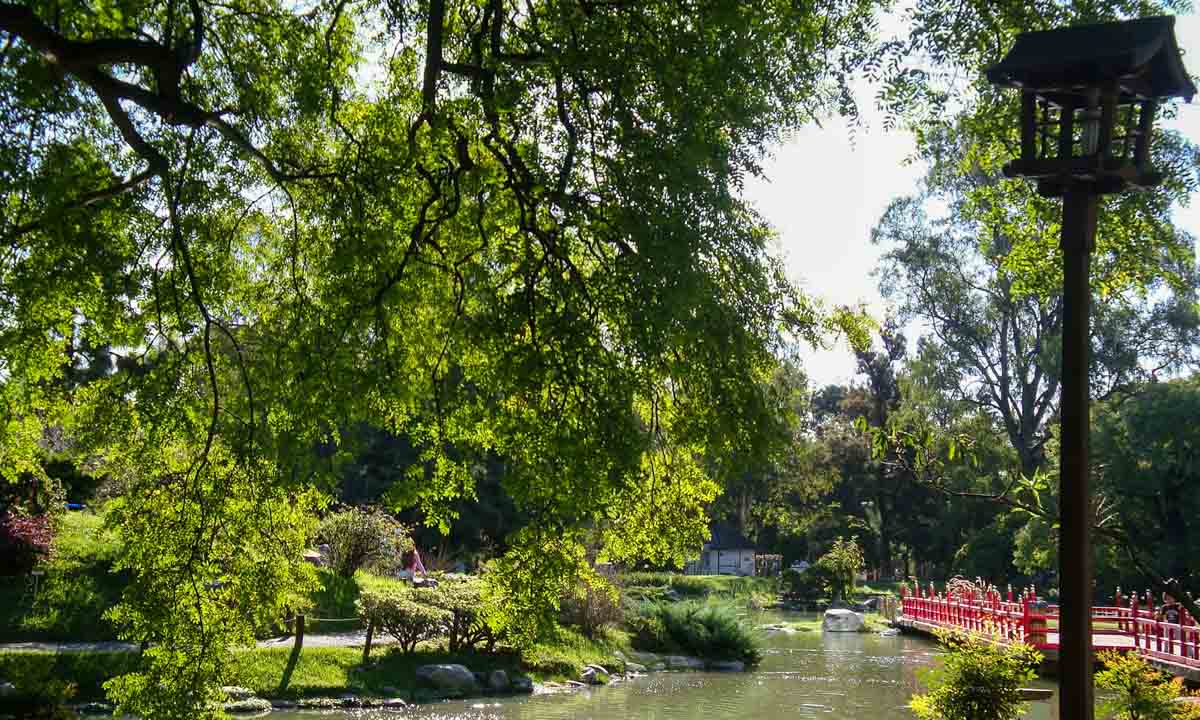
Just 10 minutes from the Japanese Garden is MALBA, the highly regarded Museo de Arte Latinoamericano de Buenos Aires. It houses a fantastic collection of Latin American art from the 20th century onward.
Asado tasting at Fogón
Option 4, for the meat lovers, is this 9-course asado at Fogón, one of the city’s best restaurants (according to none other than the Michelin Guide).
The afternoon option lasts around two hours, so you’ll still have some time to explore (or just lie flat in a park) afterwards if you’d like. They also have a dinner option if you’d prefer to find lunch on your own as you wander around Palermo. Note that Fogón has two locations in different parts of Palermo, so double check the address before heading out.
Evening: Dinner and nightlife in Palermo
For dinner, no need to leave the neighborhood! Palermo Soho and Palermo Hollywood are both chock-full of restaurants.
If you’re able to secure a spot, this super popular food tour is a great introduction to the local culture and cuisine. (Dinner spots book out early, so you could also choose to rearrange your day and do this in the late morning or afternoon.)
If you’ve had enough wandering for the day, check out this fantastic asado experience hosted by a local family and located just a few blocks from Plaza Armenia. They have a full three-course menu, including three different wines and dulce de leche ice cream (pretty much my favorite food in Argentina) for dessert. They can also make vegetarian, vegan, and gluten-free alternatives! (Just let them know when you book.)
Another favorite includes a chance to try your hand at making wine-based cocktails and empanadas. (It’s surprisingly difficult to fold them correctly!) You could also opt for a wine tasting tour and do dinner on your own afterwards.
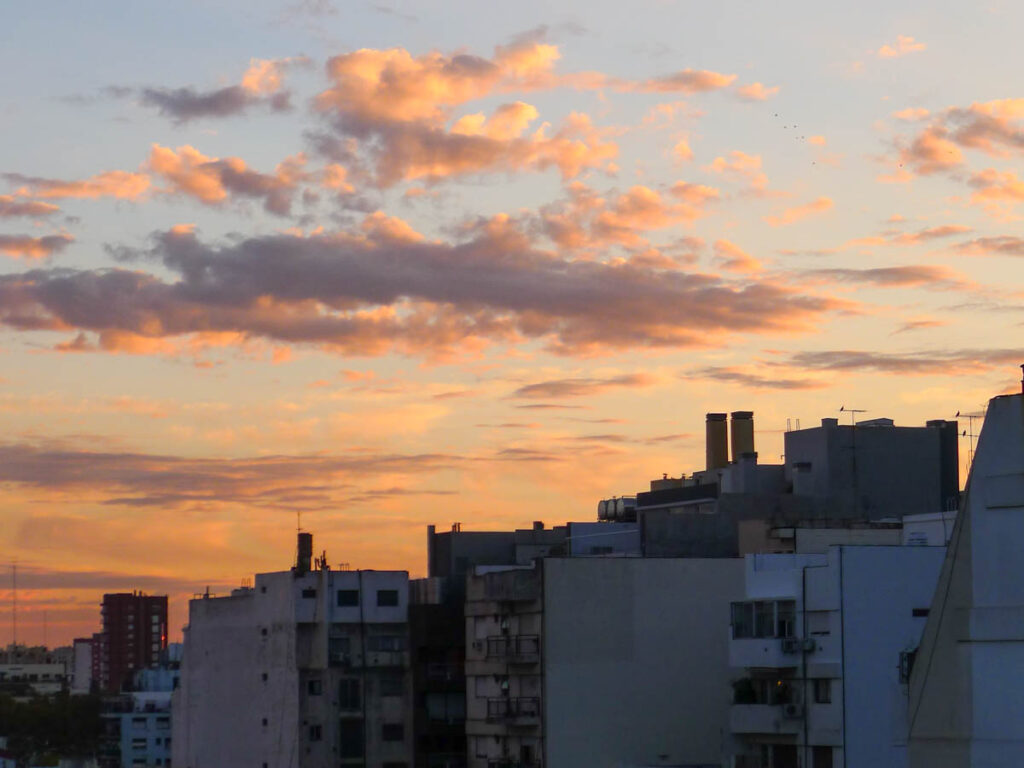
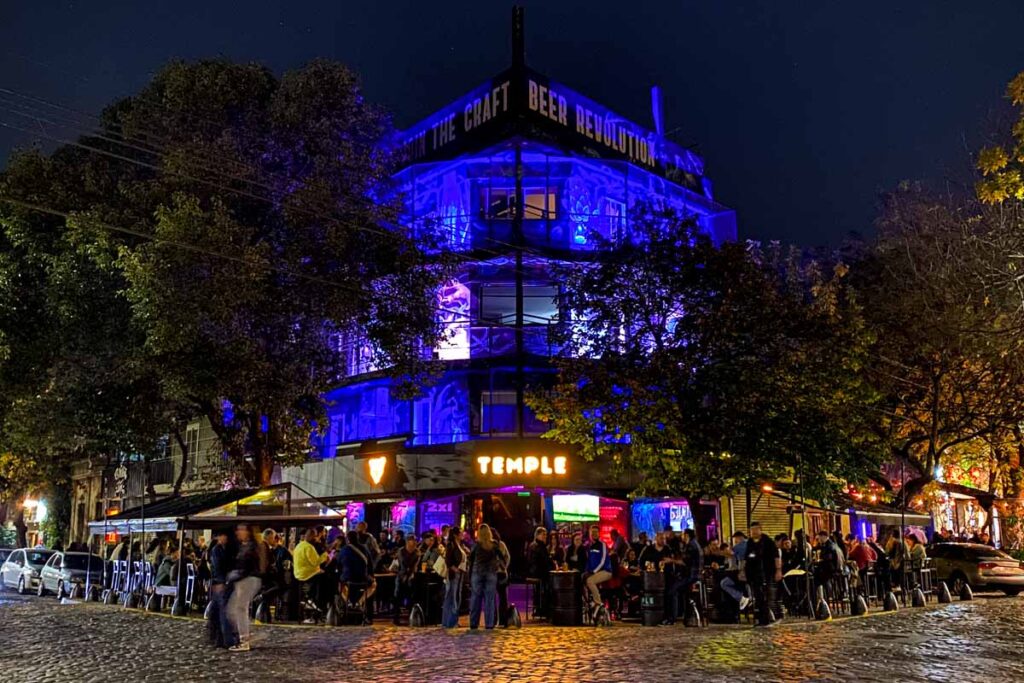
And if you still have energy for your first taste of the city’s legendary nightlife, Palermo is also your place!
How to get to Palermo
To start your day in Palermo Soho, take the green line (line D) of the Subte to Scalabrini Ortiz or Plaza Italia. From there, everything is walkable. (There are also dozens of bus lines that will take you here if that is more convenient.)
Day 2: A trip to La Boca and the San Telmo Fair
Note: It’s ideal if you can visit San Telmo on a Sunday for its famous street fair, but the neighborhood still has a plenty to see any day of the week.
Ok, a word of warning: we’re going to visit two of the most touristy places in the entire city. (But, for sanity’s sake, we’ll break it up with a little off-the-beaten-track detour in the middle.)
I personally find that my tolerance for the super touristy, cover-of-the-guidebook type of stuff wears thin quickly. I like to frontload my itineraries with these major sights so I make sure to tick them off my list before I lose any and all motivation to wade through hordes of people and their cameras.
Of course you could skip them entirely, but I don’t really recommend that. Popular places are often popular for a reason, and it would be a shame to visit Buenos Aires without seeing La Boca or the San Telmo Fair.
Morning: La Boca and the Caminito
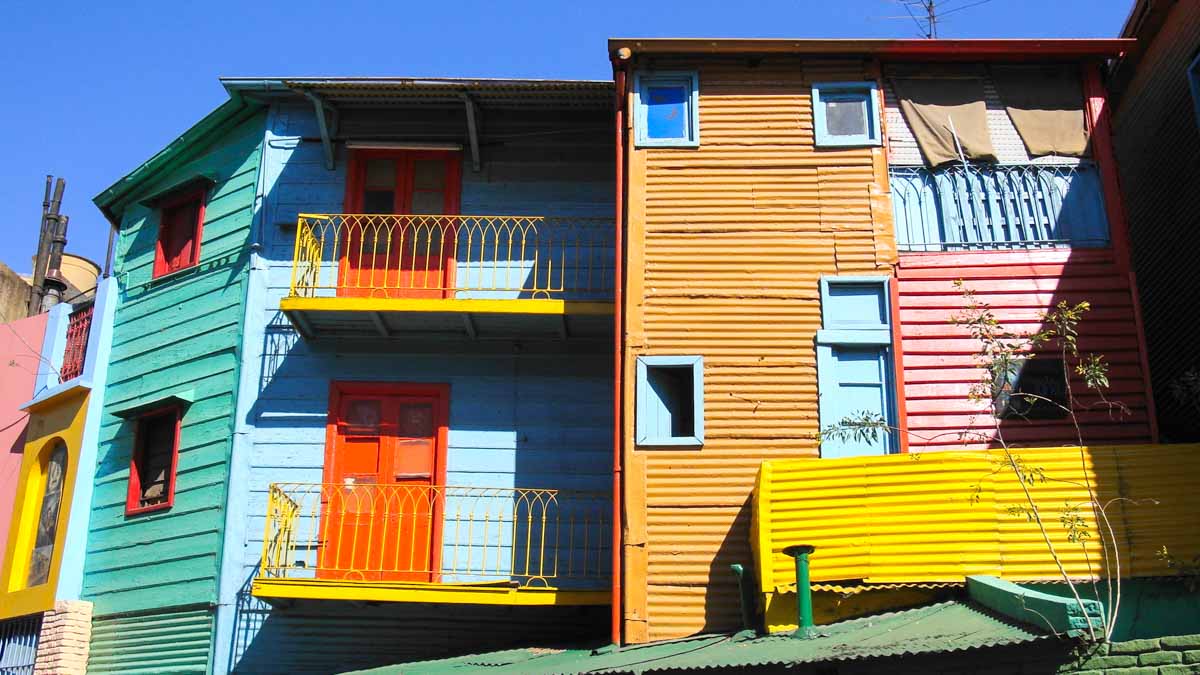
So first, head to the Caminito. With its colorful, haphazard buildings made from scrap metal, this is the most famous street in La Boca – and probably in Buenos Aires. (Scrolling through social media, you might think the entire city looks like this, but it’s actually just these few blocks.)
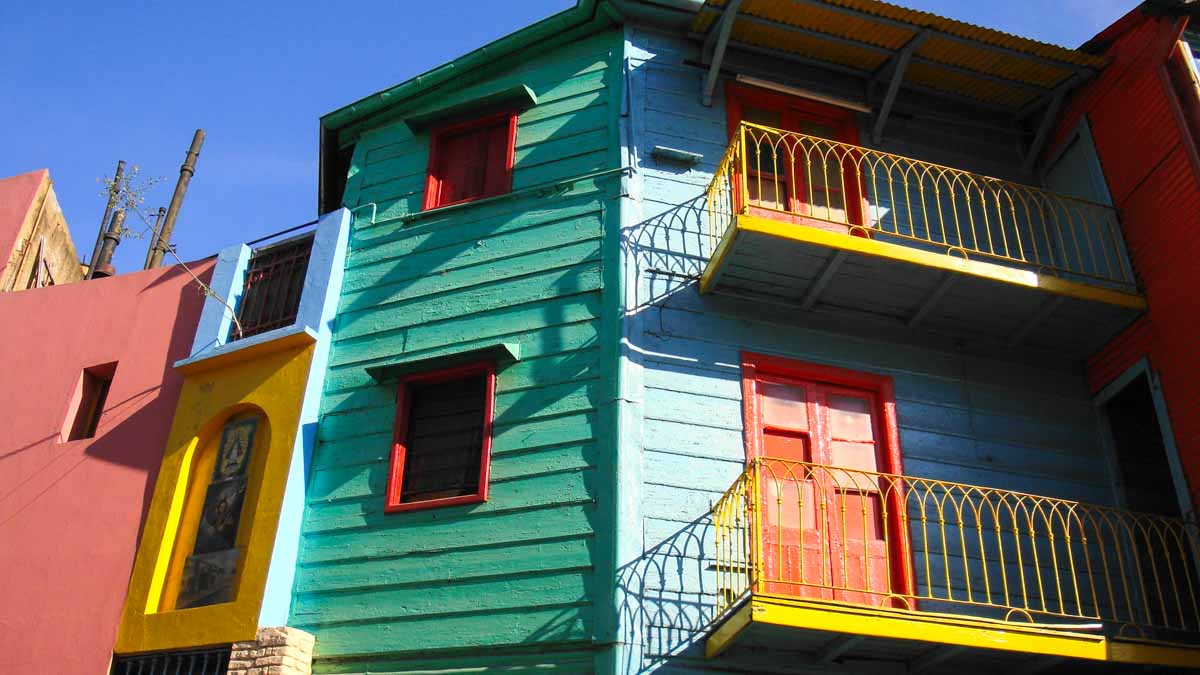
La Boca was the main port of Buenos Aires in the late 19th and early 20th centuries, and the souvenir shops and restaurants you see now were once the makeshift homes of newly arrived immigrants and dock workers.
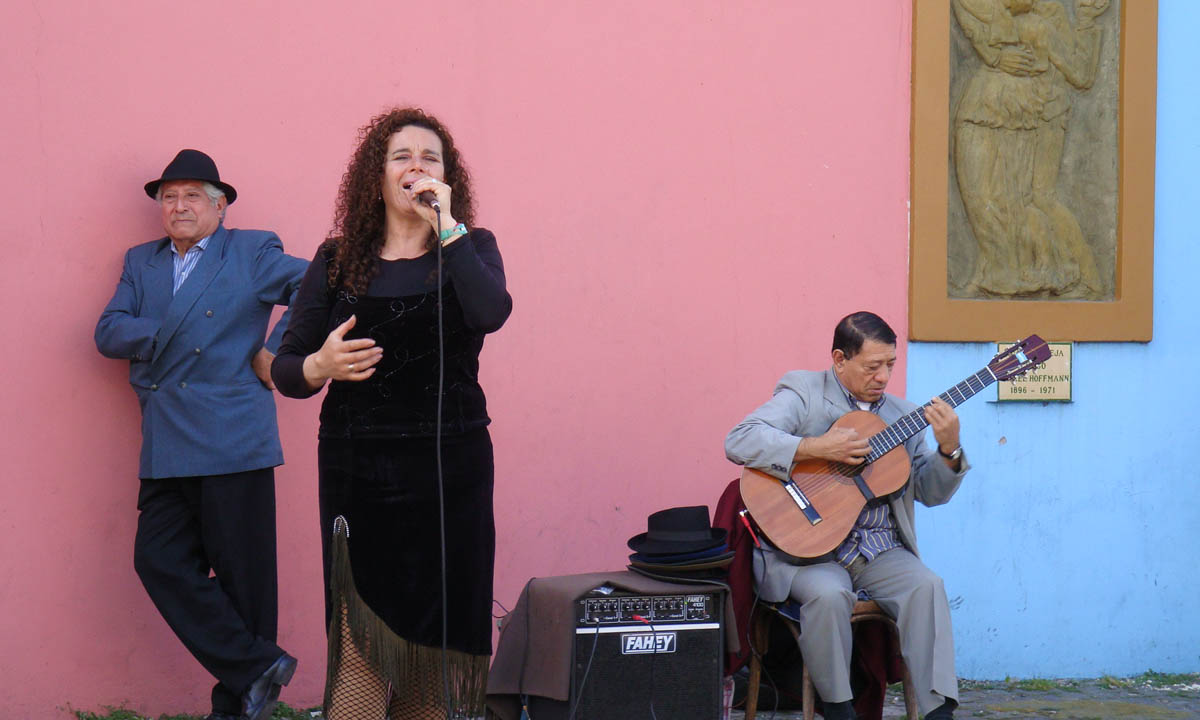
It’s admittedly a bit (maybe more than a bit) of a tourist trap, but it’s still worth an hour or two your morning. In addition to the photogenic facades, tango dancers, and souvenir stalls galore, this working class neighborhood has great street art, one of the world’s most famous football stadiums, and a lot of history.
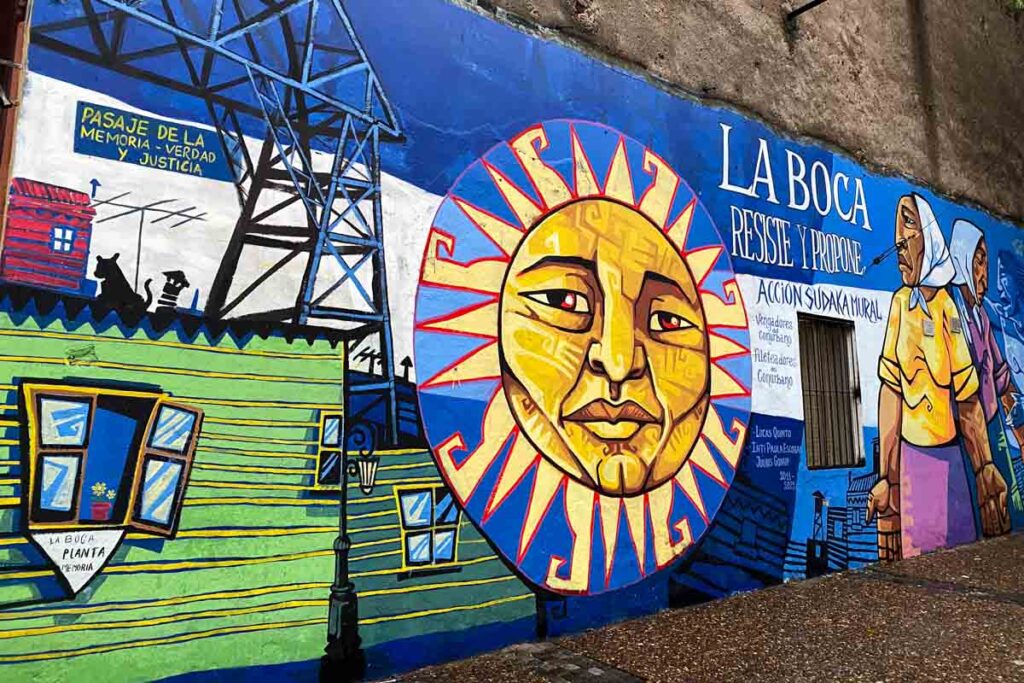
If you enjoy modern and contemporary art, pop into the Fundación Proa while you’re down here. It’s one of the city’s best art and cultural centers, and it has a lovely café terrace on the top floor.
Nearby, there’s another art museum housing the work of Benito Quinquela Martín, one of Argentina’s most famous painters. A local of La Boca, he was best known for his colorful depictions of port life in the neighborhood.
If fútbol is more your thing (and actually, even if it isn’t), check out La Bombonera, the home stadium of the famous Boca Juniors football club. There is a museum on site, and guided tours of the stadium are offered in Spanish and English. It’s a 5-10 minute walk from the Caminito.
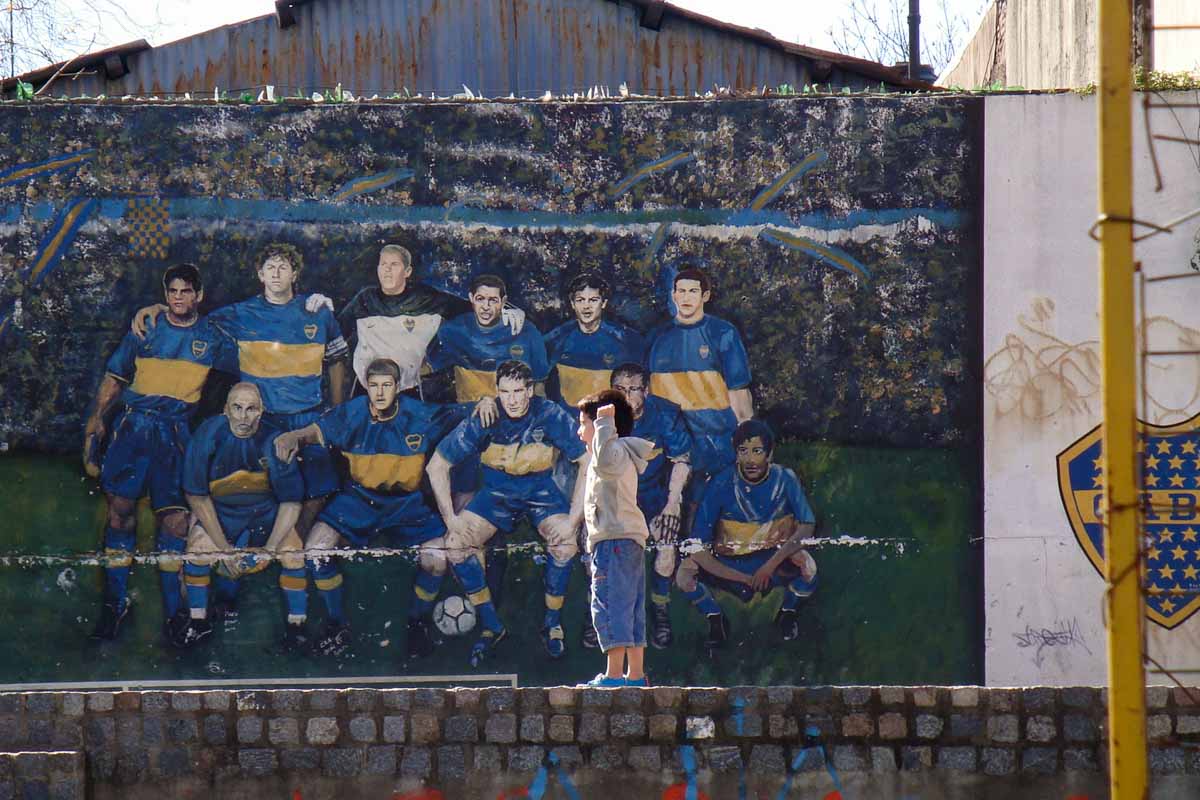
Tickets for their crazy matches are notoriously expensive and difficult to come by for tourists (note: but not impossible!). If a game is on your bucket list, my suggestion is to visit La Bombonera on a tour and then get tickets for one of the dozens of other football teams in Buenos Aires. I promise you it will still be a wild experience!
Last but definitely not least, if you’re in the neighborhood Thursday – Sunday and willing to stick around until noon, I highly recommend checking out Colón Fábrica. This museum has costumes, props, and sets on display from over a dozen past performances at the famous Teatro Colón (which is on your schedule for tomorrow evening). In my opinion, it’s one of the city’s coolest museums and underrated gems.
How to get to La Boca
The Subte doesn’t run to La Boca, so you’ll need to take a bus if you’re relying on public transport. One option is to take the Subte to Plaza de Mayo (your stop will be Catedral, Perú, or Bolívar) and switch to a bus heading south.
Depending on where you’re staying in the city, though, it might be easier to just hop on a bus and ride it all the way to La Boca. Buses 29 and 152 run frequently through the northern areas of Belgrano, Palermo, and Recoleta, all of which are popular neighborhoods for visitors.
If you’re staying in San Telmo, you can take one of the many buses running south along Avenida Paseo Colón.
Regardless of what you choose, you’ll want to take a bus that stops right in front of the Caminito (next to the Matanza River). Avoid walking from the west, as some streets can be unsafe, particularly if you stand out as a tourist.
Early afternoon: Calle Lanín
For something sort of similar (lots of colorful homes) but totally different in vibe (far fewer people and not on the typical tourist track), head to Pasaje Lanín. This is a small area of cobblestone streets with gorgeous, unique facades created by a local resident and artist.
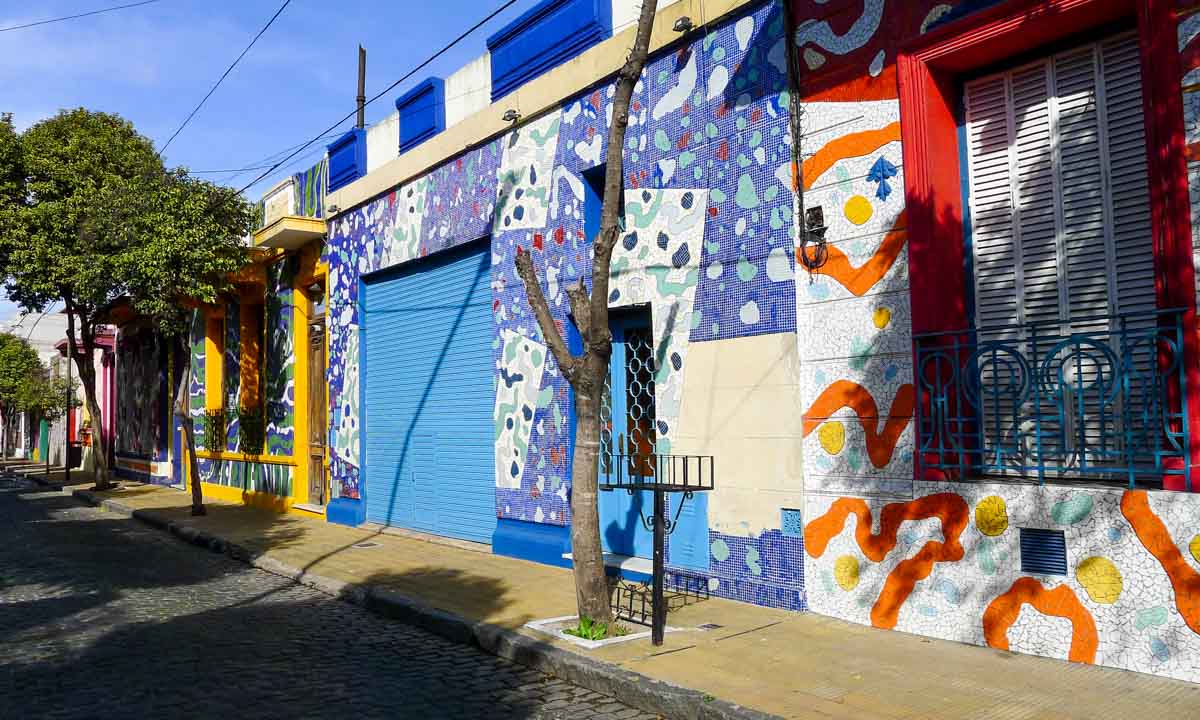
It doesn’t take long to walk around, but it’s a nice little place for a wander and some pretty pictures if you need a break from the crowds.
How to get to Calle Lanín
Unfortunately, going off-piste in La Boca is generally considered one of the big Buenos Aires no-nos. I know, looking at a map, it’s tempting to just walk – it’s less than 30 minutes on foot from the Caminito to Calle Lanín. But when it comes to safety in Buenos Aires, you really should listen to locals, and locals say this is a great way to get robbed. I have been robbed in Buenos Aires (and violently), and it is not an experience I recommend or am eager to repeat. So I say grab a taxi, or hop on the bus to San Telmo and walk from there.
(I should note that Barracas, the barrio where Calle Lanín is located, is not exactly considered the safest neighborhood in the city either. I’ve walked between San Telmo and Calle Lanín and felt fine, but I know the city well and didn’t need to have my phone out to navigate. You could always take a taxi and ask your driver to wait for you instead. The artwork only covers two blocks, and they don’t take much time to explore.)
Mid-afternoon: San Telmo
As the oldest neighborhood in the city and in many ways one of the most charming, San Telmo is a must for any Buenos Aires itinerary.
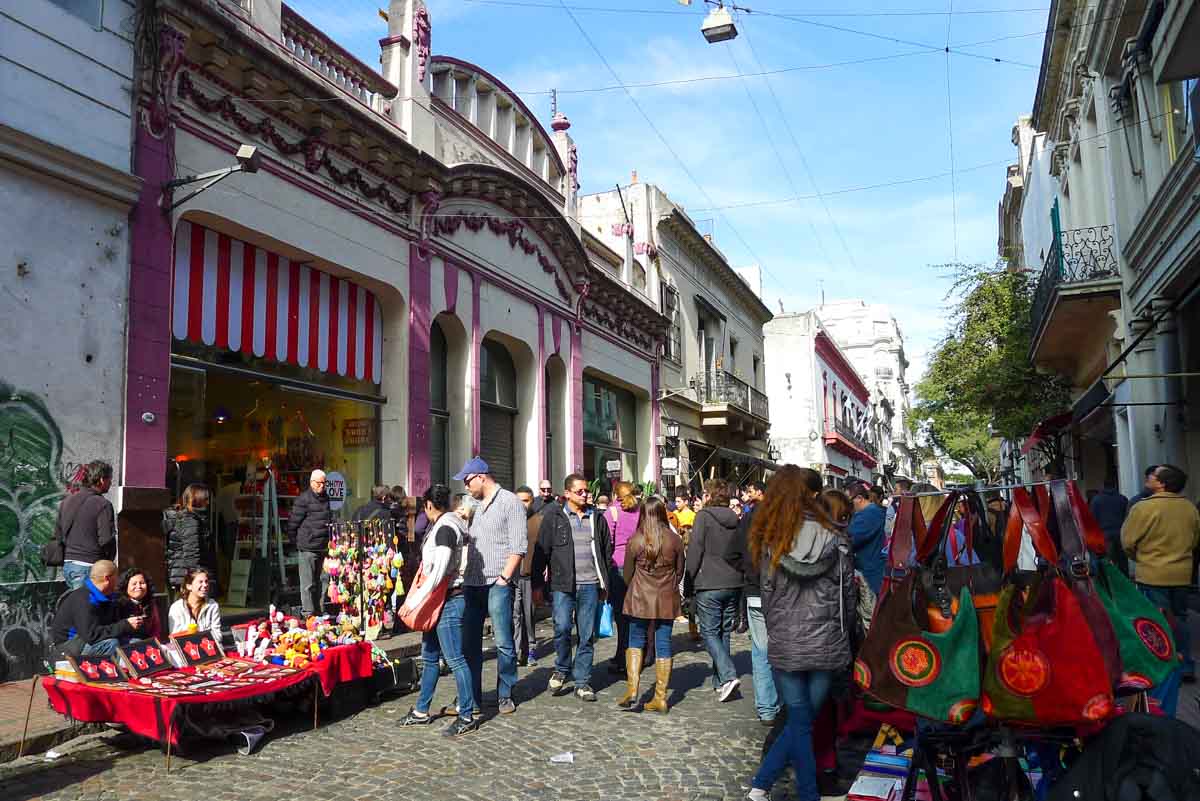
If you can, I recommend visiting on a Sunday so you can wander through the famous Feria de San Telmo. The fair originally centered around Plaza Dorrego, where you’ll find stalls selling all kinds of antiques. However, it has long extended far beyond that, with Calle Defensa packed with street performers and vendors from Plaza de Mayo all the way down to Parque Lezama. If you’re looking for souvenirs, you’ll find leather goods, artwork, jewelry, mate gourds, and lots of other local crafts.
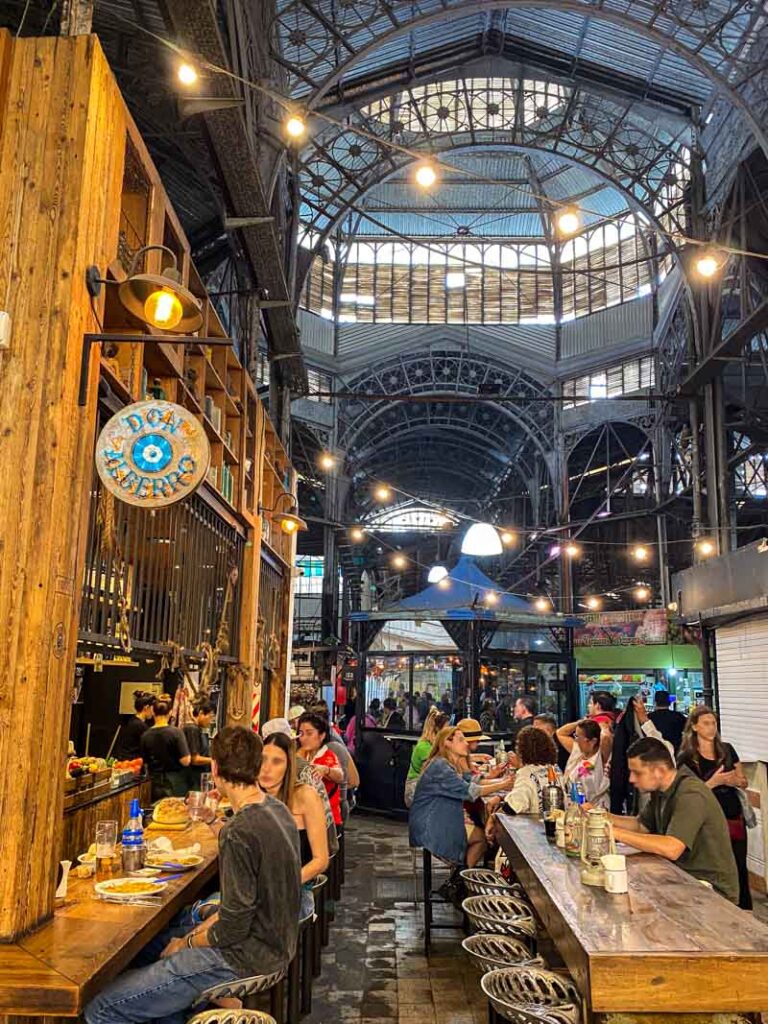
I would plan to have lunch nearby and then wander through the fair, as some of the stalls don’t set up until the afternoon. For tons of food options in a compact (and very photogenic!) space, head to the Mercado de San Telmo. This place has been totally transformed over the last ten years – while it used to be relatively quiet (I mostly remember some antique stalls, fruit vendors, and a coffee stand), it’s now a buzzing food hall giving total Time Out Market vibes. It’s absolutely packed on the weekends but pretty manageable on other days.
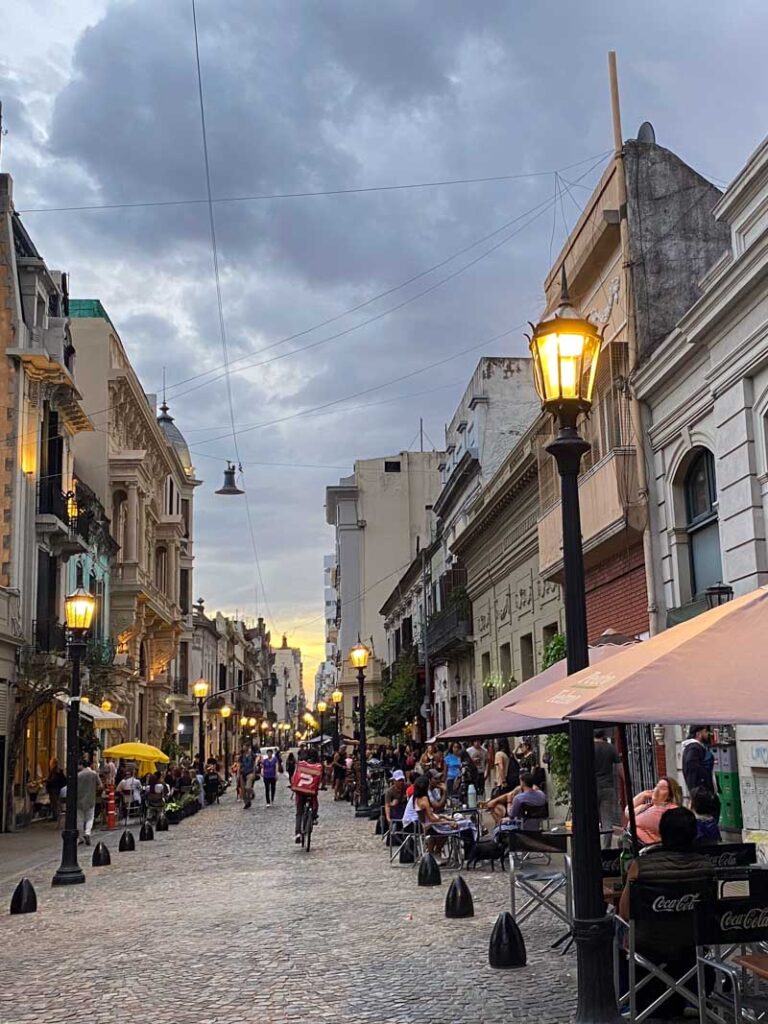
If those kinds of crowds make you claustrophobic, stop at either Bar Británico or El Hipopótamo on the northwest corner of Parque Lezama instead. (Coming from La Boca or Calle Lanín, you’ll pass through here first before really getting into the thick of the fair.)
These are just two of the dozens of cafés and bars designated as bares notables by the Buenos Aires city government for their historical and cultural significance. You’ll find all of the classic Argentinian bar fare here – milanesas, lomo, tortillas, pasta, etc.
On Sunday evenings, once the market stalls have been taken down, Plaza Dorrego fills with outdoor tables and local tango dancers. (A free tango show on a late summer evening in this square, a glass of white wine in hand, is one of my favorite Buenos Aires memories of all time.)
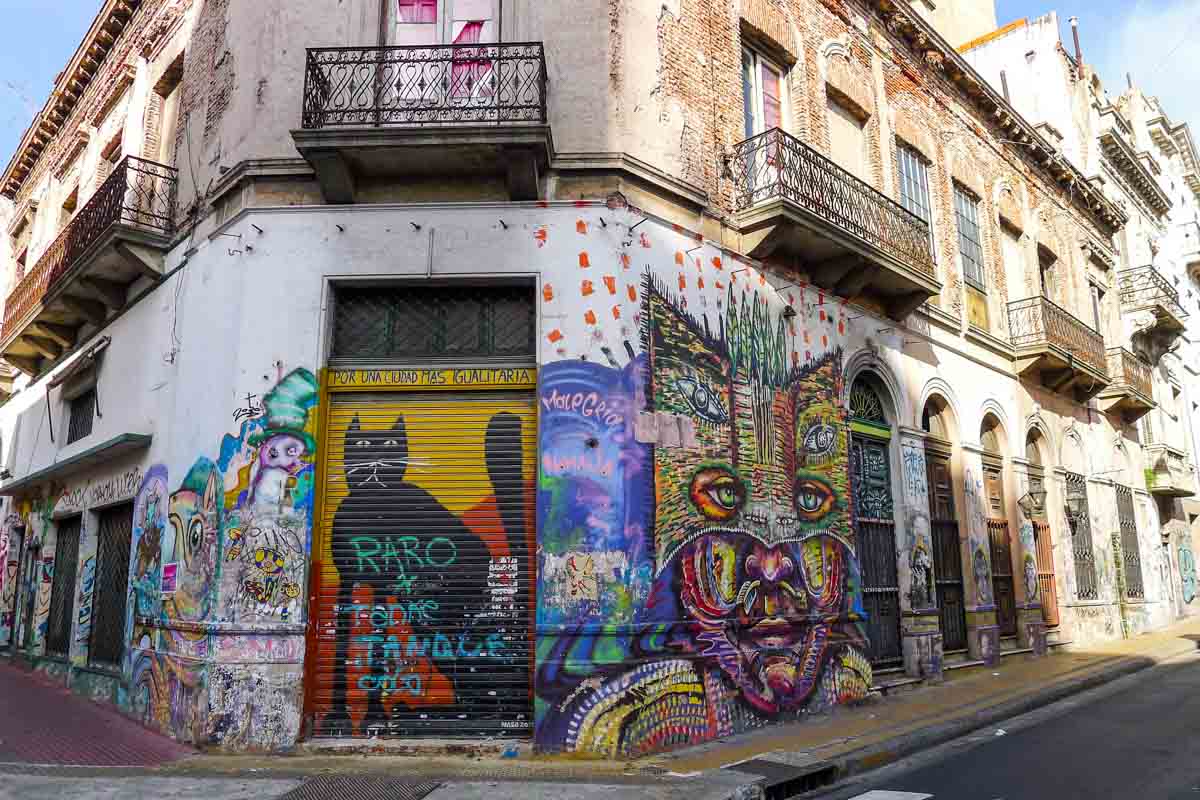
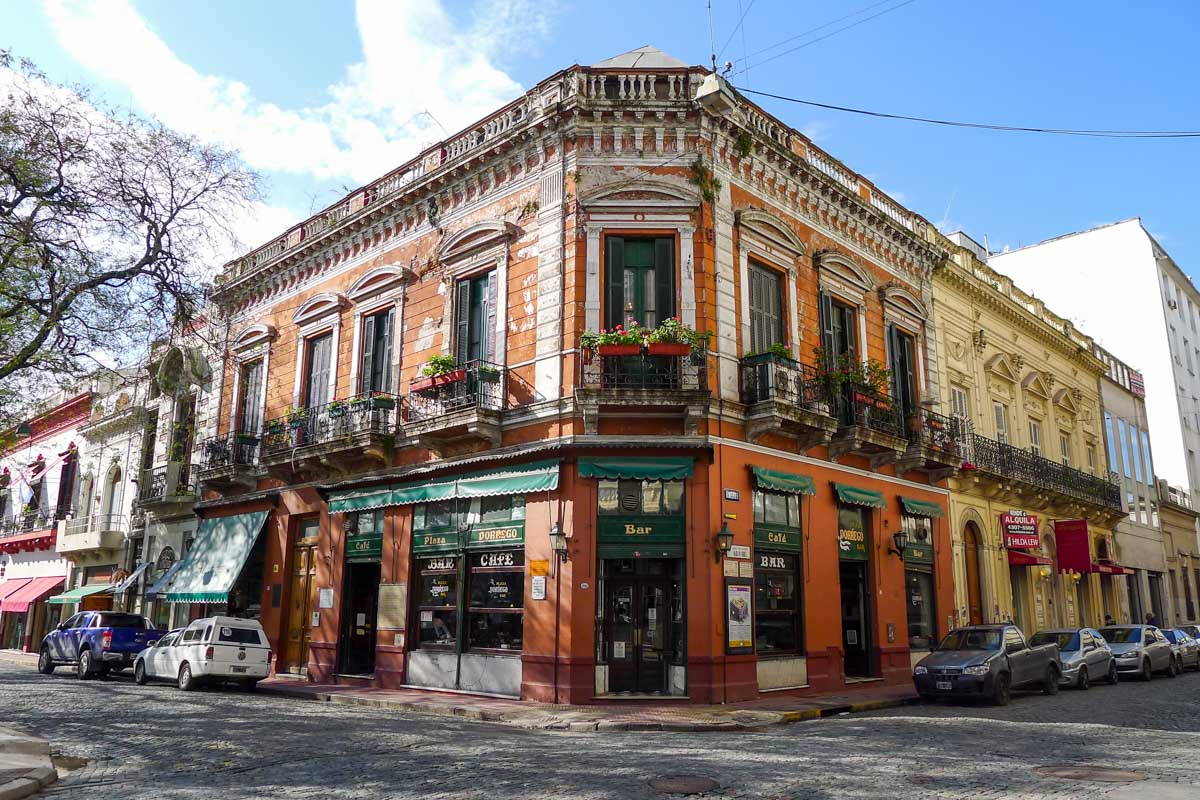
Whether you come on a Sunday or not, San Telmo has a lot of charming cobblestone streets to explore. There is a lot of great street art and beautiful (in a crumbling sort of way) architecture to admire.
The neighborhood is also home to three excellent history museums. Check out the Museo Histórico Nacional (free, located in Parque Lezama), El Zanjón de Granados (guided tours through a network of underground tunnels dating back hundreds of years, a little on the pricier side), and the Manzana de las Luces (free to wander, but you’ll learn way more from the excellent free tours offered in Spanish).
How to get to San Telmo
The easiest way to reach San Telmo from Calle Lanín is just to call a ride with DiDi, Cabify, or Uber. It will be a 10-minute drive to Plaza Dorrego.
If you’d rather walk from Calle Lanín, you’ll just need to cross under the large highway you’ll see one block east of the southern end of the street. Walk to Avenida Montes de Oca and head north until you reach Avenida Martín García branching off to the northeast. This will take you to Parque Lezama, where you can walk north on Calle Defensa to Plaza Dorrego. Keep in mind this will be a good 40-minute walk, and you won’t have even started to explore San Telmo yet!
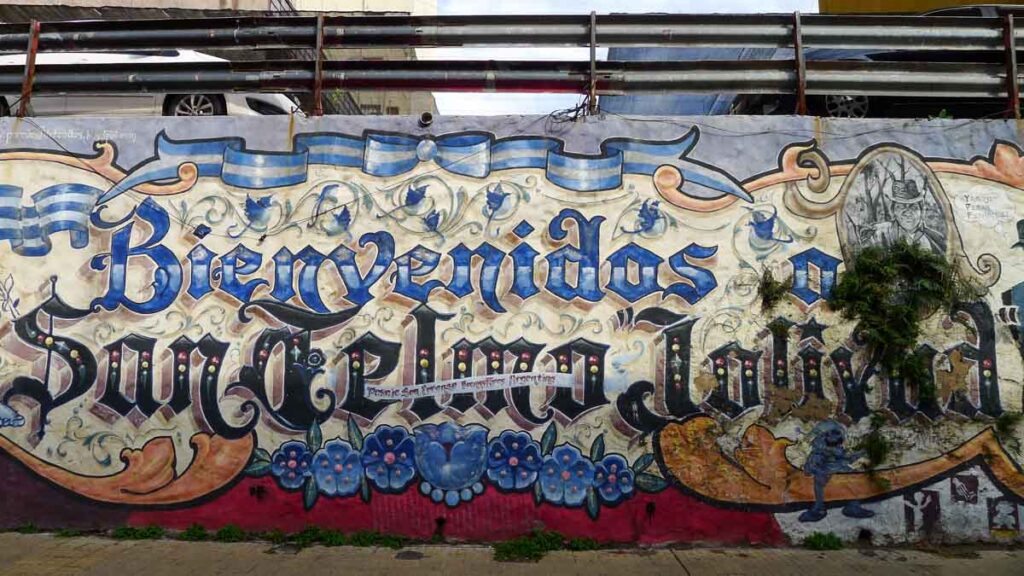
If you’ve skipped Calle Lanín and are coming from La Boca, you can hop on one of the many buses heading north from the bus stop right next to the Caminito. You can get off on Avenida Paseo Colón a few blocks east of Plaza Dorrego or further north at Plaza de Mayo if you’d prefer to walk south instead.
Evening: Attend a tango show
Many of the best tango shows in Buenos Aires are located in San Telmo, so it makes sense to catch one while you’re already in the area.
…If you’re up for hanging around for dinner and a show around 10 p.m., that is. You’ve already done a lot of sightseeing today, so feel free to shuffle the evening activities around and/or head back to your accommodation for a nap if needed! It’s also worth noting that many of the popular tango shows include hotel pickup and an optional dinner add-on.
But if you’re not too tired, San Telmo has tons of lovely places to while away a few hours.
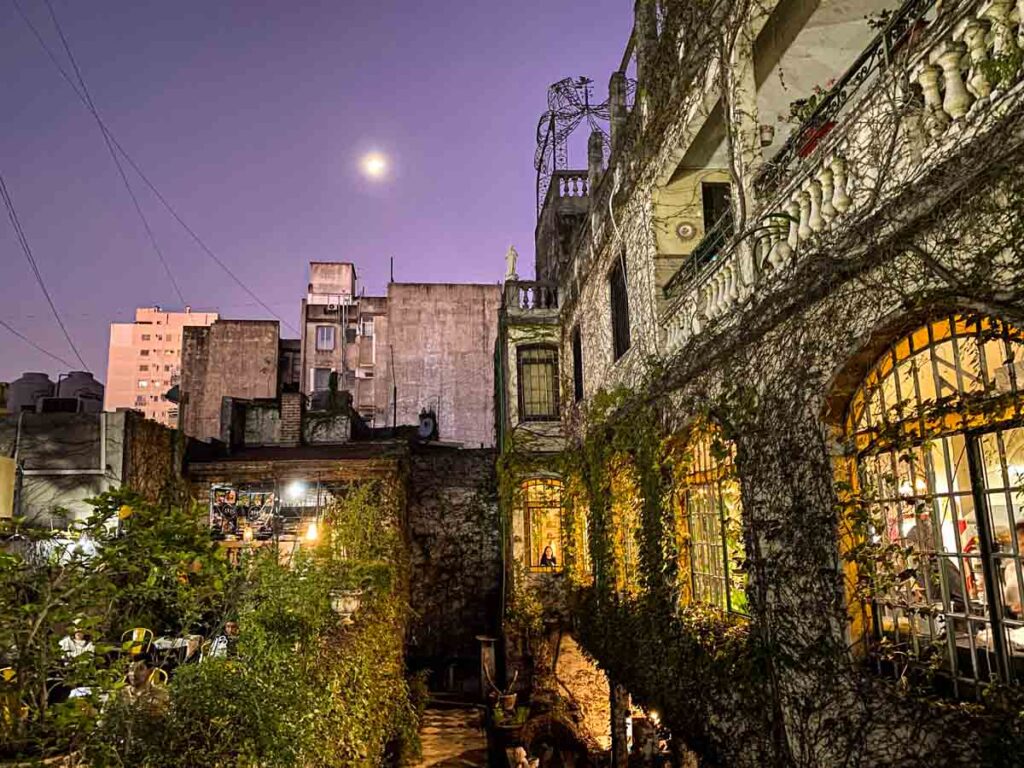
Atis Bar at Perú and Carlos Calvo is a beautifully decorated former convent with plenty of seating on its ivy-covered terrace. I can’t comment on the dinner options, but I had a super sweet piece of cake here (fine by me – Argentina is really disastrous for my sugar addiction) as well as a café con leche that was just about potable. The prices were a little high, but honestly not as high as I expected for such an Instagram-famous spot. The service was actually really friendly and the setting just lovely.
If you want a proper coffee, I recommend the lovely Ifigenia around the corner or Modular Café on the next block.
For a typical café cortado and medialuna instead, head just across the street to Bar El Federal, another of San Telmo’s bares notables. Alternatively, wander back to the restaurants on Bolívar next to the market and try to snag an outdoor table.
Day 3: History, culture, and architecture
We’ll start your third day in Buenos Aires with some important history and unique architecture. Later, we’ll head to Recoleta for its famous cemetery and some other nearby sights of interest.
Morning and early afternoon: Microcentro and Avenida de Mayo
First, head to the famous Obelisco in the Plaza de la República. You’ll find yourself standing right in the middle of Avenida 9 de Julio, the widest street in the world.
Microcentro (Downtown Buenos Aires)
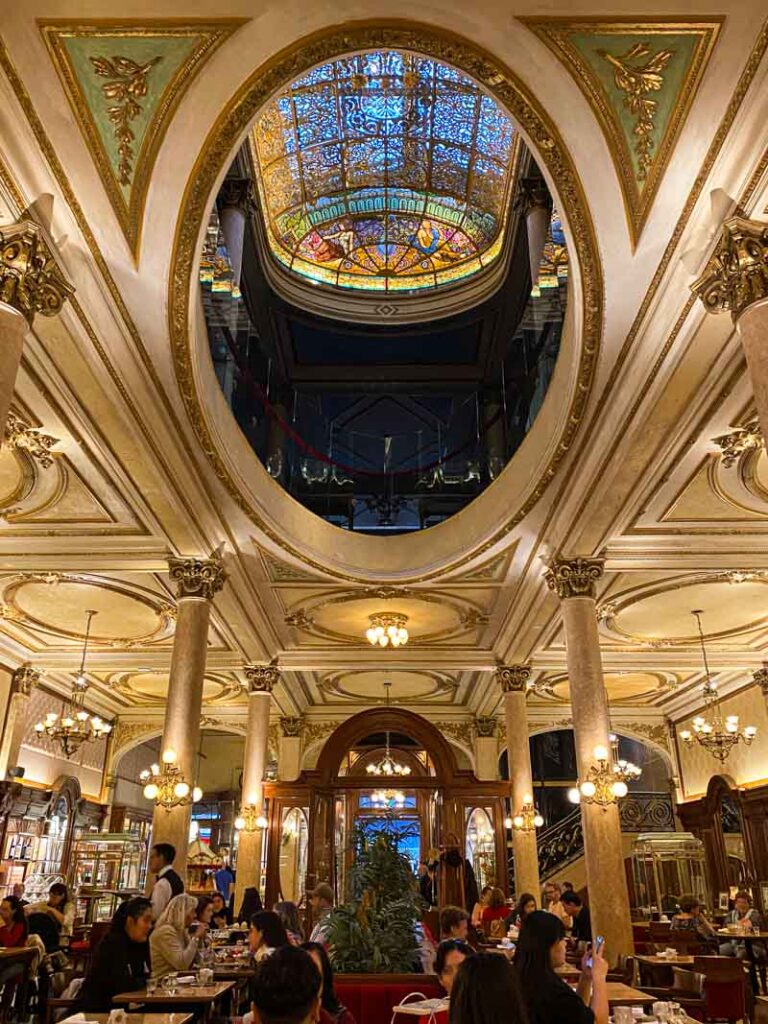
Once you’ve grabbed a few photos in front of the landscaped “BA” sign, head one block east along Avenida Corrientes to Confitería La Ideal. This is another historic establishment (dating to 1912) designated as a bar/café notable by the city, and it’s simply one of the prettiest cafés I’ve ever been to! (It’s quite expensive though, and I can’t say the cakes or coffee blew me away – I’m really recommending this for people like me who are willing to cough up a bit of plata occasionally to feel fancy and admire a pretty ceiling.)
From there, you’re about 10 minutes on foot from Galería Güemes, a beautiful Art Nouveau passageway between Calle Florida and Avenida San Martín. Inside, you can take one of the elevators on the south side to the 14th floor, then climb a spiral staircase to Mirador Güemes, a platform with 360-degree views of downtown Buenos Aires. With tickets costing about $5, this is a much more affordable skyline view than you’ll find at any of the popular rooftop bars dotted around the area. Supposedly you can see all the way across the river to Uruguay on a clear day!
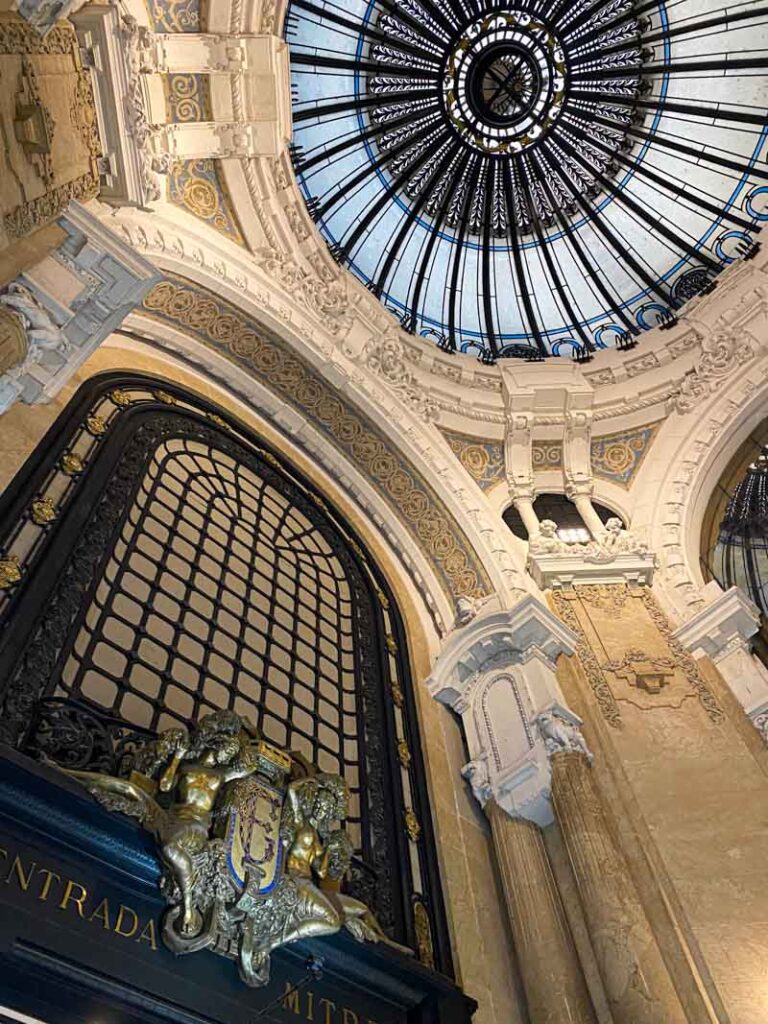
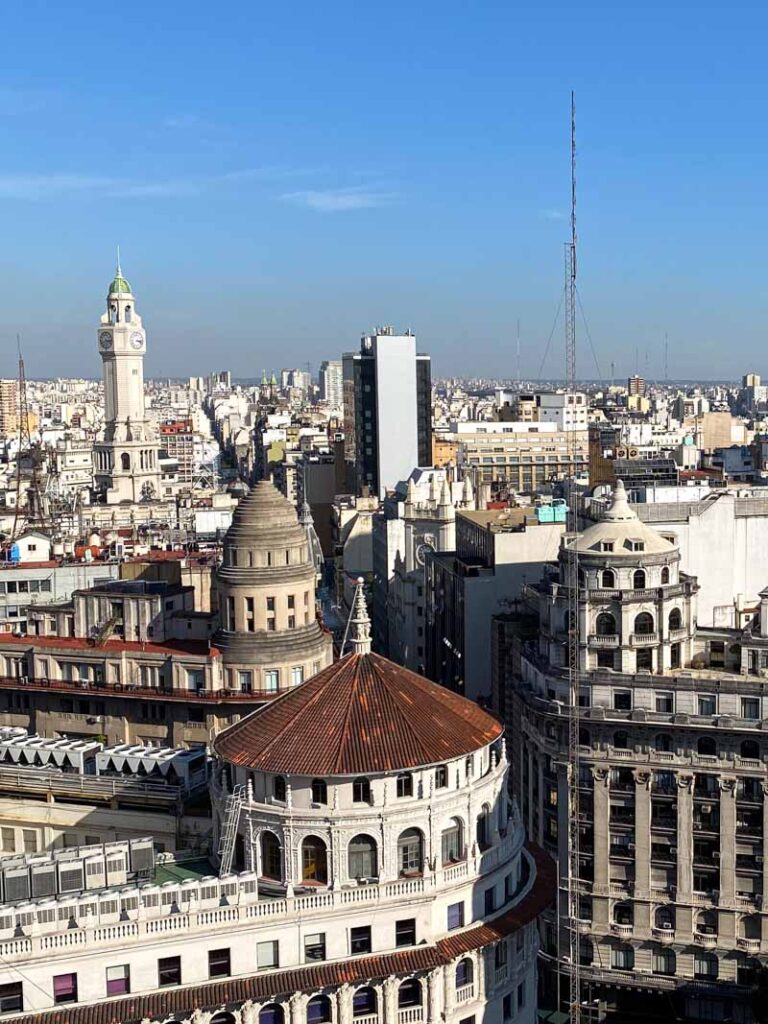
If you exit to the east and walk about a block and a half south along Avenida San Martín, you’ll end up right outside the Catedral Metropolitana, the most famous church in the city. (I don’t think it’s even in the top five most beautiful, but it’s important nonetheless!) Inside, you’ll find the tomb of General San Martín (a national hero celebrated for his role in the wars of independence in Argentina, Chile, and Peru) as well as a museum dedicated to the late Argentine Pope Francis.
Plaza de Mayo
You’re now just across the street from the Plaza de Mayo. This is arguably the most historically and culturally significant square in the country. It is home to the Casa Rosada, the seat of Argentina’s national government and the location of its presidential offices. Some of Argentina’s most important historical events have taken place here, and it has long been a site of mass demonstrations and protests.
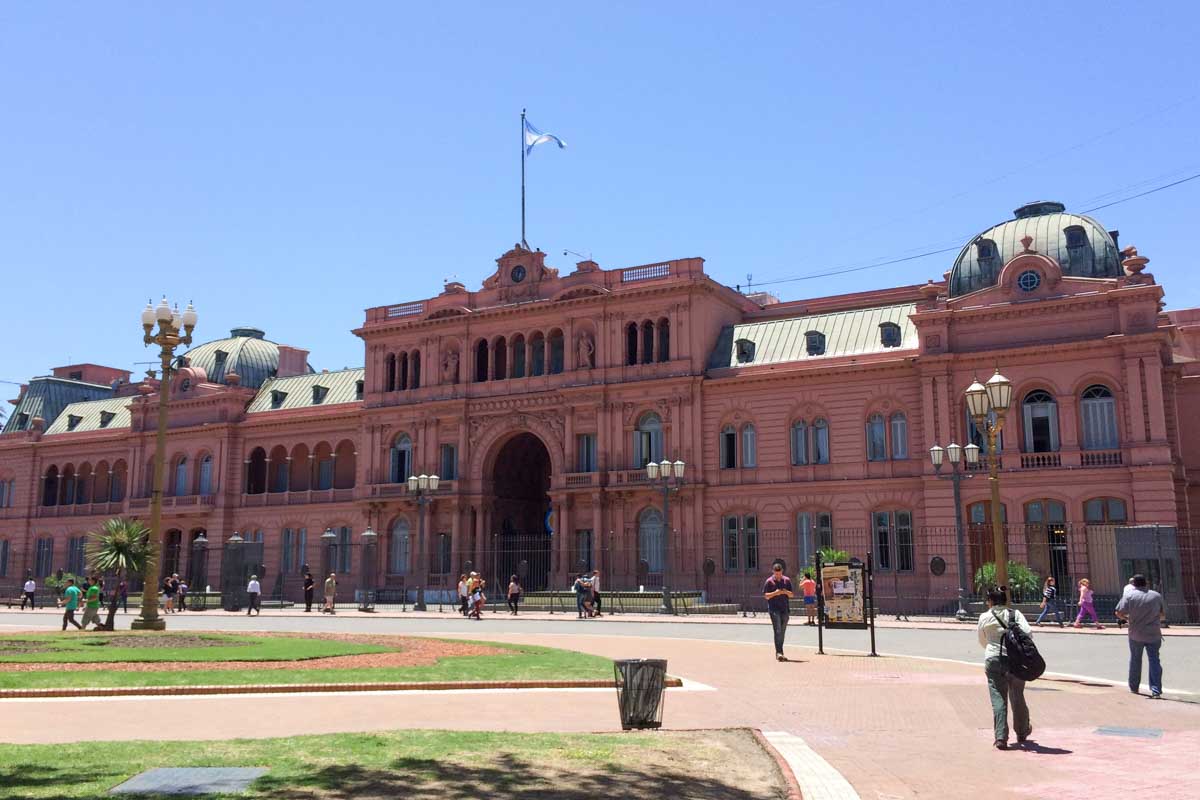
Just behind the Casa Rosada is the Museo del Bicentenario, a small museum tracing the history of Argentina and its presidents. Among other artifacts, its exhibits include artwork, furniture, clothing, and a 1950s presidential Cadillac.
The white building opposite the plaza to the west is the Cabildo, the seat of the Spanish colonial administration as well as early independence governments in the years post-revolution. There is a museum here with small exhibits on the colonial era. The second level has a nice view over the square.
If it’s a weekday, you can walk a couple blocks north on Reconquista to the Convento de San Ramón. The quiet, shady interior courtyard here is a lovely place for lunch or just some coffee and a snack – it’s popular with office workers and quite affordable. Next door, pop into the beautiful Basílica Nuestra Señora de la Merced. (You could still come check out the convent on a weekend, but the church and the dining patio will both be closed.)
Avenida de Mayo
From there, we’ll walk back to the plaza and head due west along the famed Avenida de Mayo. Your eventual destination is Palacio Barolo, about 25 minutes away. You can take the Subte instead of walking, but you’ll miss some really elegant and classic Buenos Aires architecture along this short stretch.
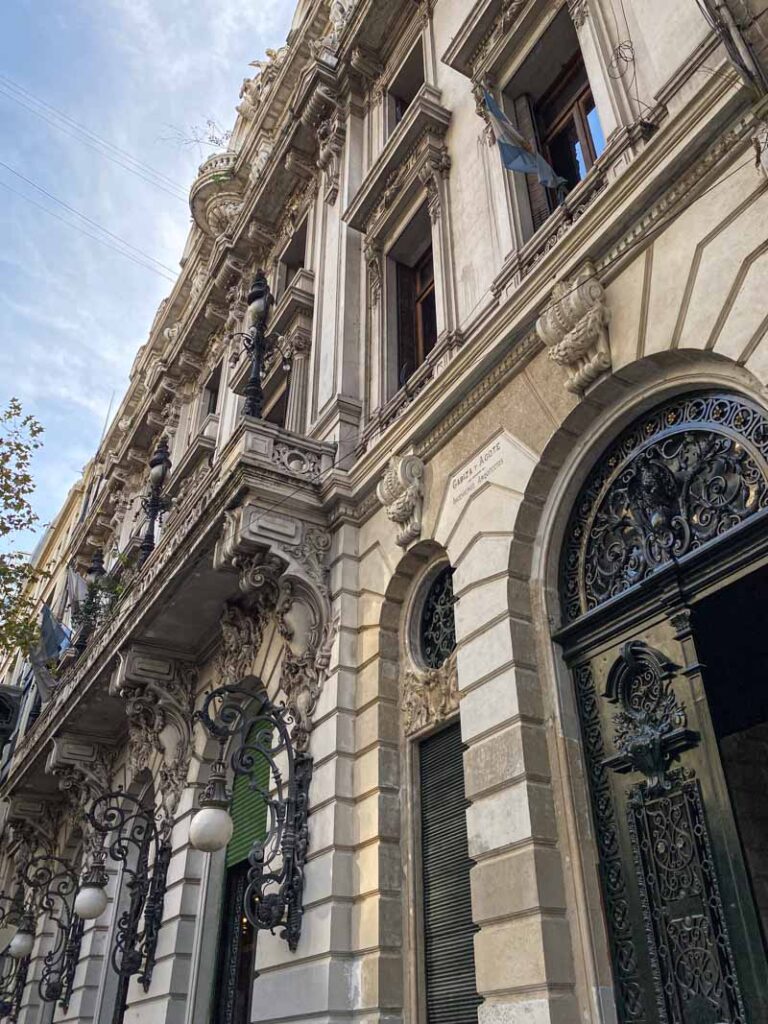
Almost immediately on your right you’ll see the impressive Beaux-Arts facade of Edificio La Prensa (now the Casa de la Cultura), which has a fraught history but now functions as a cultural space hosting performances, art exhibitions, and other events.
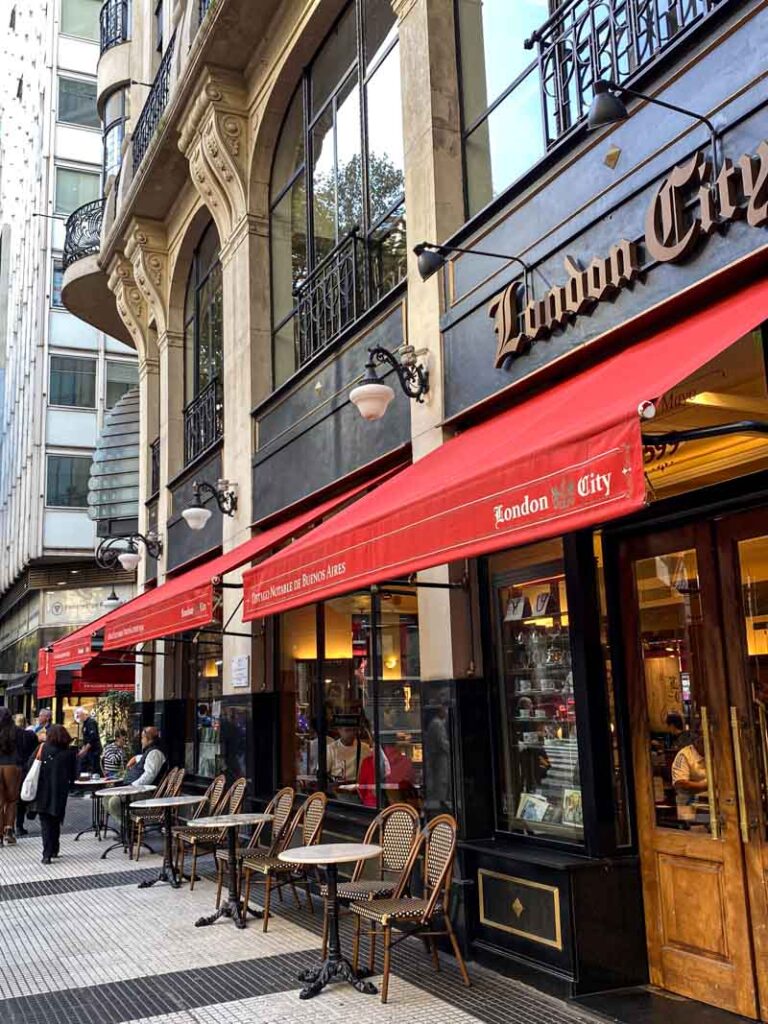
Next door is the bar notable London City. Despite the name, this one really does look like it was plucked right off the streets of good old Paris.
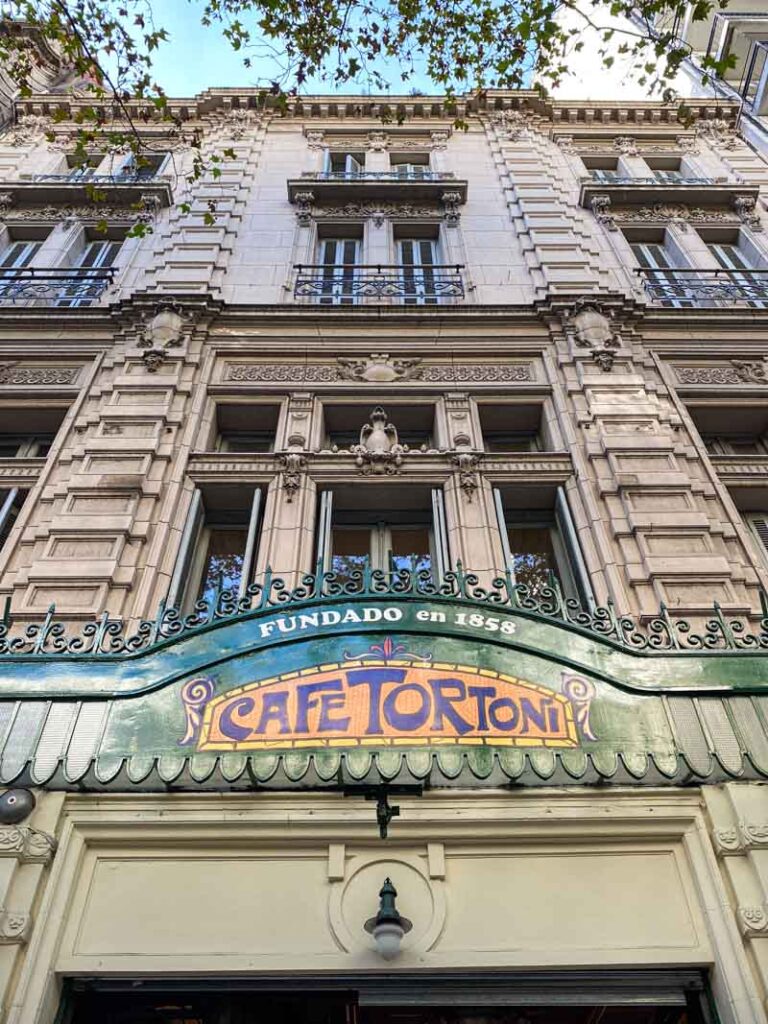
A few blocks later you’ll pass Café Tortoni, the oldest café/bar notable in the city. I went to my very first tango show in the basement of Café Tortoni many years ago! It’s like a time capsule inside, and it’s quite cool thinking about how many famous musicians, writers, politicians, and other notable people have sat in that very room. Again, this is one of those places where you’re paying a bit more for the experience, but I say the experience is definitely worth some slightly overpriced hot chocolate and churros!
There are lots of other beautiful buildings along the avenue – you’ll often find their names and a bit of information etched into plaques on the sidewalk.
Cross back over 9 de Julio and make your way to Palacio Barolo. This is one of the most architecturally interesting buildings in Buenos Aires (it was inspired by Dante’s Divine Comedy), and it also offers one of the best views in the entire city.
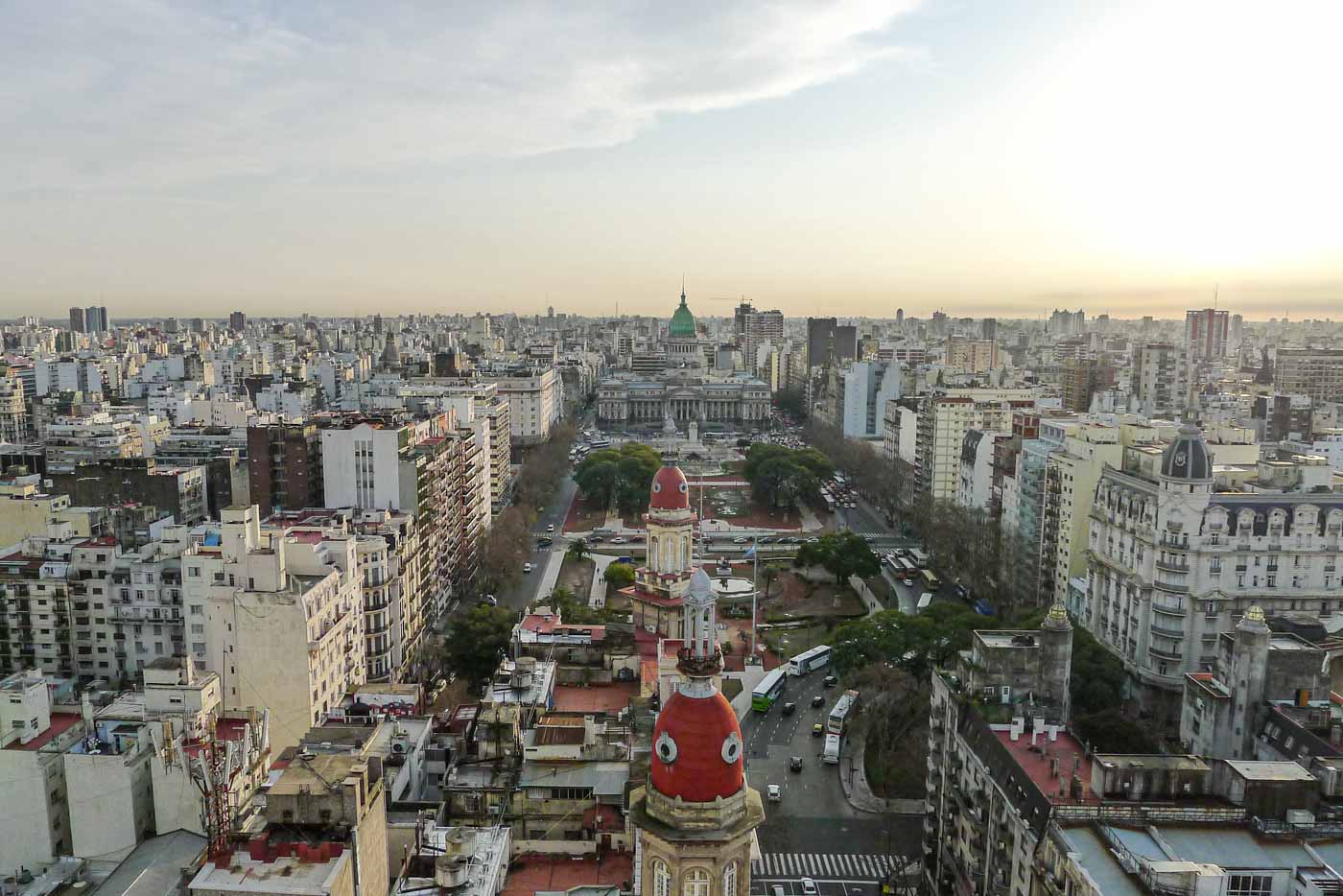
If you like architecture, I’d say the guided tours of the building are well worth the price. (If it’s just the view you’re after, though, I’m not sure you need to do this in addition to Mirador Güemes. BA is so expensive at the moment!) Palacio Barolo also has a rooftop restaurant if you’d rather come back later.
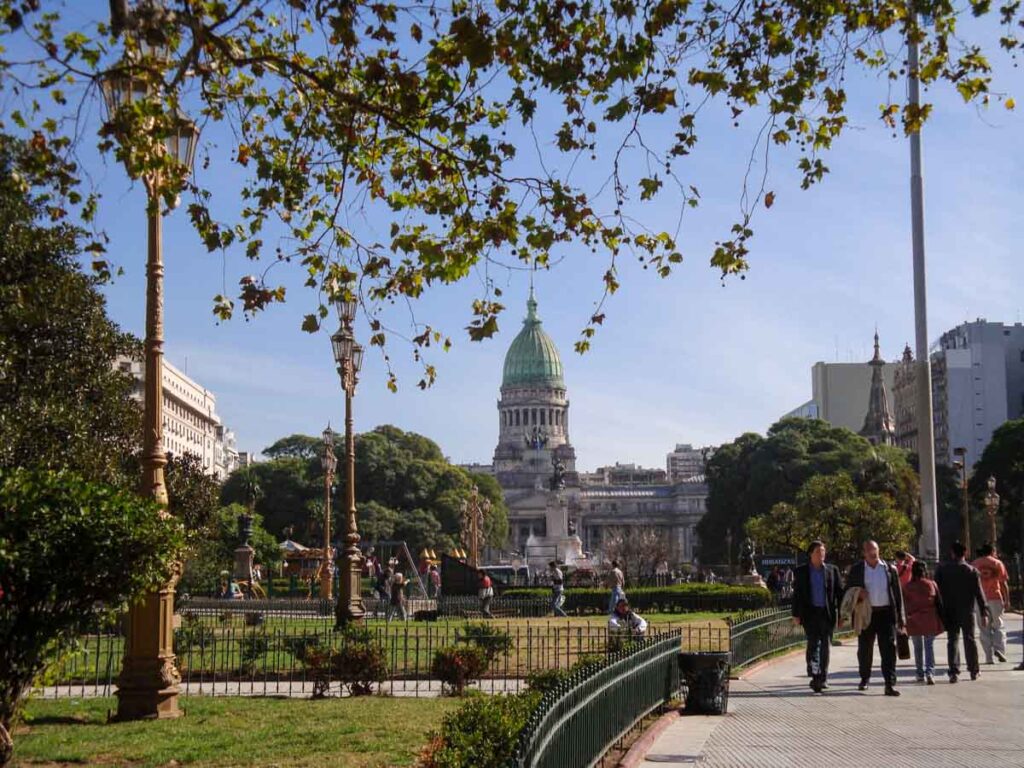
Continuing west on Avenida de Mayo, you’ll run right into the Plaza del Congreso. Free tours of Argentina’s National Congress are offered several times per week.
How to get to the Obelisco
Your morning walk starts right smack in the middle Avenida 9 de Julio, which is served by literally dozens of bus lines. You can also catch the Subte to the 9 de Julio stop on line D.
If you want to rearrange things a bit (you might not want a decadent cake first thing in the morning, I get that) and start in Plaza de Mayo instead, the Casa Rosada is pretty straightforward to reach from almost anywhere in Buenos Aires. Catch the Subte to Catedral on line D, Perú or Plaza de Mayo on line B, or Bolívar on line E. If you’re staying in Microcentro or San Telmo, you can take a bus, but it will probably take you less time to just walk.
Mid-afternoon: Recoleta cemetery and around
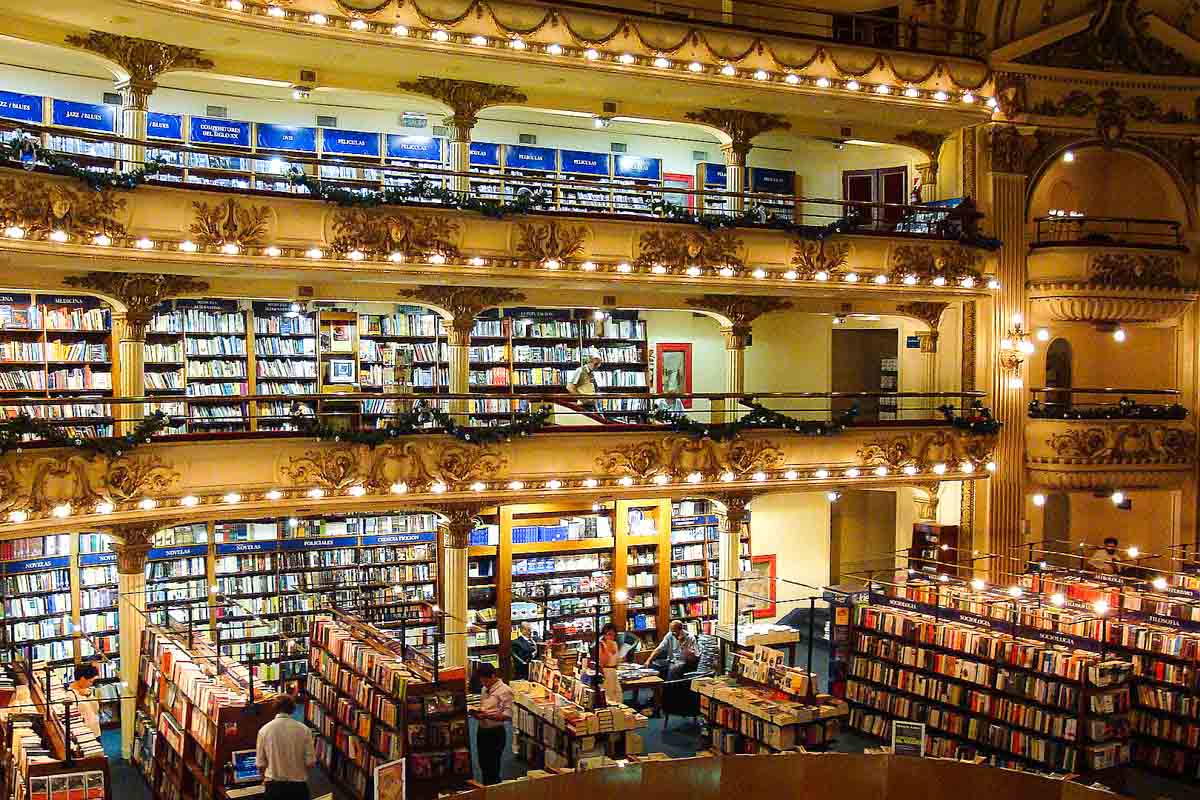
From the National Congress, you can walk or take the bus along Avenida Callao until you reach Avenida Santa Fe, where you’ll find El Ateneo Grand Splendid. This bookstore, housed in a former theater, has landed on many a list of the most beautiful bookstores in the world.
We’re now in Recoleta, one of the wealthiest neighborhoods in Buenos Aires. Parts of it are admittedly a little stuffy, but there are still a lot of nice places around here to grab some food or yet another coffee before you continue exploring.
Now on to the most important sight in the neighborhood: the Recoleta Cemetery, the resting place of Eva Perón and many other important historical figures in Argentina. It’s often recognized as one of the world’s most beautiful and impressive cemeteries.
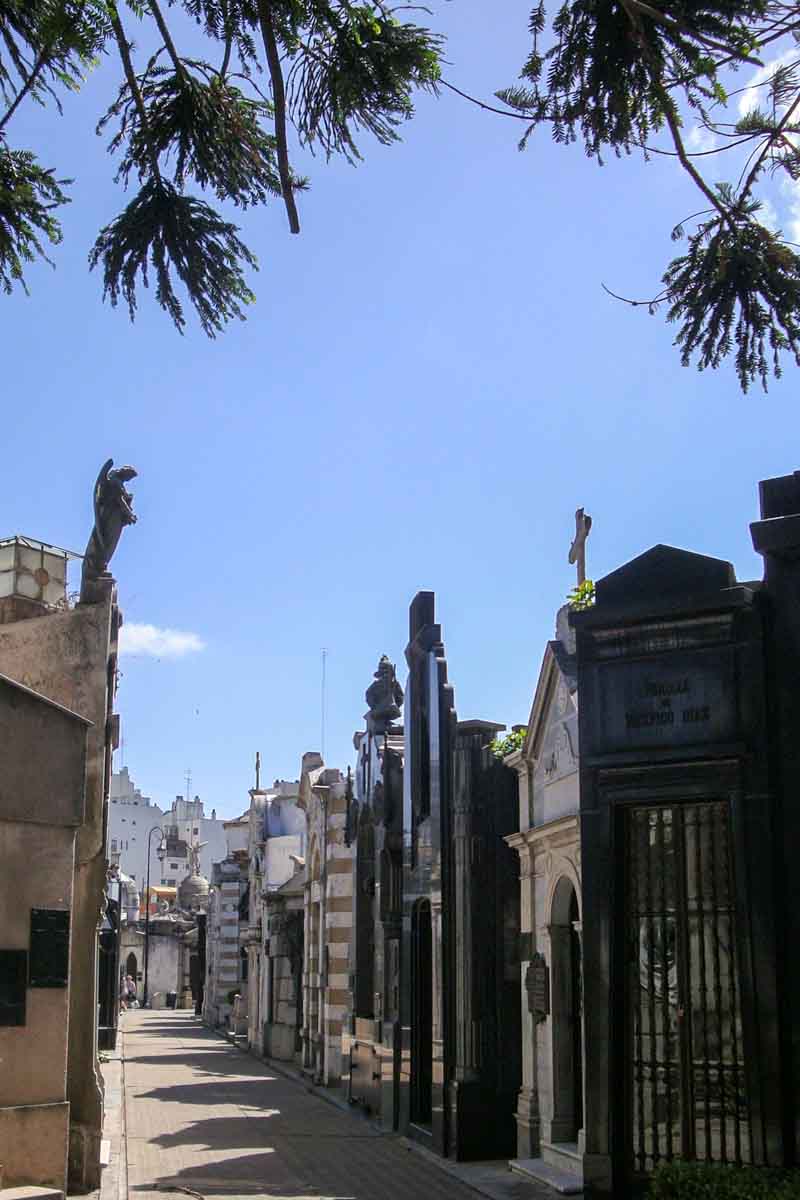
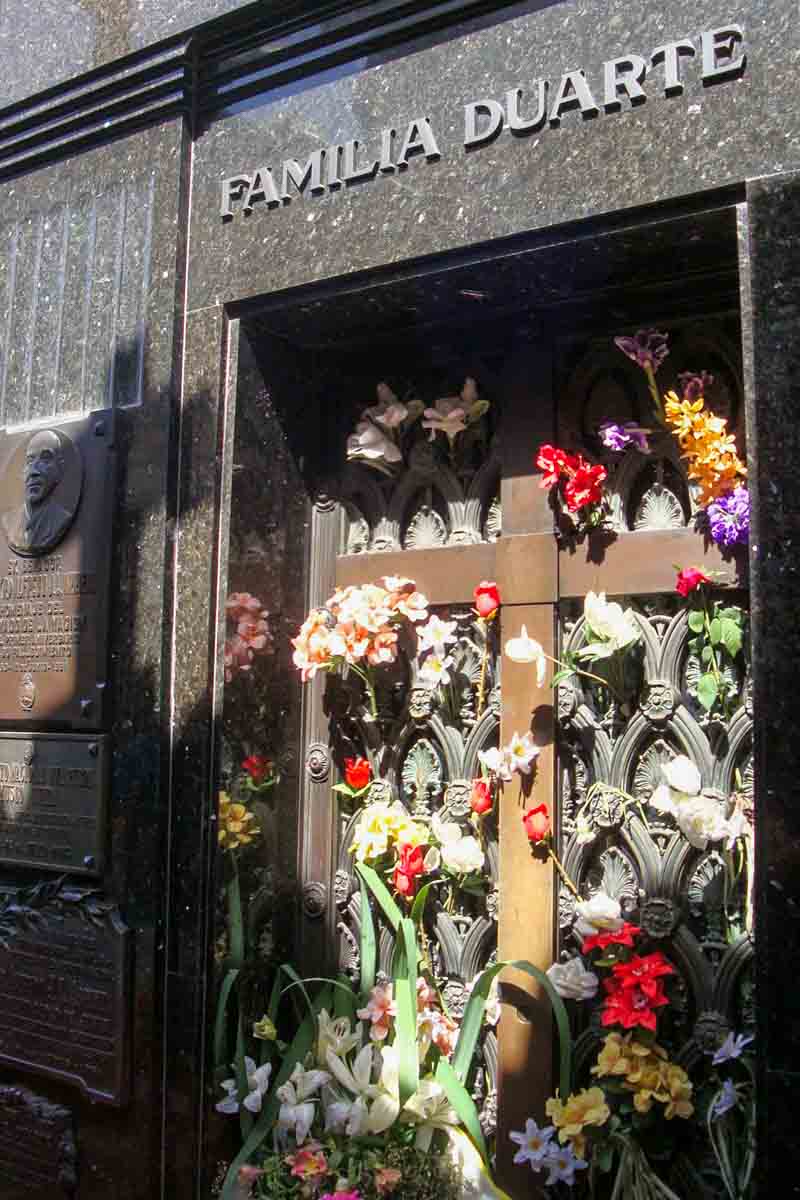
While you can definitely pop in, visit Evita’s tomb, and admire some of the other impressive mausoleums, you’ll get the most out of your visit with a guided tour. A lot of notable people are buried here, and a knowledgeable local guide can share stories and historical details you’ll miss if you just grab a map and wander around on your own.
Other attractions near the cemetery
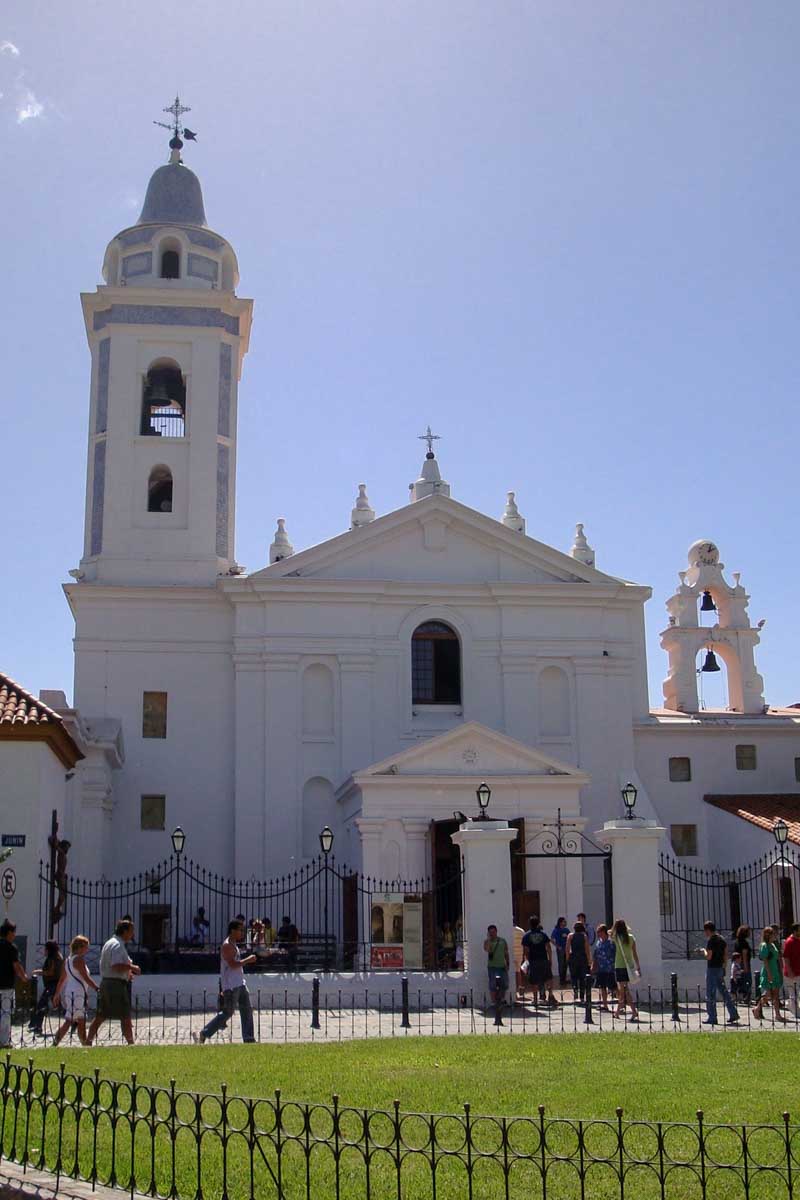
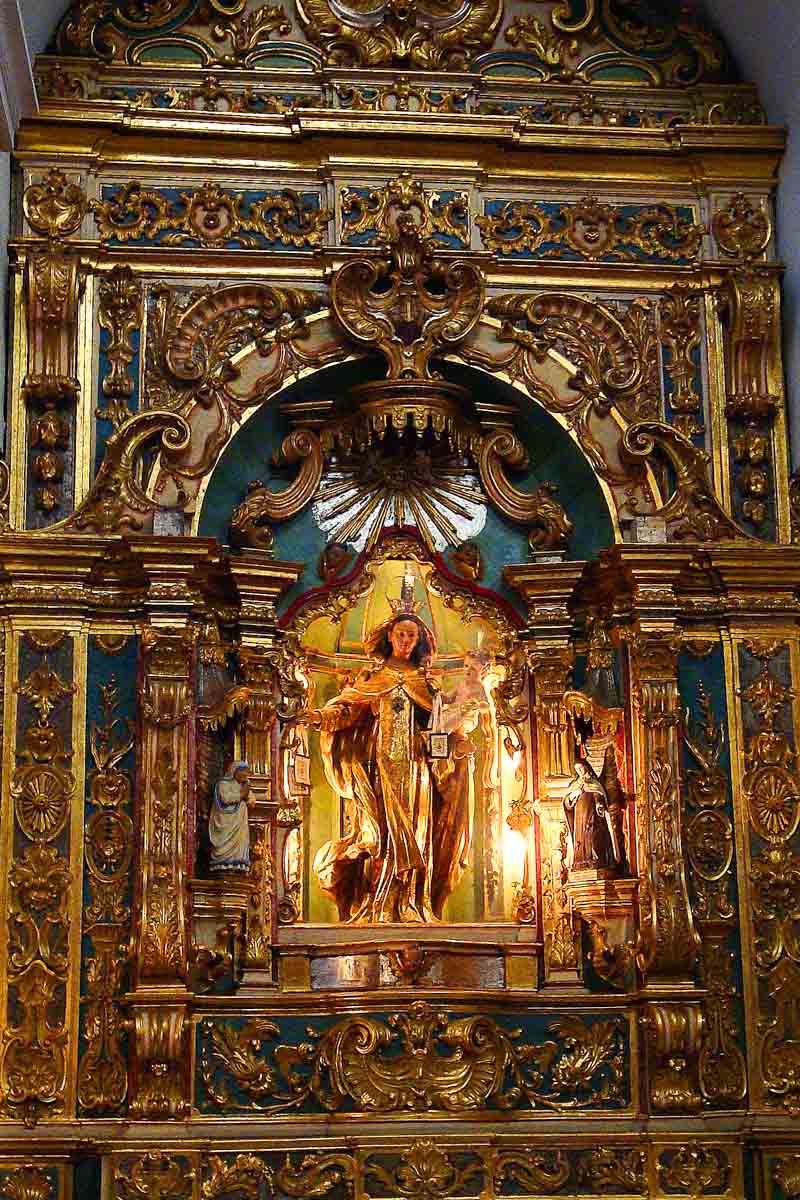
Just next to the cemetery is the Basílica Nuestra Señora del Pilar, a colonial-era church with a beautiful and intricately designed interior.
And next door to that is the Centro Cultural Recoleta, a cultural center with varying exhibits on art, science, and history.
If you’re here on a weekend, you’ll also find a lovely artists’ market in the nearby green space. I’ve found a lot of nice, affordable accessories and handicrafts for myself and friends here over the years.
Do you have any energy left for sightseeing? If so, don’t miss the Museo Nacional de Bellas Artes. It’s a wonderful fine arts museum, with a great collection of Argentinian and European artwork, and it’s just across the street. It’s also air conditioned, open until 7:30 p.m., and free! (But note that it’s closed on Mondays.)
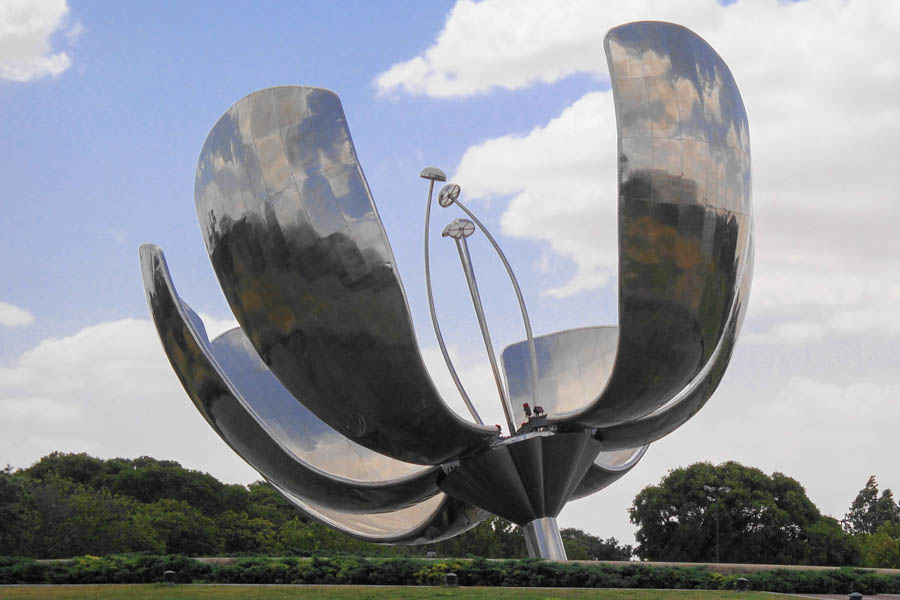
Before or after your visit, cross Avenida Figueroa Alcorta to see the Floralis Genérica, a stunning sculpture in a small, quiet park. (It’s less than 10 minutes on foot from the museum.)
How to get to Recoleta
If you’re following this itinerary to the letter, you’ll have arrived in Recoleta on foot. However, you can also reach Recoleta very easily using public transportation if that works better for your schedule and/or feet.
The closest Subte stop to El Ateneo is Callao on the green line. It is only a few blocks away. To go directly to the Recoleta Cemetery, the closest stop is Las Heras on the yellow line. There are also countless buses that will take you to either place.
Evening: An opera, ballet, or philharmonic performance at Teatro Colón
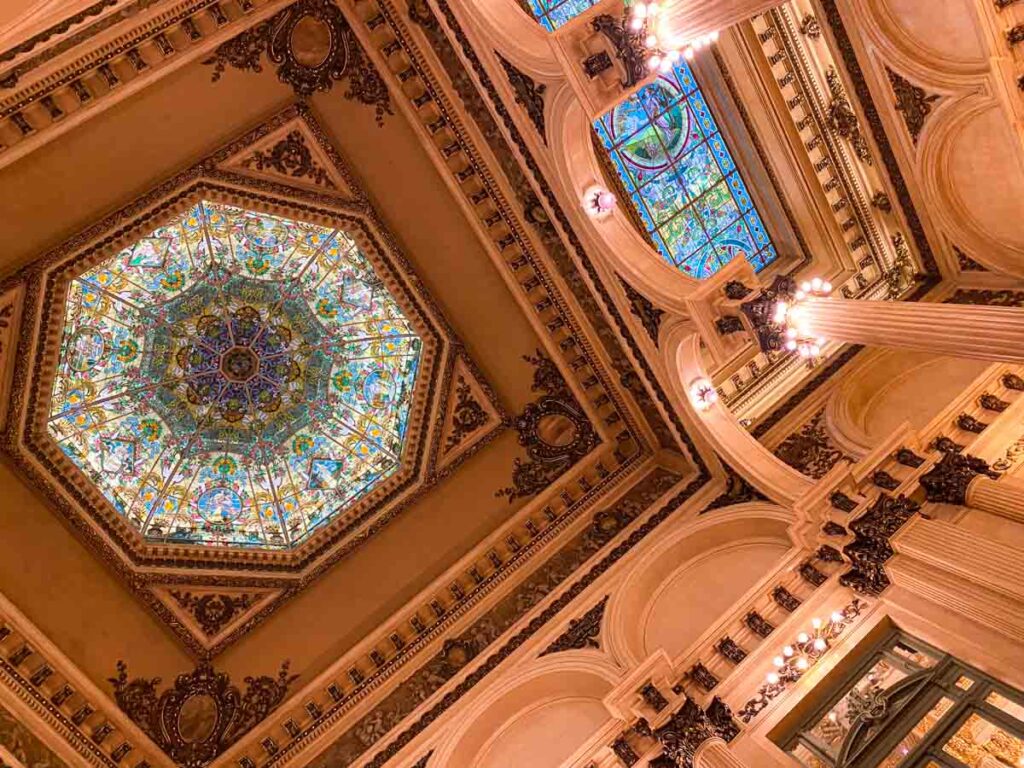
Owing to both its fantastic acoustics and beautiful architecture, Teatro Colón is one of the most famous opera houses in the world. If you have the budget and interest, catching a performance here is a top Buenos Aires experience. (And if a show is not in the cards, there are also guided tours of the theater during the day. You could come here after or instead of visiting Palacio Barolo in the afternoon.)

Tickets for the ballet or the opera can of course be pricey, but there are very inexpensive spots (we’re talking $10) at the very upper level if you’re willing to stand.
You also might get lucky with a more affordable performance on the schedule! On my most recent trip, I went to a benefit concert that was absolutely amazing, and my ticket was only $14.
Tip #1 for attending a performance at Teatro Colón:
If you’re reserving the more affordable seats in the upper balconies (e.g. Tertulia or Galería level), I recommend booking the back row of whatever section you’ve selected. It’s counterintuitive, but these actually have the least obstructed view of the stage. I was so pleased with myself for having secured a seat in the front row of one of the center galleries, but it was actually impossible to see anything from there without perching myself on the edge of my seat and leaning forward into the balcony wall for the entire performance.
Tip #2:
The entrance for the cheap seats is actually on the side of the building on Tucumán rather than at the main doors on Libertad. I recommend pretending you don’t know this, though – that way you can check out the beautiful foyer of the theater before they turn you around and send you back to the peasants’ entrance.
How to get to Teatro Colón
The Tribunales stop on the green line of the Subte will take you right to the theater. You also have tons of bus stops on 9 de Julio, which is only a few minutes on foot.
Day 4: day trip to Tigre and evening in Puerto Madero
For your last morning/afternoon in Buenos Aires, I recommend taking a day trip to Tigre. This is a popular weekend getaway for porteños (Buenos Aires locals), and it’s a nice, relaxing way to spend a few hours if you’re burned out from sightseeing. (I would be.)
When you get back, you’ll still have half a day to hit a few more Buenos Aires highlights.
Morning and afternoon: Tigre
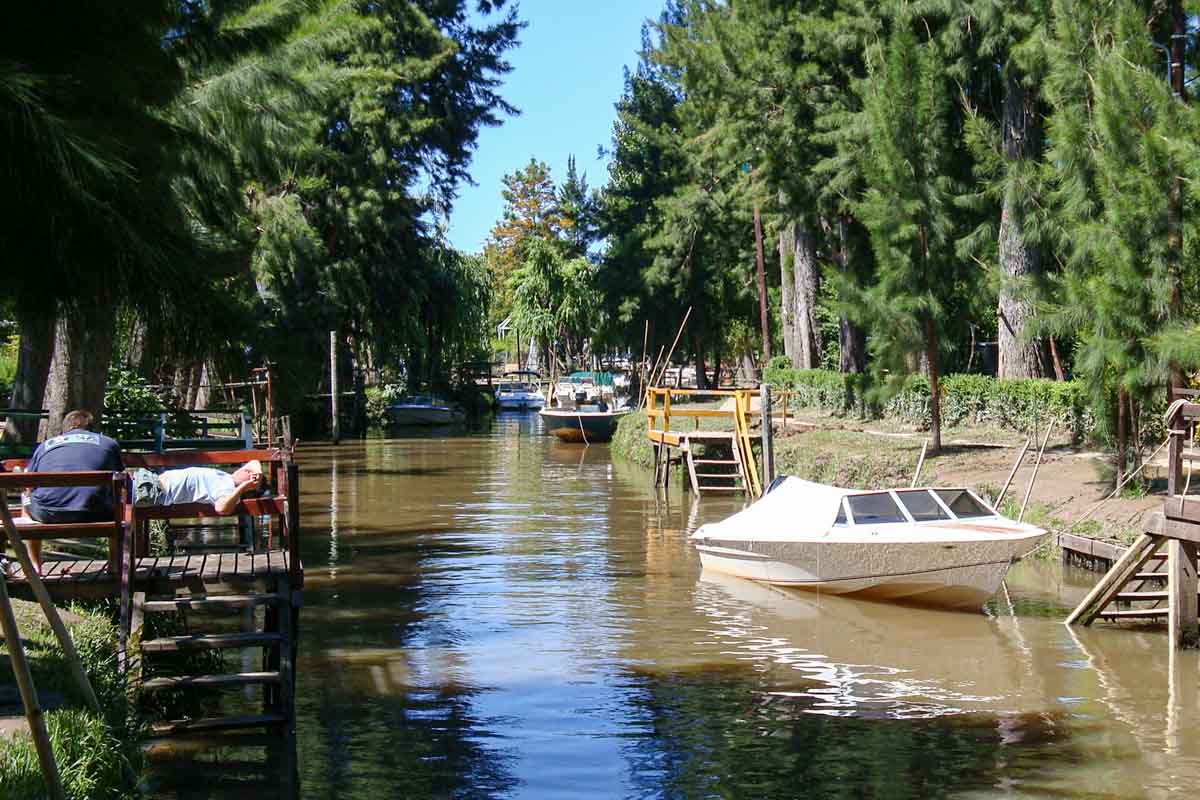
Tigre is a chill, fun trip and an interesting window into local life. You can take one of the public river boats through the delta and stop for lunch overlooking the water.
I like just walking around and admiring the quaint little weekend homes lining smaller canals. There are also a few museums, a market, and an amusement park nearby.
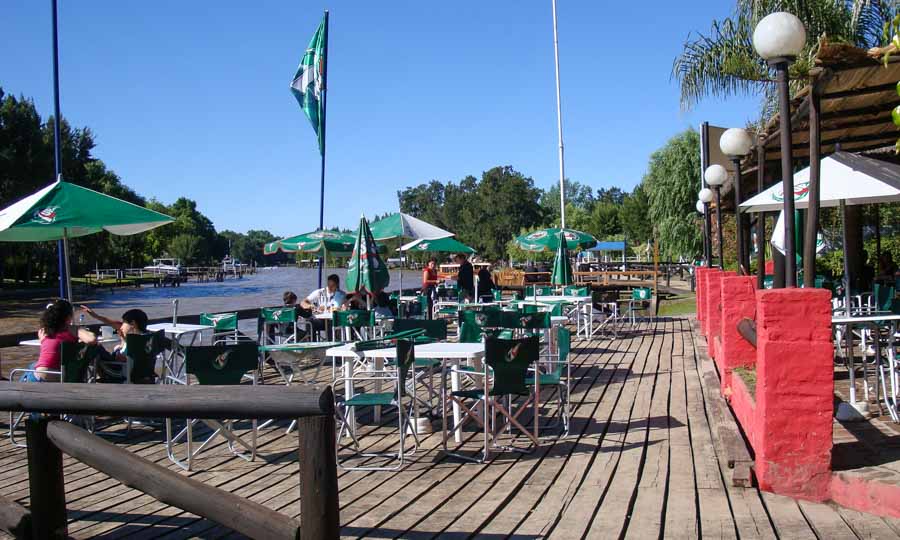
You could spend the whole day (or the night) there, but you don’t really need to. I suggest heading back mid or late afternoon to soak up your last few hours in Buenos Aires.
How to get to Tigre
Tigre is only an hour by train from Retiro station in Buenos Aires. (Depending on where you’re staying, it may be easier to hop on at Belgrano C. This station is located on a lot of popular bus routes and is a short walk from the Subte line D at Juramento.)
If you’re not in the mood to deal with logistics, there are plenty of organized tours that will pick you up and take you there – some of them via boat along the Río de la Plata and into the delta.
Late afternoon and evening: Puerto Madero
Honestly, I used to tell people to skip Puerto Madero, a waterfront area in the central business district. However! It has changed a lot since I first moved here, and I have to say it can actually be quite lovely now on a warm, breezy evening.
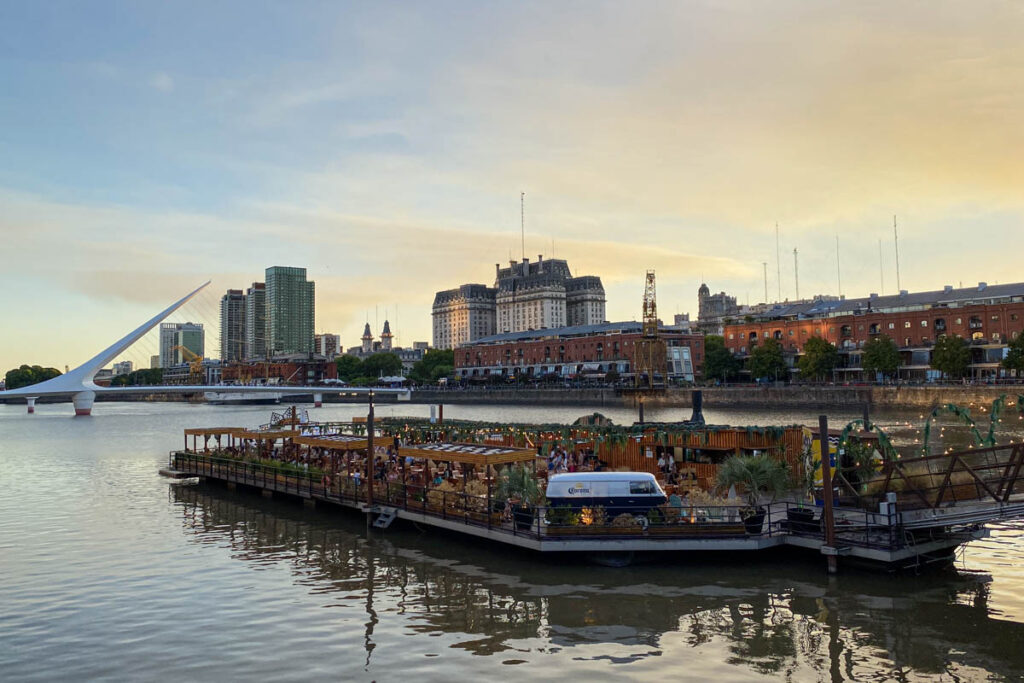
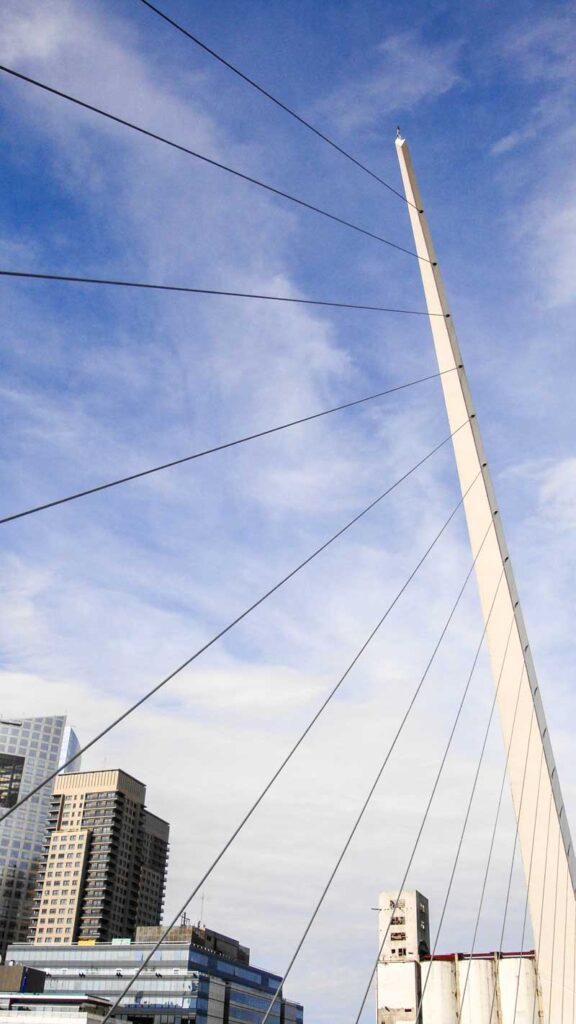
The docks that used to be lined with high end, soulless restaurants (and a random Hooters) now have a much wider range of options. You can still find fancy if you want it, but you can also enjoy only-slightly-overpriced pub fare on an open-air patio overlooking the Puente de la mujer (probably the most famous monument in Buenos Aires after the Obelisco).
There are also some food cart style options with picnic tables on the eastern side, as well as a floating bar.
Note: Depending on what time you get back from Tigre and how much energy you have, you might want to pop into one more museum before dinner. The Amalia Lacroze de Fortabat Art Collection is at the northern end of Puerto Madero, and it’s excellent. It’s not very big, and I would say an hour is probably sufficient for most people.
Alternative: Outdoor asado with live music
Alternatively, consider this 8-course barbecue with unlimited wine and live music – especially if you’re traveling in the warmer months!
An evening asado with friends on an outdoor terrace is such a quintessential Argentinian experience, and it’s one that most people won’t have with just a short time in the city. (I’ll note that they have a few different locations, and sometimes the meal is in a garden rather than on a terraza. Just as lovely!) If you didn’t already do an asado on your first day here, I would definitely recommend this for your last night.
You could also reserve a food or wine tasting tour if you were too tired (or too full) to do so on your first evening. And if you prefer a cocktail, you can tour a few of the many excellent bars and hidden speakeasies in the city.
And then, hopefully, it’s time to explore more of this beautiful country!
More on Argentina
The best of Argentina in 3 weeks: My suggested itinerary
Recommended itinerary for 2 weeks in Patagonia (Argentina and Chile!)
What to do in Buenos Aires: The must-sees for your first trip
Off-the-beaten-path suggestions for Buenos Aires
What to do in Bariloche, Argentina’s gateway to Patagonia
The top 5 day hikes in Bariloche: Easy trails to challenging, high-elevation treks
Hiking from Cerro Catedral to Refugio Frey: Bariloche’s best single-day trek
3 days in El Chaltén: The best treks (and where to eat afterwards!)
Loma del Pliegue Tumbado: Is this secretly the best hike in El Chaltén?


