Best places to visit in Argentina: Where to go on your first trip
Some links on this page may be affiliate links. That means if you follow one, see something you like, and purchase it, I may receive a small commission at no cost to you. For more information, see this site's disclosures.
This three-week Argentina itinerary takes in all of the country’s highlights, from the incredible Iguazú Falls to the mountains of Patagonia.
Argentina is one of those countries that just kind of has it all. A world-class city, jungle waterfalls, desert landscapes, wine country, glacier lakes, snow-capped mountains… all of it. In abundance.
Despite living there for years and returning multiple times to visit (for multiple months at a time), I still have dozens of little green “want to go” flags pinned in Google Maps.
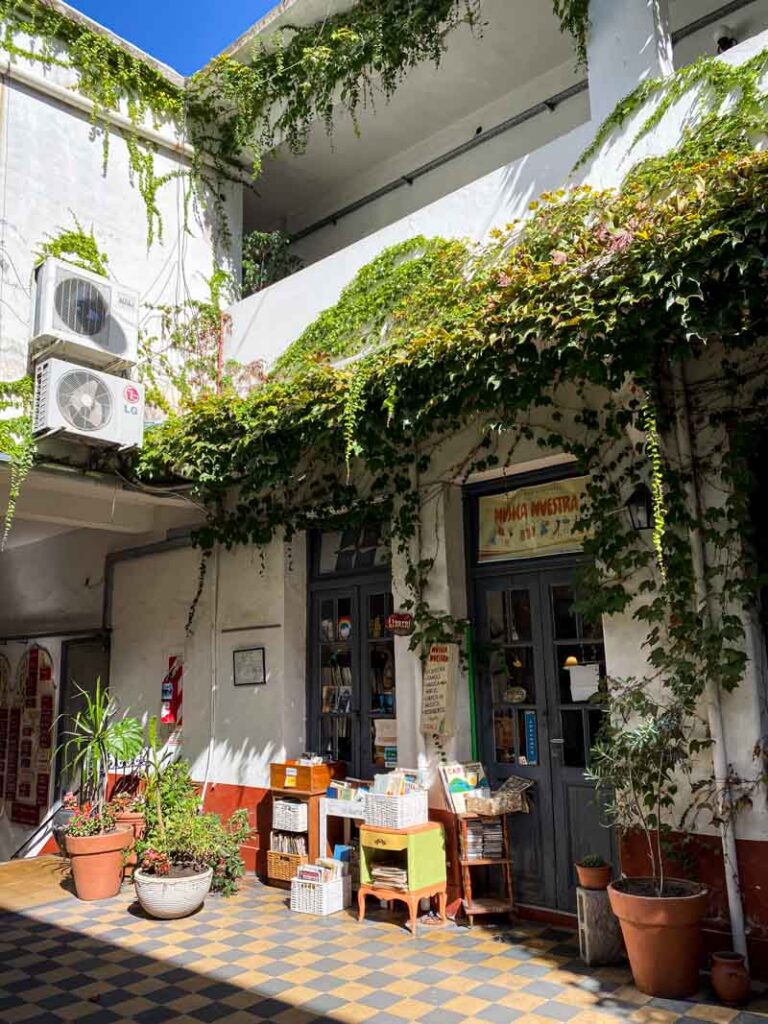
This suggested itinerary will introduce you to the absolute top places to see, but keep in mind that it’s a very large country. Hitting every stop on this list in three weeks will require a quick tempo. The only way to do it is with a bunch of overnight buses or internal flights – the distances are just too great to see it all without them.
If you plan to travel by land, you’ll need to do some combination of skipping a few places on this list or shortening your time in each one. (Some of the bus journeys take a full 24 hours or more.) If you prefer a slower pace of travel, I would urge you to consider choosing either the north or the south of the country. That said, I know people have limited time off and the Southern Cone is a long trip from almost anywhere.
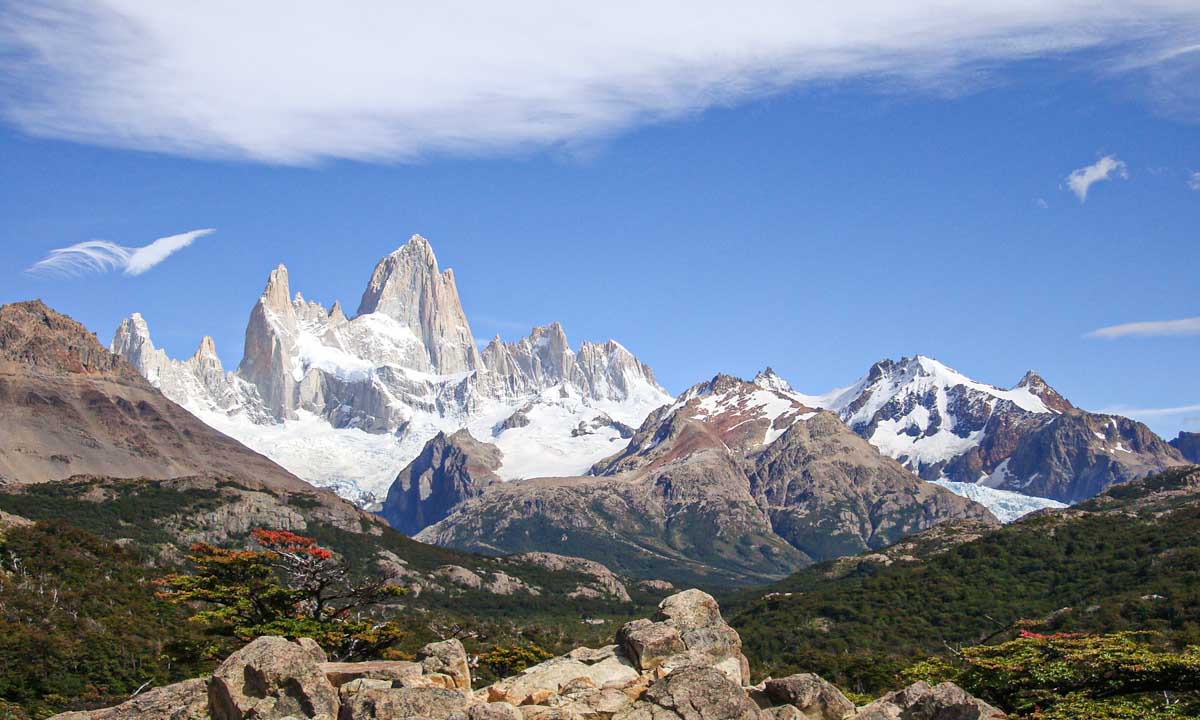
If you have more time, I definitely encourage you to take it! In the north of Argentina, you can break up the long journeys with stops in some of Argentina’s smaller cities. In Patagonia, you might want to weave in and out of Chile as you make your way south.
With that said, I’ll leave those decisions to you and get on with it! May I present… the best places to visit in Argentina for your first trip.
Buenos Aires: Argentina’s city that never sleeps (3-4 days)
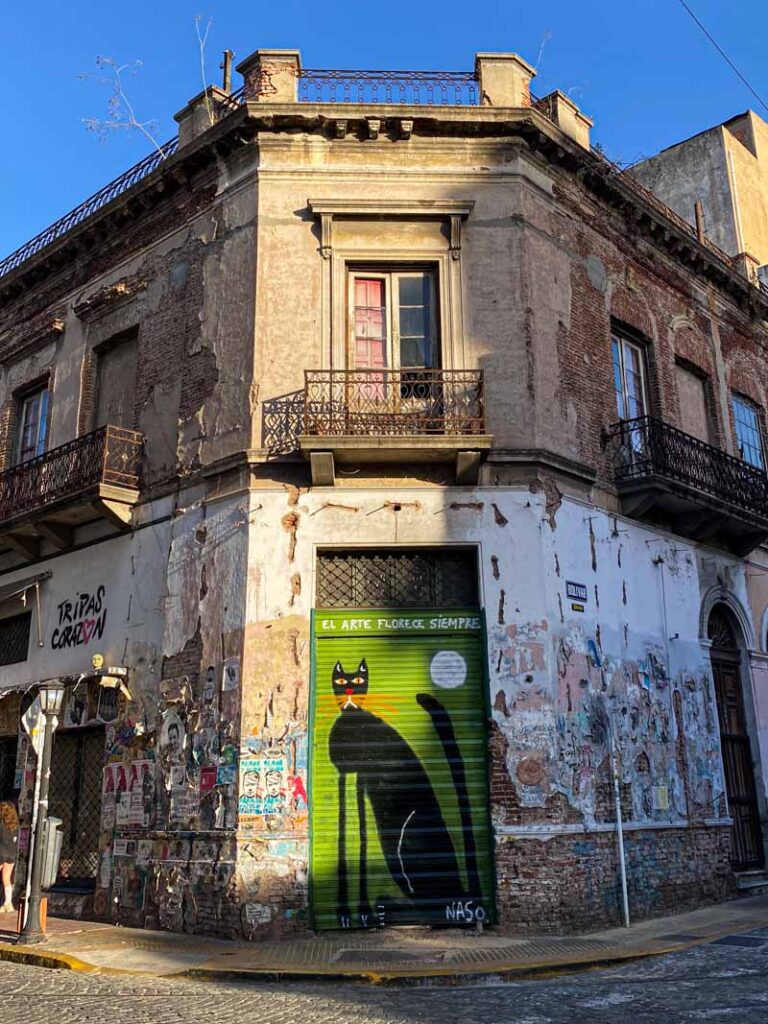
Of course, most trips to Argentina will include a stop in its largest metropolis. Buenos Aires has beautiful architecture, a lot of history, fantastic nightlife, amazing street art, and so many diverse neighborhoods to explore.
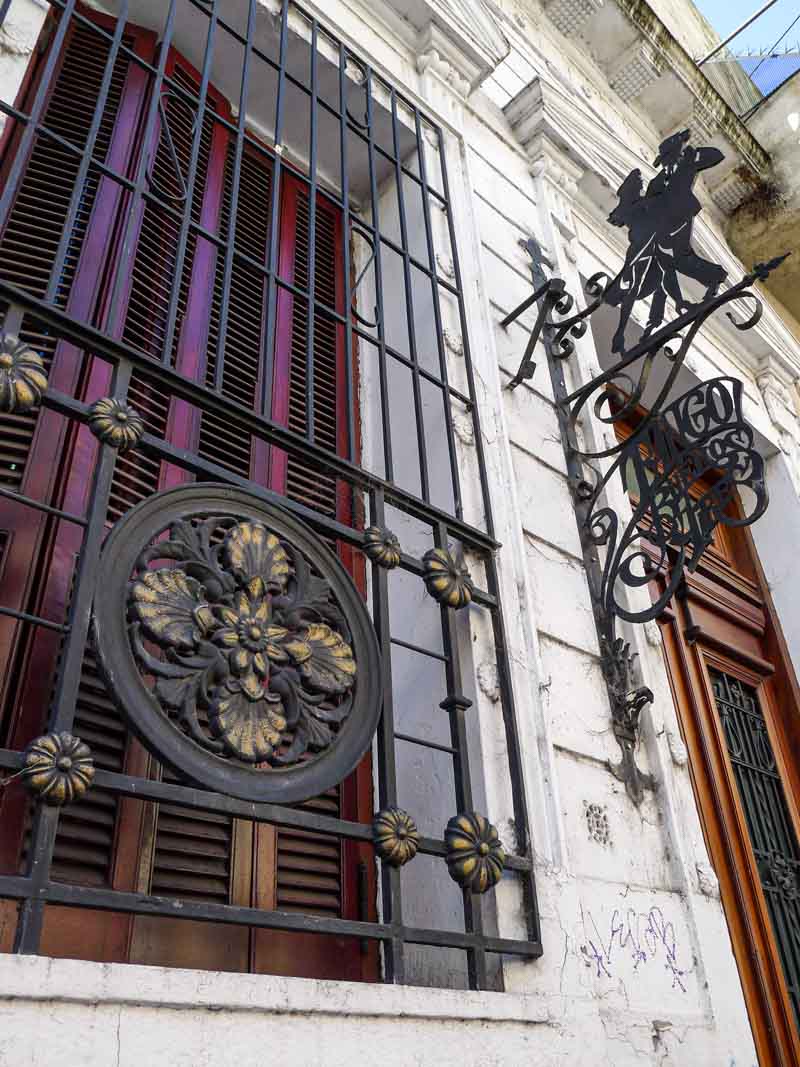
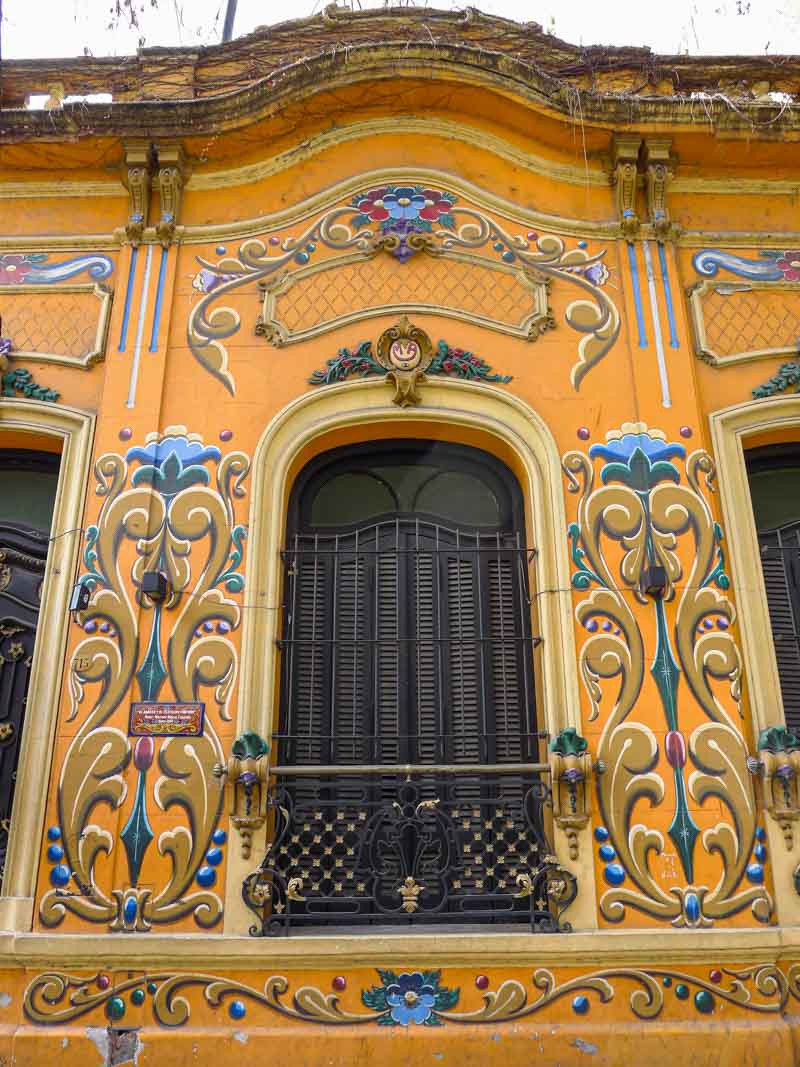
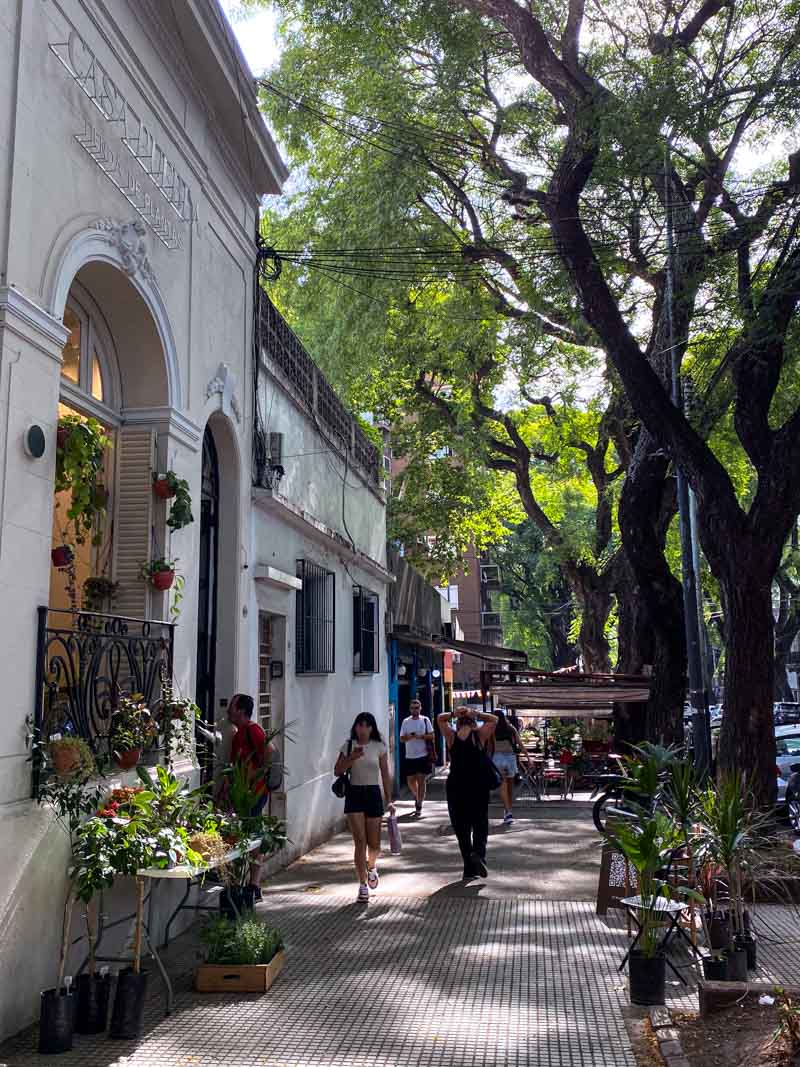
Three days is really the absolute minimum amount of time I would recommend for Buenos Aires. The classic must-see sights will take you at least two days, and that’s at a run.
These include the colorful Caminito in La Boca, the cobblestone streets of San Telmo (try to visit for the Sunday fair if you can), Plaza de Mayo (site of some of Argentina’s most important historical events), and the famous Recoleta Cemetery. You’ll probably also want to spend some time exploring the leafy, trendy barrio of Palermo.
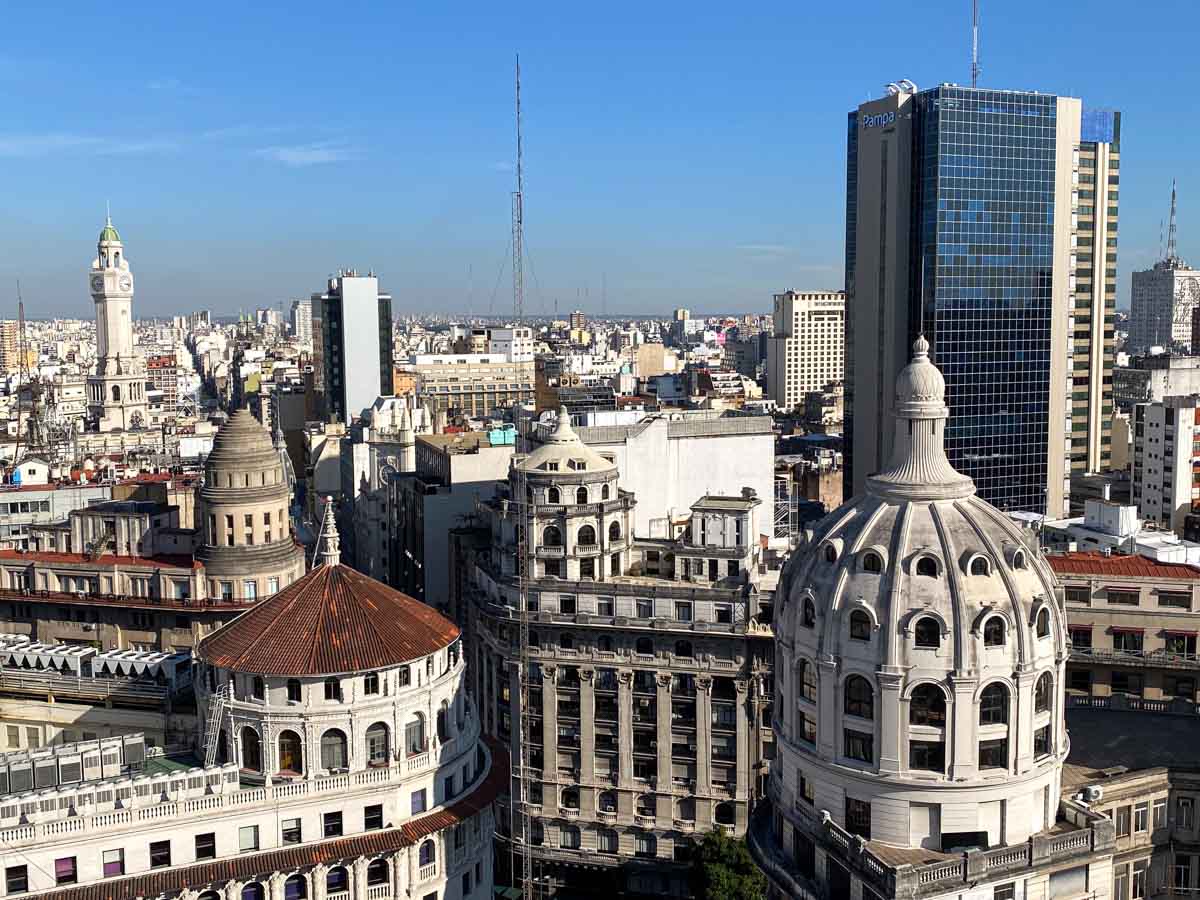
Throw in a few museums, markets, and parks – not to mention all the steak, wine, and pastries – and you’ll quickly realize there’s literally no amount of time in Buenos Aires that is truly “enough.”
It still surprises me when people travel all the way to Argentina and just pass through Buenos Aires as an afterthought or a gateway to everything else. I’m not saying the city doesn’t have its flaws and frustrations (oh does it), but no trip to Argentina is complete without allocating at least a few days here.
Iguazú Falls: One of the world’s natural wonders (1-2 days)
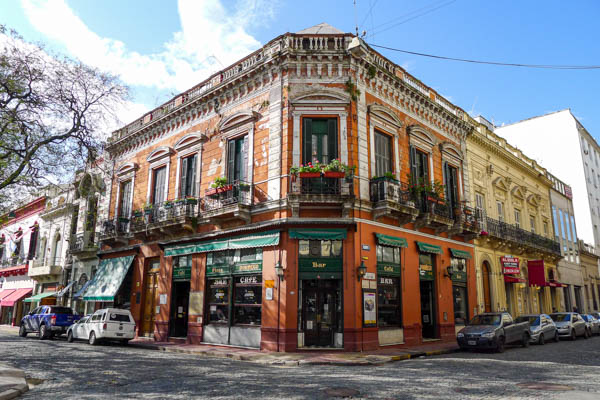
These waterfalls, situated on the border between Brazil and Argentina, are one of the most spectacular sights you’ll ever see, especially if you time your visit for the rainy season. (Yes, it’s uncomfortably hot and sticky, but you came for the waterfalls! The wet season is, unsurprisingly, when they’re at their most impressive. Rainy season at Iguazú also coincides with the best season for hiking in Patagonia, so that’s convenient for trip planning.)
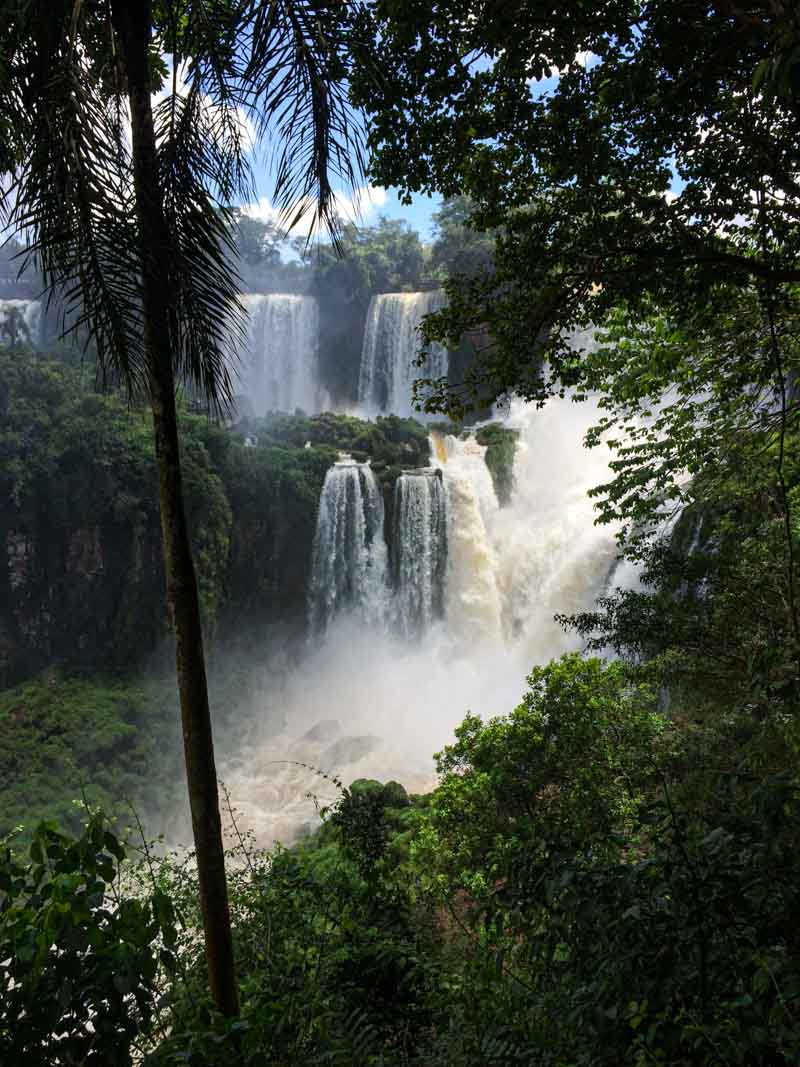
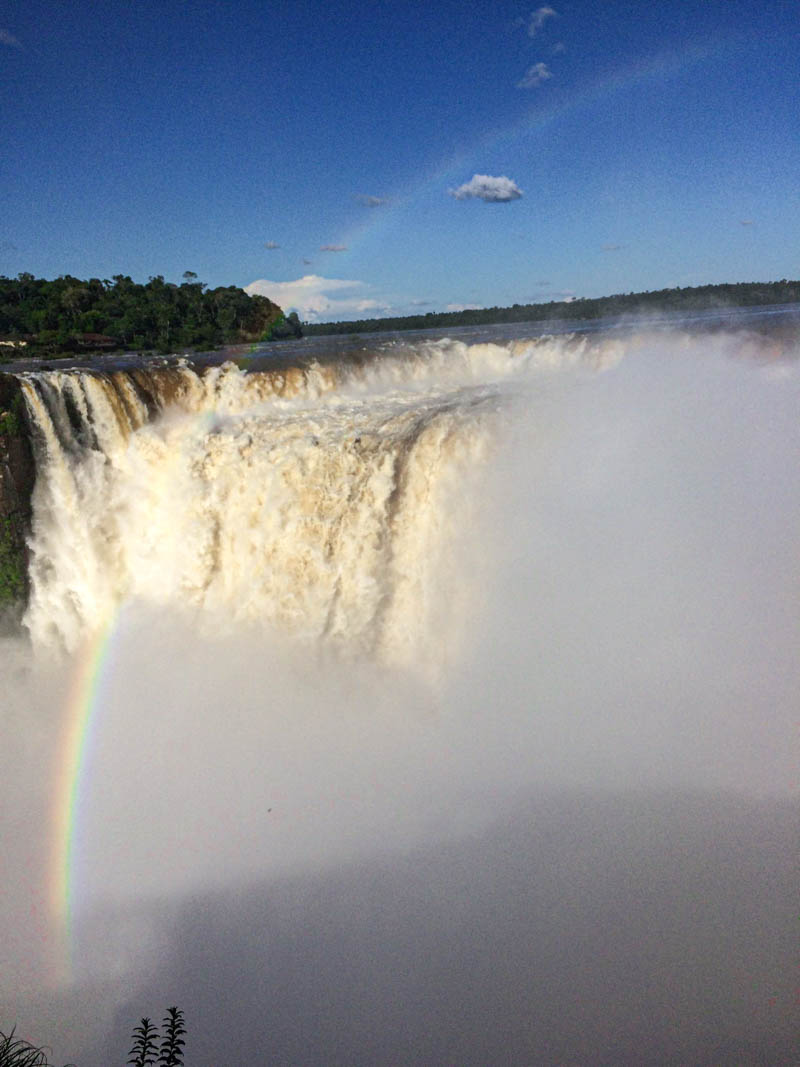
The area surrounding the waterfalls is a national park, and it has extensive walking paths with dozens of excellent lookout points over the falls. Some give you a panoramic perspective, while others lead you close enough to the rushing water to get completely drenched. (You will definitely want a dry bag.)
There is also a train to take you a bit further afield to arguably the most impressive viewpoint of all – the Devil’s Throat. From the train station, a 1-kilometer long platform over the river ends with an up-close view of a legitimately awe-inspiring (and deafening) torrent of water, as well as the numerous rainbows that form in the surrounding spray.
You can also take short boat tours on the Iguazú River for a different perspective on the base of the falls. The speedboats don’t take you right under the water, but you still get much closer than you can by walking. It’s a bumpy, wet, fun ride and worth the money. (Again, you came all the way here!)
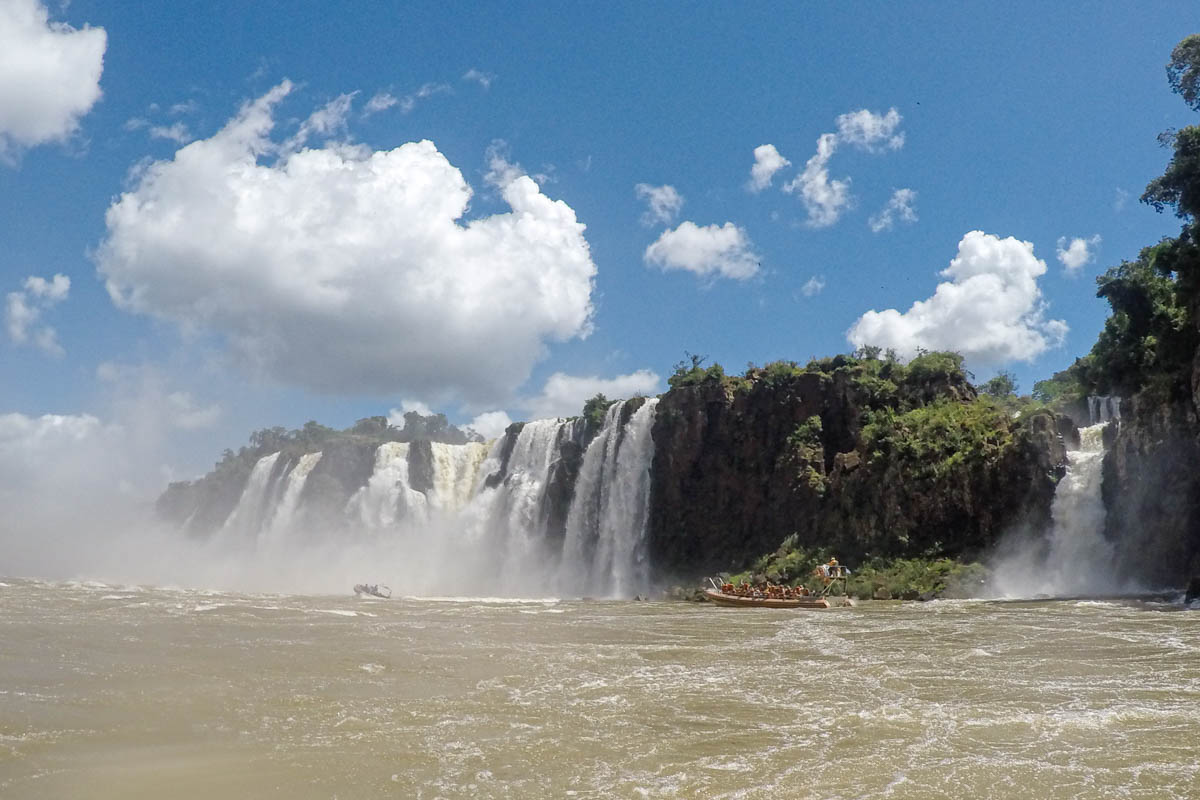
I bought my ticket on the spot but I’ve read they can fill up during busy travel periods. Some day tours of the falls include the boat ride.
One full day is enough to see the Argentinian side of the falls pretty thoroughly. I know it can feel like a waste not to stay longer, seeing as you came all the way here to the middle of the jungle. If you want to explore the Brazilian side of the falls as well, I recommend spending another day here, but there are organized tours that can take you to both sides in one day. (**Important note! Make sure to check if you need a visa for Brazil before you plan this. They change the rules for certain nationalities with some regularity.)
How to get to Iguazú Falls
To visit Iguazú Falls on the Argentinian side, most people stay in the little town of Puerto Iguazú. The town is about 20 kilometers away from the falls, and buses run there several times per hour.
By far, the easiest way to reach Puerto Iguazú is to fly from Buenos Aires. There are many nonstop flights each day from both Jorge Newbery Airport (locally referred to as simply “Aeroparque”) and Ezeiza. The trip takes just under 2 hours and usually costs less than $100 USD if you purchase tickets a month or so in advance.
Unfortunately, the alternative is… not great. If you want to travel by bus, it will take 17-20 hours and might cost just as much as the flight.
Northwest Argentina: Beautiful desert scenery and wine tasting (3-4 days)
The desert scenery of the northwest is probably not what most people picture when they think of Argentina. The landscapes are completely different from the rest of the country and have much more in common with neighboring Bolivia and northern Chile. A major highlight of traveling here is the strong sense of Indigenous culture, with distinctive food and crafts on display in the region’s many small towns.
And a bonus: Far fewer tourists, with more reasonable prices to match.
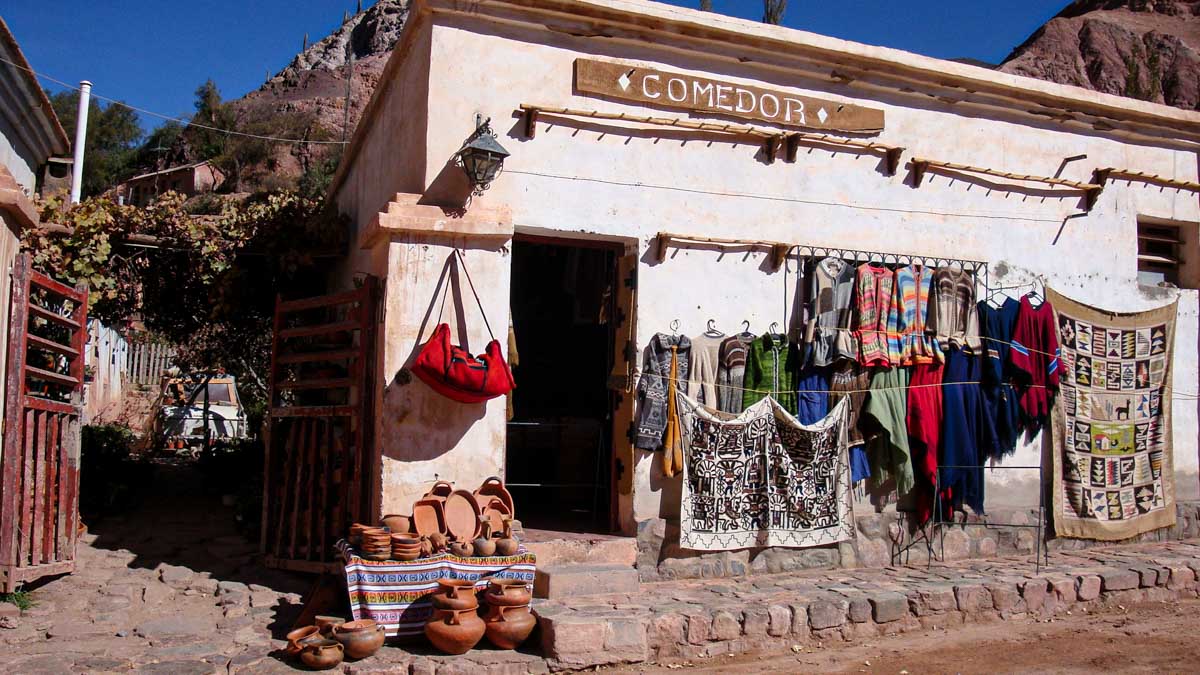
Although the northwest is enormous and technically comprises six provinces, with limited time you’ll probably want to focus on just two – Salta and Jujuy.
Within a driving radius of a few hours, you can visit dramatic salt flats, check out pre-Inca ruins, admire well-preserved Spanish colonial architecture, and explore the UNESCO-recognized Quebrada de Humahuaca. Slightly further afield is one of Argentina’s best (and underappreciated, compared to Mendoza) wine regions.
North of Jujuy: Quebrada de Humahuaca and the Salinas Grandes
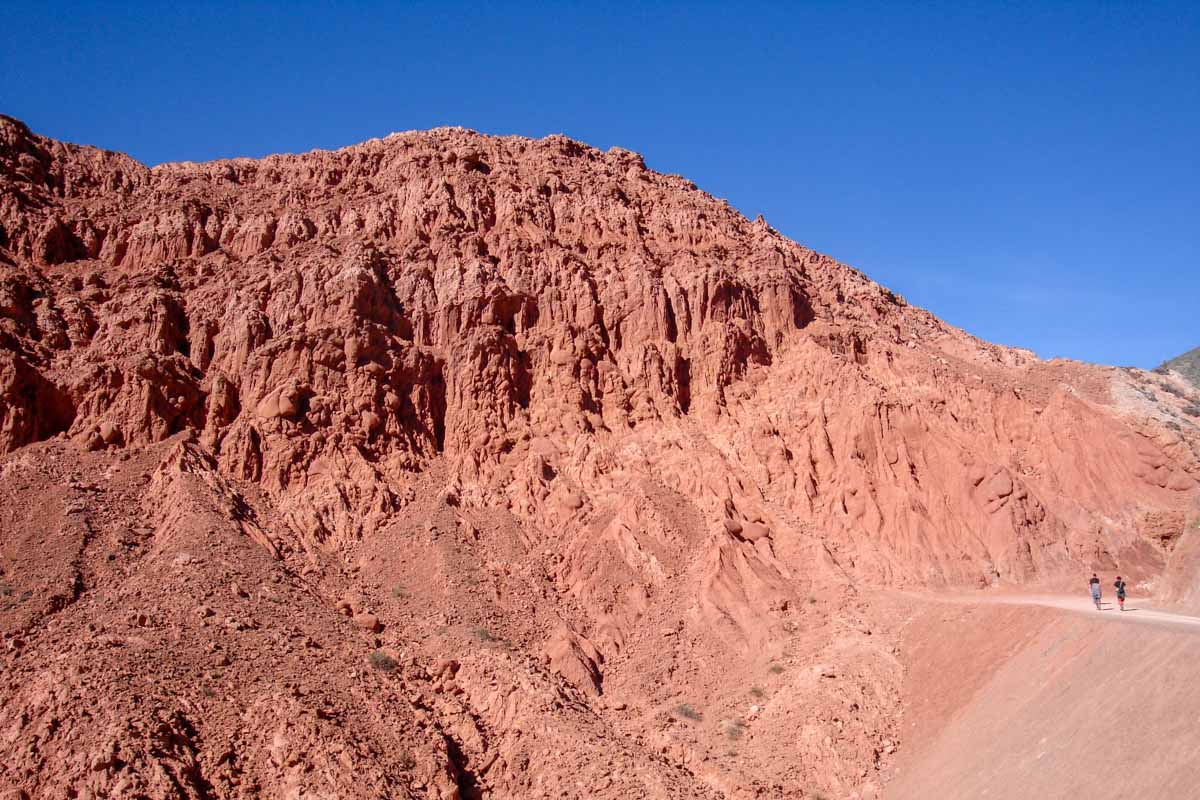
If you’re coming all the way up here, you definitely shouldn’t miss the Quebrada de Humahuaca, a valley characterized by colorful rock formations, adobe houses, and Quechuan villages. In the small town of Purmamarca, you can do an easy one-hour walk to take in the red, orange, and purple hues of the Cerro de los Siete Colores. Half an hour away, the small town of Tilcara – set in the same beautiful valley – has a reconstructed 12th century settlement overlooking the mountains.
There are also salt flats – perhaps not quite as impressive as those a bit further north in Bolivia, but still an interesting place to see and take some fun perspective-bending photos.
You can visit these as part of a day trip from either Salta or San Salvador de Jujuy (usually referred to as simply Jujuy). You’ll cut down on your driving time to the Quebrada de Humahuaca and the salt flats considerably if you base yourself in the latter, but I’d argue Salta has a bit more to see and do. It also has more frequent direct flights to other parts of the country. If you don’t mind moving around, you could stay in both, or you could spend a night in one of the small towns. (This would require renting a car, as most tours will just take you out for the day.)
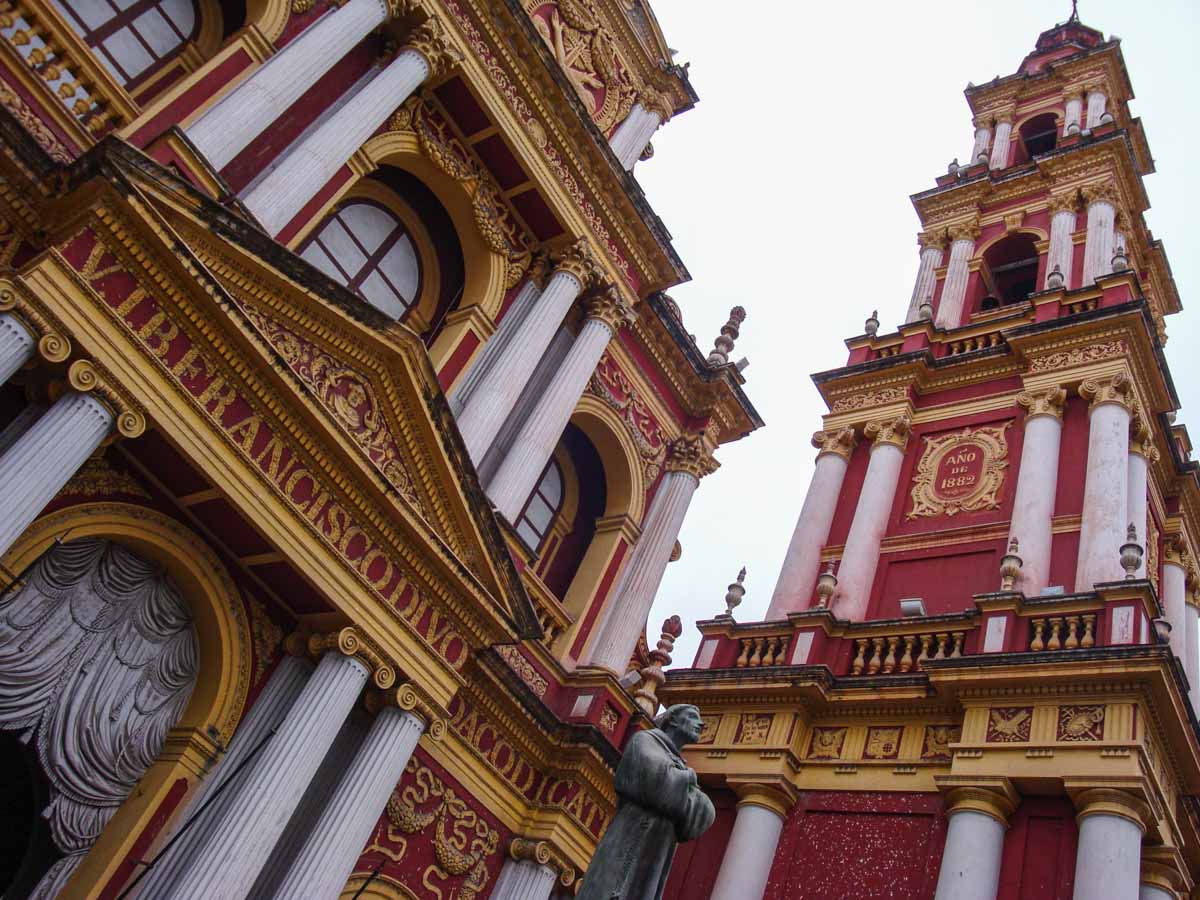
Jujuy is about two hours north of Salta. From there, it’s about an hour north to Purmamarca, and another half an hour to Tilcara. The Salinas Grandes are about an hour west of Purmamarca.
Many companies combine the salt flats and Purmamarca into one (long) day, which I think is a good option if you also want to visit Cafayate and/or Cachi. (See next section.)
South of Salta: Cafayate and Cachi
Three hours in the other direction from Salta is Cafayate, a popular wine tasting destination. It’s set in a beautiful valley, and many winery tours will include opportunities to explore the stunning rocky gorges and canyons as well. (The outdoor activities are quite sensibly scheduled before the drinking starts.)
If you’re renting a car, you could do a loop including Cachi, a small colonial town that is also about 3 hours from Salta. (Unfortunately, it’s not really on the way to Cafayate, but the drive itself is beautiful and part of the appeal.)
And if you prefer being driven, you can also book a separate day tour to Cachi and Los Cardones National Park.
(One last option is to stop in Cafayate on your way to Mendoza if you plan to travel by bus. You’d have an additional 20 hours or so with a transfer in San Miguel de Tucumán.)
How to get to Argentina’s northwest
Aerolíneas Argentinas usually has four direct flights per week from Puerto Iguazú to Salta and two per week from Puerto Iguazú to Jujuy. The flight takes two hours.
Traveling by bus will take at least 24 hours, and there is no direct bus at the time of writing. You’ll likely need to transfer in Posadas, Corrientes, or Resistencia.
Mendoza: Wine tasting at the foot of the Andes (2-3 days)
Mendoza is best known for its wineries and the ever-popular bicycle tours of its vineyards.
Many people don’t realize that Mendoza is also a major hub for adventure sports. Looking at a map, it makes perfect sense – it’s right next to the Andes. However, with so many popular hiking and outdoor activities available further south, Mendoza’s can often get overshadowed.
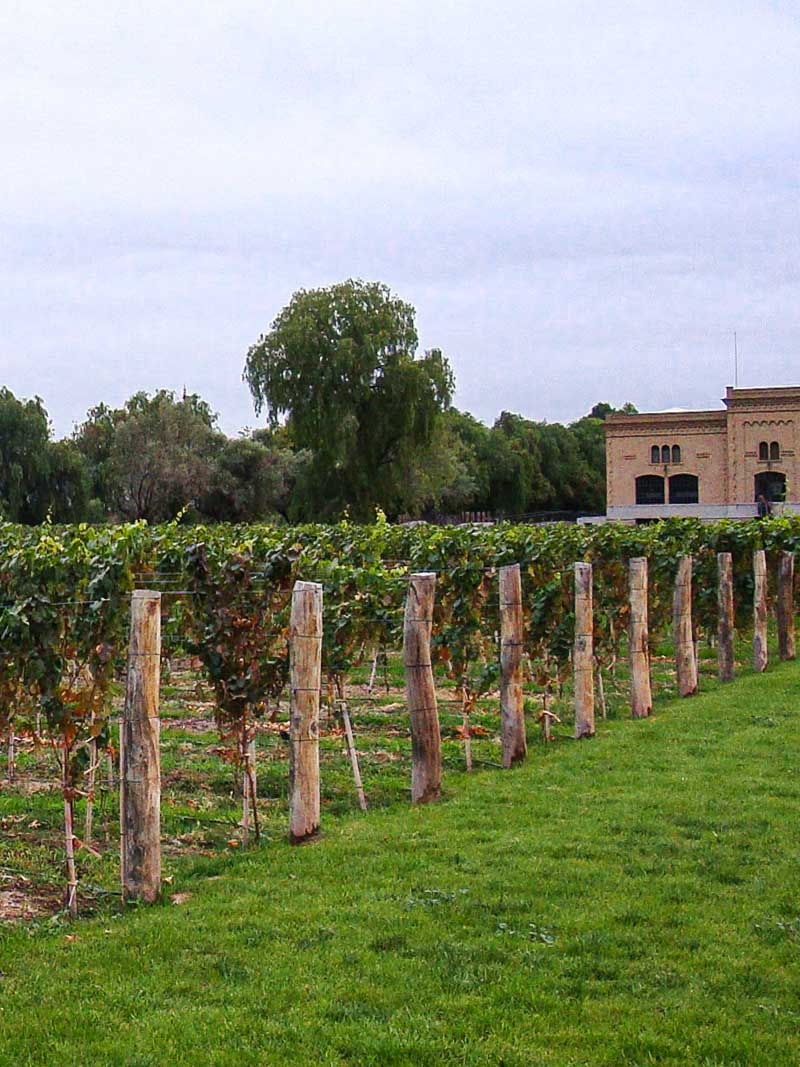

It’s true that a lot of the hikes aren’t quite as accessible as those in Patagonia. (You’re not going to walk out the door and up a mountain.) Still, there are a lot of great day tours that will get you out into nature – an especially nice counterbalance if you’ve spent the previous day drinking malbec from noon until night!
The most popular activities are riding horses, whitewater rafting, ziplining, paragliding, and of course, trekking.
How to get to Mendoza
Once again, you’re faced with the choice between a few hours in the air and 20 hours on a bus.
There are direct flights from Salta to Mendoza four days per week and from Jujuy to Mendoza twice per week. The other days, you’ll need to connect in Córdoba or Buenos Aires.
Or grab some headphones and/or a good book, and settle in for that long overnight trip!
An unpopular opinion
Mendoza is, no question, one of the most famous destinations in Argentina. I don’t think you’ll find many people telling you to skip it if you’re planning a kind of “best of Argentina” tour of the entire country.
However, my controversial take is that if you’re finding this itinerary too fast-paced, you should, in fact, skip it. You’ve got wine tasting up north in Cafayate. (I’ll take a glass of torrontés over a malbec any day; I said what I said.) And you have the mountains and outdoor adventure further south in Patagonia, where the surrounding landscape is greener and lusher.
Bariloche: outdoor adventure, extreme sports… and chocolate (2-3 days)
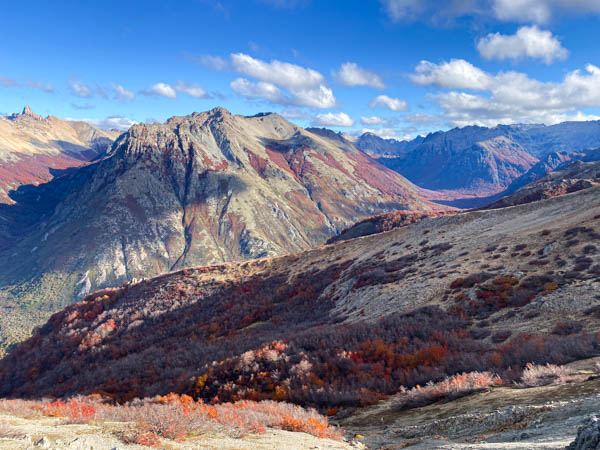
The next stop on your itinerary is Argentina’s unbelievably, jaw-droppingly gorgeous lake district. There are a number of beautiful small towns in the region where you can base yourself to explore its genuinely magnificent mountains, rivers, and lakes.
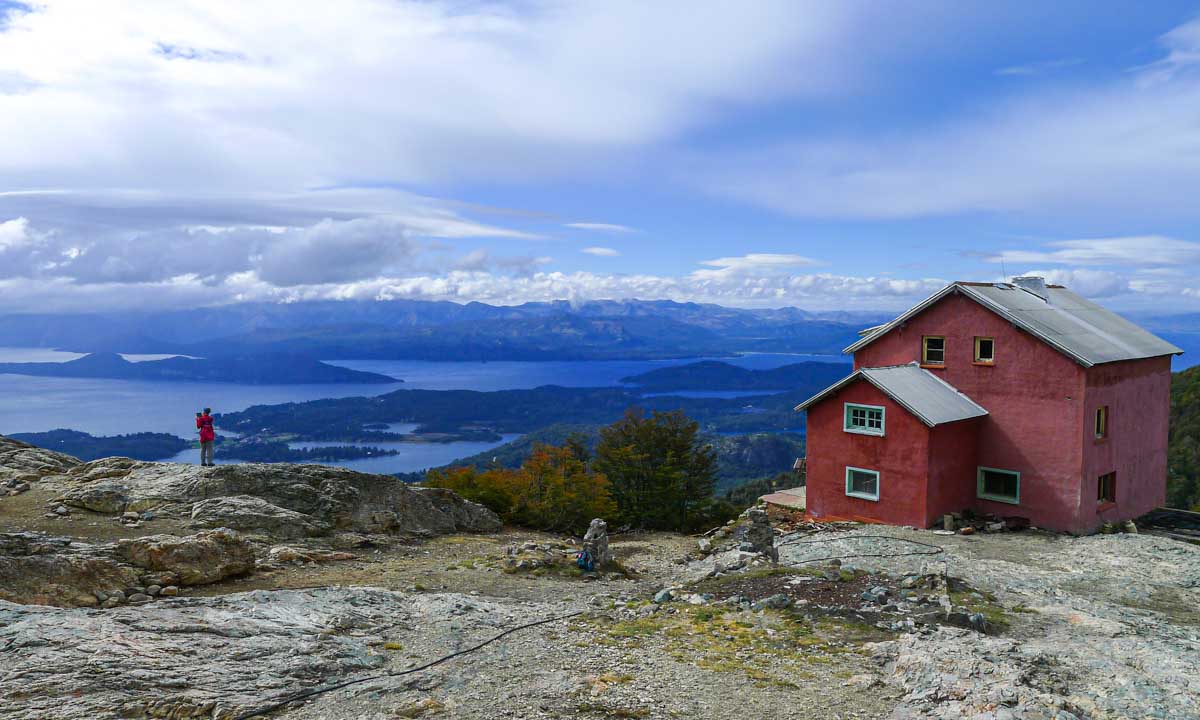
The best and easiest place, though, especially if this is your first visit to Argentina, is San Carlos de Bariloche.
Sitting on the southern shore of Nahuel Huapi Lake, it’s a major tourist center and transportation hub. Accommodation is plentiful, there are frequent connections to other parts of the country, and public transit is available to take you to trailheads and beaches.
The great outdoors in Bariloche
If you’re a hiker, I recommend tackling one or two of the phenomenal day hikes in the Bariloche area. (Since we’re trying to fit a lot into three weeks, we’ll save the multi-day treks for your next trip.) If you have to pick just one (and are up for a challenge), I highly recommend the ridgeline hike to Refugio Frey. For something more low key, head to Llao Llao Municipal Park.
And even if you’re not much of hiker, you can still reach some really lovely viewpoints by cable car. These include Cerro Campanario, Cerro Otto, and Cerro Viejo.
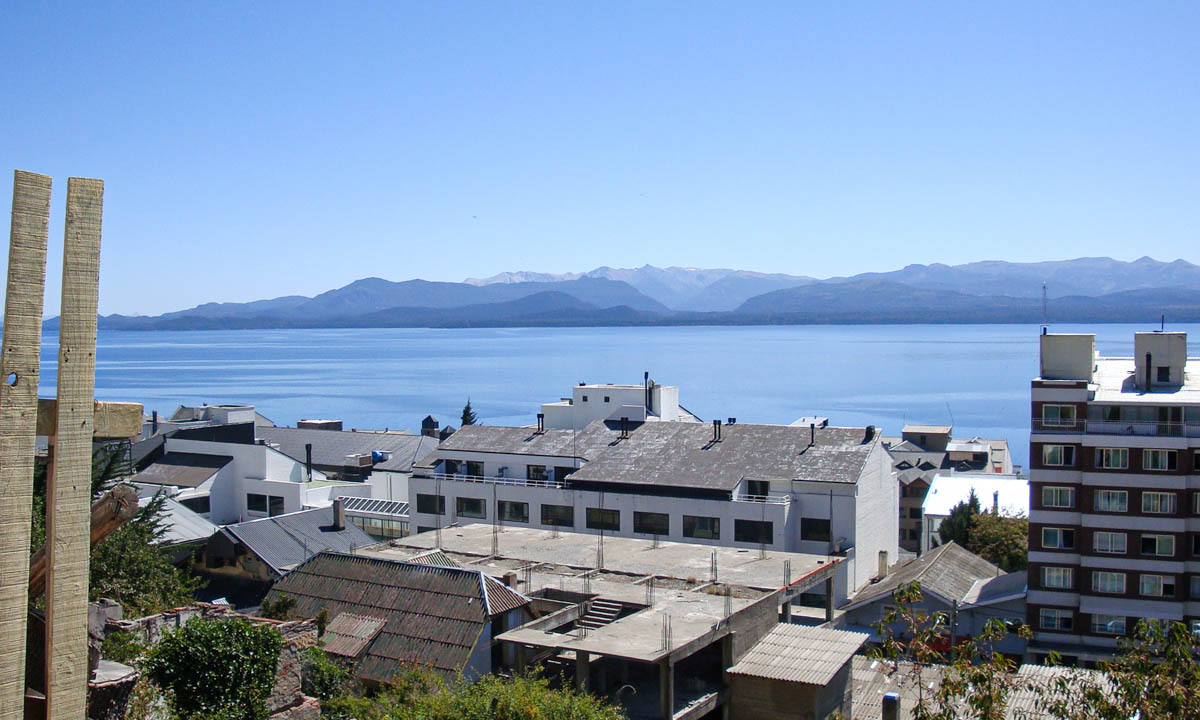
Fly fishing and horseback riding are great options for people looking to enjoy nature without the adrenaline rush. The junkies, meanwhile, can go river rafting, mountain biking, rock climbing, kitesurfing, or paragliding.
Other things to do in Bariloche
Even if you’re more about the indoor life (or if you’re just unlucky with the weather), there is a lot to like about Bariloche. In addition to the excellent wine you’ve probably come to expect in Argentina, Bariloche has a flourishing craft beer industry. It’s something of a foodie destination, with a lot of renowned (if pricey) restaurants serving traditional Patagonian cuisine.
For a history lesson, check out one of the excellent historical walking tours in Bariloche. One highly rated tour introduces visitors to the indigenous history of the region. Another focuses on the legacy of immigration from Germany to Argentina, and specifically the Lake District, before and after World War II.
Finally, don’t miss the dozens of excellent chocolate shops dotting the downtown streets. Bariloche’s long history of chocolate production (dating to the post-World War II era) has earned it a reputation as Argentina’s “capital of chocolate,” so save some room. (If you’re the kind of person who needs to “save room” for things like fudge and ice cream… I wonder what that’s like.)
How to get to Bariloche
If you’re coming here by bus, be prepared – this is another long one. (Are you perchance noticing a theme?) Most buses leave Mendoza in the evening (around 6:30 p.m.) and arrive in Bariloche around lunchtime the following day. (The trip takes about 18-19 hours.)
There are nonstop flights from Mendoza to Bariloche a few times per week. The flights take a little under 2 hours and, once again, are frequently cheaper than the bus. (I’ve often seen tickets for $60 USD.)
El Chaltén: The highlight of any hiker’s Argentina itinerary (3 days)
Let’s start by establishing that El Chaltén is for hikers. It’s a hiker’s paradise. A mecca! The “Argentine capital of trekking”!
If you’re not a hiker? I’d probably skip it and add some extra days somewhere else in your itinerary. There isn’t all that much else to do!
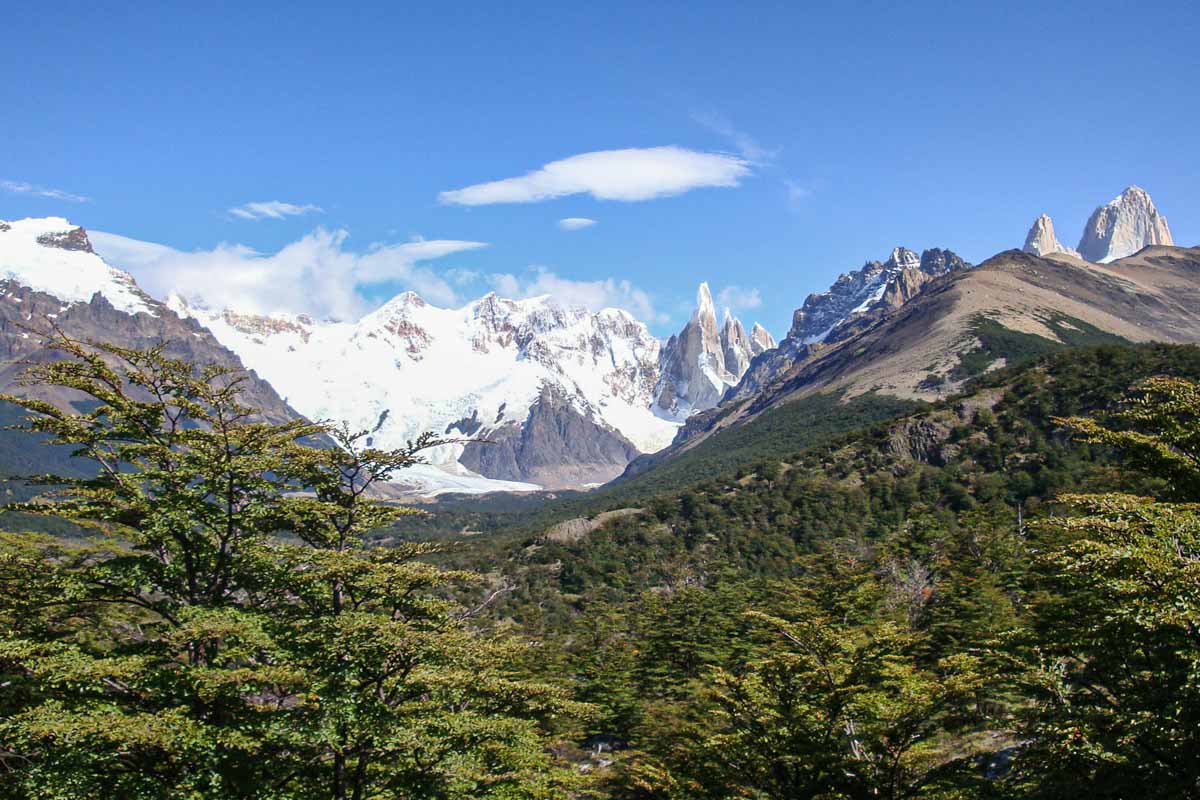
Ok, so hikers: There are two very famous treks here, and for good reason. And then there is another one that doesn’t seem to be all that famous but is, in my opinion, even better. There are also shorter hikes to waterfalls and viewpoints as well as multi-day treks if you’re so inclined.
The number one trek on virtually everyone’s list is the hike to Laguna de los Tres. A close second is Laguna Torre. Of the two, Laguna de los Tres is longer, harder, and more impressive (that’s a close one though), so that is probably the one to prioritize.
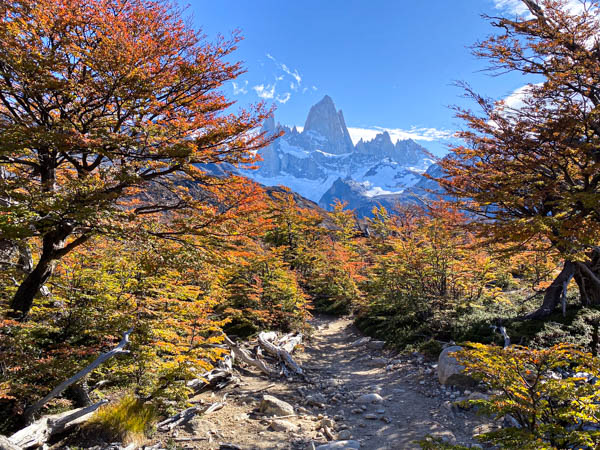
That said, if it were me, and if it were a clear day, I would prioritize a completely different hike. It’s called the Loma del Pliegue Tumbado, and I am baffled by how completely and utterly underrated it is. I hardly see it mentioned, it’s alllll the way down at #7 on AllTrails, and… yeah, that just makes no sense to me.
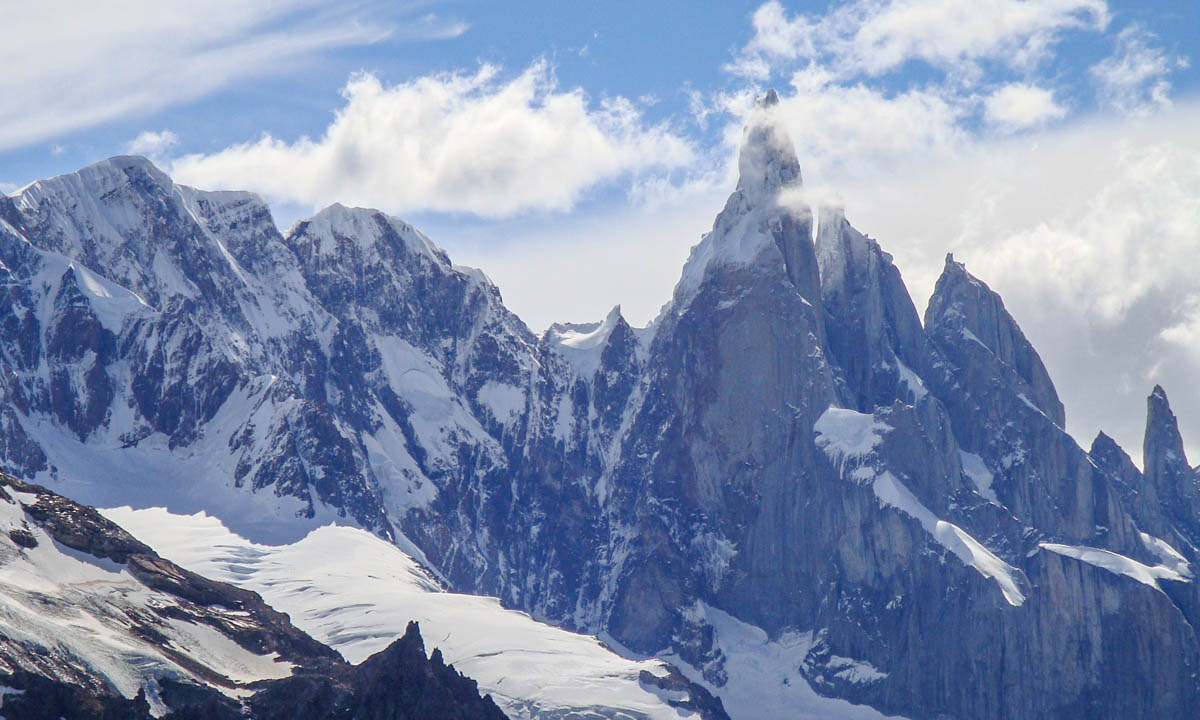
Unfortunately, there’s a decent chance the weather won’t cooperate with you for three full days – this is just the nature of Patagonia. If that’s the case, there are some easier hikes closer to town that only require a few hours. (Consider the Chorillo del Salto, for example.)
More detail:
How to get to El Chaltén
Bariloche to El Chaltén takes a good 24 hours by bus – at best. You’ll travel along the famous Ruta 40, which runs the length of Argentina parallel to the Andes. (Unfortunately this stretch of it is not particularly interesting.)
I’ve done it myself (and I should note that it took ~33 hours~), but this is another one of those times when I certainly understand the choice to fly. Aerolíneas Argentinas runs nonstop flights from Bariloche to El Calafate (see the next section) once a day in the summer months and a few times per week in the shoulder season.
If that’s what you choose to do, you’ll just have to travel the roughly three hours from El Calafate to El Chaltén by bus. (And that route is, luckily, pretty spectacular!)
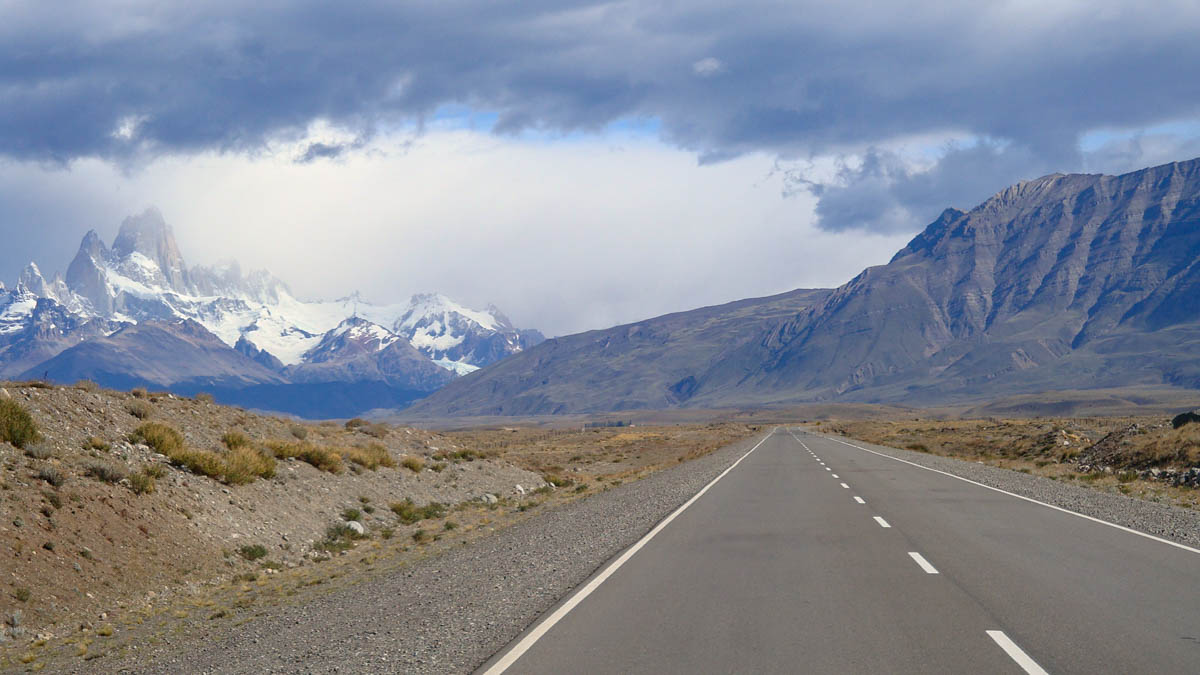
El Calafate: Gateway to the incredible Perito Moreno Glacier (2 days)
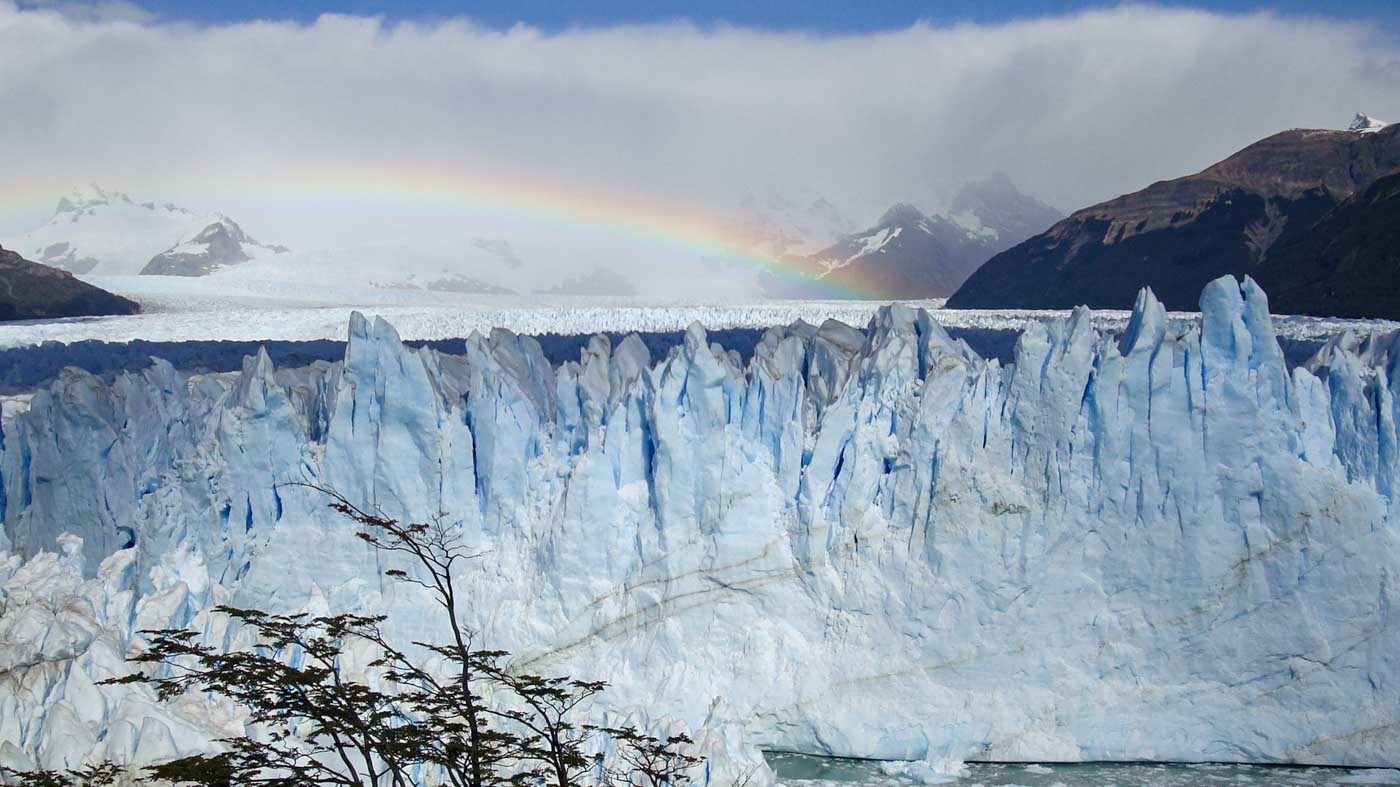
Next up on the itinerary is El Calafate. This little town is the gateway to one of the most magnificent sights on this big blue Earth: the Perito Moreno glacier. This is one of the most accessible glaciers in the world, and it is genuinely a sight to behold. I’ve never seen a picture do it justice.
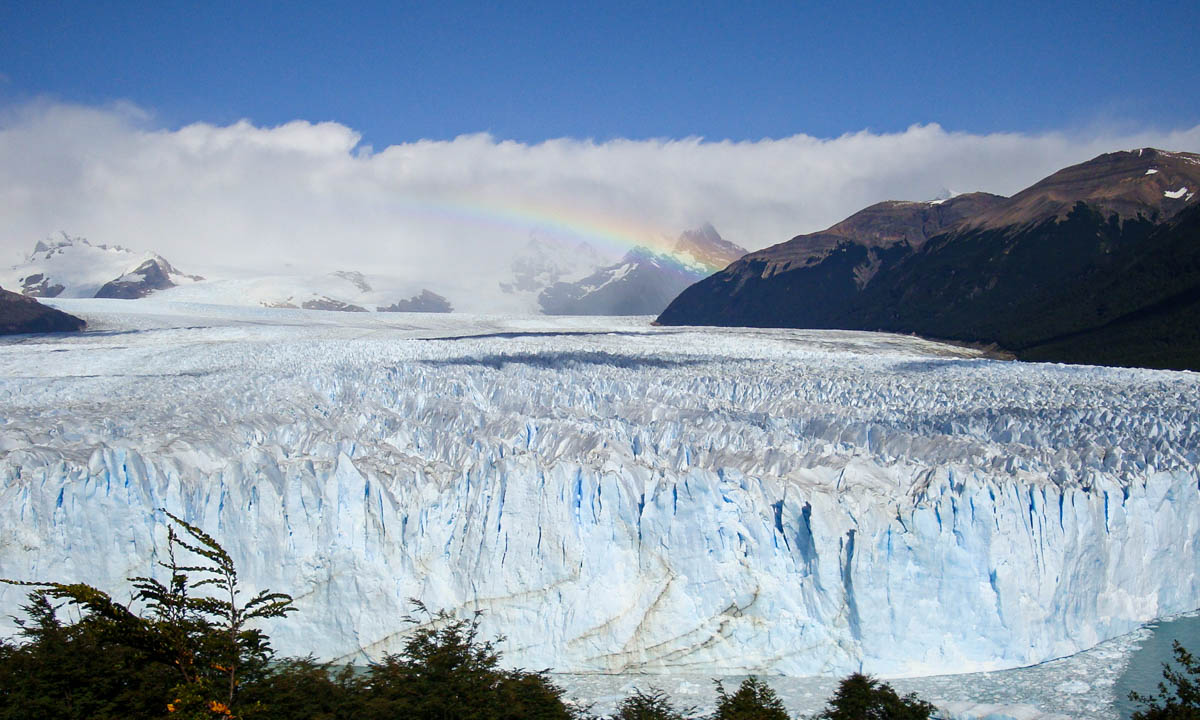
There are a number of ways to experience the Perito Moreno, from kayaking through its floating icebergs to ice trekking over the glacier itself. The most budget-friendly option is to just admire it from the walkways and viewing platforms on the other side of the lake. (I spent hours doing this, and I swear it never once got old – every shift in the clouds made me feel like I was looking at something new. I truly felt like I needed that time to fully appreciate how beautiful and enormous it is.)
Many people opt for a boat tour, which is kind of a happy medium. It gets you closer to the glacier than the walkways, but it doesn’t cost an arm, a leg, and a kidney like the ice trekking. Usually this will include hotel pickup and transportation to the glacier, as well as some time allocated to the viewpoints on land, so it’s not an either-or situation.
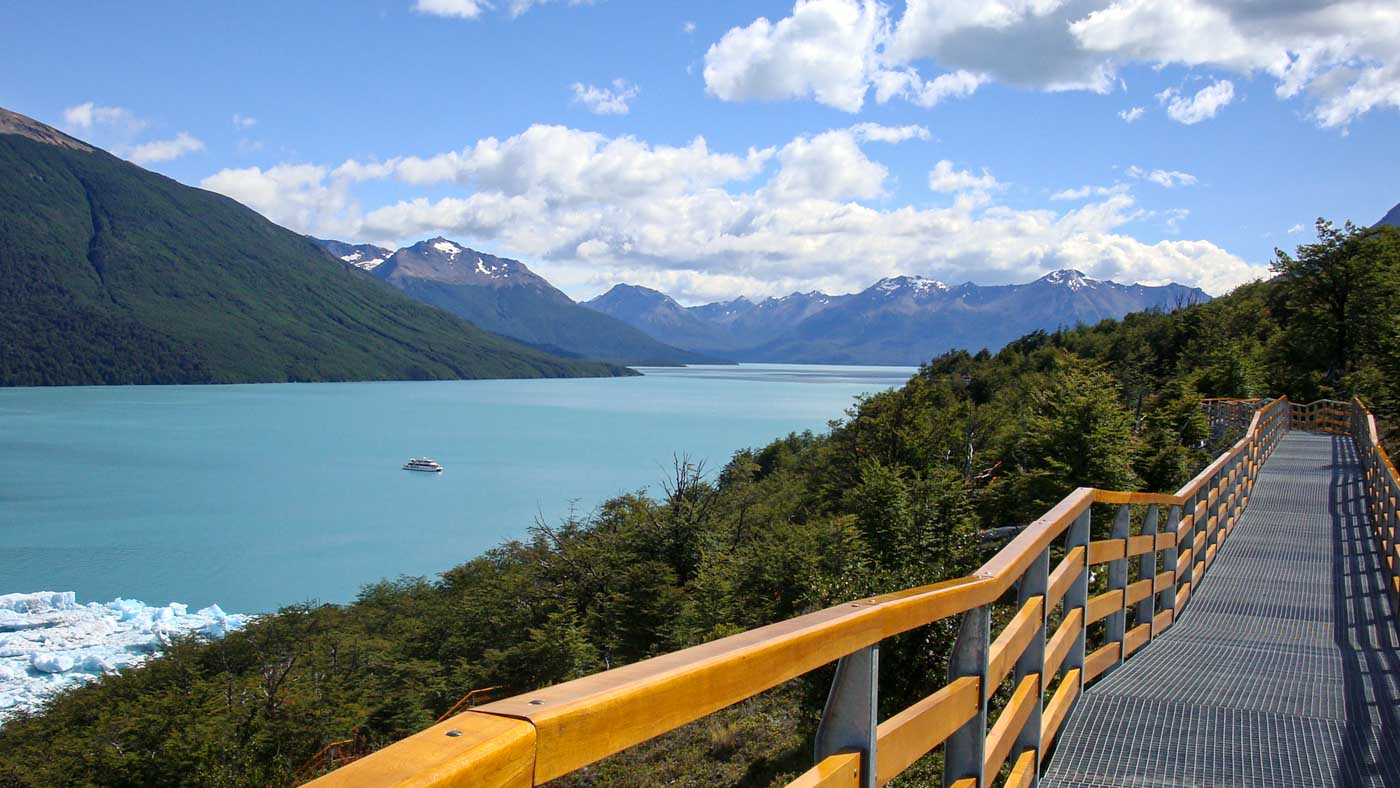
As you stand gaping in awe, there is a good chance a chunk of ice the size of 5-storey building will break off of and crash into the lake below. You’ll usually hear a loud crack before it does – a second or two of a heads up to see how fast you can get your camera appropriately positioned (although this is also a bit of a guessing game).
El Calafate itself is a small town in a beautiful setting on the southern shore of Lago Argentino. You can go horseback riding, visit another glacier a bit further afield, or just take a stroll near Laguna Nimez to check out the resident flamingos.
How to get to El Calafate and the Perito Moreno Glacier
As mentioned above, there are daily flights to El Calafate from Bariloche in the summer. If you’re just coming from El Chaltén, it’s a very manageable 3-hour trip by bus along a beautiful stretch of highway.
Buses head to the Perito Moreno from El Calafate every morning. The trip takes about an hour and a half.
Ushuaia: Hiking and wildlife at the end of the world (Bonus: 3 days)
Our final stop on this three-week Argentina itinerary is Ushuaia, generally considered the southernmost city in the world. I’m including it on the list for anyone who has an extra couple of days.
It’s a scenic place with some great treks and nice opportunities to spot wildlife, and it’s cool to stand at the so-called ends of the Earth.
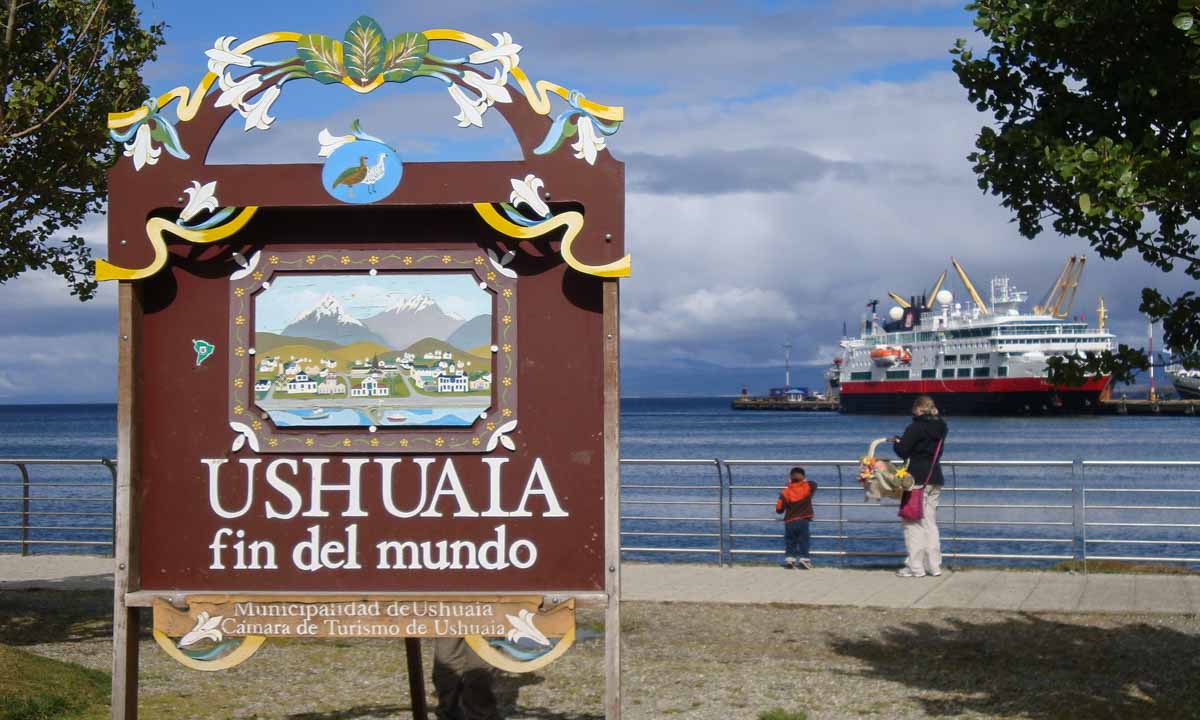
Wandering around the harbor, you’ll see ships bound for Antarctica. With a bit of lucky timing, you might even spot one on its way there from one of the nearby hiking trails.
That said, don’t lose sleep if you took some night buses to save the planet and have run out of time to visit Ushuaia. Bariloche, El Chaltén, and El Calafate are the real Patagonian must-sees on your first trip to Argentina. Ushuaia is a nice bonus. (If your heart is set on Antarctica someday, you’ll probably be back anyway.)
Ushuaia is a great place to hike, as you’ll find the trails much less crowded than the ones in El Chaltén or nearby Torres del Paine in Chile. The most popular treks are Laguna Esmerelda, Cerro Guanaco in Parque Nacional Tierra del Fuego, the Vinciguerra Glacier, and the Martial Glacier.
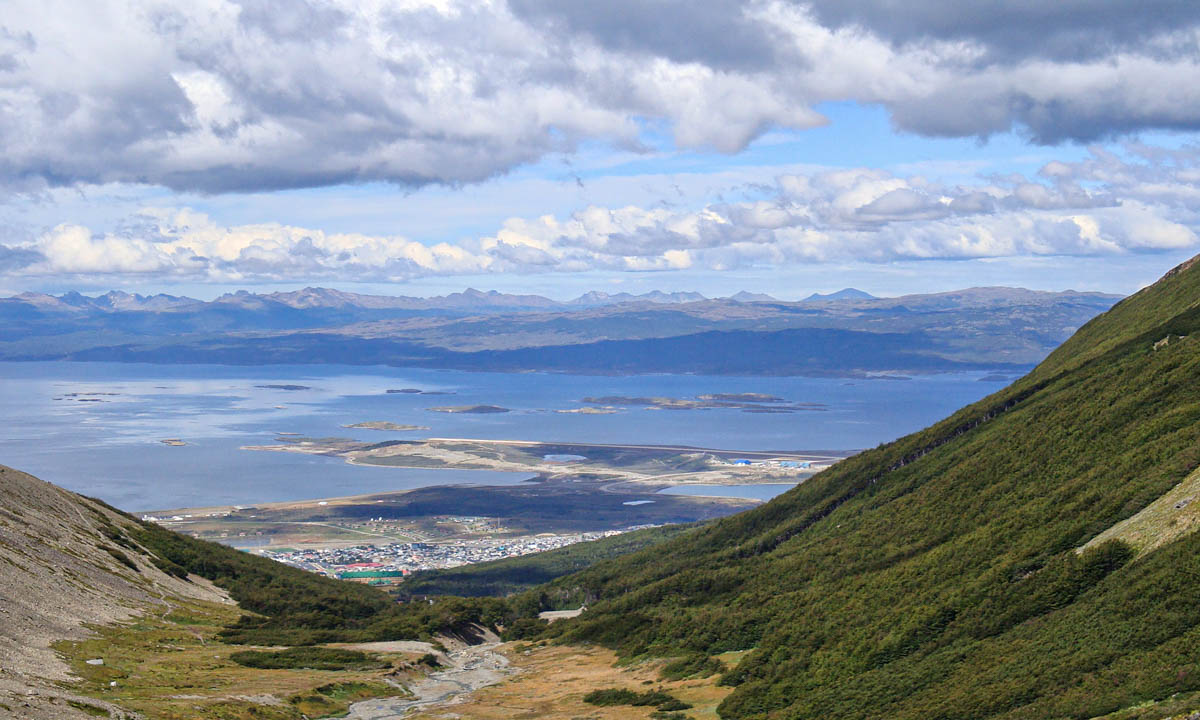
For a chance to spot some incredible wildlife (potentially including whales, dolphins, and sea lions!), check out boat tours through the Beagle Channel. If you, like me, can’t get enough of adorable Patagonian penguins, look for tours that include Isla Martillo.
How to get to Ushuaia
If you’re combining your Argentina itinerary with some time in Chile, it makes the most sense to visit Torres del Paine in between El Calafate and Ushuaia.
*Note that if you want to hike the famous W trek (or the longer O that includes it), you have to either plan wellll in advance or get very lucky in order to secure accommodation along the route. But Torres del Paine has some really beautiful day hikes, and it’s worth visiting even if you can’t manage a multi-day trek.
Getting to Ushuaia from Puerto Natales in Chile
Buses between El Calafate and Puerto Natales typically take between six and seven hours, including the border crossing. (Once in Puerto Natales, you can rent any gear you need and book transportation to Torres del Paine.)
When you return from the park, you can take a bus from Puerto Natales to Ushuaia, which takes about 13 hours. (You might think heading to Punta Arenas will shorten the trip, but in reality the trip from Punta Arenas to Ushuaia takes almost as long because of the way the Strait of Magellan is shaped. I loved my trip to Isla Magdalena from Punta Arenas, but you can see penguins in Ushuaia, too. My humble opinion is that it’s not worth going out of your way to Punta Arenas unless it’s time to go home and you need to fly to Santiago.)
Getting to Ushuaia from El Calafate
If you’re not visiting Torres del Paine on this trip, you can fly directly from El Calafate to Ushuaia in about 75 minutes. Aerolíneas Argentinas has several direct flights per day, but they can be pretty pricey if you don’t grab them early. (Again, a lot of people are coming here to go to Antarctica, so they book many months in advance – and the price is kind of a drop in the bucket in comparison.)
There is no direct bus, so you’ll have to transfer in Río Gallegos if you go that route. Again, I’ve done it, and honestly I just slept a lot and did a lot of processing of all of the amazing things I’d seen on my adventure. But I was time rich, money poor, and very young, and it did take a solid 18 hours.
Getting back to Buenos Aires
As you’ve probably guessed by now, taking the bus back to Buenos Aires will take over 48 hours. If you’re going to do that, at least give yourself a break in the middle in Puerto Madryn. This small city on the east coast is best known for whale watching from June to December, but it has some nice rocky beaches and is a great place to see other wildlife throughout the year. (It is one of my aforementioned little green dots on Google Maps.)
Heading into Chile
If you have more than three weeks for your trip, you might have already decided to zigzag between Argentinean and Chilean Patagonia. Chile is an absolutely amazing country, and I highly recommend spending some time there if you have it.
From Puerto Natales, consider taking the Navimag ferry (if it’s within your budget) through the Chilean fjords and up to Puerto Montt. From there, you can easily travel to beautiful Chiloé Island or the lovely lakeside town of Puerto Varas (kind of like Chile’s friendlier, more compact answer to Bariloche).
More on Argentina
20 must-see and must-do activities in Buenos Aires
How to hit all the Buenos Aires highlights in 4 days
Unique and underrated things to do in Buenos Aires
Calle Lanín: A colorful street off the beaten path in Buenos Aires
Best things to do in Bariloche – the heart of northern Patagonia
The 5 best day hikes in Bariloche
Hiking to Refugio Frey from Cerro Catedral in Bariloche
3 days in El Chaltén: Where to hike (and where to eat afterward!)
The most underrated hike in El Chaltén: Loma del Pliegue Tumbado