Koh Lanta diving: Some of the best in Thailand
Some links on this page may be affiliate links. That means if you follow one, see something you like, and purchase it, I may receive a small commission at no cost to you. For more information, see this site's disclosures.
Everything to know about diving Koh Lanta, including the best dive sites, the best time to come, and what makes this some of Thailand’s best diving.
When you first start researching diving in Thailand, you’ll probably come across a lot of information on Koh Tao. This tiny island in the Gulf of Thailand is the most popular place in the country (and one of the most popular places in the world) to learn to scuba dive. If you’re already certified though, head right on over to the beautiful, relaxing island of Koh Lanta on Thailand’s Andaman coast.

Here you’ll find long, sandy beaches dotted with restaurants, guest houses… and dive shops! This is one of the best places to dive in Thailand, largely because it is the closest base to reach the famed dive sites of Hin Daeng and Hin Muang.
Koh Lanta is also quite simply a lovely place to hang out for a few days, a week, or longer. The vibe here is very chill relative to Thailand’s other popular beach destinations. It takes about 45 minutes to drive the length of the island, making it quite a bit larger than its neighbors as well. That translates to lots of room for exploration and plenty of beaches to check out when you’re not diving!
Also, to clarify, you can definitely learn to dive here, too! It is just a bit more expensive than Koh Tao, and you won’t be able to reach the best spots until you’re Advanced Open Water certified.
In this post, I’ll discuss the must-visit dive sites, the diving season, prices, and everything else you need to know about this beautiful corner of the Andaman Sea.
Koh Lanta’s best dive sites: What can you see here?
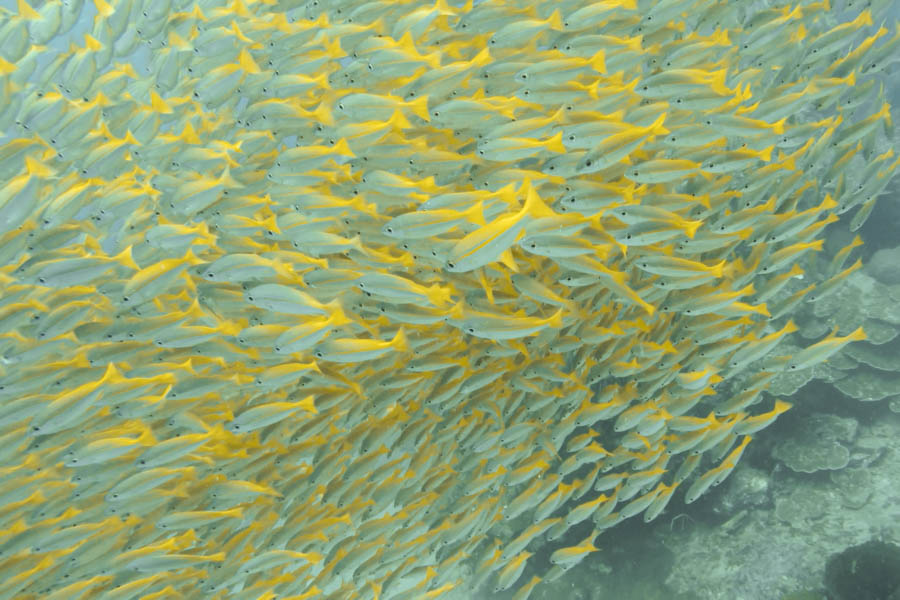
Koh Lanta’s best dive sites are known for their colorful, healthy coral and variety of marine life. In the right season, this includes whale sharks and manta rays!
The highlight of diving Koh Lanta: Hin Daeng and Hin Muang
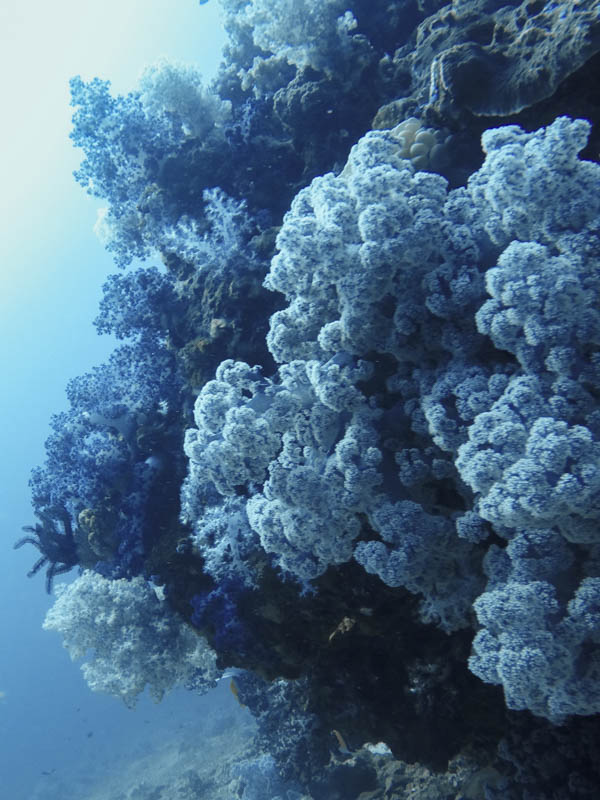
The side-by-side pinnacles of Hin Daeng and Hin Muang are the real prize when it comes to diving in Koh Lanta. Although there is one dive site in the Similan Islands that I think beats them (the world-famous Richelieu Rock, of course), these two are definitely in the running for the best diving in Thailand. Hin Daeng and Hin Muang (which translates to Red Rock and Purple Rock) are covered in beautiful soft coral, and there are all kinds of large and small creatures to discover out here.

The dive sites are quite a way off the coast, so diving centers come here by speedboat (usually with an additional fee). The ride still takes about an hour and a half.
And because the two pinnacles are way out in the middle of the ocean, there can definitely be some current here. They are also quite deep, so dive centers will generally want you to have your Advanced Open Water certification for these dives.
The currents and distance make this one of the best places in Thailand to see whale sharks and manta rays. It’s possible to spot them any time during the diving season, but your chances improve a bit closer to February/March. (But of course, you just never know!)
Caverns and swim-throughs: Koh Haa
Koh Haa is a cluster of islands about 20-25 kilometers off the coast of Koh Lanta (depending on where you depart). The name translates to Five Islands, even though there are actually six.
Some of the dive sites here are quite sheltered with little current, making them great for beginners. This is also a great place to come if you’re traveling with non-divers, as Koh Haa also has some excellent snorkeling spots.

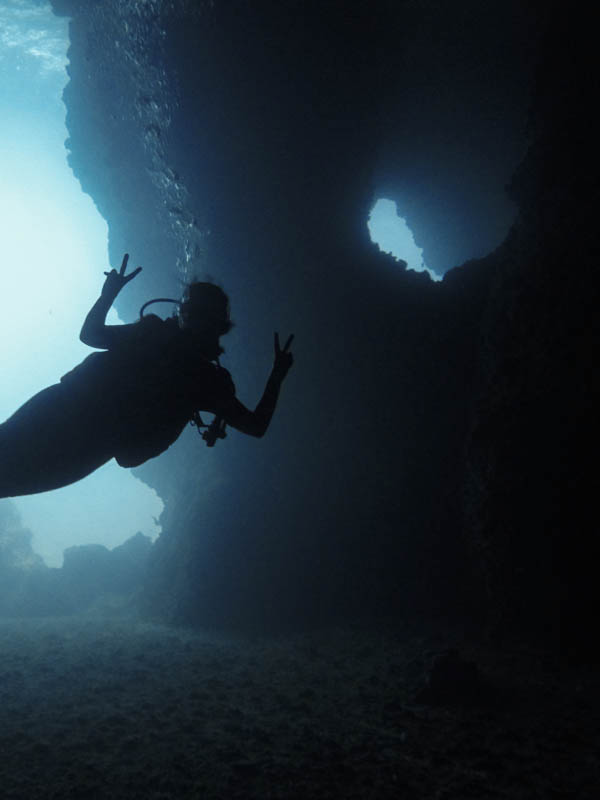
Two of the most interesting dive sites here are known as the Cathedral and the Chimney. The first, located at Koh Haa Yai, is a large underwater cavern with a few different chambers. They all have wide open access, so you don’t need any special skills to visit them. The Chimney, at Koh Haa Neua, has a few narrower swim-throughs that are probably only suitable for divers with a little more experience. (I found this a bit claustrophobic as a relatively new diver at the time, but I was able to do it without problems.)
There is also a lot of beautiful coral around Koh Haa, and you can often find the same red and purple hues that Hin Daeng and Hin Muang are famous for. It’s also possible to see sea turtles, reef sharks, and even whale sharks!

By speedboat, it takes about 45 minutes to reach Koh Haa, but most dive shops will come here with a large boat. This is obviously slower (the trip takes closer to 2 hours), but it’s much more comfortable.
Wrecks and leopard sharks: Phi Phi islands
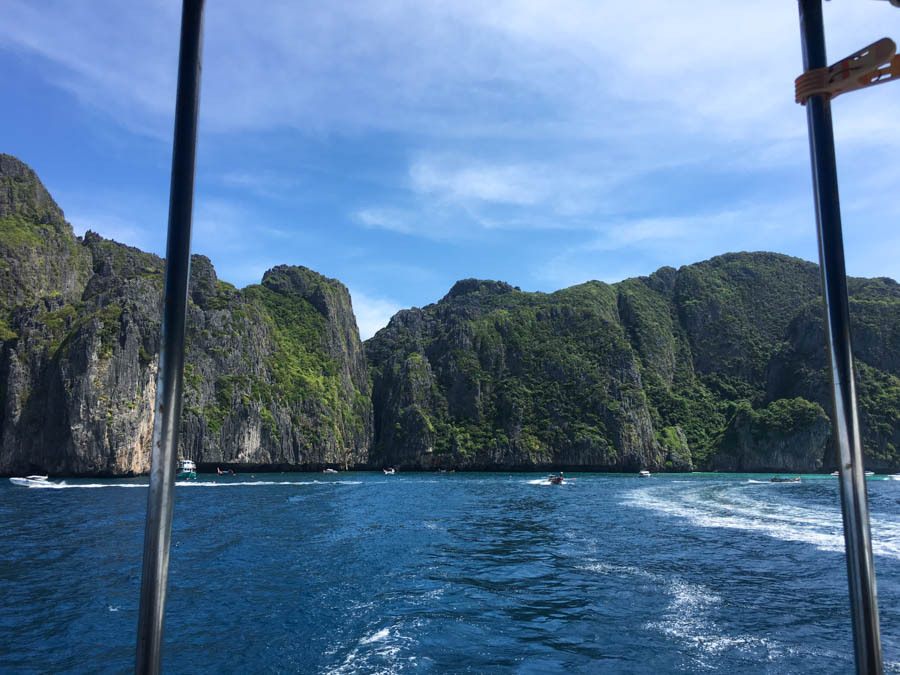
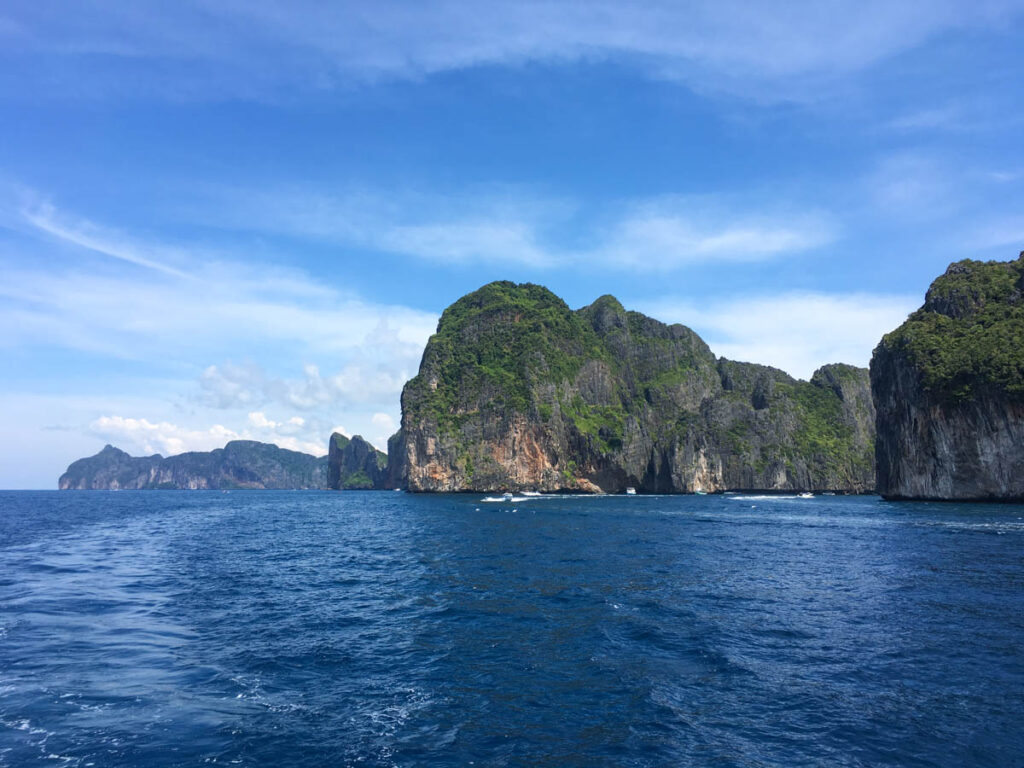
Northeast of Koh Lanta are the Phi Phi islands. Best known for the famous party island of Koh Phi Phi Don and the hugely popular day trip destination of Maya Bay, this small archipelago also has some great dive sites.
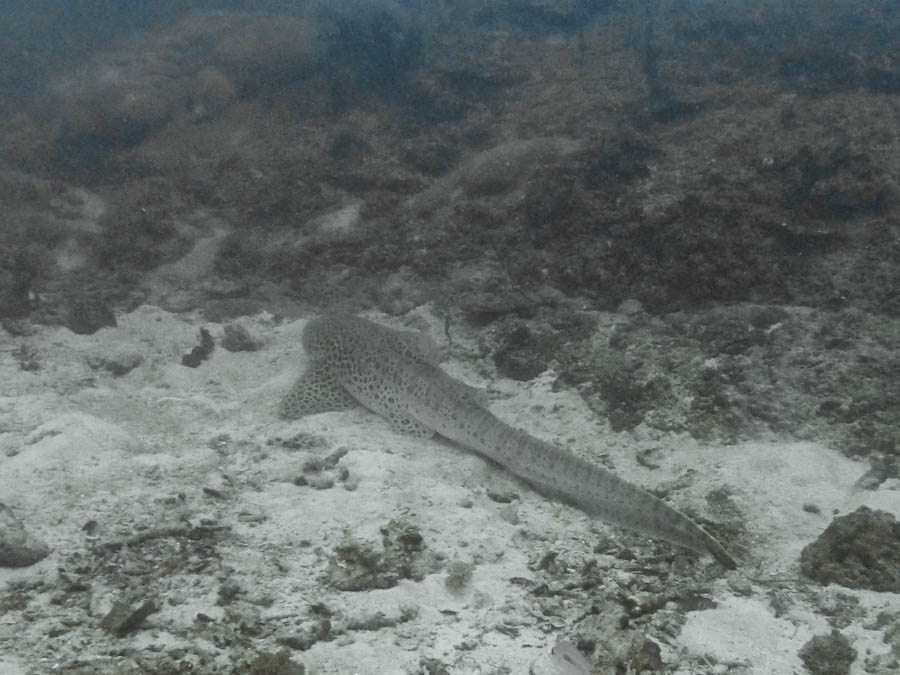
In my opinion, the coolest part of diving here is the chance to spot leopard sharks at Hin Bida and Koh Bida Nai.
There is also a famous wreck dive between Koh Phi Phi and Phuket – this is where the King Cruiser passenger ferry sank in 1997 (killing zero people, don’t worry!). It’s quite a distance from Koh Lanta (an additional hour past Koh Phi Phi), so most dive shops don’t head there as often as they visit the closer dive sites.
There is another wreck, the Kled Gaeow, just east of Koh Phi Phi Leh. This one was sunk deliberately about ten years ago. It’s not as unique as the King Cruiser, but dive operators will often combine this with Koh Bida as it’s much closer.

Diving costs on Koh Lanta
Diving on Thailand’s Andaman coast generally costs a bit more than diving in the Gulf, mostly due to the distance to the dive sites and associated fuel costs. The diving is also just generally nicer on this side – my opinion is that the marine life and state of the coral alone are worth the slightly higher prices.
Note that it is typical for dive centers here to add a fuel surcharge to visit Hin Daeng and Hin Muang. There is also a marine park fee of 600 baht (400 for the park entry and an additional 200 to dive) per day for divers visiting Hin Daeng, Hin Muang, Koh Haa, and several other nearby islands.
There is generally not a ton of variation in pricing on the island, so I recommend chatting to a few dive shops to see how you get along and what their schedule is like for the upcoming days. Most will offer pickup and drop-off from your accommodation, but it’s worth double-checking this.
A standard trip usually includes two dives, but you can often reduce your cost per dive by adding an optional third. For example, pricing for two fun dives typically hovers around 3500 baht (excluding rental equipment and marine park fees), with an additional 1000-baht charge for a third dive. That brings your cost per dive down from 1750 to 1500.
The best value is often found in booking a package if you plan to be on Koh Lanta for a bit. I did this and found there were pros and cons. Yes, I saved some money, but I also ended up returning to a few dive sites I wasn’t wild about because I needed to use up the dives I’d paid for. I would have saved more money by just having a beach day… but alas, I don’t control the schedule!
I also ended up on a few day trips where the dive center decided they wouldn’t offer a third dive that day, negating some of the value of buying a package.
Best time to dive Koh Lanta
The diving season on Thailand’s Andaman coast corresponds to the dry season, which runs (roughly) from November through April.
It’s still possible to dive year-round, but you’ll have far fewer dive sites available to you. Koh Lanta National Park, which encompasses Hin Daeng, Hin Muang and Koh Haa, closes from mid-May to mid-October.
As mentioned above, you’re a bit more likely to spot whale sharks and mantas in the second half of the diving season.

More Thailand travel planning
Well, you did come all the way here! If you’re wondering what else to see and do in Thailand, I have plenty of suggestions.
Planning your first trip to Thailand: The perfect 3-week itinerary
The north:
The 10 best motorbike trips from Chiang Mai
Guide to the Mae Hong Son Loop by motorbike
Visiting Chiang Dao and the Sticky Waterfalls
What do long-term travelers love so much about Chiang Mai?
Riding the Mae Salong Loop from Chiang Mai
The south:
Diving in the Similan Islands: A great choice for your first liveaboard
Everything to know about Khao Sok National Park and its floating bungalows