The best beaches in Colombia: A Caribbean coast itinerary
Some links on this page may be affiliate links. That means if you follow one, see something you like, and purchase it, I may receive a small commission at no cost to you. For more information, see this site's disclosures.
A guide to the best beaches in Colombia from Cartagena to La Guajira. This Caribbean coast itinerary includes places to hike, kitesurf, party, and just relax.
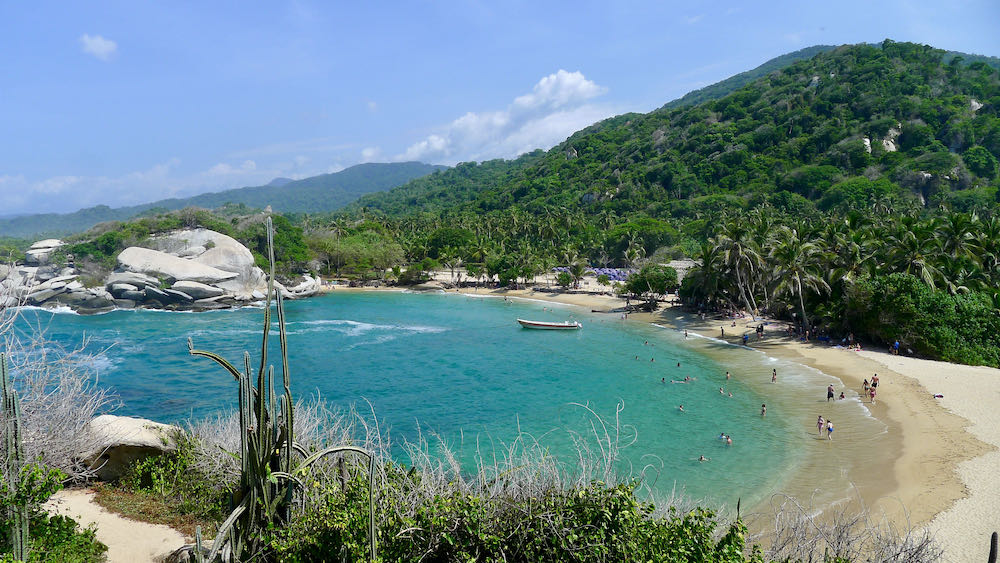
The beaches in Colombia are some of the most beautiful in the entire world. We’ve all seen the picture-perfect scene of colorful hammocks against the backdrop of stunning Tayrona National Park.
The laid-back destinations of Palomino and Costeño Beach are situated along miles and miles of wild, undeveloped coastline.

Lesser-known beaches like Playa del Pilón de Azucar and the Taroa Sand Dunes have unique desert landscapes and few tourists. Colombia’s coastal cities of Cartagena and Riohacha also have excellent kitesurfing beaches, along with the considerably more remote Cabo de la Vela.
Of course, travelers with more time and money can visit the crystal-clear water of San Andres and Providencia islands. Adventurous souls can venture west to explore the untamed, secluded beaches of Colombia’s Pacific Coast.
For those with just a week or two and a limited budget, however, Colombia’s Caribbean coast offers plenty of unspoiled coastline with gorgeous scenery. Read on for an overview of the best beaches in Colombia between the major tourist hub of Cartagena and the remote region of La Guajira along the Venezuelan border.
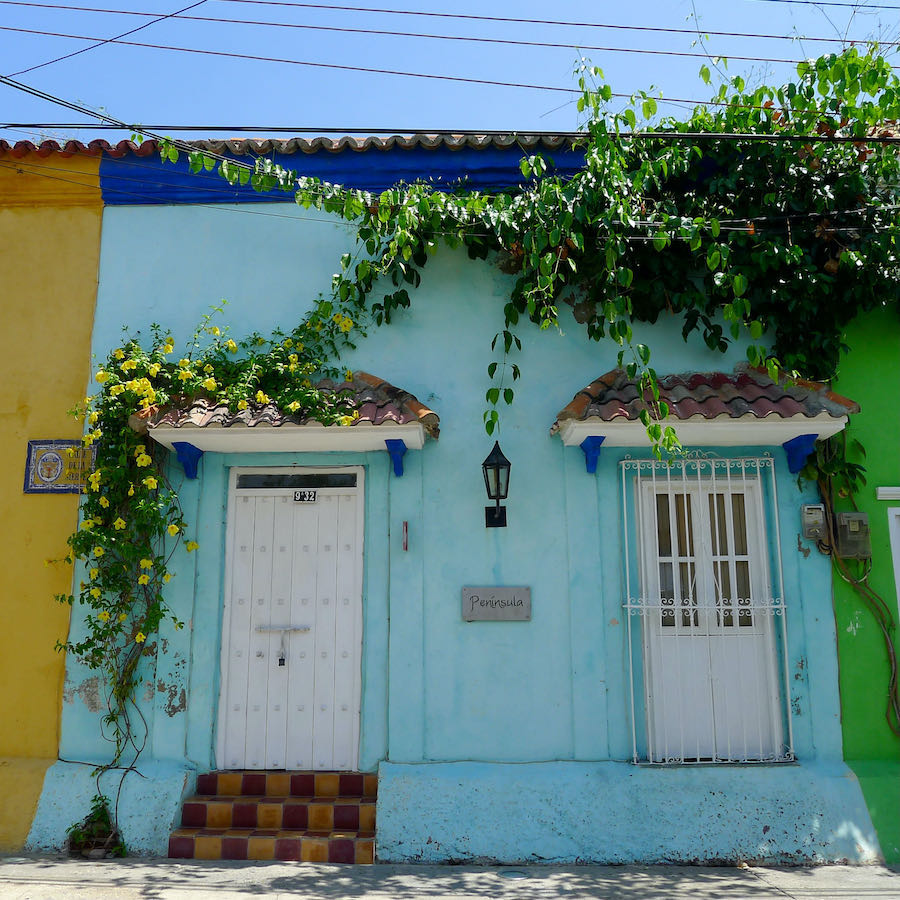
There are a few beaches close to the city, but they’re not nearly as nice as the options further north.
That said, Cartagena has some of the best beaches in Colombia for kitesurfing (even if they aren’t much to look at). There are many highly rated kitesurfing schools located near Cartagena, particularly on La Boquilla Beach.
If you’re more interested in lounging and swimming, I would recommend hopping on a bus to enjoy some of the spectacular beaches up the coast.
Unless you’re really pressed for time, kiters should check out Riohacha and Cabo de la Vela (below) as well.
Santa Marta: Jumping-off point for Minca and the Lost City
Traveling northeast from Cartagena, your first port of call will likely be Santa Marta. This is a popular beach destination with local families, and there are also several fun and social hostels for the young/young at heart.
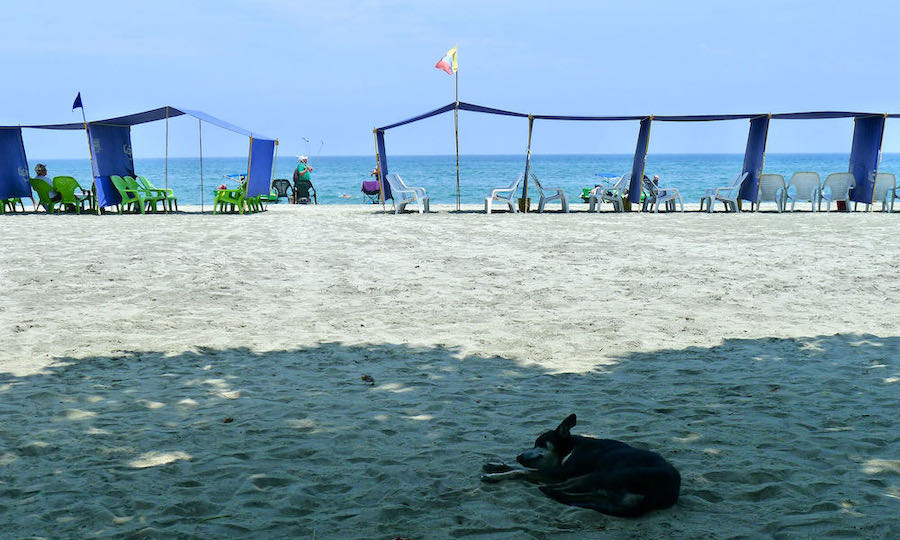
Santa Marta is also a great place to arrange a trek to the Ciudad Perdida or catch a pickup to the cooler hills of Minca.
Parque Nacional Natural Tayrona: The most picturesque beaches in Colombia
Next up is Tayrona National Park, home to the most famous beaches in Colombia, including the stunning Cabo San Juan. This is that postcard-perfect beach you’ve seen on the cover of nearly every guide to Colombia in existence! Any northern Colombia itinerary should include this place.
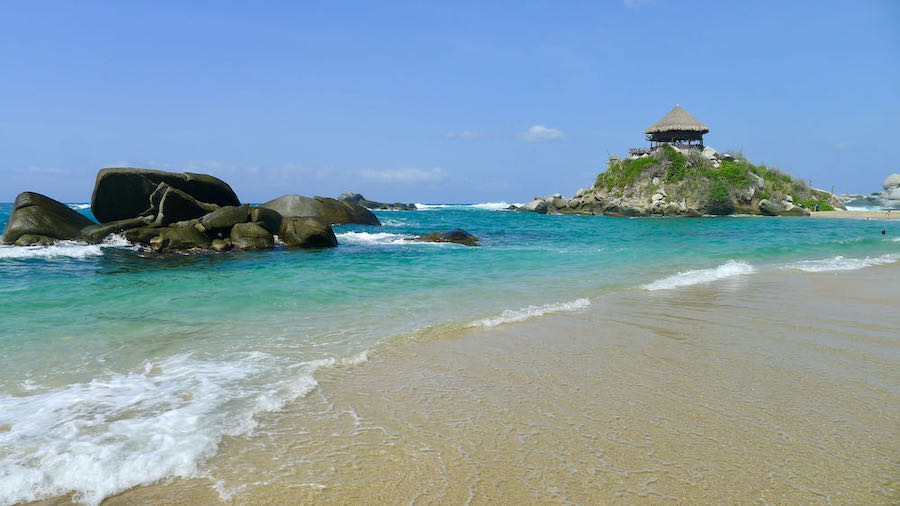
There are two routes into the park.
Option 1: Take a bus to El Zaino, the main entrance to Tayrona National Park
Most visitors take a bus to the park entrance at El Zaino. After paying the entrance fee, you can take an optional shuttle to Castilletes and walk to the famous Cabo San Juan beach from there. (I recommend taking the shuttle, as the walk from El Zaino to Castilletes is on a paved road and not particularly nice.)
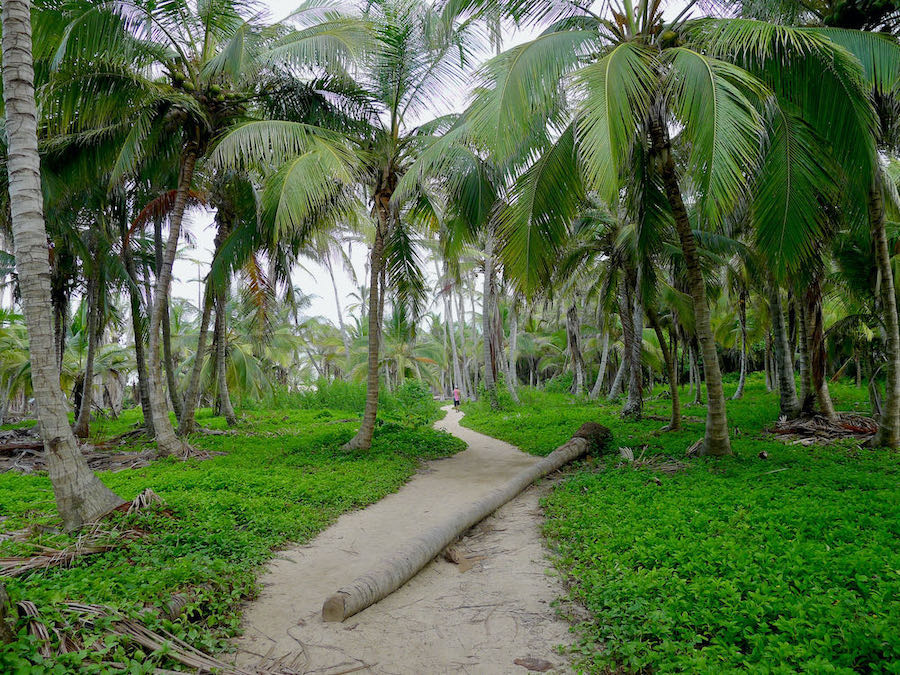
This trail is flat and takes you through the forest and past the beaches at Cañaveral, Arrecifes, and La Piscina. It’s about 2 hours from the shuttle drop-off to Cabo San Juan.
Option 2: Start in Calabazo for a less crowded (but more challenging) hike into Tayrona
For a longer hike, you can get off the bus from Santa Marta a bit earlier, in Calabazo. From here, you’ll walk through the jungle and past the indigenous village of Pueblito.

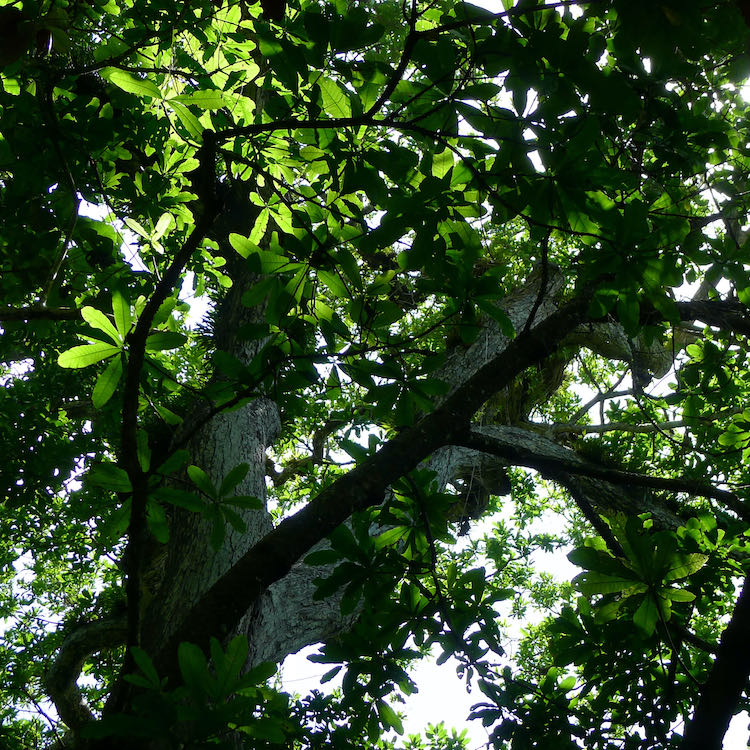
I was completely alone for most of this hike – a world away from the crowds I found when I arrived at the beach four hours later.
I recommend hiking out the traditional way, especially if it’s later in the day. You’ll find plenty of buses waiting to take travelers back to El Zaino, and you’ll get to see a different part of the park.
Spending the night in Tayrona National Park
It’s possible to stay overnight in Tayrona National Park by renting a hammock or tent on the beach. (I’ve heard the tents are unbearably hot, so I would try to reserve a hammock!)
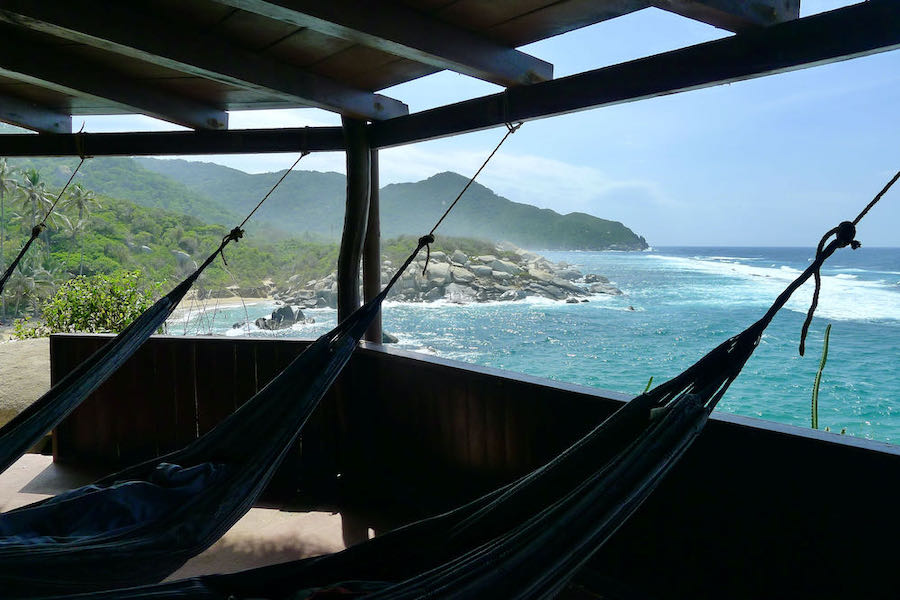
You can reserve a tent online at many of the campsites (but not at Cabo San Juan). It’s also possible to bring your own tent, and there are several campgrounds in the park.
There are lockers to store your belongings, and there is also a restaurant near the Cabo San Juan campsite. I always recommend bringing your own padlock instead of renting one. (It’s more secure, plus it saves you money.)
Costeño Beach: Probably the best beach in Colombia to do nothing at all
For something significantly sleepier, the next stop on your Caribbean coast itinerary is Costeño Beach. Just 15 minutes up the road from Tayrona, this isn’t a town so much as a small collection of hostels and guest houses on a beautiful beach.
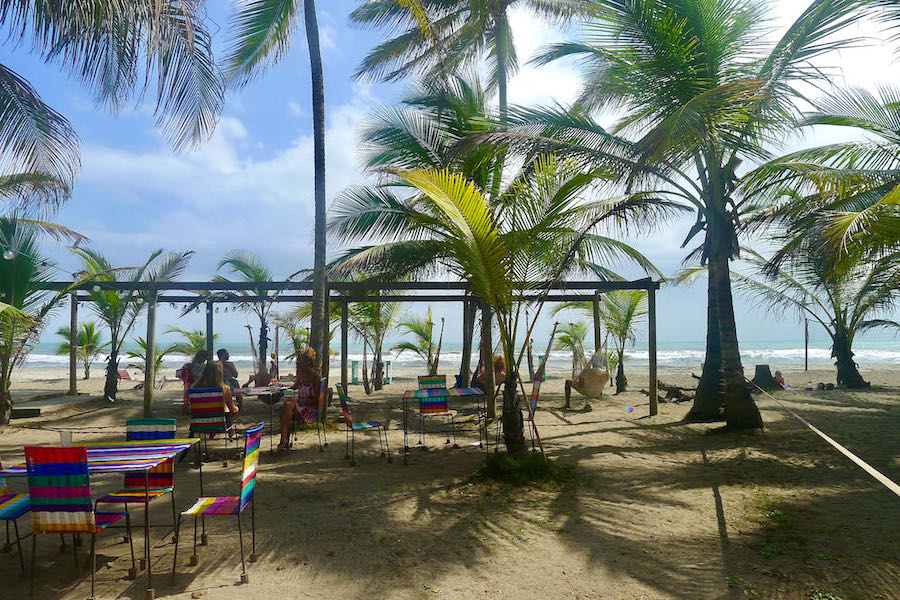
My recommendation would be to continue up the coast to Palomino, Riohacha, and Cabo de la Vela first. That way, you have a nice place to break up the drive back to Santa Marta or Cartagena. (Personally, I was pretty worn out after organizing a trip to Cabo de la Vela. I was perfectly happy to relax under the coconut palms for two days before leaving the coast for Medellín.)
Palomino: River tubing and a chill, social beach town
Palomino is a quiet little beachside town with a handful of hostels and beautiful, wild coastline. It’s about 45 minutes to an hour by bus from Costeño Beach.
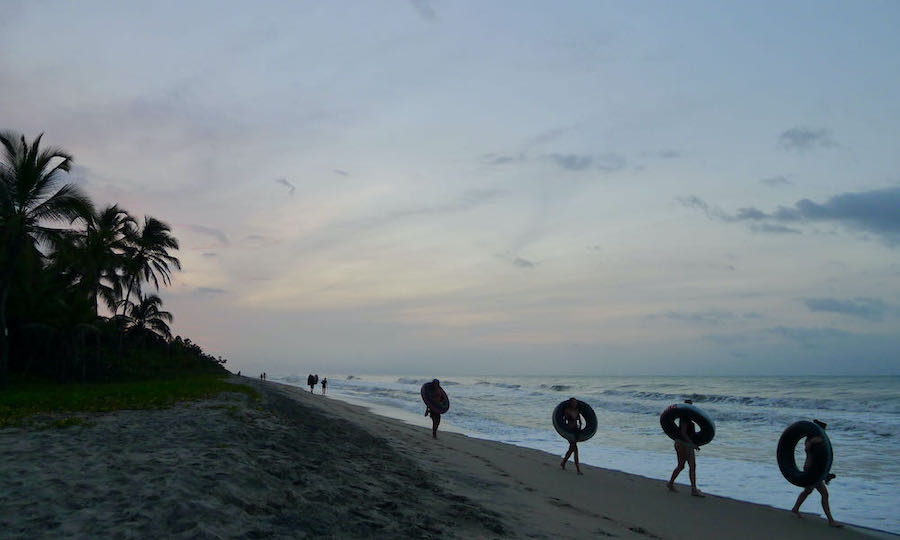
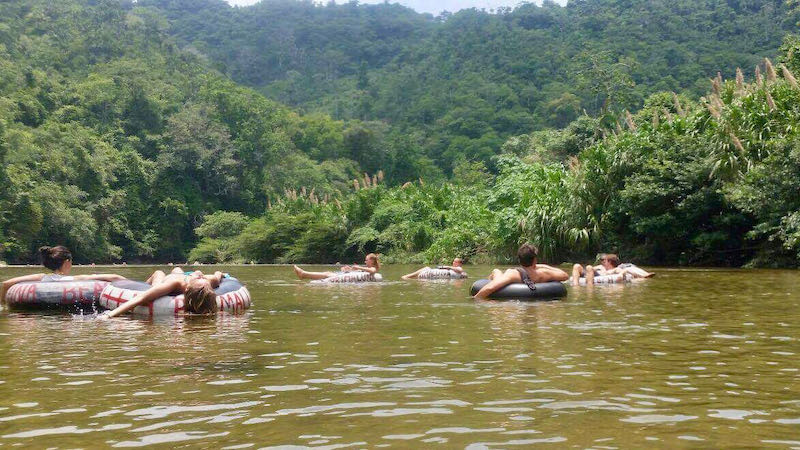
Palomino has a pretty social vibe, and it’s easy to meet other travelers. One of the highlights of Palomino is actually not on the beach at all – it’s the two-hour tubing trip down the Palomino River.
The tubing companies drive you inland through the jungle to a drop off point, and you spend the next several hours drifting lazily towards the sea and chatting with your new friends. Remember to wear plenty of sunscreen and possibly a rash guard or long-sleeved shirt. You’re in that tube for several hours, and there’s no shade. It will protect you from the unrelenting sun, and you can easily stay cool by just getting in the water.
Riohacha: Gateway to La Guajira and a kitesurfing destination in its own right
If you’re looking to arrange a trip to the Cabo de la Vela area, you’ll almost certainly pass through Riohacha. (It’s not really worth traveling all the way here unless you’re continuing north.) I did not visit the beaches here myself, but when I caught a glimpse of the water on the way out of town, I wished I had!
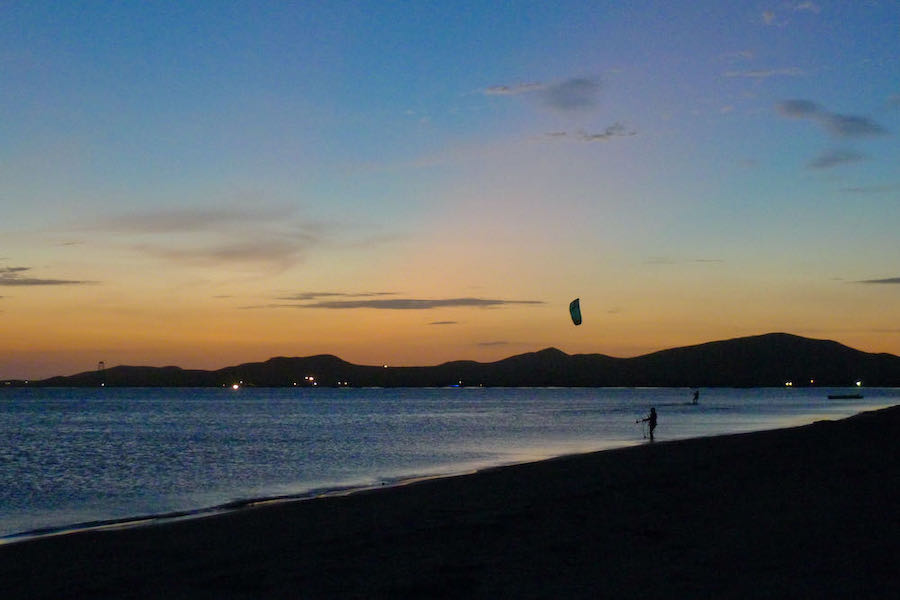
Riohacha is also home to several highly rated kitesurfing schools. It is possible to arrange lessons on nearby Mayapo Beach or book a kitesurfing trip to Cabo de la Vela.
Cabo de la Vela: One of the best beaches in Colombia for kitesurfing
Getting to Cabo de la Vela takes some work, but the trip is well worth the effort. This area is spectacularly beautiful and remote, and it has some of the most unique beaches in Colombia.
It’s possible to arrange tours of Cabo de la Vela, Taroa, and Punta Gallinas from Riohacha.
To tour the northern area of La Guajira independently, you’ll need to first take a shared taxi to Uribia. From there, you can catch one of the pickups headed to Cabo de la Vela. (Check with your accommodation in Riohacha for updated information about where to find onward transportation once you arrive in Uribia. There are typically trucks bound for Cabo de la Vela waiting in front of the market area.)
Pilón de Azúcar Beach: Relax after a long travel day
Once in Cabo de la Vela, you can organize pickup or motorbike trips to Playa del Pilón de Azúcar and El Faro. (Both are nearby, and you can easily visit them in one afternoon.)
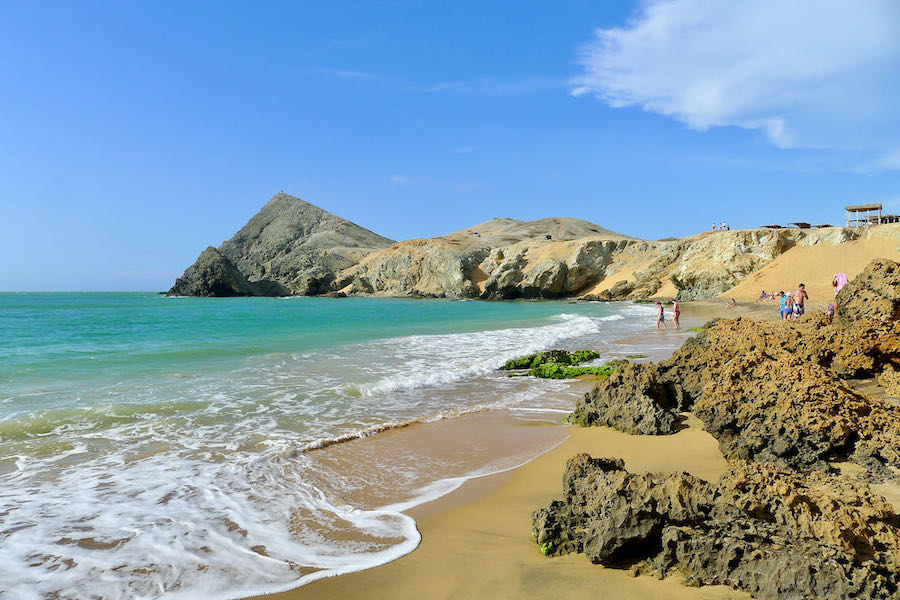
When you arrive at the Pilón de Azúcar, you can scramble up the very windy peak before relaxing on the beach below. From the Virgen de Fátima statue, there are panoramic desert and ocean views.
The Playa del Pilón de Azúcar is a beautiful, swimmable beach with few crowds. Most tours will take you to the lighthouse (El Faro) for sunset before heading back to Cabo de la Vela.
If you are traveling independently, you can arrange a 2-day trip to Punta Gallinas back in town.
Taroa Sand Dunes: An otherworldly landscape on one of the most remote beaches in Colombia
Las Dunas de Taroa are arguably the crown jewel of the Punta Gallinas region, and they form one of the most distinctive beaches in Colombia. This otherworldly place was the unequivocal highlight of my northern Colombia itinerary.
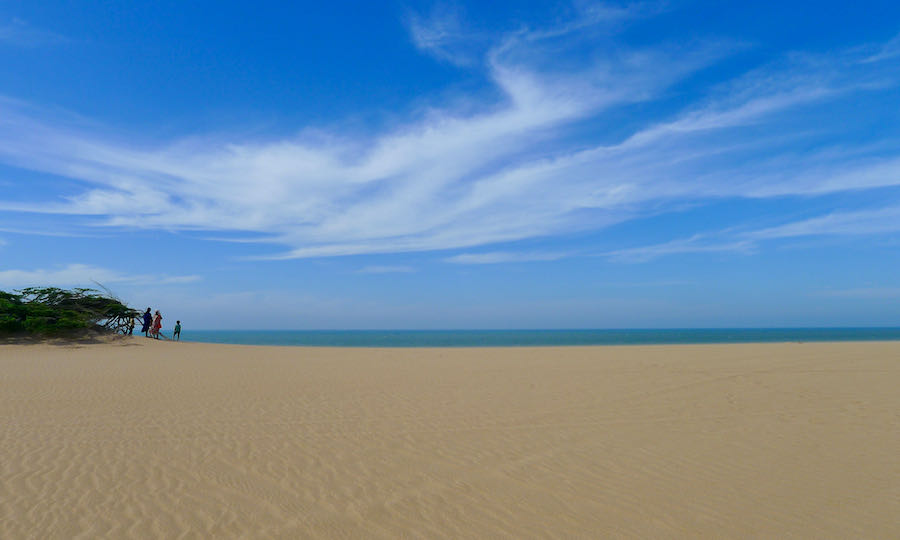
You’ll climb up the dunes in a landscape more reminiscent of the Sahara Desert than most people’s idea of a Caribbean beach.
Once you reach the top of the dunes, you’ll catch your first glimpse of the sand cascading down to the sea. If it weren’t so hard to get to, it would make for a great sci-fi movie set!

Most tours spend a night in the Bahía Hondita before heading back to Cabo de la Vela, Uribia, or Riohacha the next day.
From there, start your long voyage back to Cartagena!
Hopefully, you’ve saved a few of the beaches on this list for the return trip. If you’re ready for something different, consider heading to the mountains of Minca for cooler weather and a change of scenery. Or head alllll the way inland for high altitude trekking, lively cities, and gorgeous small towns surrounded by coffee farms.
More on traveling in Colombia
The perfect three-week Colombia itinerary
Minca, Colombia: A mountain escape
Exploring Cabo de La Vela, the Taroa Sand Dunes, and Punta Gallinas