2 days in Montreal: An itinerary for first-time visitors
Some links on this page may be affiliate links. That means if you follow one, see something you like, and purchase it, I may receive a small commission at no cost to you. For more information, see this site's disclosures.
This itinerary is for anyone planning a quick weekend trip or other short city break in Montreal – my home for several years and one of the most interesting places in Canada (and arguably in all of North America).
Forgive the incoming cliché, but Montreal is a really unique place. Culturally, it doesn’t feel like anywhere else in Canada. That said, it’s not quite the dupe for Paris the tourism board would have you believe. (I’ve just offended a good chunk of the population in saying that, but Montreal truly does have its own character.)
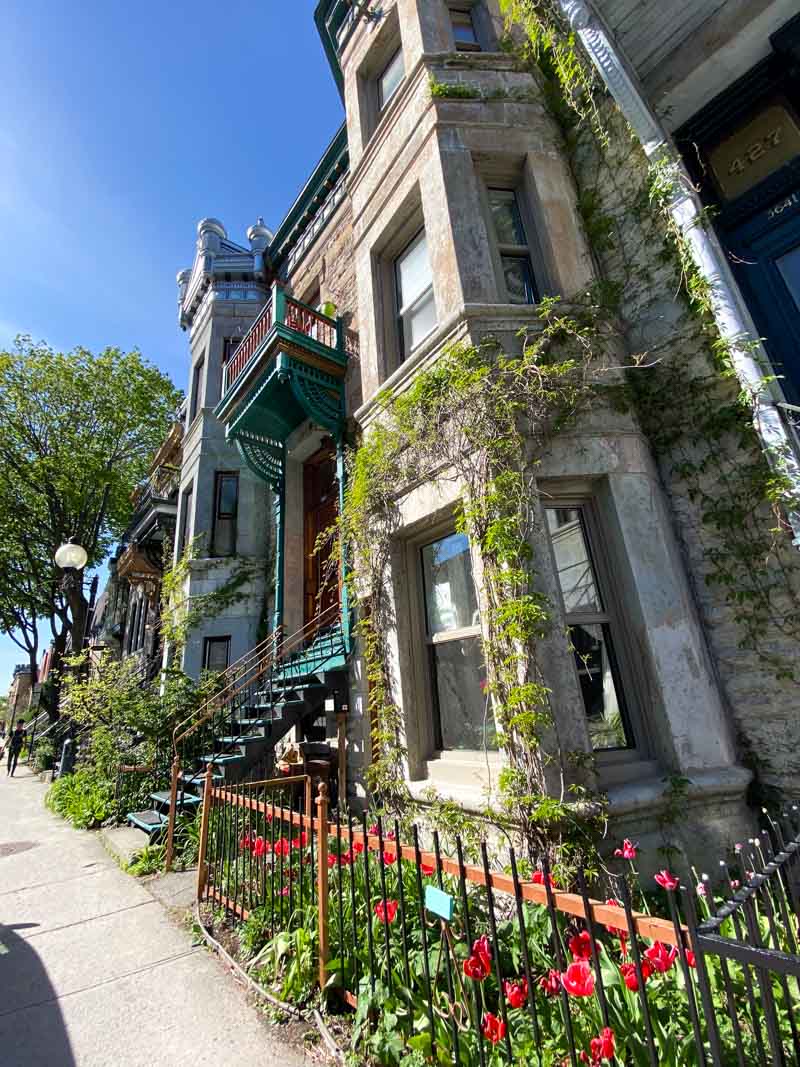
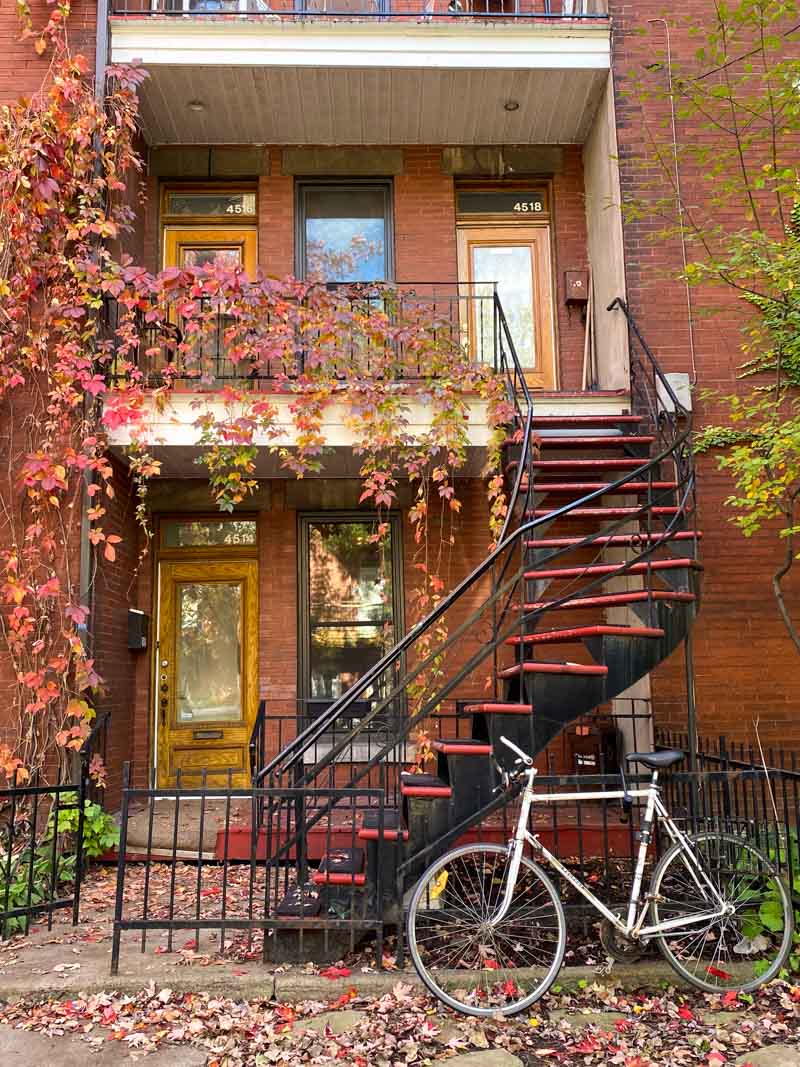
Visually, there’s nowhere like it. Treacherous winding staircases covered in half a foot of snow? Only one place that could be!
I lived in Montreal for just over three years, and I still go back frequently to visit family and friends (sometimes for a few weeks or months at a time). I can say with confidence that even though there’s plenty to do if you want to stay longer, Montreal is a fantastic destination for a short trip or weekend getaway.
The entire city is extremely walkable, and it has good public transportation for days when the weather makes that sound less than appealing. You’ll find amazing food, great nightlife, charming streets, quirky neighborhoods, art, shows, festivals, and a few lovely pockets of nature!
This itinerary will give you a great overview of the city’s history and culture, all while taking in its most beautiful architecture and sampling some of its most famous eats.
Not reading all that?
Here are my top picks to get to know the city if you’re short on time to plan:
- Walking tour of Old Montreal to learn about its history and architecture.
- Cycling tour of the Plateau, one of Montreal’s coolest (and prettiest!) neighborhoods. You can choose an e-bike or a regular bike.
- Eat your way through Mile End on a food tour. Montreal-style bagels, poutine, French pastries… need I go on?
- Scooter tour of Montreal. The morning, afternoon, and evening options all visit different neighborhoods. (I would choose the afternoon or evening one if you’re visiting the Plateau and Mile End on one of the other tours listed above.)
Is two days enough time to see Montreal?
I am of the mind that two days is not really enough time to see anywhere on the planet thoroughly, but we have to work with what we’ve got! Two days is certainly enough time to visit Montreal’s must-see sights and get a sense of its many distinct neighborhoods.
The city is a foodie paradise, home to a fantastic arts scene, and a joy for photographers. If this is your first trip, two days is a great amount of time to get oriented, but there will still be plenty for you to see next time!
🛏️ Where to stay
Budget travelers: With half of my extended family in Montreal, I’d never looked much at short-term accommodation until I started researching places to stay for this blog. I was genuinely shocked (in a good way) by the number of options I found for smaller budgets, given that North America isn’t exactly known for its hostel scene.
Take a look at M Montreal, the Auberge du Plateau, or the Alternative Hostel of Old Montreal, and add this to the list of “things that will make you feel like you’re actually in Europe.”
Everyone else: I imagine many, perhaps most, people reading this are past their hostel era (as am I, sadly), so I have recs for you too:
Eurostars Old Montreal Suites: Modern, but also gorgeous and full of charm in the heart of Old Montreal.
Manoir Sherbrooke: This is the one to choose for character. Located in the Plateau in a historic Victorian building.
Hotel Le Dauphin Centre-Ville: Modern and super central to downtown, Old Montreal, and the Quartier des Spectacles.
Ok, getting on with it now!
Day 1 (Morning): Climb Mont Royal
Let’s start your first day in Montreal with a bit of exercise! The expansive green space in the center of the city is home to Mount Royal, the mountain (really just a large hill) from which Montreal gets its name.
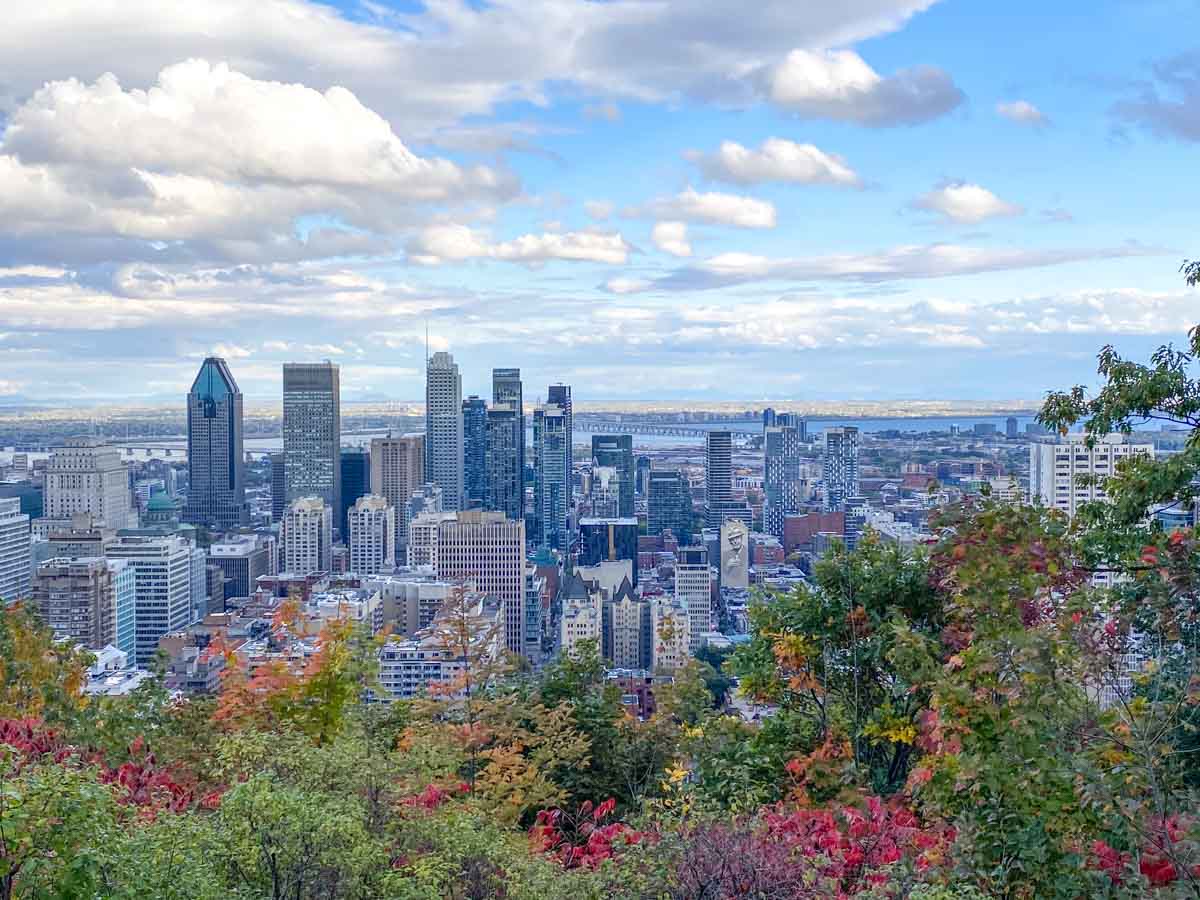
Known to locals as simply “the mountain,” it has an amazing, panoramic view of the Montreal skyline at its main viewpoint, Belvédère Kondiaronk. This large observation platform is a great place to start your trip, as it helps you to immediately orient yourself. (I have instructions on how to get there, as well as directions to other lookout points on the mountain, in my post on the best views on Mount Royal.)
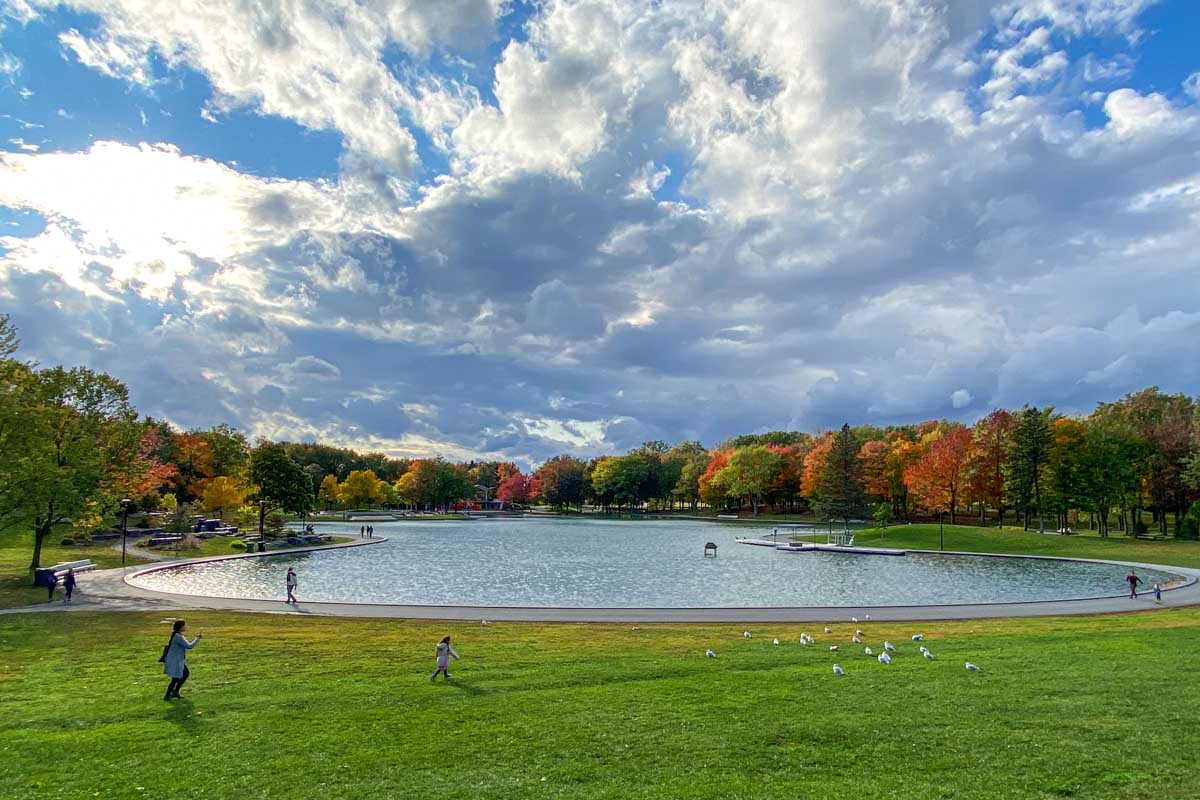
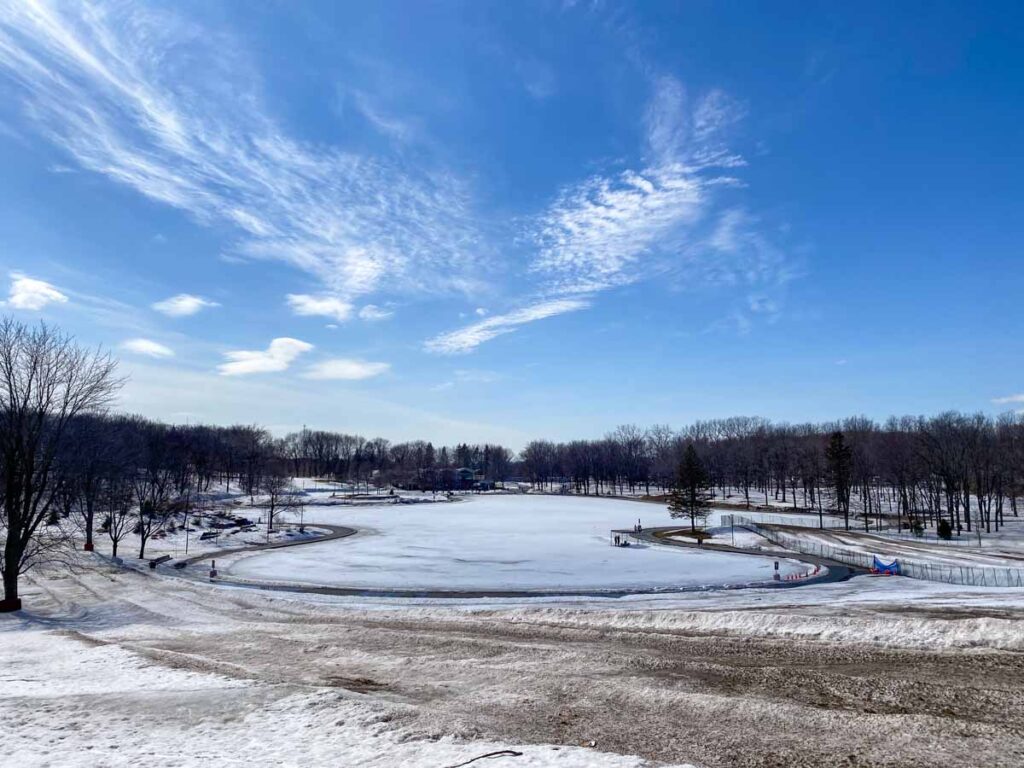
Mount Royal also has a lake (Lac aux Castors, or Beaver Lake) where you can rent a paddle boat, admire baby ducklings, or ice skate, depending on the season. The area around Lac aux Castors is a very popular place for family and friends to get together in nice weather. If you enjoy people-watching, this is a great spot to while away a few hours.
For something more active, there are miles and miles of walking trails that double as cross-country ski paths in the winter. (Watch out for ticks and poison ivy if you head into the woods in the warmer months.)
Morning alternative for rainy (or just too miserably cold) weather: Musée des Beaux-Arts
Montreal is known for many things, but good weather is definitely not one of them. If spending several hours in the wind and cold is not for you today (or if you’re unlucky enough to arrive during a canicule/heatwave), Montreal has some great museums where you can spend the morning instead.
My personal favorite is the Montreal Museum of Fine Arts (MMFA), located in the western part of downtown Montreal. You can find information about permanent and temporary exhibits on the museum’s website.
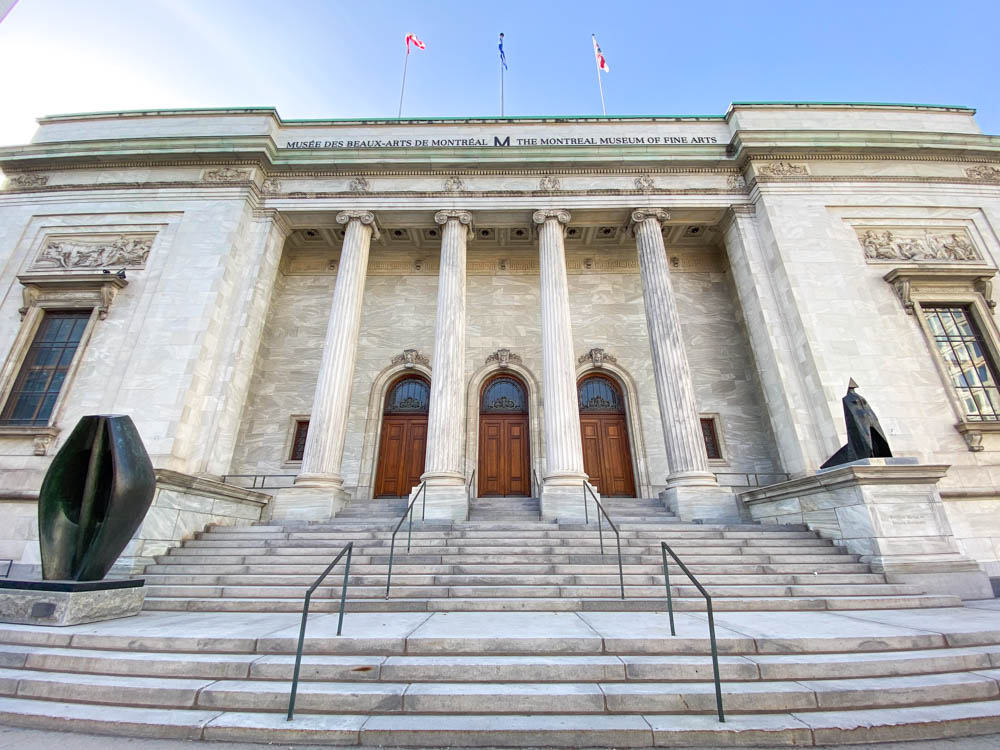
(I recognize that some people like to start earlier and squeeze a lot more into their days than I do. If you want to visit the mountain and the museum, it’s about a 15-minute walk from here to the Peel Steps, where you can start your climb up Mount Royal. Alternatively, walk about 5 minutes to this bus stop and take line 165 or 166 to the Trafalgar Stairs. From here, it’s less than 10 minutes on foot to Beaver Lake.)
If you enjoy history more than art, you might prefer Pointe-á-Callière (the Montreal Museum of Archaeology and History) instead. And if you’re more into science, the Biodome and Planetarium in Montreal’s Space for Life are also a great option. Just note that they’re a bit out of the way for the rest of the day’s activities. (It’s an easy ride on the metro, though.)
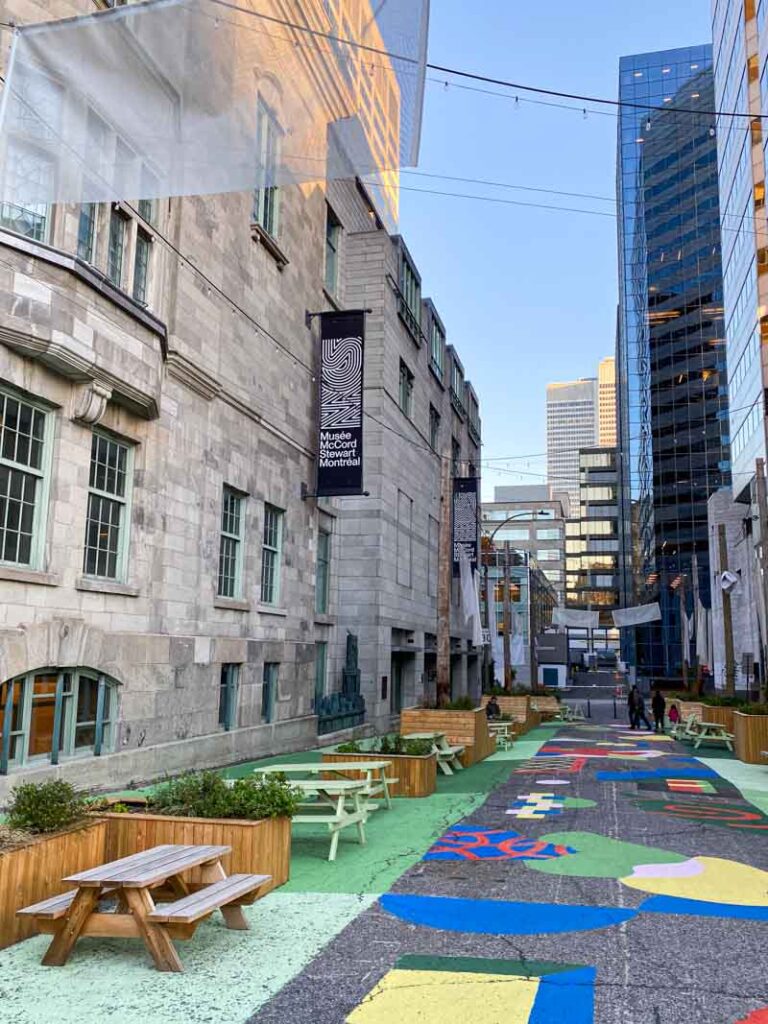
There are two smaller museums just a short walk down Rue Sherbooke from the MMFA that might make more sensible alternatives, logistically speaking. One is the McCord Stewart Museum, which has a very educational and at times moving exhibition on Indigenous cultures in Quebec. It also has frequent temporary exhibits showcasing photography, fashion, and textiles.
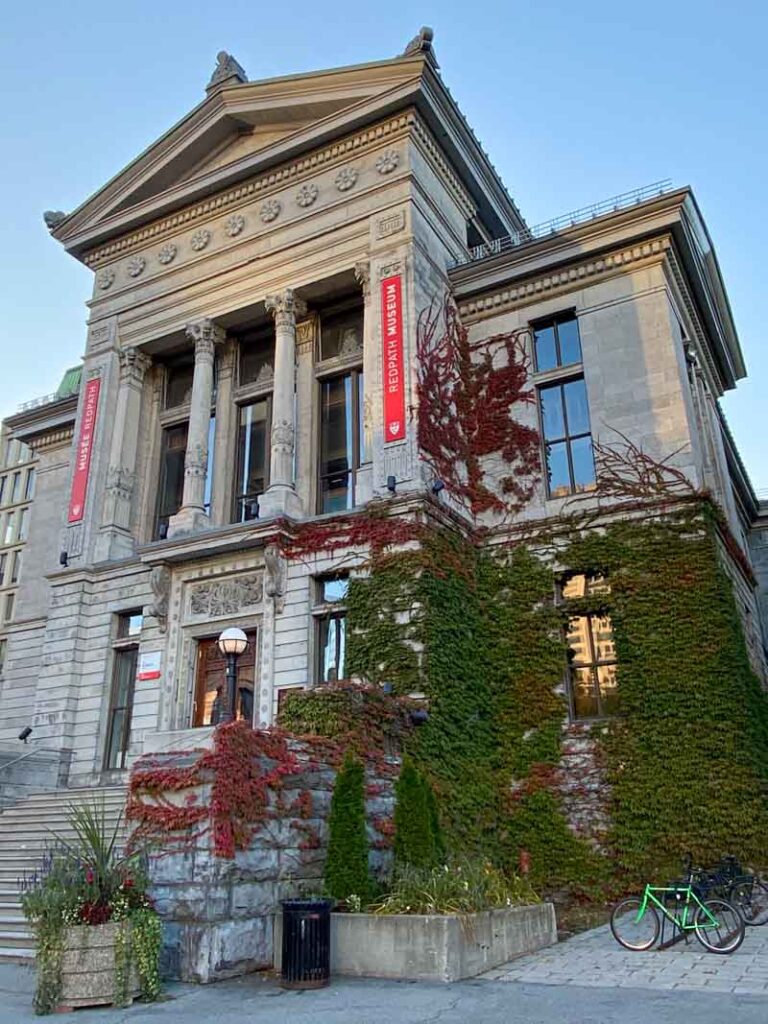
Just across the street is McGill University, where you’ll find the Redpath Museum of natural history and ethnology. This is a great one for kids – it’s small, but it has lots of interesting collections focused on zoology and paleontology. (Dinosaur skeletons? Check.)
Day 1 (Afternoon): Eat and drink your way through the Plateau and Mile End
Although the downtown area and Old Montreal are where you’ll find most of Montreal’s major sights, the best place to really get a feel for the city’s culture are the popular residential neighborhoods just east of the mountain.
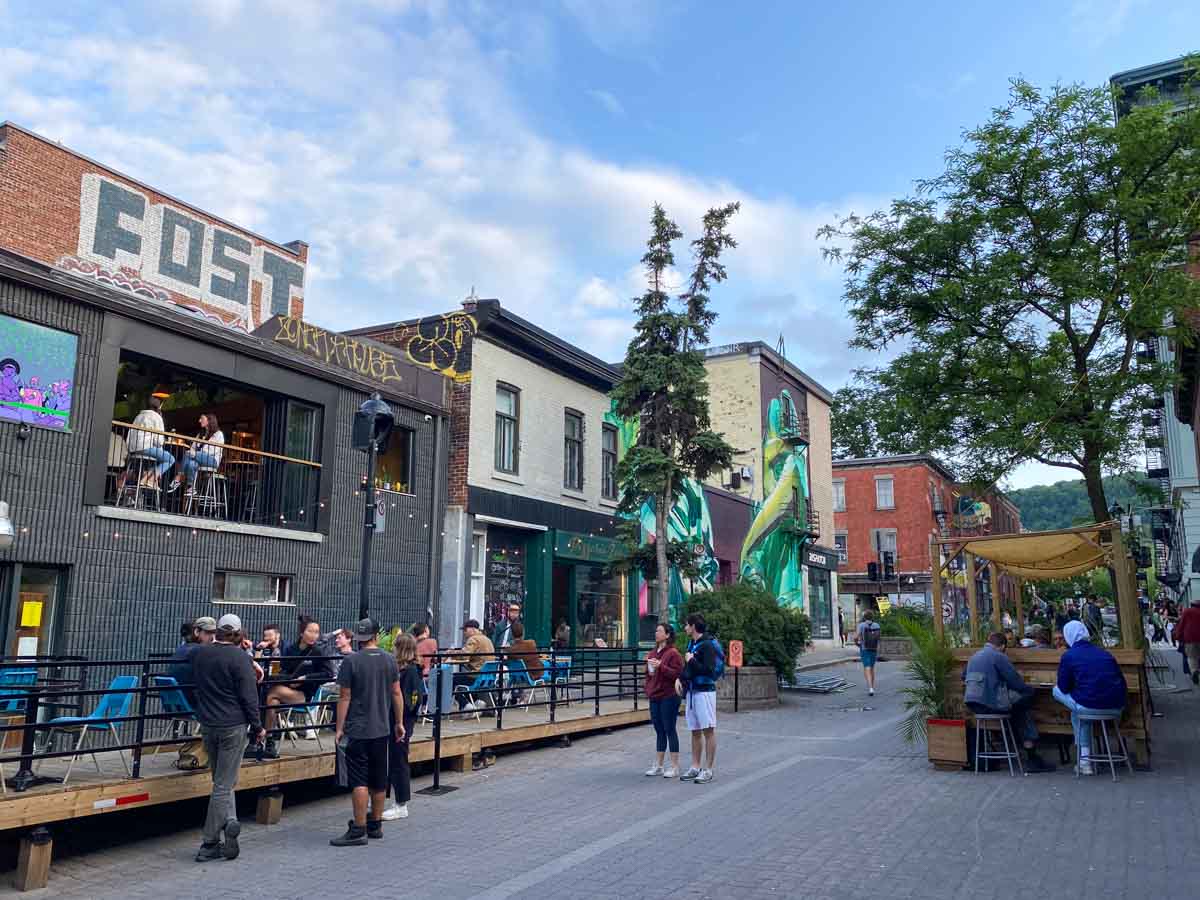
I recommend spending the afternoon wandering thorough the Plateau and Mile End. This area is really the cultural heart of Montreal, and it’s a must-visit for anyone who really wants to get to know the city. You can continue over to Little Italy and adjacent Villeray if you really want to get your steps in.
If you prefer pedaling to walking, there are bike sharing stations every few blocks throughout the neighborhood. There is also a fantastic cycling tour of the Plateau, Mile End, and Little Italy that starts right next to the popular Parc La Fontaine. When Montreal isn’t covered in snow (admittedly a solid portion of the year), it’s a fantastic city for cycling – bike lanes galore!
Le Plateau-Mont-Royal
If you’re feeling up to it, you can walk here from the Mount Royal Chalet. Head down the Grand Staircase and turn left when you reach the Olmsted Path. Just follow it all the way east until it ends; you’ll end up in the Plateau.
If you’d rather take the bus and save your energy (the Plateau and Mile End are best explored on foot or by bike), you can make your way to Lac aux Castors, the Mount Royal carpark, or the Camillien-Houde viewpoint. Buses 11 and 711 will take you right to the Mont-Royal metro station in the heart of the Plateau.
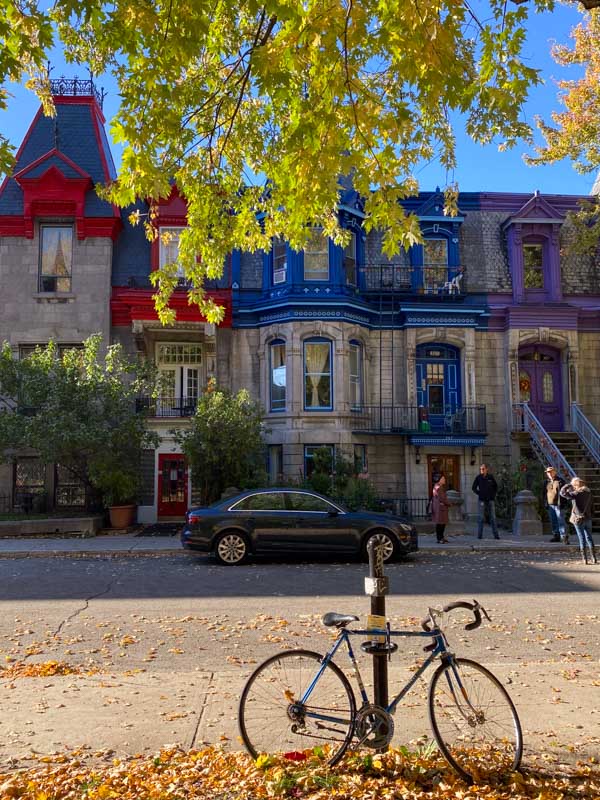
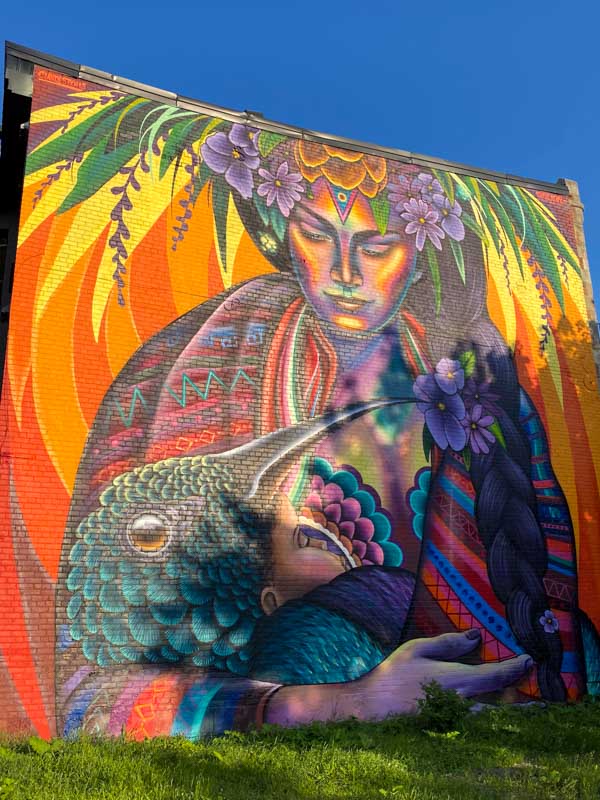
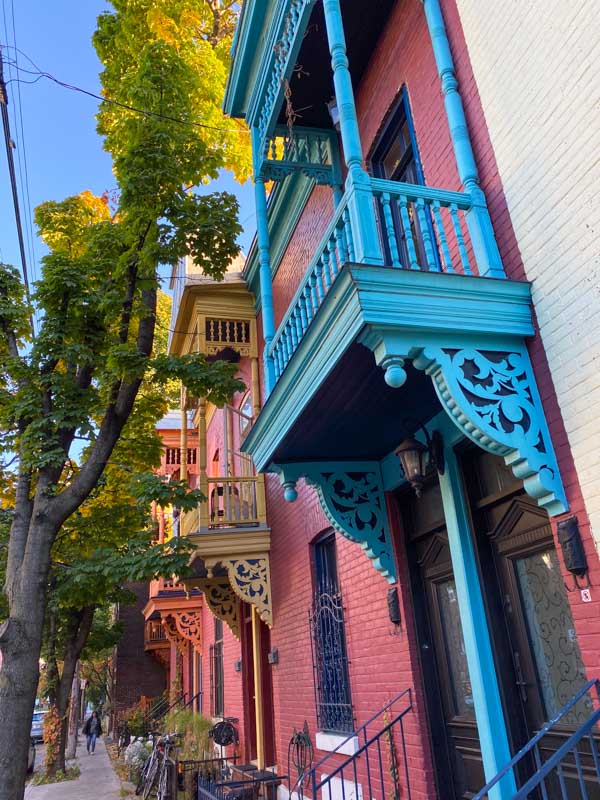
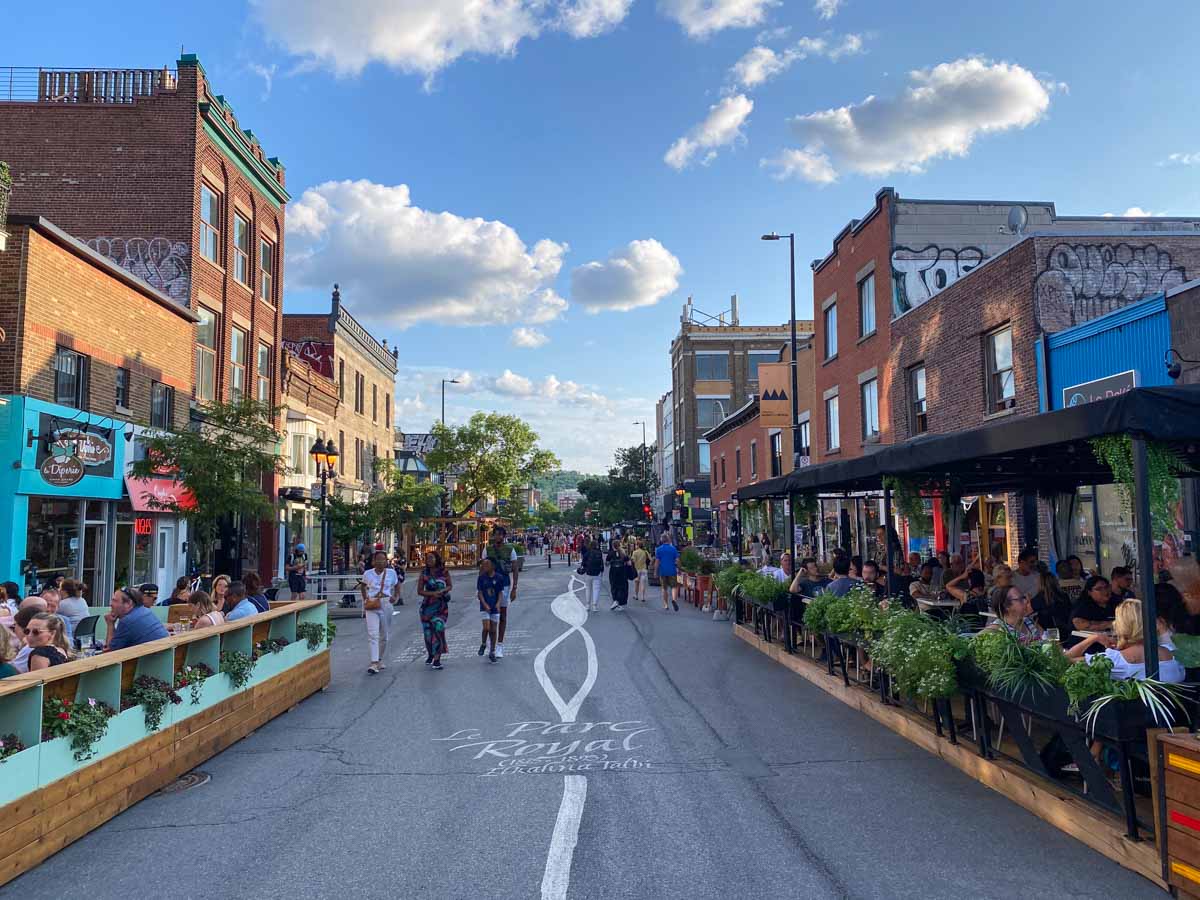
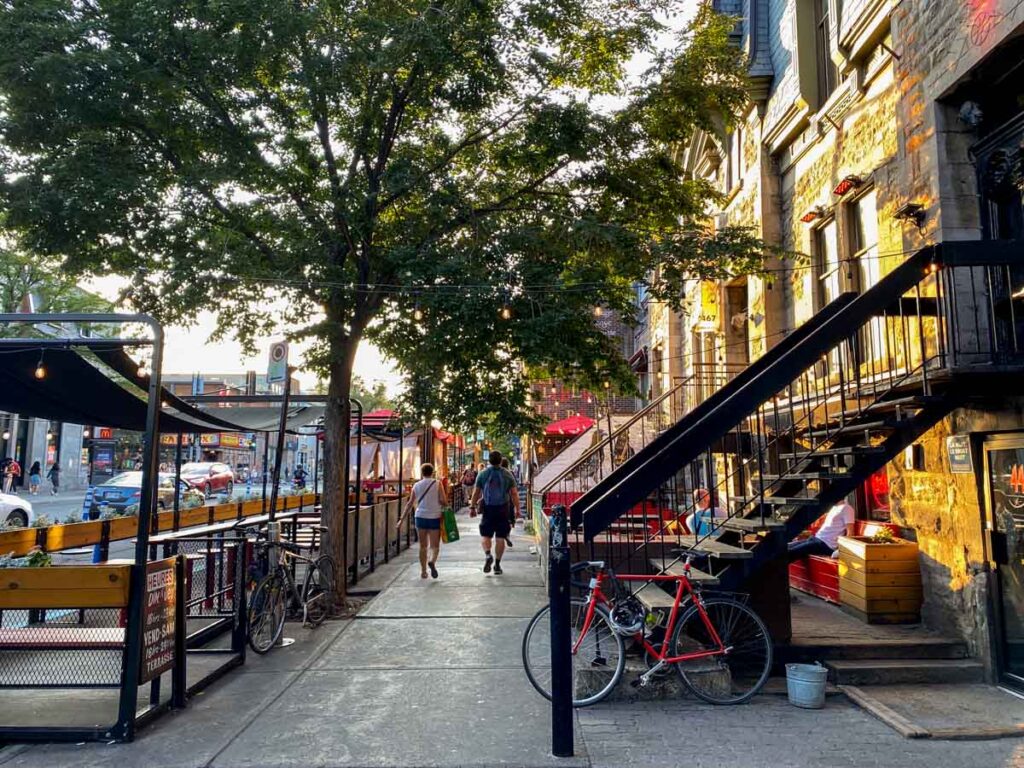
Here you’ll find tons of great bars and restaurants (cheap and not), lots of cool murals, and street after street of colorful Victorian facades and those iconic twisty staircases. The main arteries are Boulevard Saint-Laurent running north-south and Avenue du Mont-Royal running east-west. In the summer, the latter is closed off to cars, and Montreal’s beloved outdoor terrasses spill into the streets.
It feels impossible to make specific recommendations for lunch because Montreal is such a foodie destination, and there are just so many wonderful options depending on what you’re in the mood for. Some of the most famous places are La Banquise (for classic and not-so-classic poutine) and Schwartz’s Deli.
Vegetarians and vegans, check out Ohana, Sham, or Aux Vivres. If none of those speak to you, feel free to just wander until something does – I don’t think it will take long.
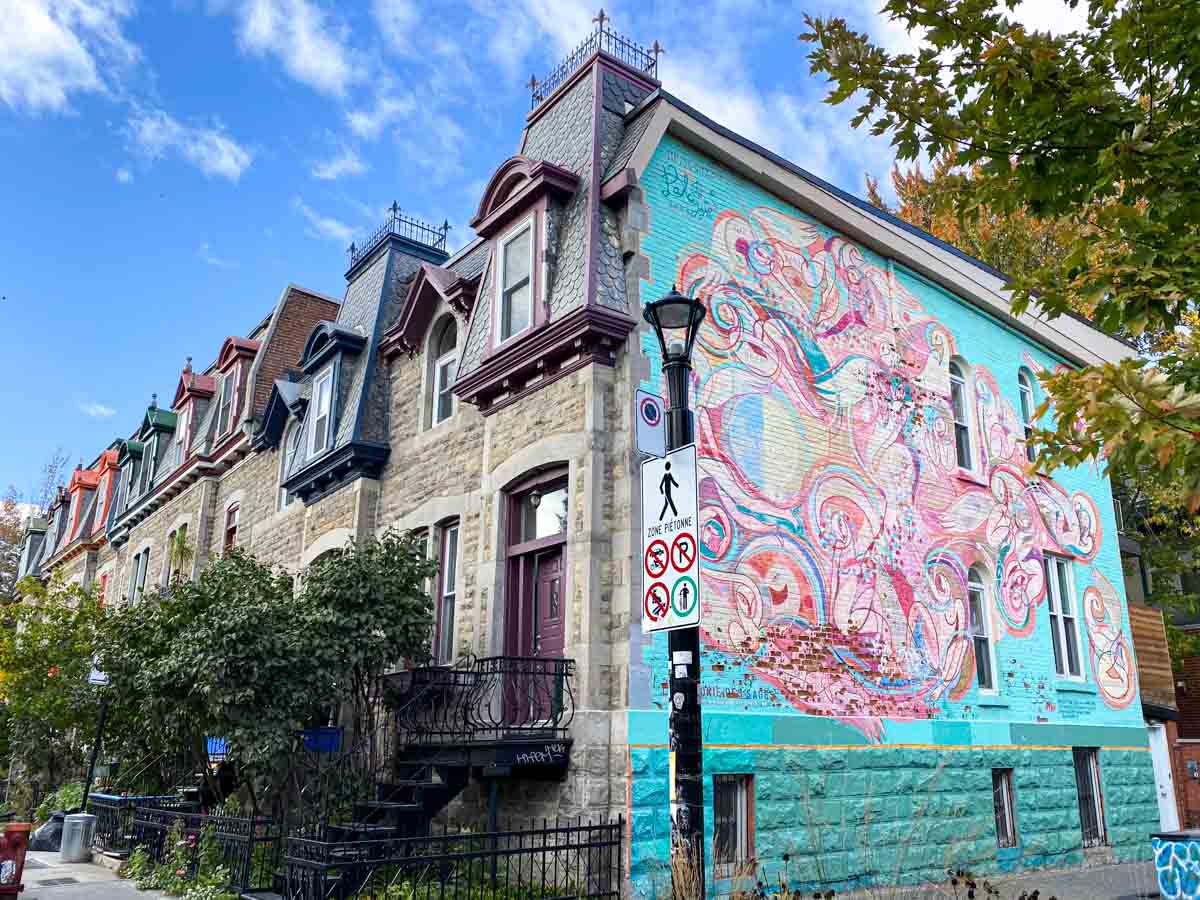
To admire some of Montreal’s most distinctive architecture, head up to Square Saint-Louis and stroll northwest from there to Avenue du Mont-Royal.
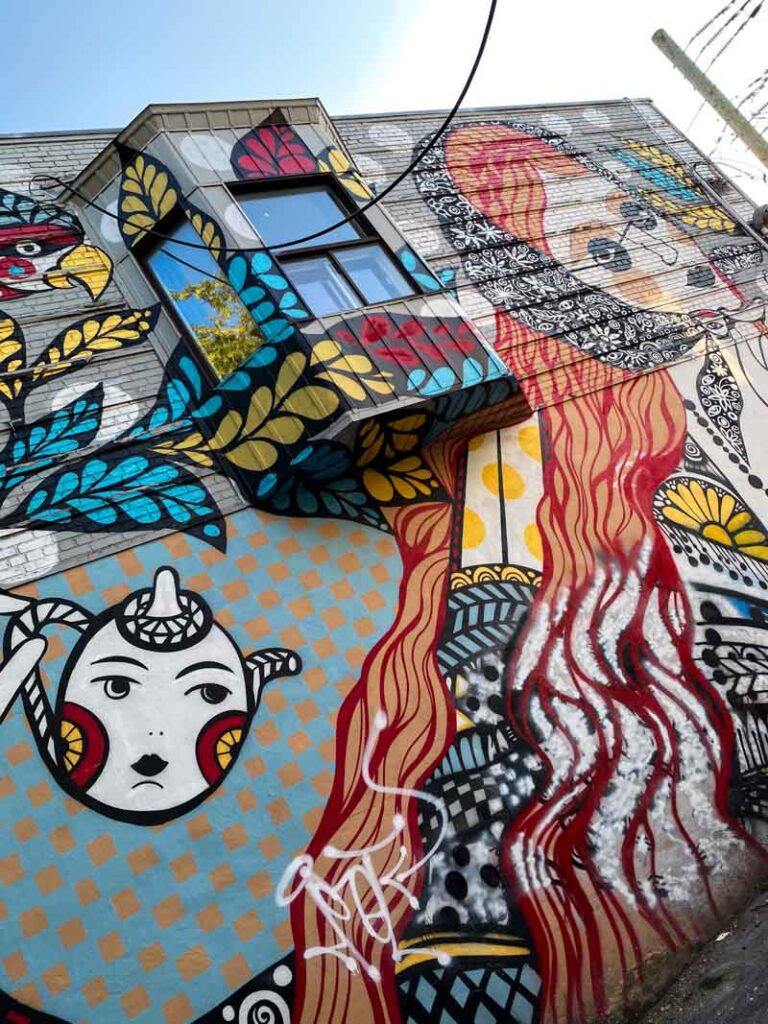
Street art fans will appreciate the many amazing murals in this neighborhood. New pieces are added all the time – Montreal actually hosts a mural festival every summer with food, music, and the chance to watch the artists at work. You’ll likely stumble across a few on your own, but also consider taking a tour for a deeper understanding of the history and context behind Montreal’s street art. The original Montreal mural tour has a fantastic reputation for affordable tours with friendly and knowledgeable guides.
Mile End
Just north of the Plateau (and technically forming part of the larger Plateau-Mont-Royal borough) is Mile End. This neighborhood has a similar vibe, just maybe a bit more low key.
Café Olimpico is a bit of an institution in Mile End, but there are lots of great spots around for a post-lunch caffeine fix. I like Café in Gamba (three locations in the area) and Café Myriade, which is on your way if you’re walking from the Plateau. (They also have two locations in the neighborhood, with one on Mont-Royal and one on Saint-Denis.)
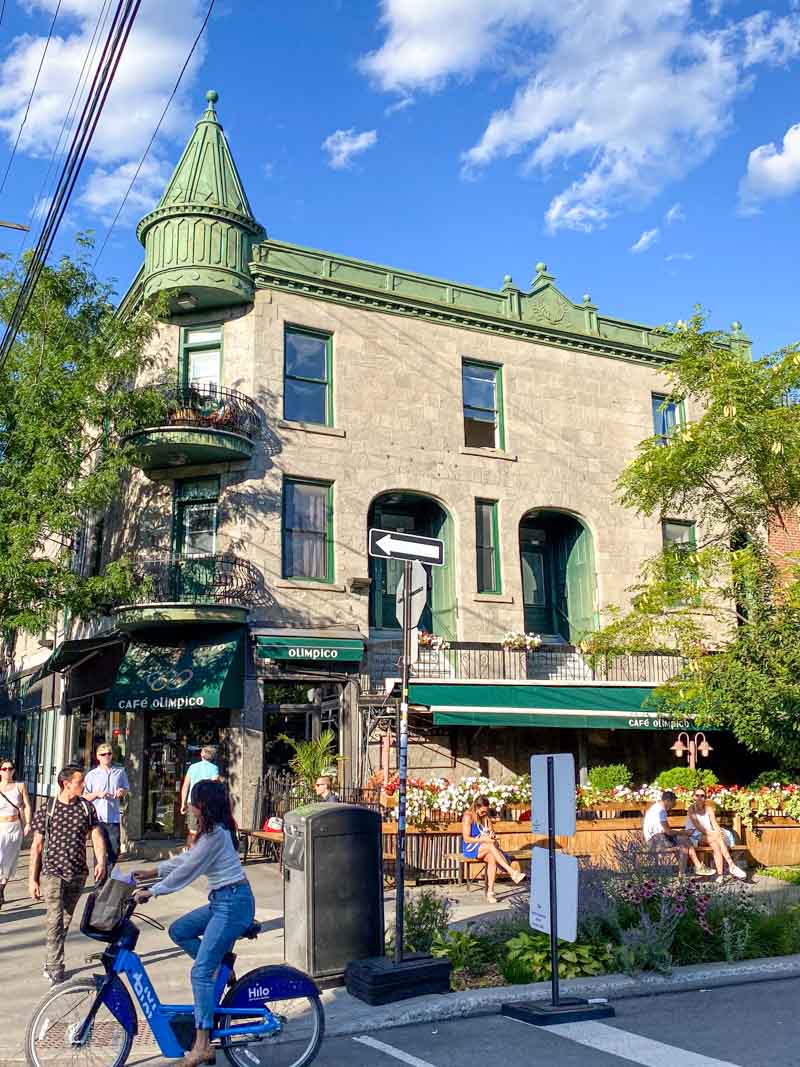
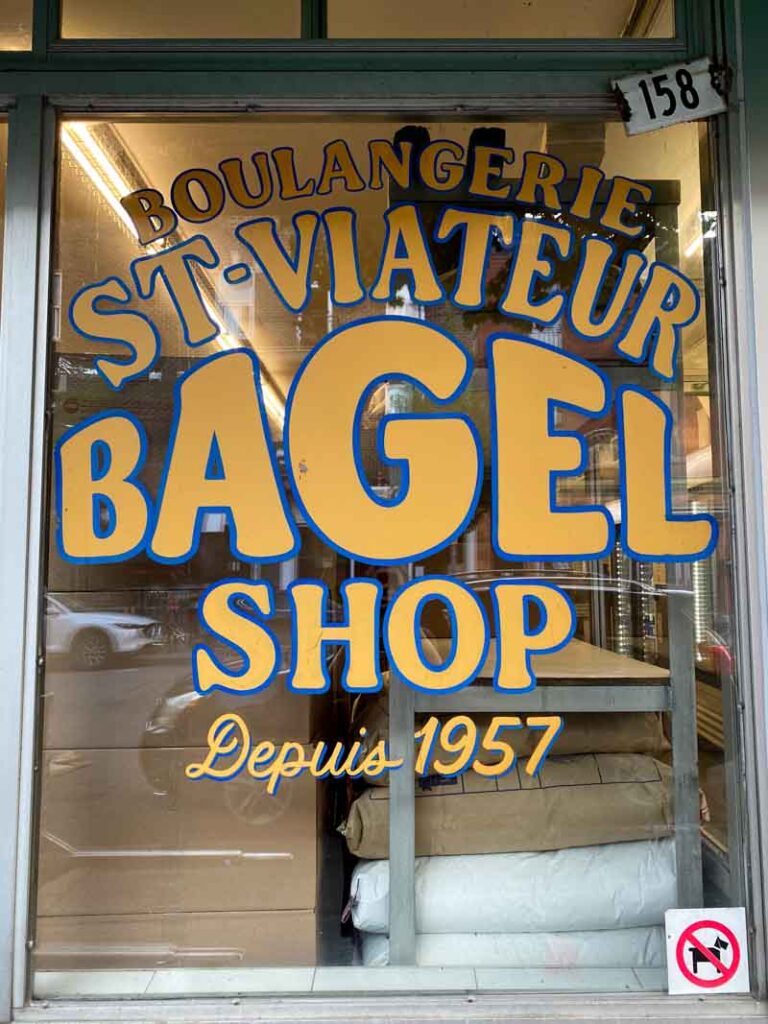
Also make sure to try a Montreal-style bagel in the neighborhood – they are nothing like what you’re used to, but delicious nonetheless. Longtime rivals Fairmount and Saint-Viateur both claim to make the best ones in the city. (You might want to do your taste test on one of the ever-popular food tours in Mile End.)
Jean-Talon Market and Little Italy
If you want to check out the famous Jean Talon Market (Montreal’s largest and one of North America’s oldest), now is the time to do it. Again, Montreal is supremely walkable and you could pretty much traverse the entire city on foot. However, I’ve already had you walk a lot today, so I’d probably recommend hopping on the bus or metro for a short ride to the market. If you still have energy afterwards, you can walk around neighboring Little Italy.
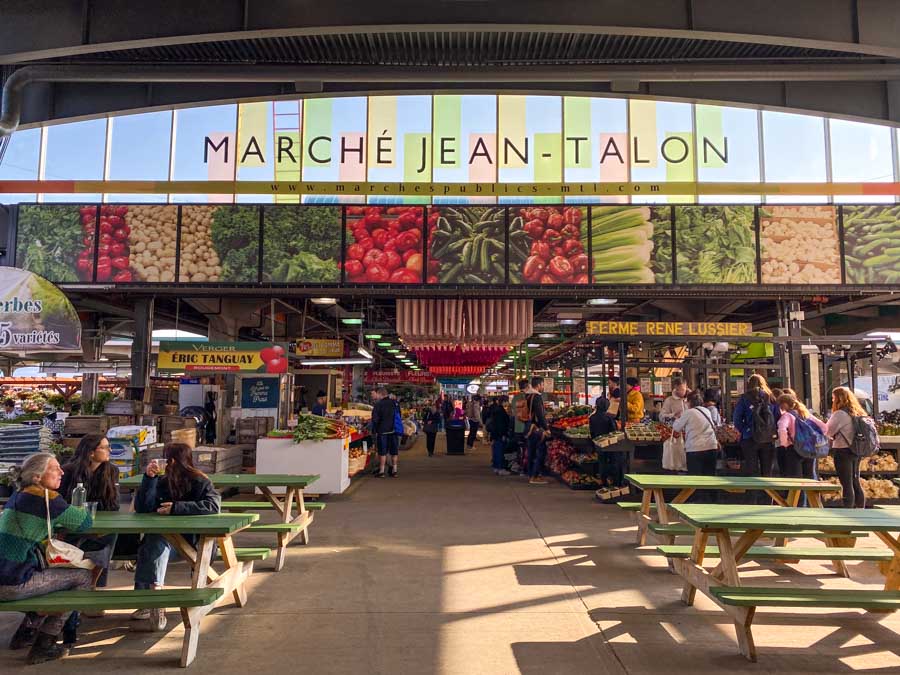
Also note that I’ve included Atwater Market on tomorrow’s itinerary. It’s a little smaller, but I think the experience is pretty similar. So don’t feel like you absolutely have to go to Jean Talon if you’re tired and need a rest before dinner.
Day 1 (Evening): Dinner in the Plateau or Old Montreal
For your first evening in Montreal, I recommend either sticking around the Plateau or heading into Old Montreal.
Have a look at this list of Canada’s best restaurants (filtered to show those in Montreal) and you’ll quickly notice that a whole lot of them are in the Plateau and Mile End.
Many parts of the neighborhood have a young, alternative vibe, so you’ll find a lot of delicious dinner spots for smaller budgets as well. And if you want to do some bar hopping afterwards, this is one of the best places to be.
As for Old Montreal, many of the restaurants and bars here – despite being located in the most touristy area of the city – are actually quite beloved by locals as well. While there are certainly establishments that exist only for the tourist crowd, you can find a lot of great places to eat and drink here, especially if you’re looking for something a bit more upscale.
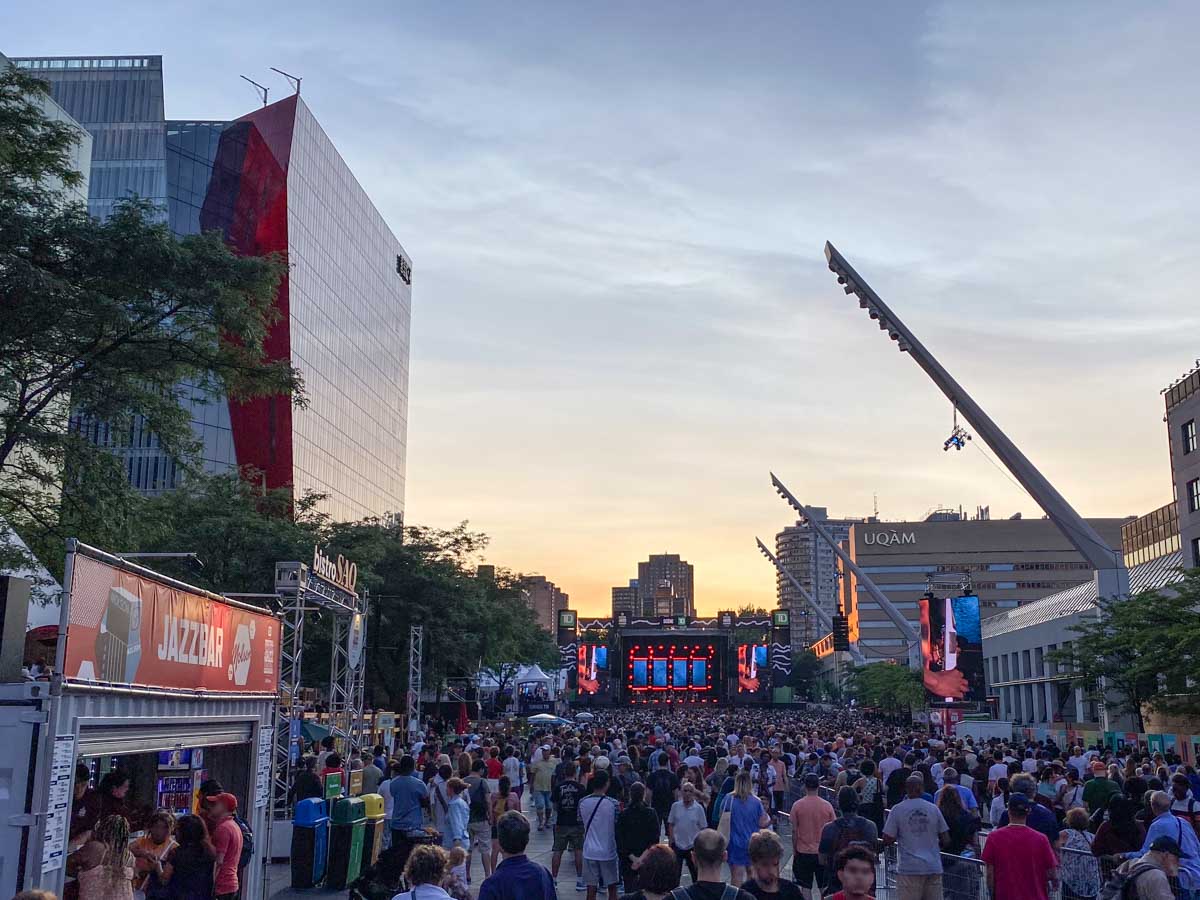
I also highly recommend checking to see if there are any special events taking place during your visit. Montreal has a pretty packed festival schedule – there is nearly always something going on in the summer, and the rest of the year is far from sleepy.
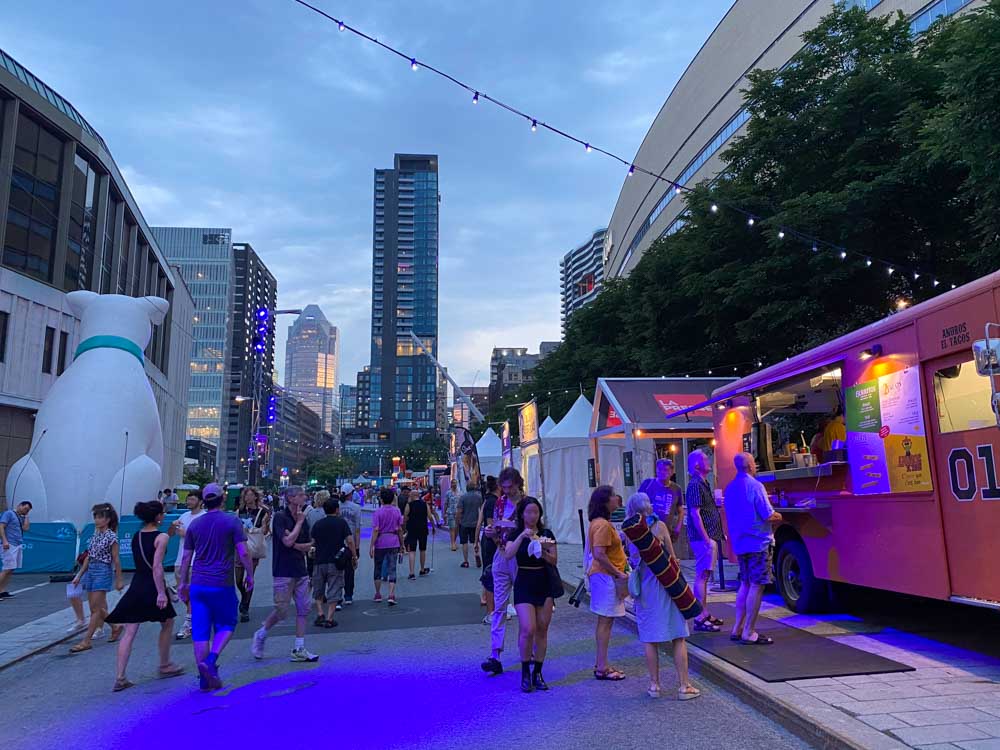
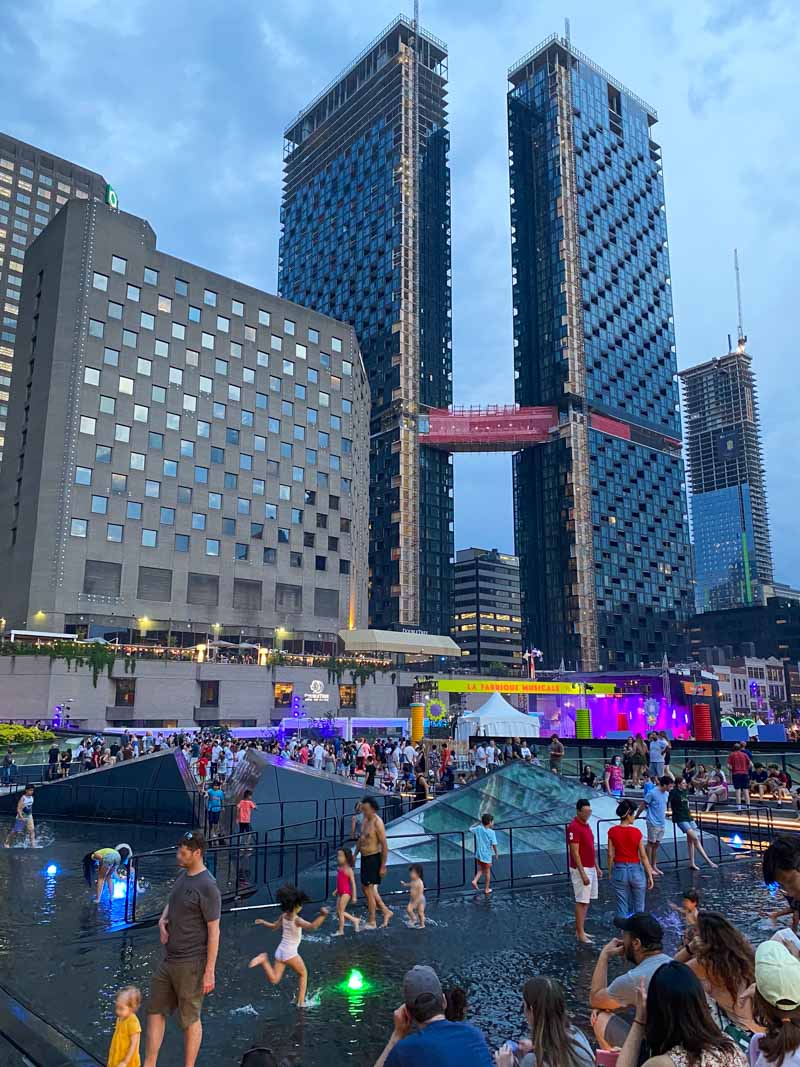
The best part is that many of the city’s most popular events have shows, programs, or exhibits that are completely free. If you’re here in the winter, for example, make sure to stroll through the Lumino art installations in the Quartier des Spectacles.
In the summer, check if your dates coincide with Jazz Fest, Just for Laughs, or the Festival International Nuits d’Afrique.
Day 2 (Morning): Wander through Old Montreal and the Old Port
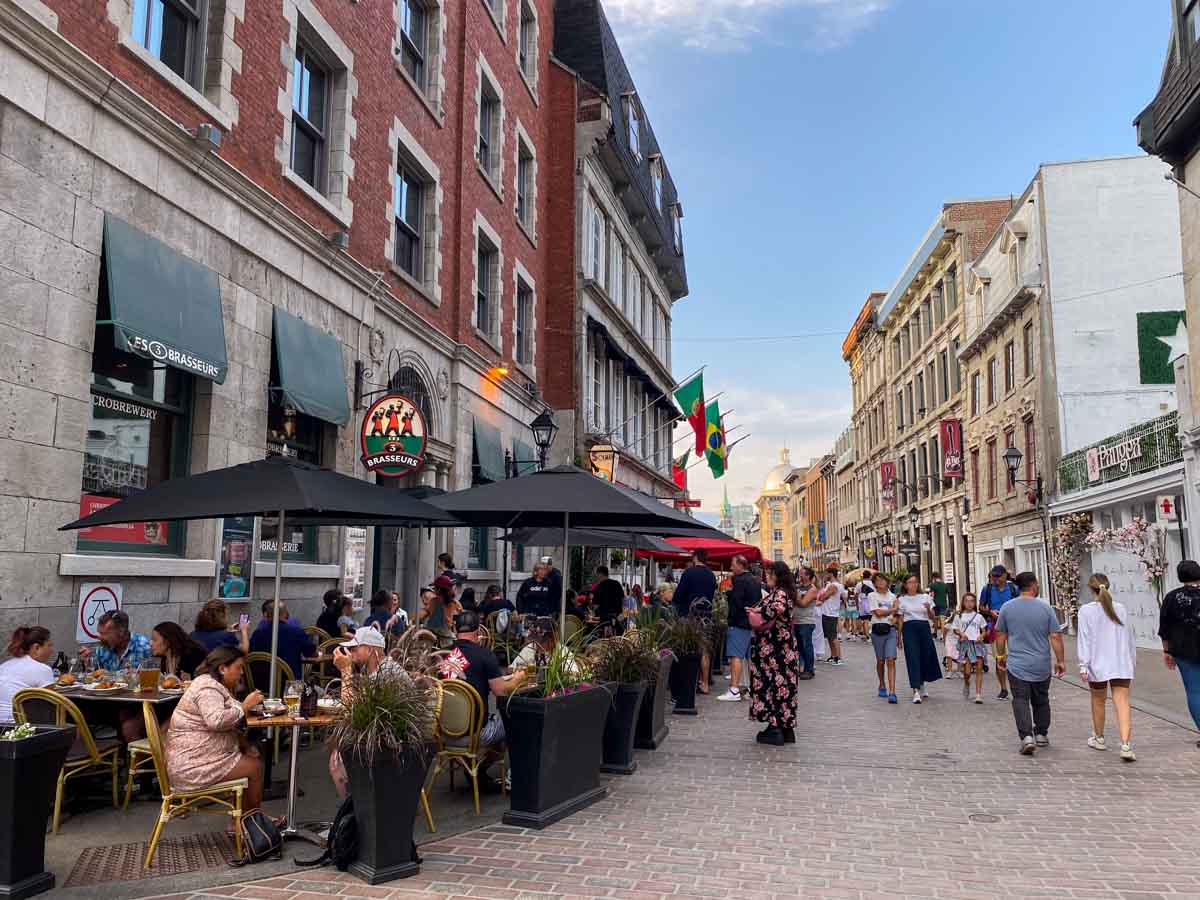
You can’t really come on a first trip to Montreal without visiting Old Montreal and the adjacent Old Port area. The neighborhood is almost 400 years old, and it is home to several well-preserved streets and buildings constructed during the colonial era.
Old Montreal (Le Vieux-Montréal)
Without a doubt, the most famous historical building in the area is the Notre-Dame Basilica. Unfortunately, it’s probably one of the more expensive churches you’ll visit in your life – but almost certainly one of the most beautiful as well. I do think it’s worth it to spend some time inside if you have any interest in art, history, or architecture. (I’ll also note that entry is free if you attend a mass.)
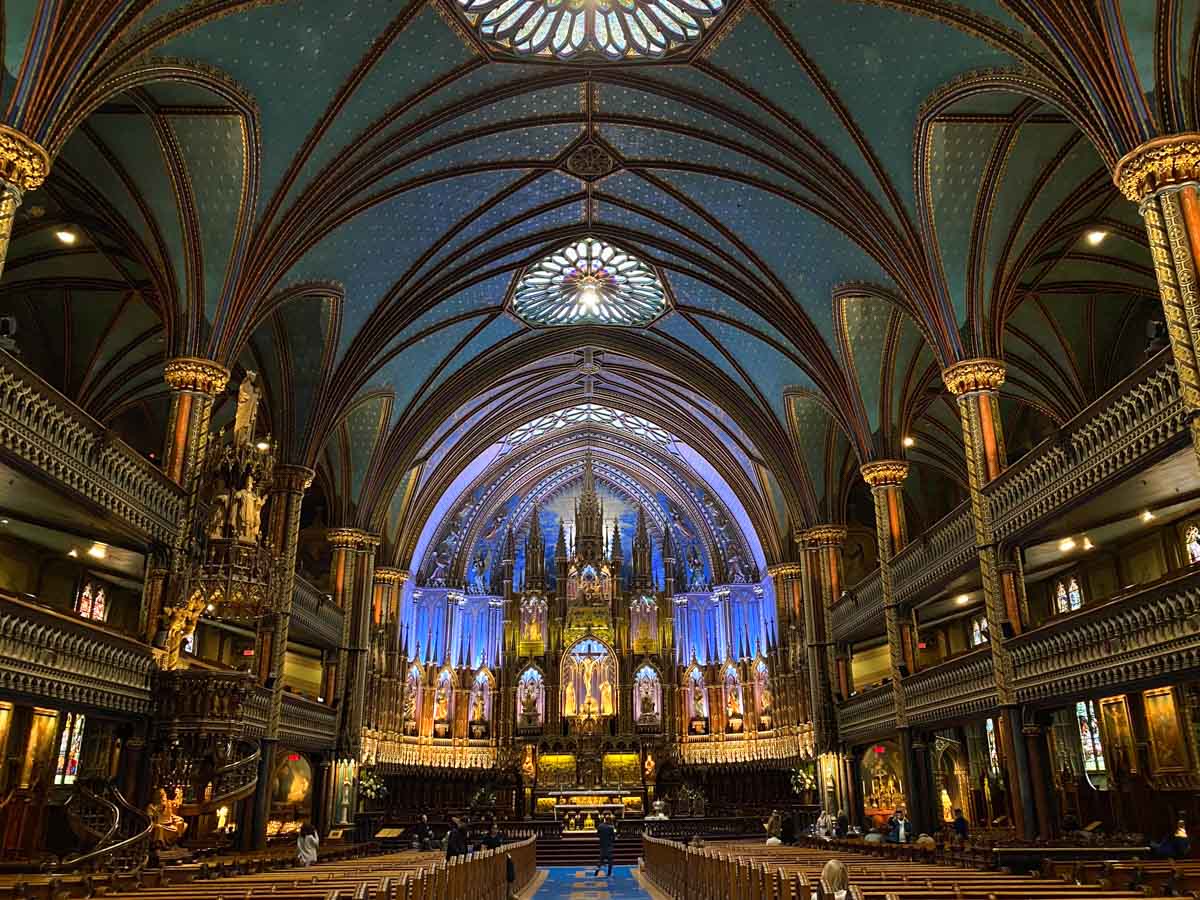
From Notre Dame, you can head down cobblestone Rue Saint-Sulpice to Rue Saint-Paul. Wander past cafés, restaurants, and art galleries as you make your way the Old Port.
You might want to pop into Château Ramezay, a UNESCO-recognized history museum, or the Bonsecours Market, one of Montreal’s most famous heritage buildings and a great place to check out local crafts and souvenirs. Nearby, the beautiful Notre-Dame-de-Bon-Secours Chapel (also known as the Sailors’ Church) is free.
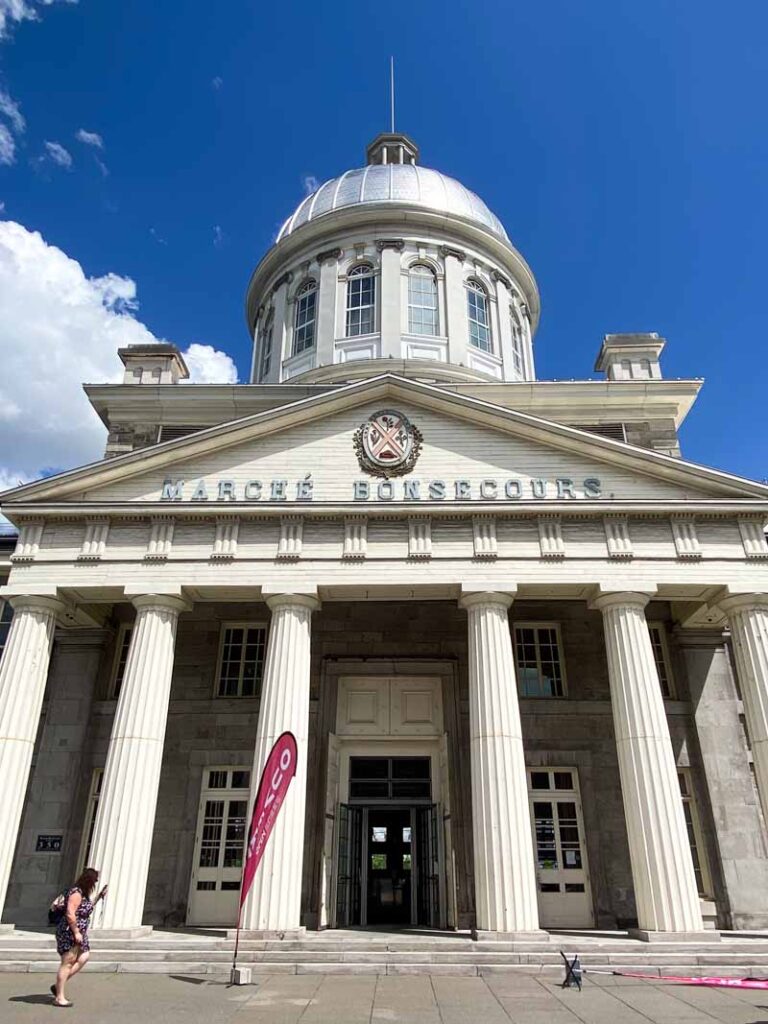
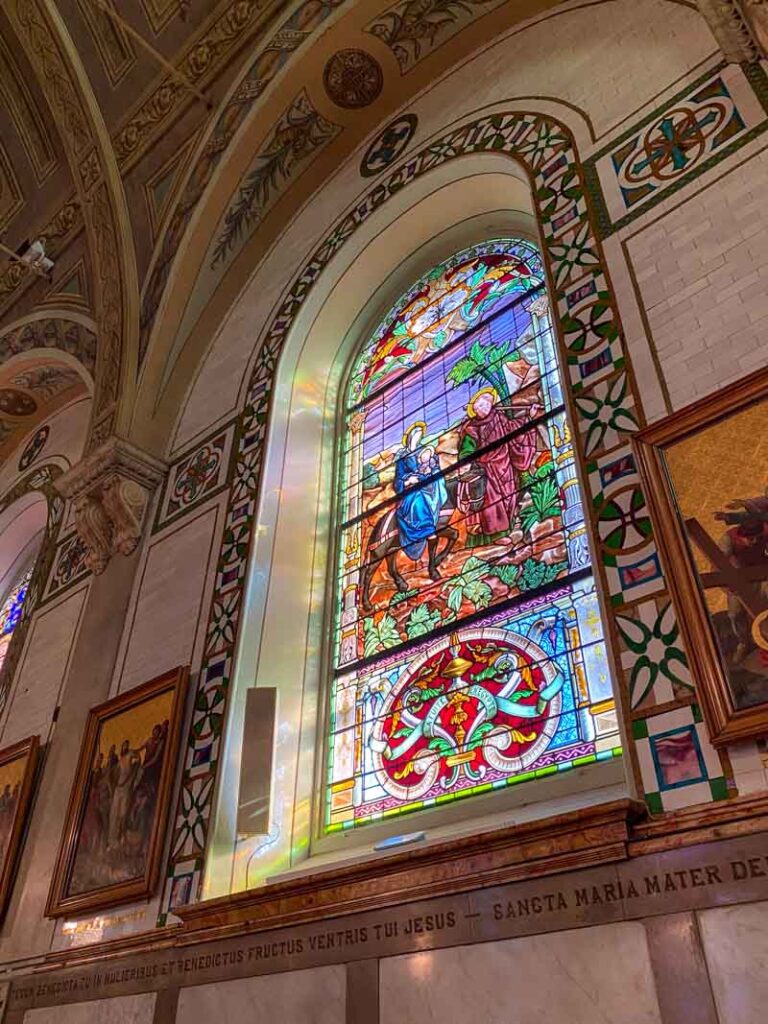
If you’re interested in history and/or architecture, you might enjoy a walking tour through the neighborhood with a local guide to provide that additional context.
You could also visit some museums and churches on your own for a few hours before joining a food tour.
The Old Port (Le Vieux-Port de Montréal)
La Grande Roue, Montreal’s ferris wheel, is open year-round and offers great views of the city and the river. In the winter, you can ice skate right under it.
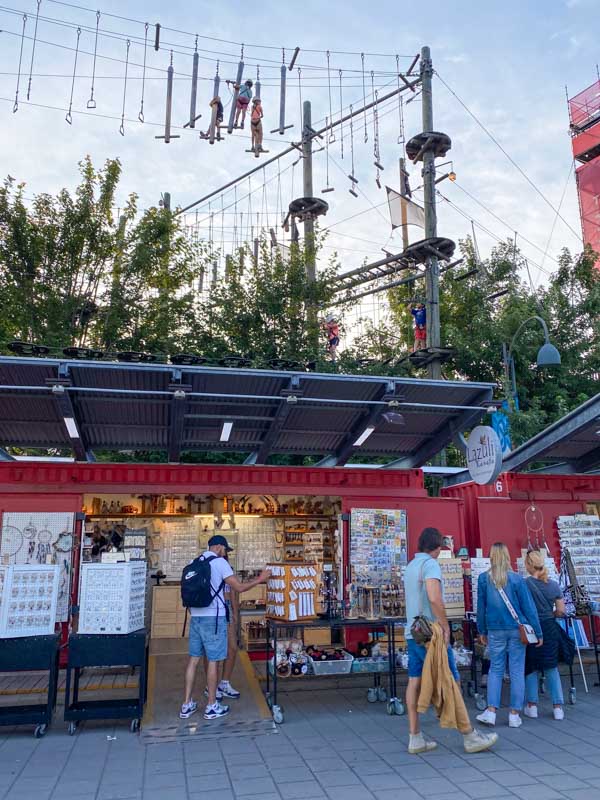
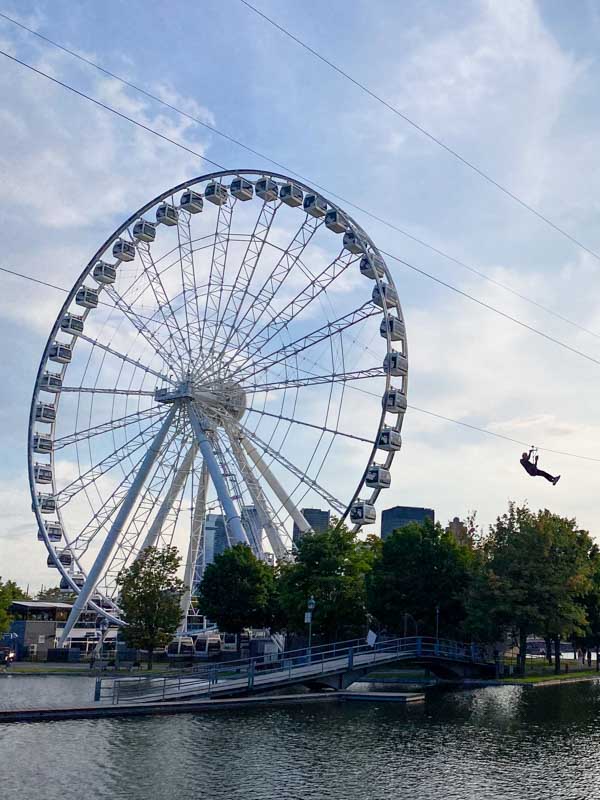
In the summer, the area along the river is buzzing with even more going on. The promenade next to La Grande Roue is lined with small boutiques selling accessories and souvenirs. (See the schedule on the Old Port’s website.) There are also lots of food trucks for anyone craving poutine, cotton candy, or ice cream.
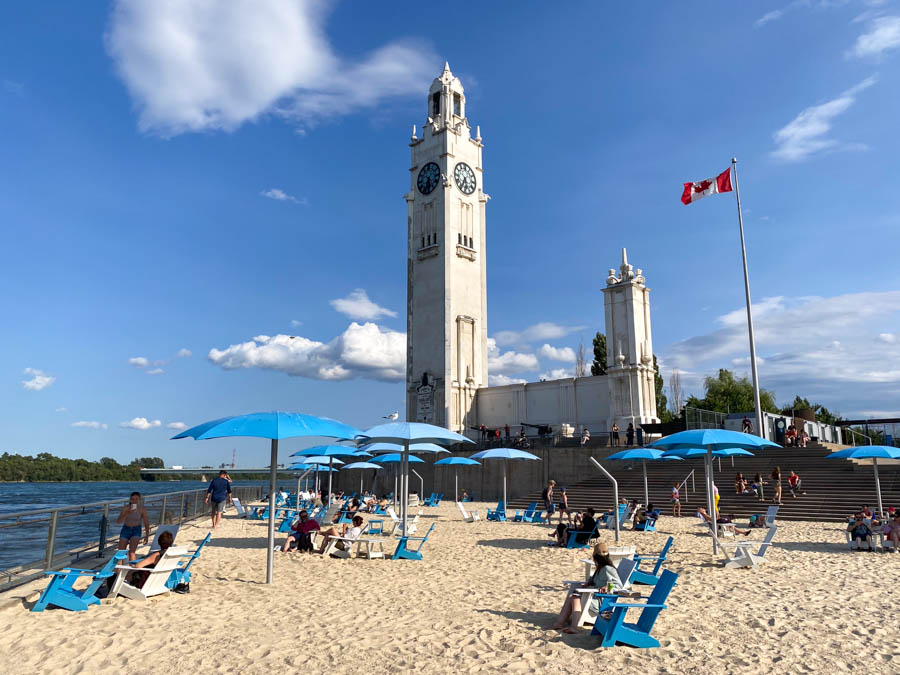
As you stroll around Bonsecours Basin, you’ll see people ziplining overhead every few minutes. There is an adventure park, called Voiles en Voiles, with lots of activities for families, including a ropes course and a climbing wall. Walk down to the Clock Tower and you’ll even find a small beach where you can put your feet in the sand and watch the bateau-mouche sightseeing boats cruise past.
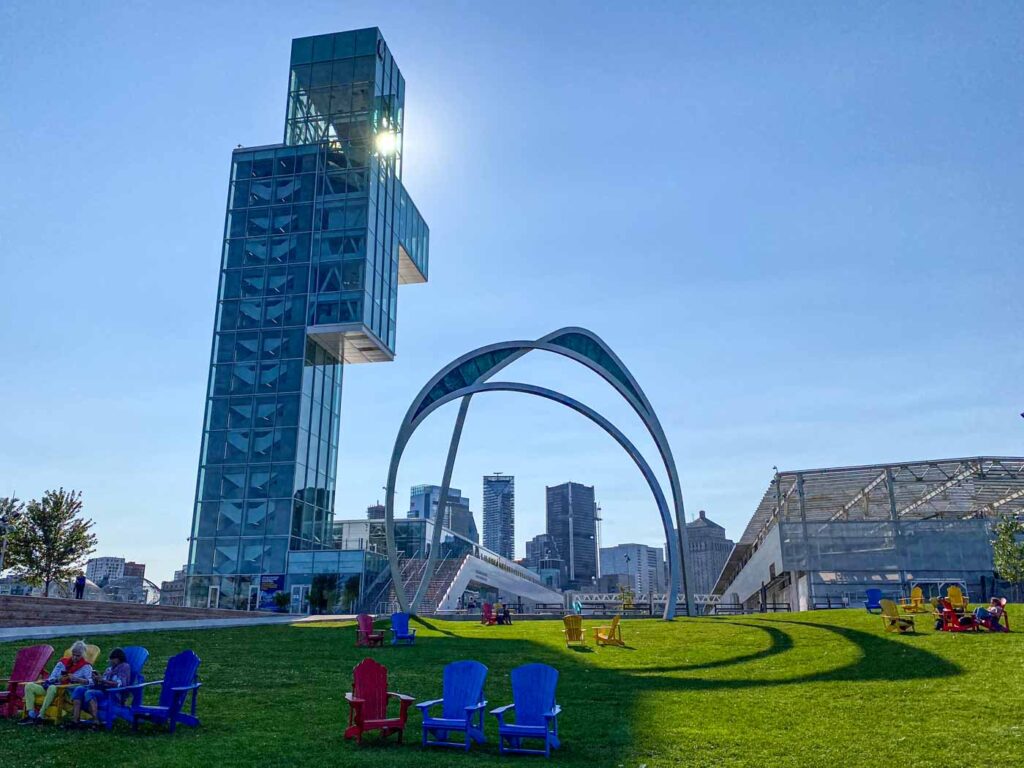
And at the opposite end of the Old Port, you’ll find Montreal’s newest tourist attraction, the Port of Montreal tower. This 65-meter glass building affords great views of the skyline and the St. Lawrence (for about half the ticket price of a standard adult ticket for La Grande Roue, if the view is your main concern). Check the schedule online before you go, as outside of high season it’s only open on the weekends and holidays.
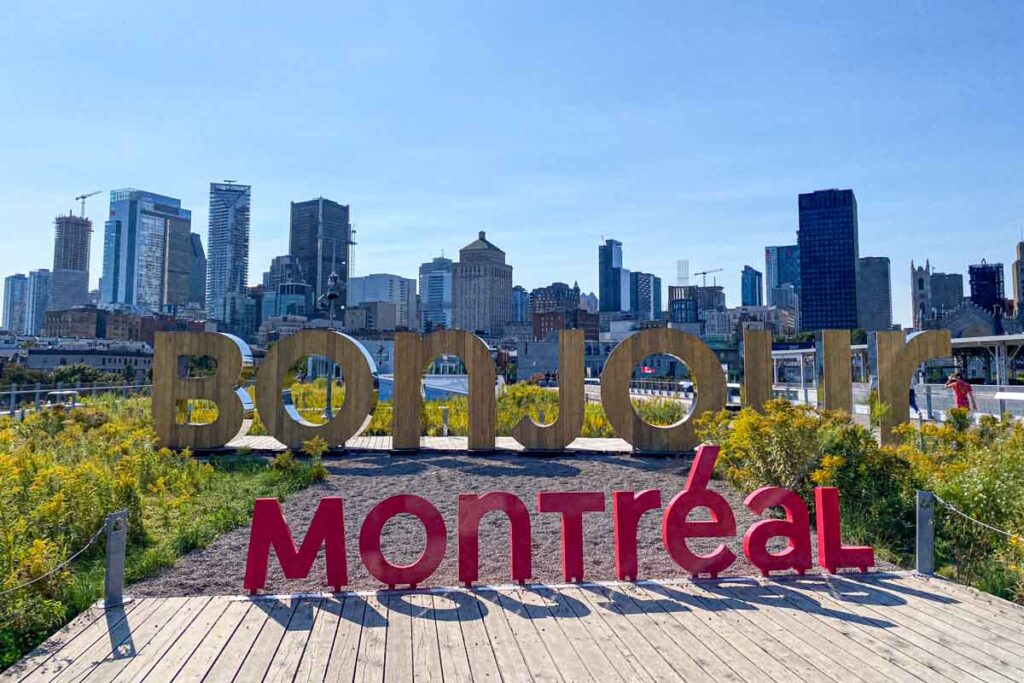
The Grand Quay where the tower is located is still worth a stroll any time, though. This is where you’ll find the famous “Bonjour Montréal” sign, and there are some interesting sculptures on the other side of the tower (as well as some lovely Adirondack chairs if your legs need a break).
You also have a great view of Habitat 67, the unique apartment complex and architectural landmark on the other side of the basin.
Day 2 (Afternoon): Explore Little Burgundy and Saint-Henri
The morning was pretty packed with sightseeing and walking, so I thought we’d spend your afternoon doing something a little more chill.
We’ll head now to the Sud-Ouest borough of Montreal, where you’ll find down-to-earth vibes, lots of great food and coffee, and one of Montreal’s largest public markets.
To get here from Old Montreal, you have a few options. One is to hop on the metro at Champ-de-Mars, Place d’Armes, or Square Victoria (depending on where you are) and take the orange line to Lionel-Groulx. From there, you’re just a five minute walk from Atwater Market, right on the border of Montreal’s Little Burgundy (Petite-Bourgogne) and Saint-Henri neighborhoods.
If it’s a nice day, you might prefer to rent a Bixi in the Old Port and cycle down to Little Burgundy along the Lachine Canal. It’s a flat and straightforward ride, and it will probably take you half as much time the metro. You could also go on foot, but this will take close to an hour (versus maybe 15 minutes on a bike). There are walking paths alongside the bike paths on both sides of the canal.
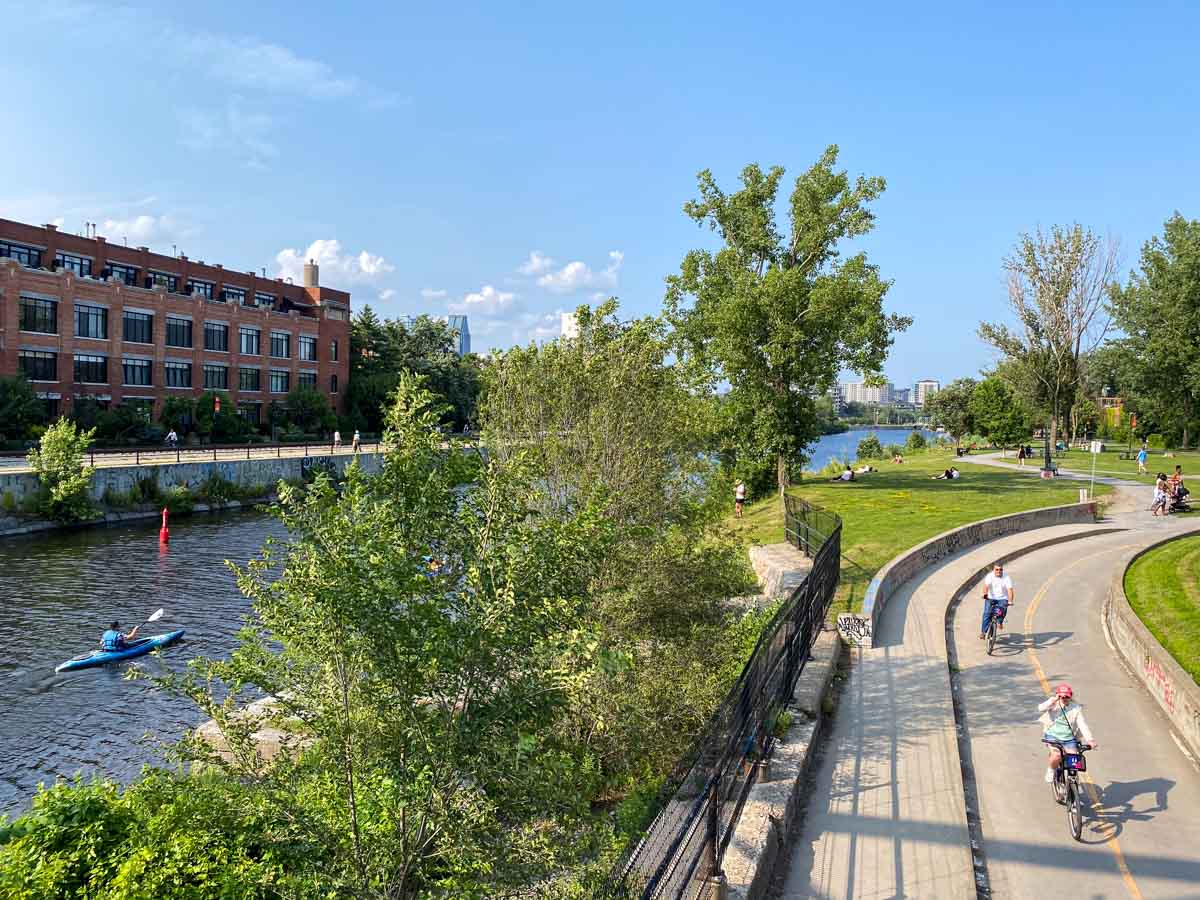
You could also walk straight through the city along Rue Notre Dame, but I think the canal is nicer. (Notre Dame Street is quite cute and lively once you reach Little Burgundy, but the section that passes through Griffintown doesn’t have a ton of character.)
You can dock your bike at the Bixi station right next to the market on Atwater Avenue. (There is also one at Lionel-Groulx station if this one happens to be full.)
Atwater Market and Little Burgundy (La Petite-Bourgogne)
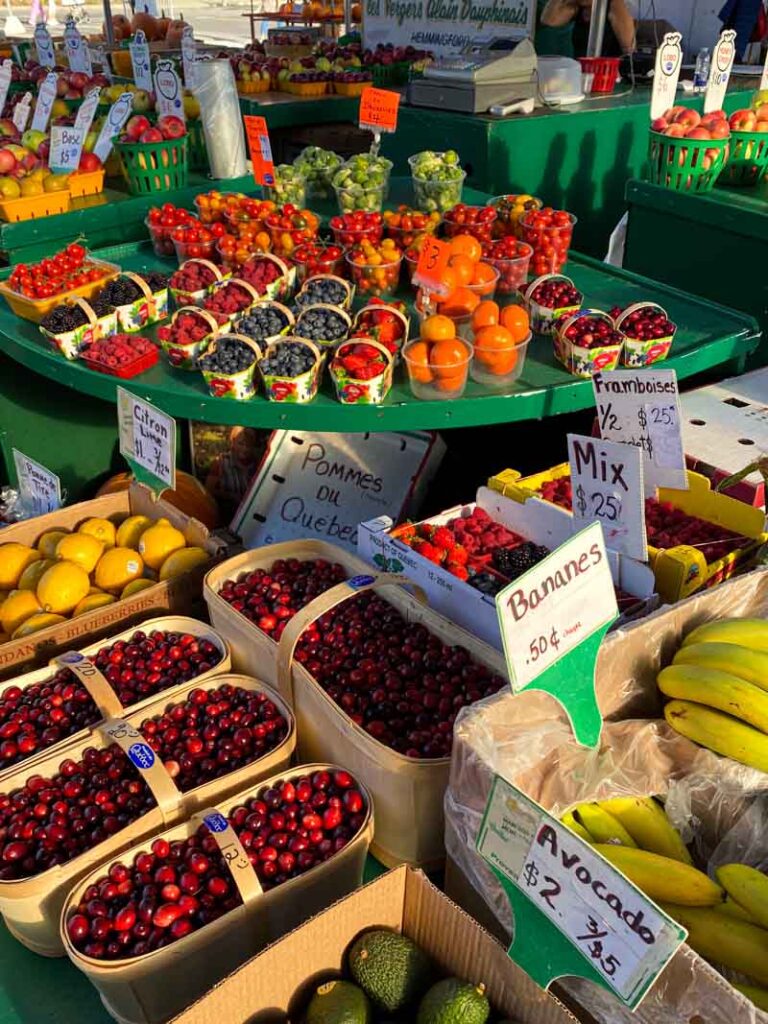
Right on the northern bank of the canal, you’ll see Marché Atwater, the second most famous public market in Montreal (after Jean Talon). Inside, shops and stands sell cheese, wine, bread, meat, spices, sauces, fruit, and other provisions year-round.
If you’re there during the warmer half of the year, especially on a weekend, it will be super lively – some of the neighborhood’s most popular restaurants have food stalls here.
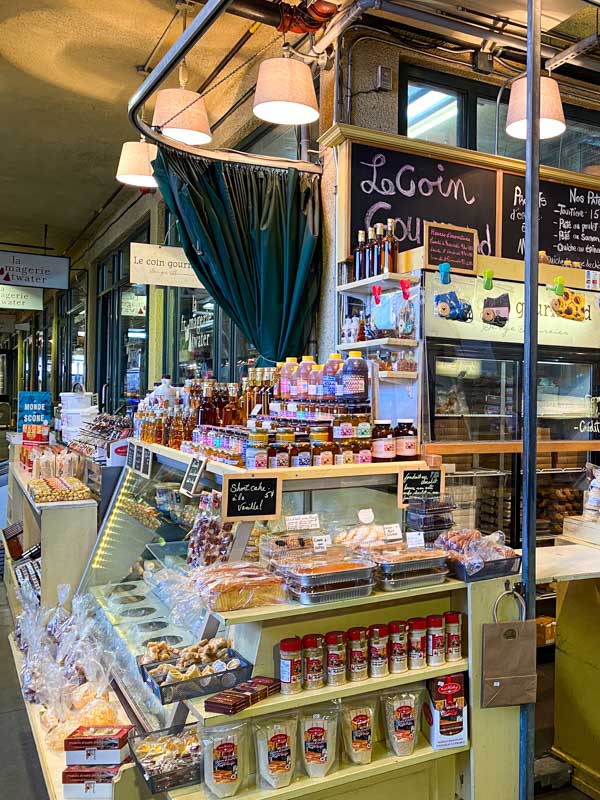
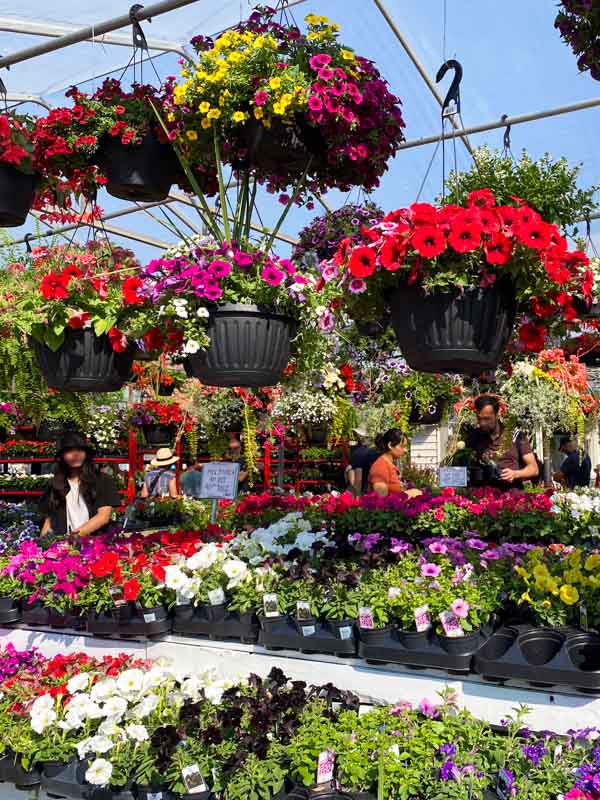
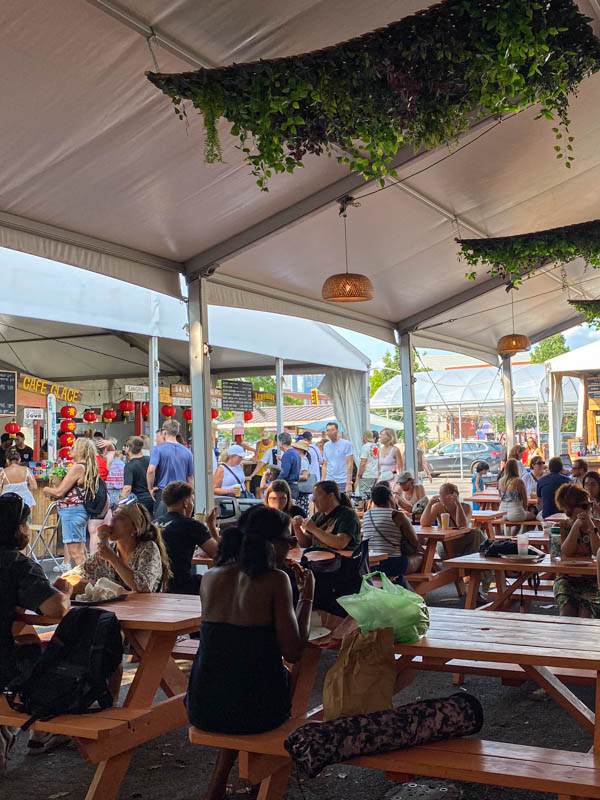
You could easily cobble together a picnic lunch to enjoy next to the canal. If you’re hungry for something more substantial, there are tons of restaurants on Rue Notre Dame just east of the market. Many have outdoor seating in the summer.
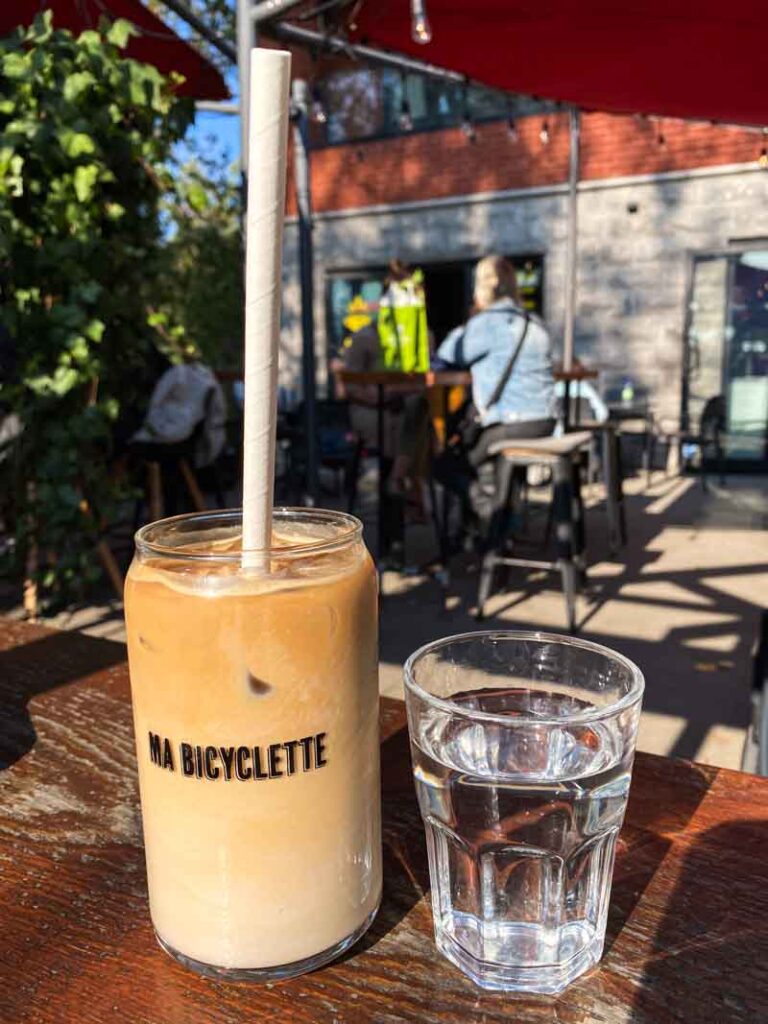
For coffee and light bites, pop into September Cafe, Café Ma Bicyclette, or Café Redwood. (The latter two are just across the canal in Pointe-Saint-Charles.)
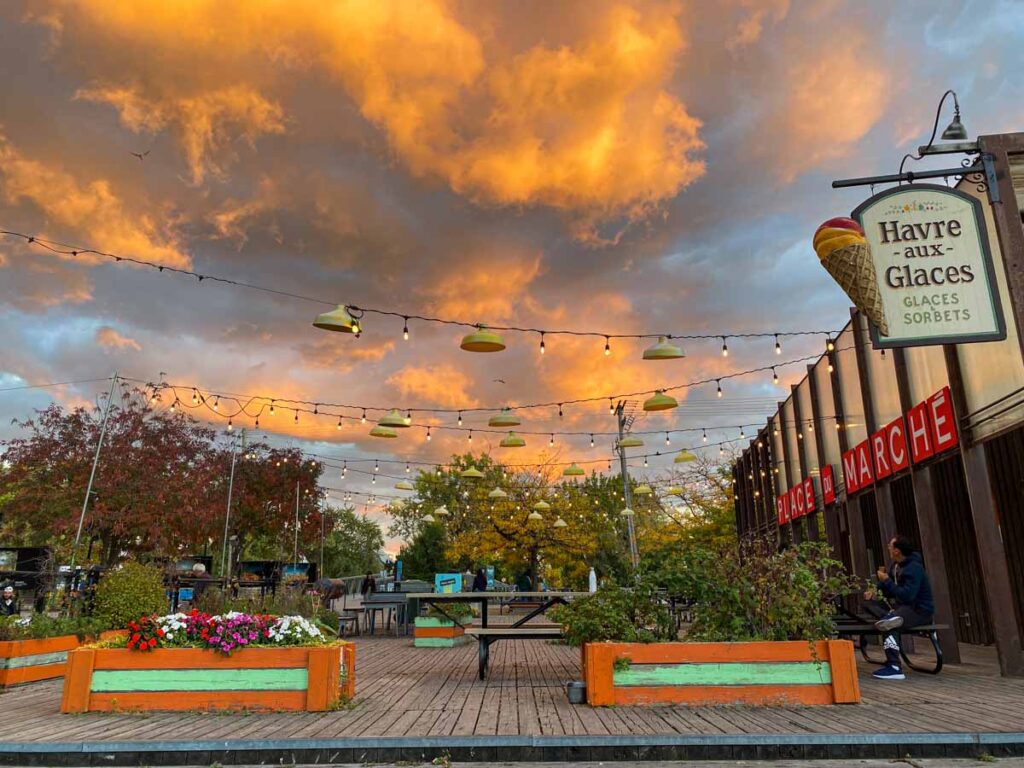
Outside in the summer, you’ll find a popular ice cream stand, kayak and paddle boat rentals, and a floating cocktail lounge right on the water.
Saint-Henri
Alternatively, continue west along the canal just a kilometer or so to Saint-Henri. (The path on this side is interrupted by some train tracks, and it’s a little confusing where to go. It’s easier if you cross to the other bank and then cross back at this small bridge.)
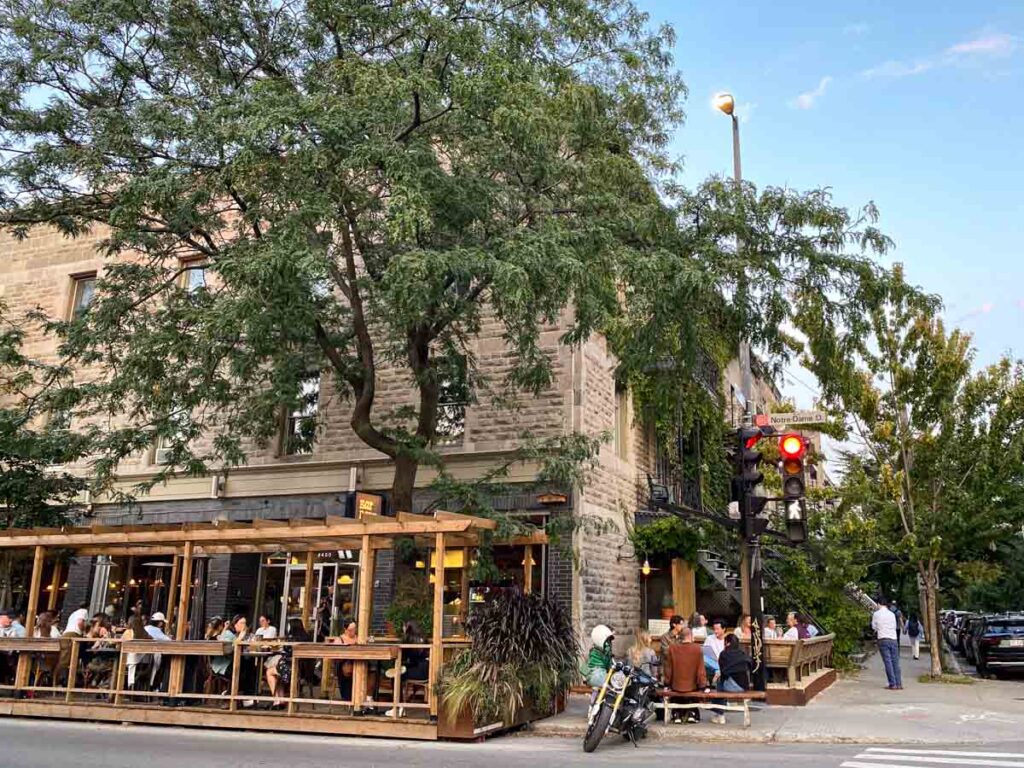
This is definitely one of Montreal’s coolest neighborhoods (it’s sometimes called “the Brooklyn of Montreal”), but it’s an area first-time visitors often skip due to its distance from more well-known places like the Plateau.
You’ll find another cluster of restaurants and bars on Rue Notre Dame just next to Sir-George-Étienne-Cartier Park.
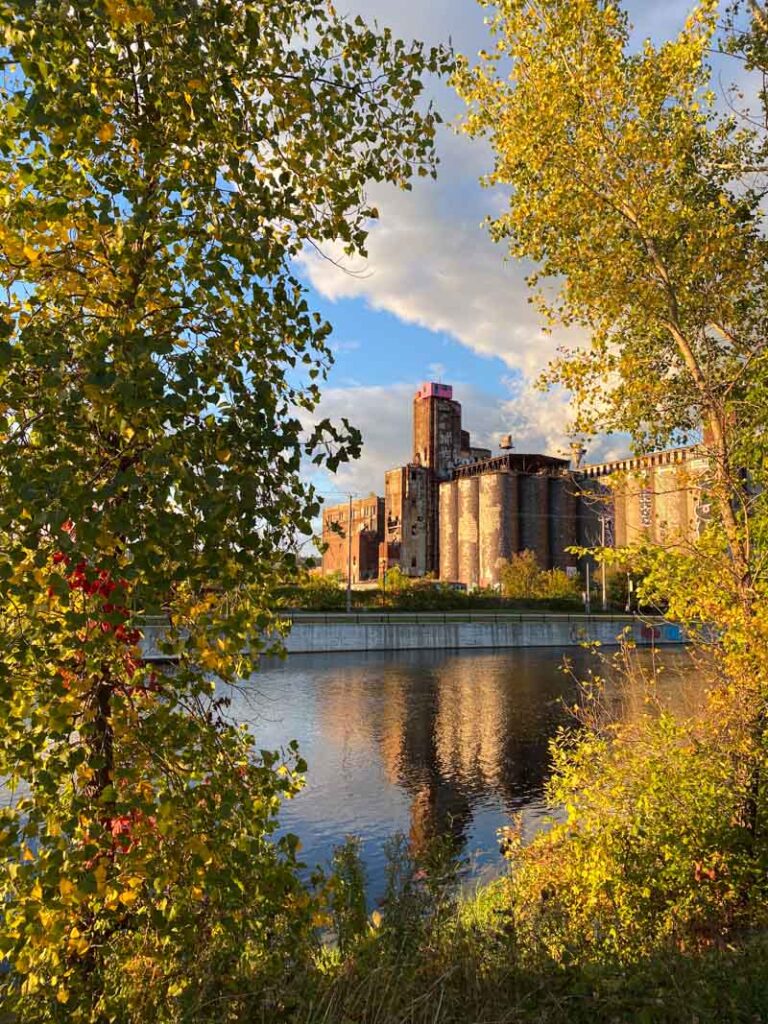
Just a few minutes further along the canal is one of the city’s many curiosities – La Maison Rose, a miniature pink “house” perched precariously on top of an abandoned grain silo.
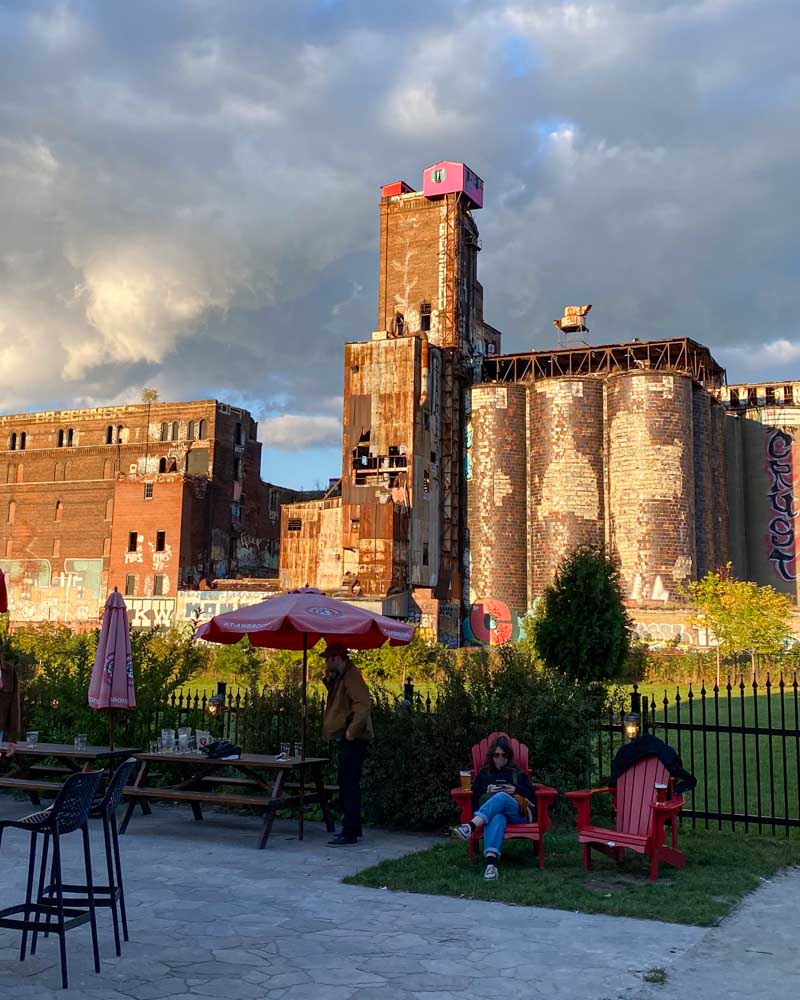
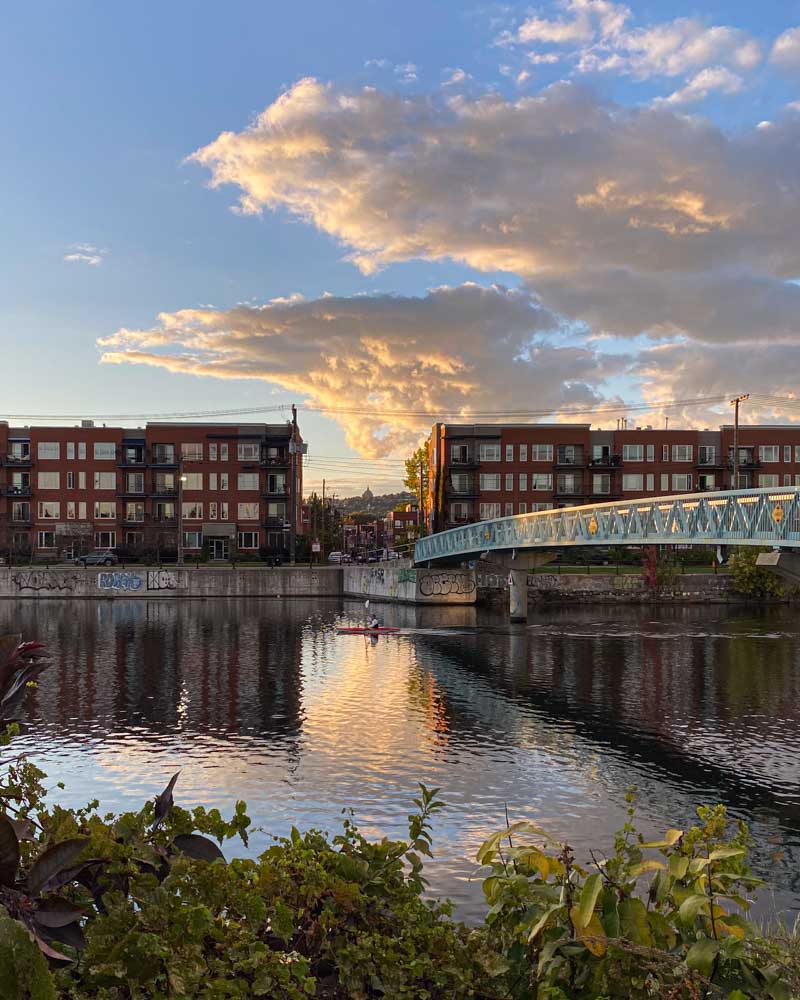
Although the structure on top of the old malting plant is not new, the pink paint, green shutters, and flower boxes first showed up in 2019. Every winter, it gets decked out with a Christmas tree, wreath, and red bows. Who’s responsible? Why and how? Nobody knows, and people generally like it that way – just another quirky little Montreal mystery.
There are a couple of breweries right next to it with tons of terrasse seating in the summer.
Day 2 (Evening): Stick around Little Burgundy or head back to Old Montreal
There are several excellent dining options located just a stone’s throw from Atwater Market, including Joe Beef – one of Montreal’s most famous restaurants. A few doors over, Le Vin Papillon is a lovely wine bar with delicious small plates. There is also excellent Japanese food at Bar Otto.
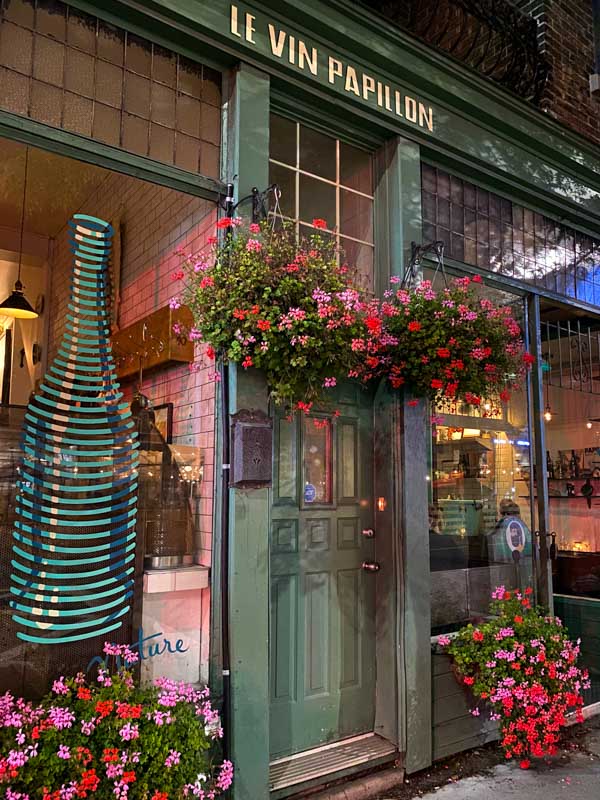
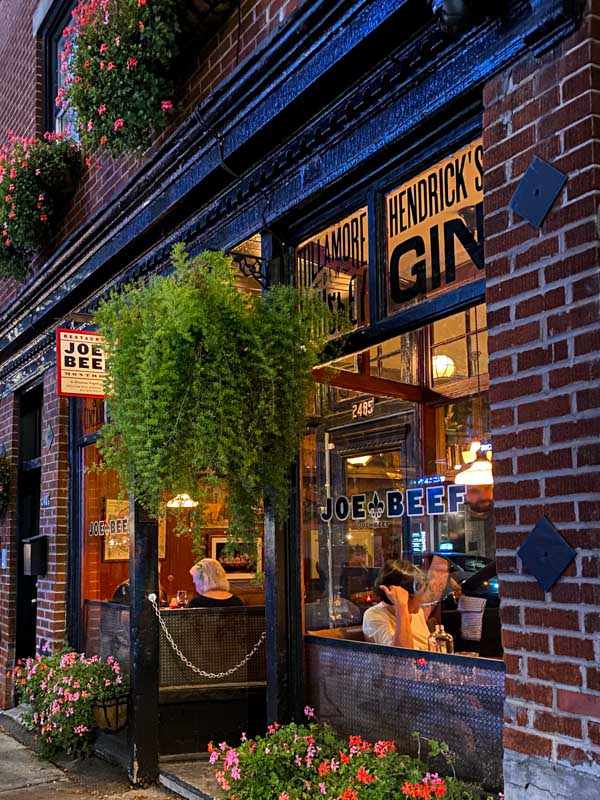
For high-end cocktails, walk just a few minutes to the Atwater Cocktail Club. (You’ll think you’re in the wrong place, but no, this is one of those “upscale bars hidden in a dark alley” situations.)
Alternatively, you may want to return to Old Montreal (especially if you ate dinner in the Plateau yesterday) or the Quartier des Spectacles if there’s a festival on!
And for something really fun and unique, check out the evening version of this scooter tour of Montreal. (I’ll note that they also have a morning and afternoon option, and each one takes you through different neighborhoods. If you want a little less walking than I’ve outlined in this itinerary, this would be a pretty cool alternative!)
When is the best time of year to visit Montreal?
The short answer is not winter, but I think the best time to be in Montreal varies from person to person. (And I’ll admit that visiting in winter has its own charms.)
The energy of the city in the summer can’t be beat, but this is also the hottest (obviously), most expensive, and most crowded time of year. Blink and you’ll miss spring, but it’s a wonderful time to visit if you can time it well. (That generally means May. Don’t come until May!)
Weather in the fall can range from positively lovely to downright disgusting, but those autumn colors against the backdrop of Montreal’s Victorian row houses are really a sight to see.
I actually wrote an entire post on this question breaking down the best time to visit Montreal month by month. Feel free to peruse that and think about what’s most important to you.
More on Montreal
That just about wraps up my itinerary recommendations for 2 days in Montreal!
Of course, you might want to make adjustments depending on the weather and how much walking or cycling you want to do, but I hope I’ve given you a good starting point as you plan your trip! For more on Montreal, check out the posts below:
Guide to Montreal’s most interesting neighborhoods
The best lookout points on Mount Royal
The best months of the year to visit Montreal
Montreal in winter: Festivals, snow sports, and other things to do