
El Nido diving: Much better than island hopping!
Some links on this page may be affiliate links. That means if you follow one, see something you like, and purchase it, I may receive a small commission at no cost to you. For more information, see this site's disclosures.
El Nido, despite being known for its beautiful, crystal-clear water, is not necessarily a place most people associate with scuba diving. It’s one of the most famous travel destinations in the Philippines, a country known as one of the best diving destinations in the world… and yet. Most people head off on an island-hopping tour, but never venture below the water’s surface.

I’m here to tell you that this is a mistake! While I won’t try to argue that El Nido is the best underwater destination in the Philippines, it’s definitely worth booking a few dives if you have the budget for it. (You are almost certainly coming here anyway.)
Not only does the area have plenty of interesting underwater life, but diving here gives you a chance to get away from the island hopping tours (which really are a bit much). You’ll most likely be on a smaller boat, with far fewer people, and you won’t be stopping at the same coves and lagoons where dozens of other boats congregate at once.
Is El Nido diving any good?
I promise I wouldn’t be recommending it if it wasn’t. The diving, for me, was really the highlight of my time there.
El Nido is one of those places that has just gotten too crowded for its own good. Its white sand beaches, coupled with dramatic limestone cliffs jutting out of impossibly beautiful water, have made it one of the most iconic tourist destinations in the Philippines. Inevitably, this has led to a quintessential “Instagram vs. Reality” situation.
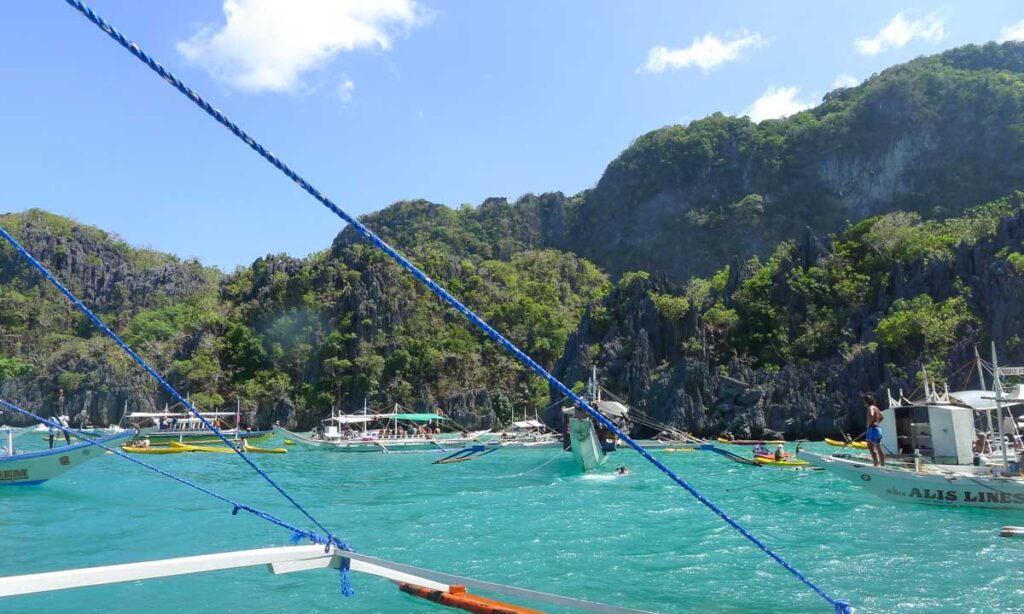
I went on two of the standard island-hopping tours, and I still found this part of Palawan really difficult to enjoy in the way I could see with my eyes it deserved to be enjoyed. It doesn’t matter that it’s one of the most absolutely stunning places on Earth – the natural beauty is overshadowed by the sheer number of people and boats (and the accompanying noise) everywhere you turn.
Being out on the dive boat was a completely different experience. The dive sites we visited were some distance away from the most popular beaches and lagoons for snorkeling and kayaking. The scenery was, of course, still incredible, and it was much easier to appreciate as we chilled on our little outrigger between dives. (It was also nice to be able to actually move on the boat instead of being packed in like sardines!)
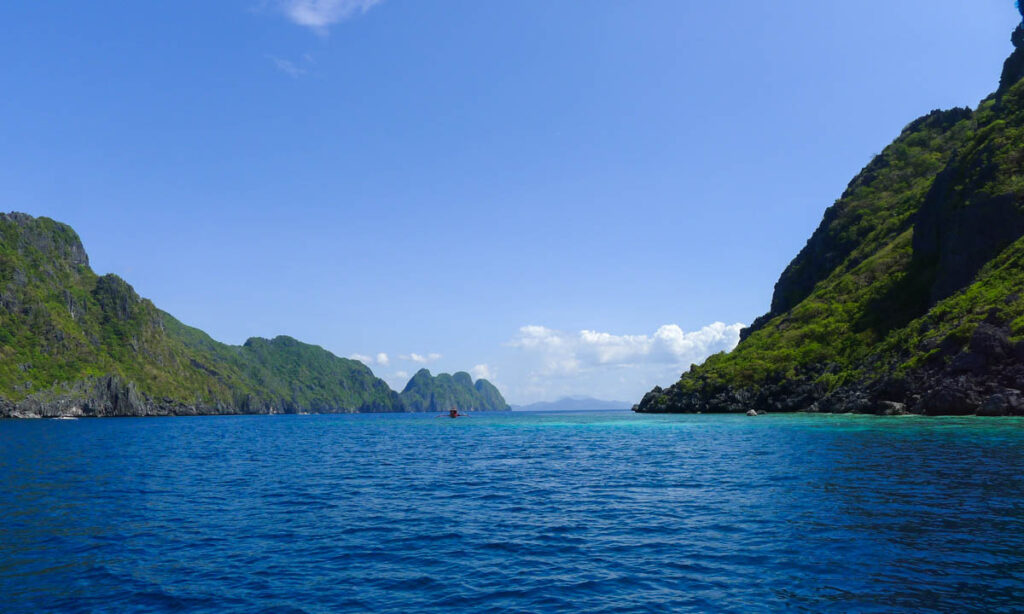
Dive sites are generally within an hour of El Nido by boat, with several just 15-20 minutes away from town.
When is the diving season in El Nido?
You can generally expect the best visibility during April, May, and June. This is also when the water is warmest, with temperatures hovering around 29 degrees Celsius. The worst months are January and February, when visibility is frequently less than 10 meters and water temperatures are around 22-23 degrees Celsius.
Of course, it varies from day to day and dive site to dive site. I did three dives in El Nido in April, and on the first one we unfortunately only had a few meters of visibility. The other two were much better, though, with visibility between 20 and 30 meters.
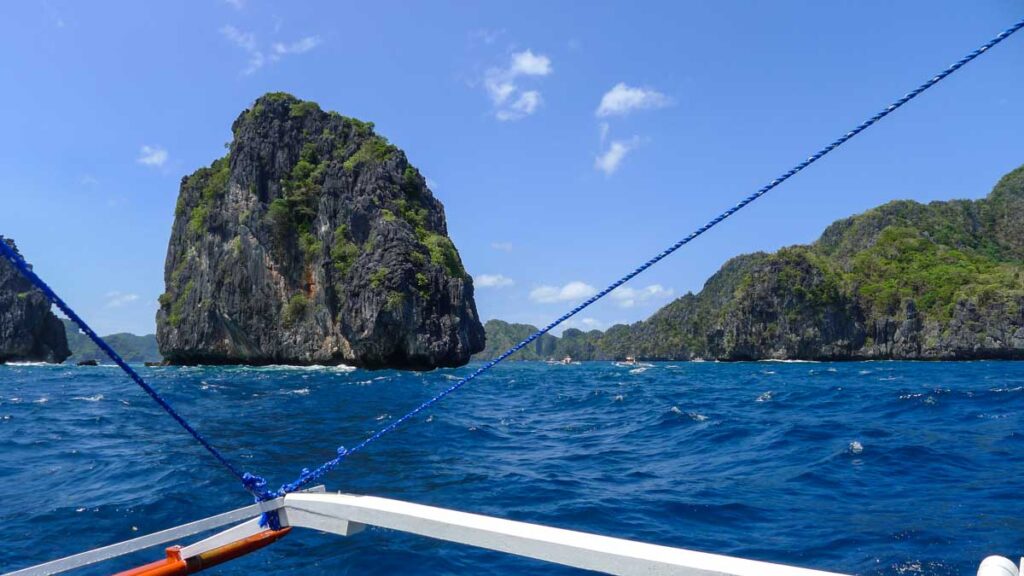
Rainy season in Palawan typically lasts from June or July until October or November. The diving conditions aren’t quite as good, but visibility is okay and the town of El Nido itself is nice and quiet. Locals say that October, barring any typhoons, can actually be one of the best months to dive.
Still, if you have the flexibility, May is probably the best month overall for diving in El Nido. The visibility will be at its best, the water will be warm, and the high season tourist crowds will have thinned considerably.
What kind of marine life can you expect to see?
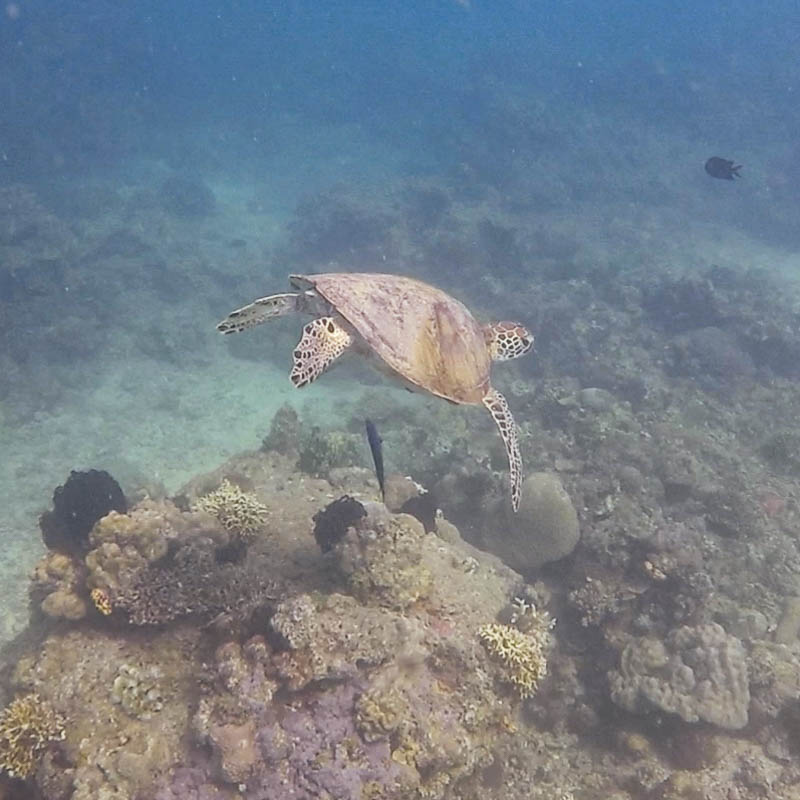
The dives sites peppered around Bacuit Bay have beautiful coral, lots of sea turtles, interesting macro life, schools of pelagic fish, and sometimes even larger animals like whale sharks and manta rays. Note, though, that the best time to ~ potentially, maybe ~ see the big stuff (January/February) is generally the worst time to see all of the other stuff. You could very well end up with a view of nothing but plankton.
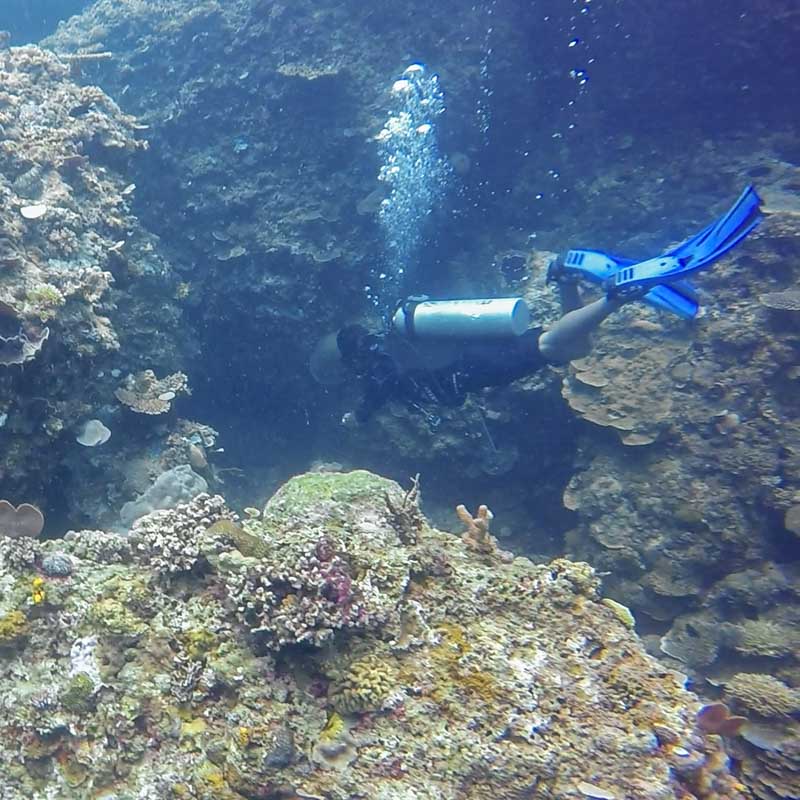
But of course, you never know what you’re going to get! With a bit of luck, you can have a really amazing experience. My final dive of the day was just me and my guide, and we had an octopus put on an incredible show for our last few minutes underwater. So many different colors, smooth to spiky and back again – it was just astonishing! My camera battery had died, which I still can’t believe when I think back on it.
Actually, though, the reason my camera had died was simply that I had taken far too many videos of the beautiful shoals of fish and sprawling cabbage coral at South Miniloc. This is probably the most famous El Nido dive site, and I definitely recommend trying to include it on your itinerary. (Most shops will likely be going there anyway, but it doesn’t hurt to confirm!)
Another dive site of note is Paglugaban, which is an area with a lot of large boulders and several swim-throughs. This is a beautiful spot – the coral is amazingly colorful – with a lot of macro treasures to find. For sea turtles, Nat-Nat is often a good bet. And if you’re crossing your fingers and hoping for those big fish, try to visit North Rock.
How to get to El Nido
From nearby Coron, you can take a ferry to El Nido. From anywhere else in the Philippines, you’ll most likely arrive by air.
Direct flights to El Nido airport
El Nido has its own airport just 15 minutes outside of the main town. You can fly there directly from Manila, Cebu, Bohol, or even Coron.

Flights are significantly more expensive than flying to Puerto Princesa and traveling the rest of the way by bus/van. (And I do mean several times more expensive. You’re often looking at something in the range of $140-200 USD to El Nido vs. $30-60 USD to Puerto Princesa. The exception to this is Coron, as it’s so close to El Nido – the flight is only 40 minutes.)
However, I will say that this is one of those times when it’s worth considering how much your time is worth. If you have the money for it (and you aren’t planning to visit other destinations south of El Nido), I’d probably opt for the flight to El Nido airport. The journey by road from Puerto Princesa is long and uncomfortable.
Flights to Puerto Princesa + bus or van
On the other hand… that money could pay for a couple of dives! I certainly understand the choice to go the cheaper route. I did it myself (although I also took a detour to Port Barton for a few days).
From Puerto Princesa, there are regular bus and van services that bring travelers up to El Nido. Vans typically take around 5-6 hours, while buses take a few hours longer.

You can reserve vans to pick you up right from the airport or from somewhere in town. Just be prepared for some delays, as the vans often won’t leave until they are full or close to it. (That means you could be waiting a while for other people’s flights to arrive, for example.)
To travel to El Nido by bus, you’ll need to make your way to the Irawan bus terminal in Puerto Princesa, a solid half an hour from the airport. The bus is cheaper than taking a van, but only marginally – and again, it moves slower and makes more stops along the way. It could easily take you 6-8 hours to get there. You’re really not looking at a very big difference in cost, if any, once you factor in the price of a tricycle, taxi, or shuttle service (offered by some bus companies) from the airport to the bus terminal. All things considered, I would opt for the van.
If you want to explore Palawan independently, you could also rent a car at the Puerto Princesa airport and drive yourself.
Ferry from Coron
As mentioned, you can fly directly to El Nido from Coron. However, there are also several ferries per day that take anywhere from 3.5 to 6 hours (depending on the company/boat you book).
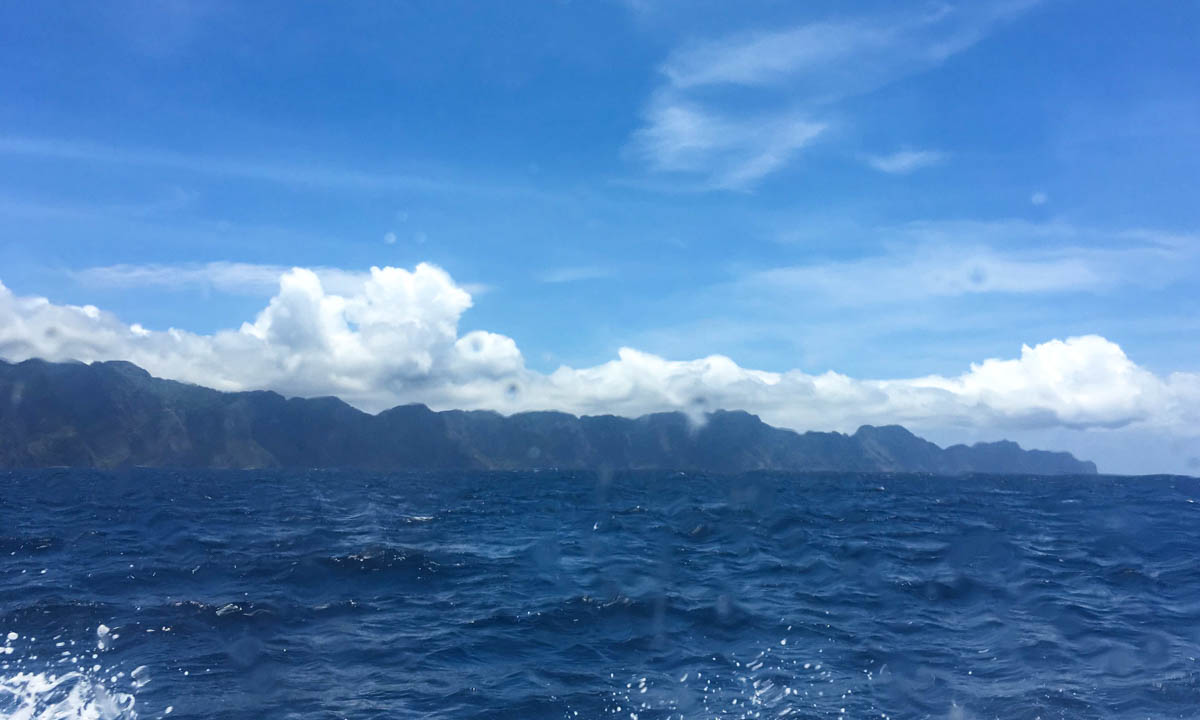
In many ways the ferry is preferable to flying – ferries run much more frequently than flights, they’re cheaper (…sometimes), and of course they’re better for the environment. (Think of the coral!)
I took the ferry in the opposite direction and found it to be a pretty nice ride. The surrounding islands of the Palawan archipelago were beautiful, and (at least in April when I traveled) the sea was relatively calm. (This was very fortunate indeed, as I’d been up literally all night with food poisoning. Were you wondering why I didn’t recommend a specific dive shop in El Nido? That is why.)
If it works for your schedule, I recommend visiting El Nido before Coron rather than the other way around. The diving in El Nido is nice, especially as an alternative to the overcrowded island tours, but the diving in Coron is on another level. (And the island-hopping was better there, too.)
And if you have more time in the Philippines, I highly recommend heading over to Bohol for incredibly beautiful reefs and tons of sea turtles!
Finally, don’t miss Malapascua, one of the best places in the entire world to dive with thresher sharks!
* * *


