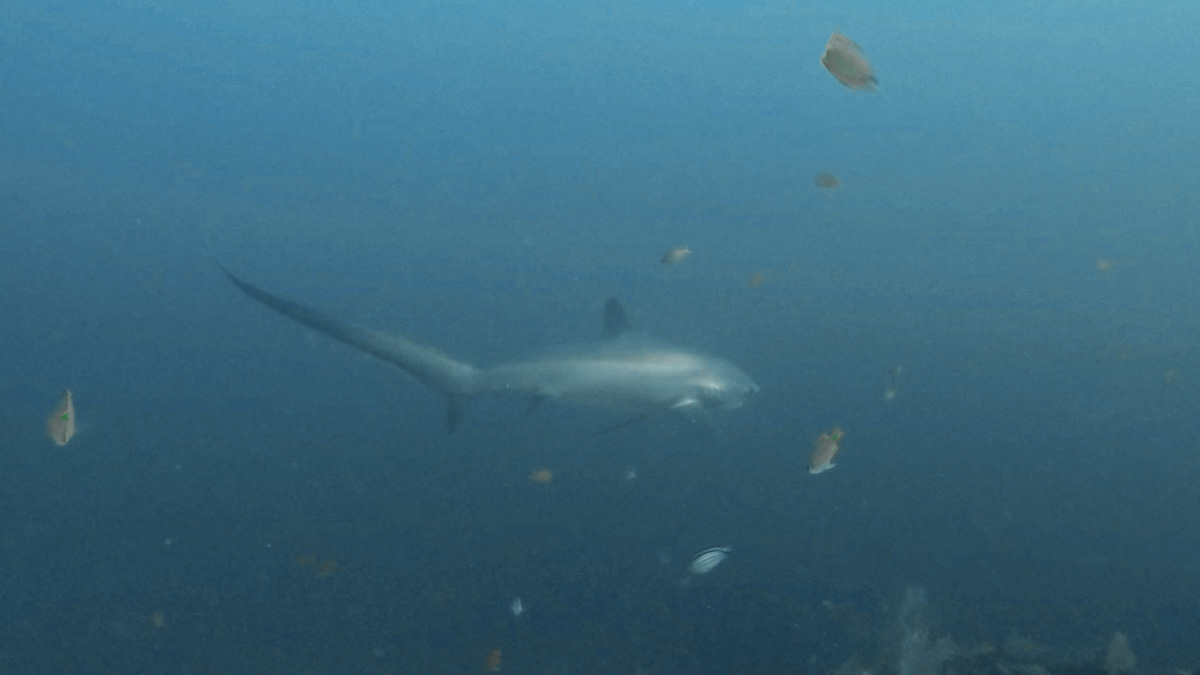
Incredible thresher shark diving: Malapascua Island in the Philippines
Some links on this page may be affiliate links. That means if you follow one, see something you like, and purchase it, I may receive a small commission at no cost to you. For more information, see this site's disclosures.
A guide to diving Malapascua Island, generally recognized as the best place in the world to see thresher sharks. This place is a bit of a pain to get to, but it rewards in a big way. Read on for what to expect (beyond the sharks, obviously) and how to get there.
When you imagine “diving with sharks,” you might assume this is something only super experienced divers get to do. Surely shark diving must be quite dangerous and require a lot of technical expertise… right?

I mean, not necessarily, as it turns out. Yes, you’ll want to be Advanced Open Water certified (or at least willing to do the deep dive portion of the course). But thresher sharks are generally harmless, and the dive to see them at Malapascua Island’s famous Kimud Shoal is not especially difficult.
This dive site, where Malapascua’s thresher sharks have relocated only recently, is actually shallower than their former preferred cleaning station at Monad Shoal. Now at just 15-20 meters, the dive is even more accessible than before. (Well, in one sense… It’s actually further away now and requires an even earlier wake-up call!)

Some dive shops on Malapascua are reporting the best sightings in 20 years – so now is the time to go! If you’re willing to get yourself to this tiny island in the middle of the Philippines, you can experience a true bucket list dive.
What can you see scuba diving Malapascua Island?
As I think we’ve established, thresher sharks are the main attraction on this tiny island north of Cebu. Lucky divers might also spot devil rays, manta rays, or even hammerheads! And even with no luck at all, you’ll find a lot of fantastic macro life here.

Where to see thresher sharks
The most famous dive site here is Monad Shoal, home to several marine cleaning stations where these beautiful (and kind of adorable) creatures used to make a daily appearance. For reasons that are not totally clear, the thresher sharks are now much more likely to be found at Kimud Shoal (sometimes spelled Kemud Shoal or Kemod Shoal).
Although a sighting can never be completely guaranteed, the sharks show up every morning like clockwork – you have a very, very good chance of spotting them.

Monad Shoal is still a good diving destination, though, as it has become popular with tiger sharks and bull sharks. There is a rope set up on the shoal to help divers kneel in the sand at about 25 meters. Some dive operators prefer to do a swimming dive between 22 and 27 meters.
It’s even better if you’re Nitrox-certified, as you can hang around at the shoal after many of the other divers have had to return to the surface. I actually did my Nitrox certification on Malapascua specifically for this purpose.
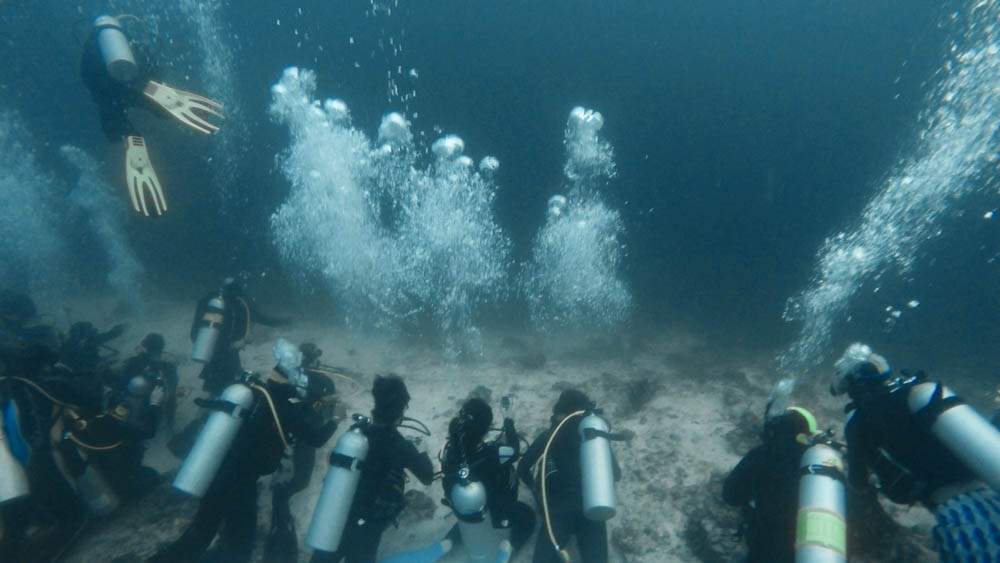
Kimud Shoal is shallower, but it is still considered an advanced dive site.
To do a thresher shark dive at either destination, most dive operators will ask you to either be Advanced Open Water-certified or do a deep dive with one of their instructors (which should count towards your Advanced certification in the future).
The threshers show up around sunrise, so most dive shops will leave around 4:30 or 5:00 a.m. Yuck, I know, but it’s well worth it!

Kimud Shoal is also known for hammerhead shark sightings from late December to April/May. The hammerheads never showed up as consistently as the threshers, and these days they are even rarer than before. You never know, though!
Other Malapascua dive sites of note
There is more to this place than the thresher sharks! There’s also a lot of beautiful macro life, and it’s quite common to see other large animals like reef sharks.
Gato Island is about 45 minutes away from Malapascua. This is a marine reserve with colorful coral and a lot of interesting macro life. There is also a swim-through where whitetip reef sharks like to hang out.

I did two dives here. Even though the visibility was not always the best, the colors were amazing and I saw a bunch of reef sharks.
My guide was fantastic at finding small creatures like colorful nudibranchs, ghost pipefish, and frogfish. You can also find pygmy seahorses here!

I also had a guide to myself and had two lovely hourlong dives. (Do people just come for the threshers and leave? Maybe. I highly recommend not doing that – there is a lot to see here.)
Lighthouse is a dive site famous for sightings of the incredibly colorful (and rare) mandarin fish. It’s also a good place to spot seahorses, cuttlefish, and the beautiful blue-ringed octopus. Many dive operators will do a sunset dive here.

These are the most popular dive sites, but there are dozens more. If you want to spend some time here, you definitely won’t get bored.
When is the best time to dive Malapascua?
The Malapascua diving season is year-round, but it’s still better to avoid the typhoon season from July to October. This is when you’re most likely to encounter rough seas and poor visibility. The rainy season usually sticks around for a few additional months (through December), but it’s usually not too disruptive to dive plans.
The thresher sharks are here all year! If you’re hoping to see hammerheads, your best bet is in March or April.

Water temperatures are at their lowest (mid-20s Celsius) in January and peak (around 29-30 degrees Celsius) in May.
How to get from Cebu to Malapascua Island
Malapascua is a little difficult to reach, but it’s not at the ends of the earth. The worst part is just getting out of Cebu City!
Malapascua is located just north of Cebu. However, Cebu is a pretty large island. It’s a 4-6 hour ride from the northern bus terminal in Cebu City to the small port where you can catch a boat to Malapascua.
Air-conditioned Ceres buses leave once per hour from SM North Bus Terminal. Non-air-conditioned buses leave more frequently, but they also make more stops along the way. I’d say it’s better to wait for an AC bus.
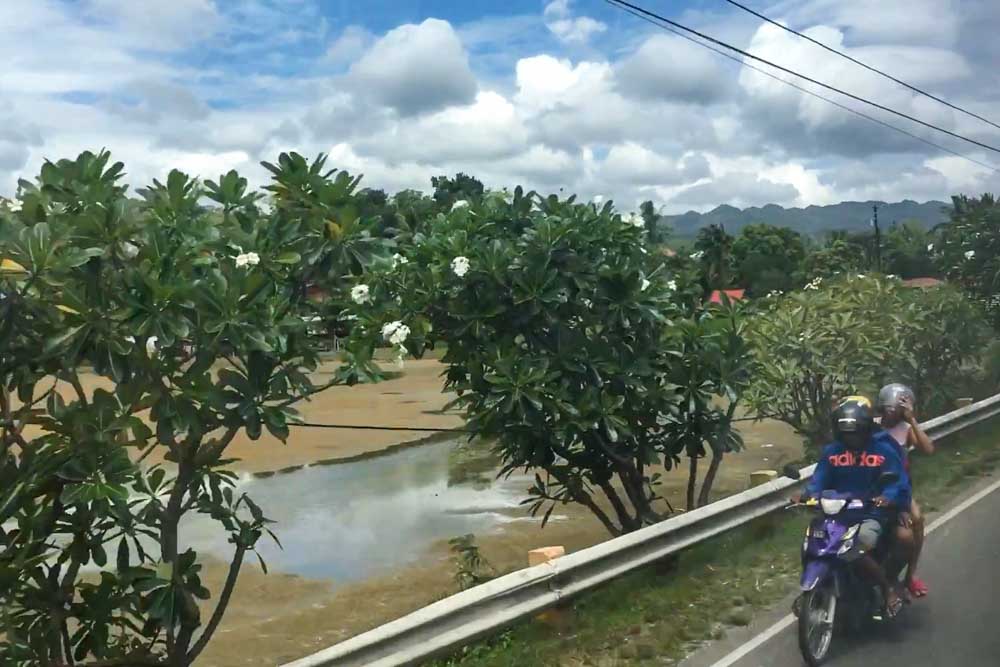
Minivans are another option; they leave from the same bus terminal and cost about the same price.
Arriving in Cebu by air
Mactan-Cebu is the second-largest airport in the Philippines, and it’s usually quite affordable to get there from almost anywhere else in the country. There are also direct flights from many other large cities in Asia – there’s really no need to go through Manila if you’re primarily here to dive.
The bus terminal is about 10 kilometers from the airport, but traveling those 10 kilometers could easily take you 40 minutes in traffic.
If you’re traveling light and solo, I highly recommend taking a motorbike taxi over a taxi or bus. If it’s not practical for you to hop on a bike (e.g. you have diving gear, you’re traveling with a group) or you simply don’t want to, just factor some extra time into your plans. Keep in mind that you’ll need to get to Maya Port before 4:30 – 5:00 p.m. to catch the last ferry to Malapascua.
Arriving in Cebu by ferry
My advice is similar if you’re coming from Cebu Pier, which is where you’ll arrive if coming by ferry from Bohol. I did the reverse trip (the bus terminal to the port – about 3 kilometers) and the roads were really congested. I would not have made it in time if I’d been in a car; bless that moto-taxi driver. (As it was, a kind OceanJet employee led me and two other travelers on a sprint through the terminal in order to catch the ferry!)
Private transfers
If you’re traveling in a group, it might make more sense to hire a taxi or private van. You’ll save a lot of time – both because private transport is inevitably faster and because you won’t have to make your way through traffic to the bus terminal (and then potentially wait a while for a bus to leave). Especially if split among a few people, you might decide that the fare is worth saving yourself the hassle of everything described above.
If you book your dives in advance, many dive centers can arrange private transfers directly from the airport or pier in Cebu City. They might be able to pair you up with other divers to reduce the cost per person.
Ferry from Maya Port to Malapascua
In good weather, it’s about half an hour from Maya Port to Malapascua. Depending on the time of day, boats either leave when they are full or every 15-30 minutes.
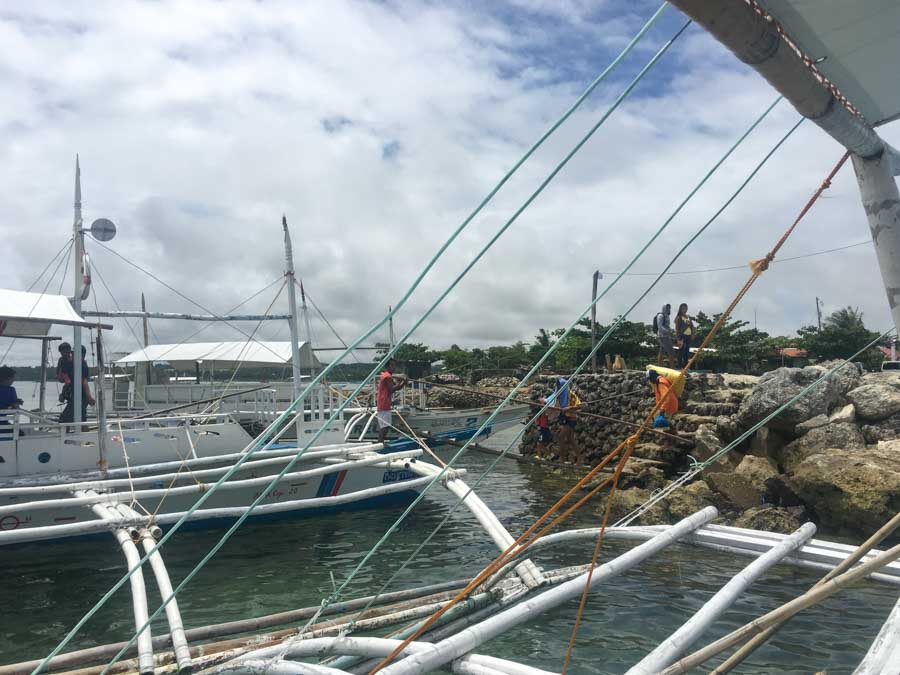
The sea was pretty rough on my short little trip between the two islands, and every one of us travelers cringed and held our breath as our tiny backpacks – you know, the important ones – were tossed from the pier over to the boat. We (and our belongings) were soaking wet by the time we arrived.
It was hilarious, and fun, and of course quite a relief to have made it there at all in stormy weather instead of having to spend the night at the port.
Arguably the best way to get to Malapascua – by liveaboard!
It’s worth noting that liveaboards through the Visayas often include Malapascua.
Personally, I’m saving my money for a Tubbataha trip someday, as many of the excellent dive sites in the Visayas can be reached independently. (Though, as we’ve seen, it can take a bit of time and patience.)
If you have the budget though, a liveaboard is something to consider!
Other things to note
Malapascua is a great place to relax and explore. It is not a great place to get work done if said work requires a decent internet connection.
There are a few ATMs on the island nowadays, but they sometimes run out of money. In a pinch, some higher end resorts will allow you to get cash using your credit card, but of course the rates are quite poor. I recommend bringing plenty of cash with you from Cebu. Transport companies will usually stop at an ATM before reaching Maya Port, but again, better not to rely on the same cash machine as every other tourist on the bus!
* * *


