Scuba Diving in Bohol, Philippines: A Complete Guide
Some links on this page may be affiliate links. That means if you follow one, see something you like, and purchase it, I may receive a small commission at no cost to you. For more information, see this site's disclosures.
Everything to know about scuba diving on Bohol Island in the Philippines. This includes information about Panglao, Cabilao, and Balicasag, which are all separate islands but are the best places to dive in the Bohol area. You’ll see incredibly colorful reefs, float among schools of jackfish, and dive with dozens of sea turtles!

The Philippines, of course, is one of the best places in the world for diving. Although the most famous and prized reefs are only accessible by liveaboard, there are hundreds of incredible dive spots near the more populated areas of the archipelago.
I spent six weeks traveling around the Philippines, and Bohol was one of my favorite places in the entire country. It had a perfect combination of fantastic diving, good budget accommodation, a nice beach, good food, and a fun traveler vibe.
Is Bohol good for scuba diving?
Incredible marine life, good visibility, and relative accessibility make Bohol one of the best places to dive in the Philippines.
The surrounding dive sites are famous for their healthy coral reefs, sea turtles, and abundant species of fish. I was mesmerized by the incredible colors on my dives there, and I saw turtles or large shoals of fish on almost every dive!
Bohol’s airport is a mere 10-minute drive from Alona Beach, the main base for divers on Panglao Island. Bohol is also just a short ferry ride from Cebu, one of the main cities of the Philippines and one that has frequent flight connections to other parts of the country.
Bohol’s diving rivals that of much more remote locations in the Philippines, so it’s a fantastic destination for divers who are limited on time. It’s also one of the most affordable diving destinations I know of, with prices hovering around 1600-1800 pesos per dive, or around $28-32 USD.
Where should you stay to dive Bohol?
There are two main spots to base yourself to dive Bohol – and neither of them is technically on Bohol!
The first place is Panglao Island, which is connected to Bohol by two 500-meter bridges. It is not technically the same island, but it may as well be. (The first bridge to Panglao is only a five-minute drive from Tagbilaran Port, where you can access Bohol from Cebu, Siquijor, or Dumaguete.)

The second is Cabilao Island, which is located off the west coast of Bohol. You can travel there independently and stay on the island or one of its neighbors. Alternatively, you can just go for the day – most dive centers in Panglao also arrange trips to Cabilao.
Diving on Panglao Island, Balicasag Island, and Pamilacan Island
If you’re coming to Panglao to dive, the best place to base yourself is Alona Beach. This is the busiest Panglao beach with lots of restaurants, stores, hotels, scooter rentals, and dive shops.
There are a number of dive sites peppered around the island – not shore dives, but still quite close to the coast. (There is a 20-30 meter wall that surrounds the island.) Depending on tides, your dive shop may take you by boat from Alona Beach or do the majority of the trip by car or jeepney to cut down on time.

But the real highlight of scuba diving Panglao is the nearby Balicasag Island.
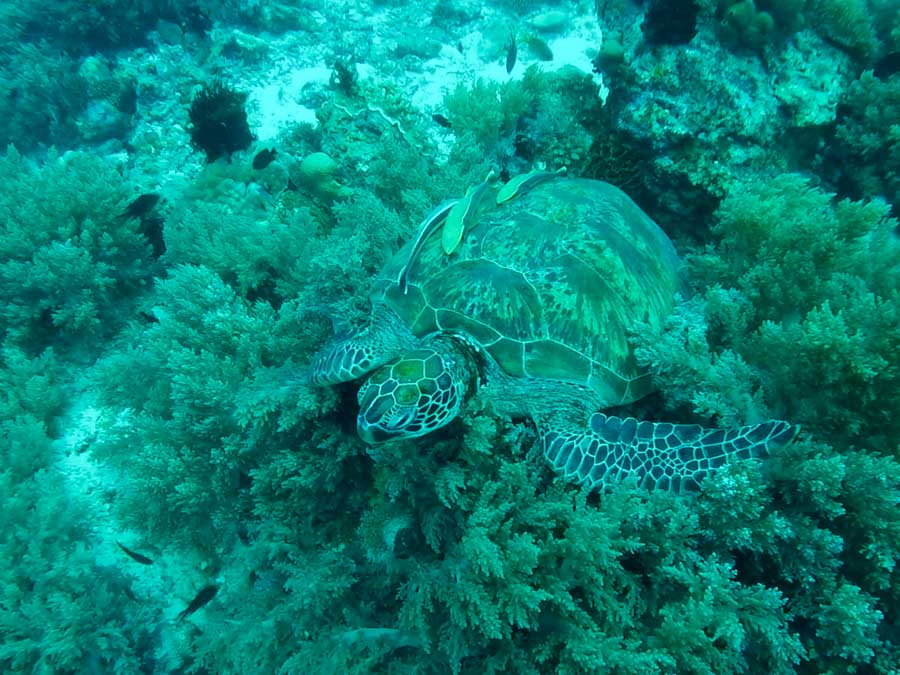
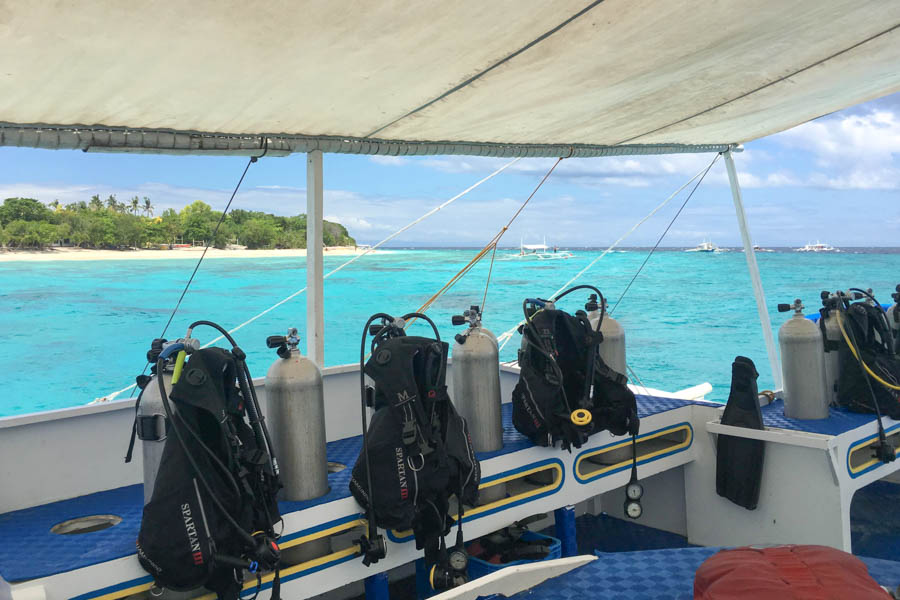
Balicasag Island diving is known for its beautiful reef walls and sea turtles. It’s not uncommon to see 5-10 sea turtles on one dive. (We certainly did! It was amazing.) The Black Forest dive site in particular is known for some of the best diving in Bohol.
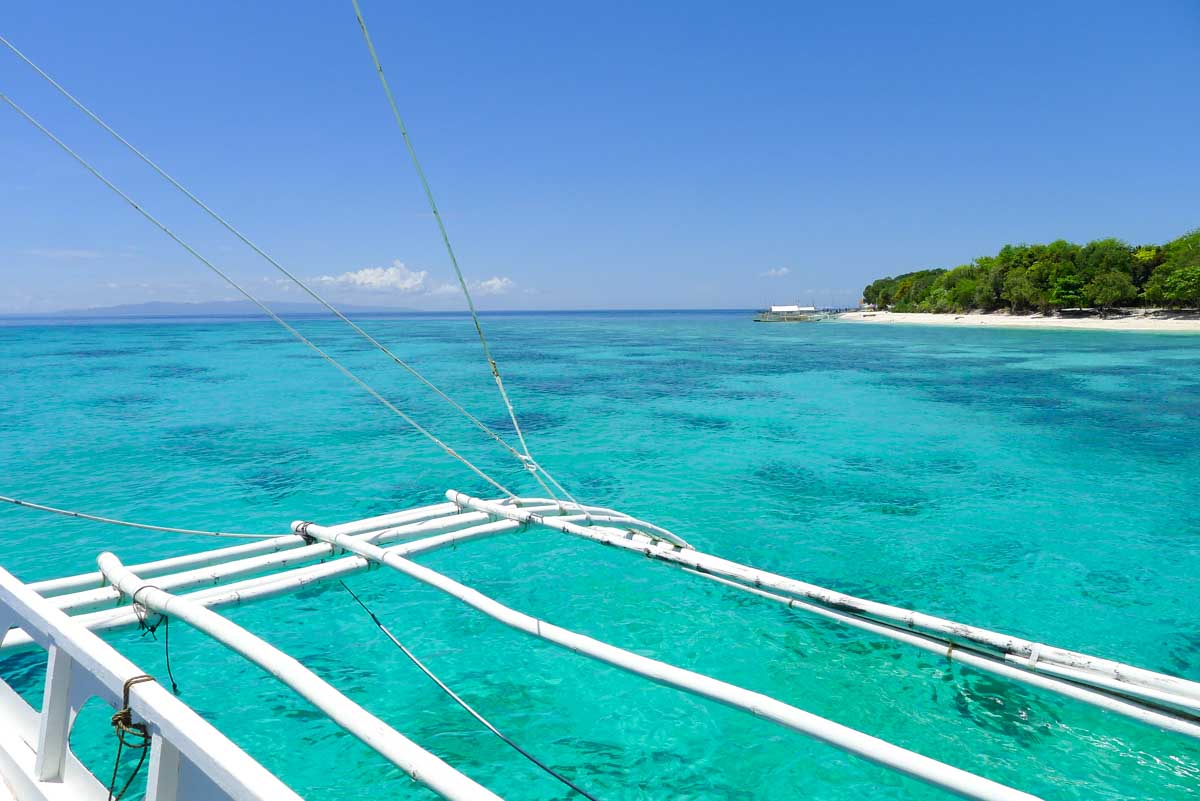
Some of the sites here are also great for snorkeling, so it’s a perfect half-day trip if you’re traveling with non-divers as well. From Alona Beach, it takes about half an hour to reach Balicasag by boat.
Pamilacan is another small island off the coast of Bohol and Panglao. It is a bit bigger than Balicasag Island, but still tiny. And as with Balicasag, you can find beautiful coral gardens, sea turtles, and many different species of fish here. It is about 45-55 minutes from Alona Beach by boat.
Balicasag vs. Pamilacan
If you’re trying to choose between Balicasag and Pamilacan, there are a few things to consider.
Pamilacan is not great for snorkeling, so Balicasag is definitely a better choice if you’re traveling with someone who doesn’t dive.
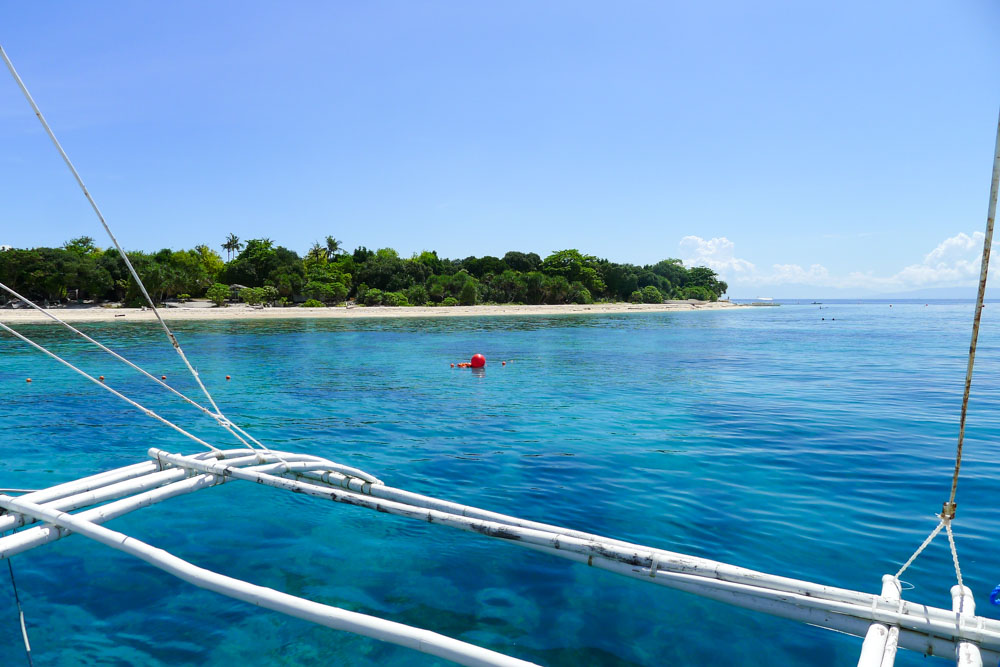
Balicasag is generally viewed as easier to dive as well, as Pamilacan has stronger currents. This means that most dive shops visit Balicasag multiple times per week, while trips to Pamilacan are less frequent. As a result, there will be far fewer divers around if you do decide to head to Pamilacan. (Note, though, that there is a daily cap on permits to dive Balicasag, so it never gets too crowded.)
Many operators will also recommend that you have an Advanced Open Water certification for Pamilacan, while Balicasag is great for divers of all levels.
The currents do mean that occasionally, lucky divers might encounter larger animals like eagle or manta rays – even the rare whale shark! – near Pamilacan. This is far from guaranteed, however, and not a regular enough occurrence that I would personally let it affect my decision. There are better places to dive in the Philippines if you’re hoping for a manta ray (or shark!) encounter.

If you don’t have time or money for both, my recommendation is to head to Balicasag over Pamilacan. The coral gardens are beautiful, the sea turtles are not shy at all, the boats go every day, and the diving is extremely chill.
Diving on Cabilao Island
As I mentioned, you can dive Cabilao with many of the diving operators based on Alona Beach. If you have the time, though, I highly recommend spending a few nights on the island. I stayed three nights on Cabilao, and it was probably the highlight of my entire time traveling in the Philippines.
This is a tiny island with a small local community and just a few dive resorts. There are incredibly beautiful, healthy reefs just off the coast – the boat ride to reach most of them takes less than 10 minutes. (I once was getting ready to jump and realized I didn’t have my mask, but no worries! My room was literally 4 minutes away.)

I spent my time in between dives just relaxing on the beautiful grounds of my accommodation, looking out over the ocean, and chatting with other travelers. It was almost like a liveaboard experience in that I woke up, went diving, relaxed, ate, went diving, relaxed, ate… There was nothing else to do, and everything I needed was located within a radius of a few hundred meters. It was so relaxing! (And much cheaper than a liveaboard.)
The resort where I stayed is no longer operating, but it was right next to Cabilao Sunset Dive Resort and Polaris Resort on the western side of the island.
I’ll also note that anyone can appreciate Cabilao Island – it’s not just for divers. Several of the other travelers I met were there just to enjoy the remote location and slower pace of life. I think it would be a fantastic place for snorkeling as well, as the shallow areas of the reef were just as beautiful as the deeper sections along the wall.

How to get to Bohol
You can reach Bohol by air or by ferry.
Traveling by air
Bohol-Panglao airport is a 10 minute drive from Alona Beach. This is a new airport that only opened in late 2018.
Direct flights from Manila take about an hour and a half and can be very, very affordable – typically around $35 USD. There are also direct flights from Davao, El Nido (significantly more expensive), and several cities in South Korea.
Traveling by ferry
If you’re coming from elsewhere in the Philippines, the best way to get to Bohol is by ferry.
Ferries between Bohol and Cebu
From nearby Cebu Island, you can take a two-hour ferry to either Tagbilaran Port or Tubigon Port. If Panglao is your first destination, Tagbilaran is closer and makes more sense. If you’re starting with Cabilao, just take whichever ferry leaves at a more convenient time – the distances to the two ports are similar.
To reach Cebu, you can take a direct flight from almost anywhere in the Philippines, as well as many other major Asian cities.
Keep in mind that even though Cebu Pier is less than 15 kilometers from the airport, traffic can be very heavy in this area. If you’re traveling alone with a backpack, I definitely recommend a motorbike taxi over a car or bus. If you want to travel in more comfort, with a group, or with a suitcase, you can easily grab a regular taxi. I don’t really recommend the bus, as it’s still a bit of a walk to reach the pier from where you get dropped off.
Note that most ferries to Bohol leave from Pier 1, but double check this when you book your ticket.
Ferries between Bohol, Siquijor, and Dumaguete
I assume, if you’ve stumbled across this post and read this far, that you’re a diver. If you have time, I highly recommend also visiting Siquijor Island and Apo Island (just off the coast of Negros – not to be confused with Apo Reef). The diving continues to amaze!
You can take a bit of a triangular route between Tagbilaran, Siquijor, and Dumaguete Port, which is 30-40 minutes north of the popular diving hub of Dauin on Negros. Alternatively, just base yourself on Siquijor – the dive shops here also visit Apo Island regularly. (They do typically require a minimum number of divers for this, though, so check with them regarding their upcoming schedule, especially if you’re traveling solo.)
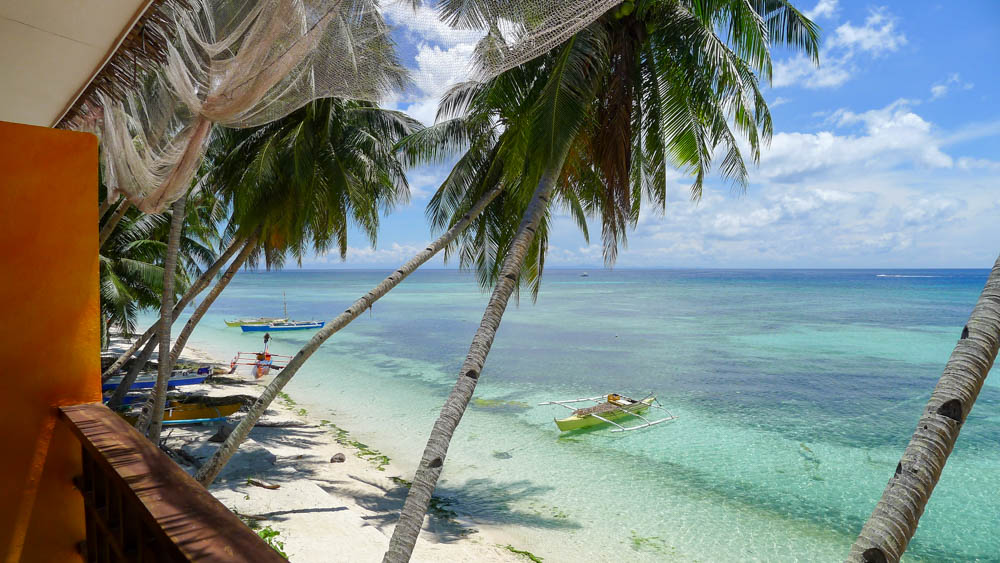
From Bohol (Tagbilaran), the ferry to Siquijor takes between 1.5 and 2.5 hours, depending on which company you choose (some boats are faster than others). Note that Siquijor has two piers, Siquijor Pier and Larena Pier.
For the trip between Siquijor and Dumaguete, there are several ferries in both the morning and afternoon. Some take 45 minutes and some take twice that, so just make sure you look carefully when you book.
There is usually only one ferry per day from Dumaguete to Bohol. The trip takes 2 hours.
How to get to Panglao Island from Bohol
As mentioned, try to take a ferry to Tagbilaran (rather than Tubigon) if you’re heading to Panglao. If you arrive during the day, you will have a lot of options – taxis, motorbikes, tuk-tuks (called tricycles in the Philippines), jeepneys (shared transport, like colorful bus/truck hybrids), and shared vans will all be waiting.
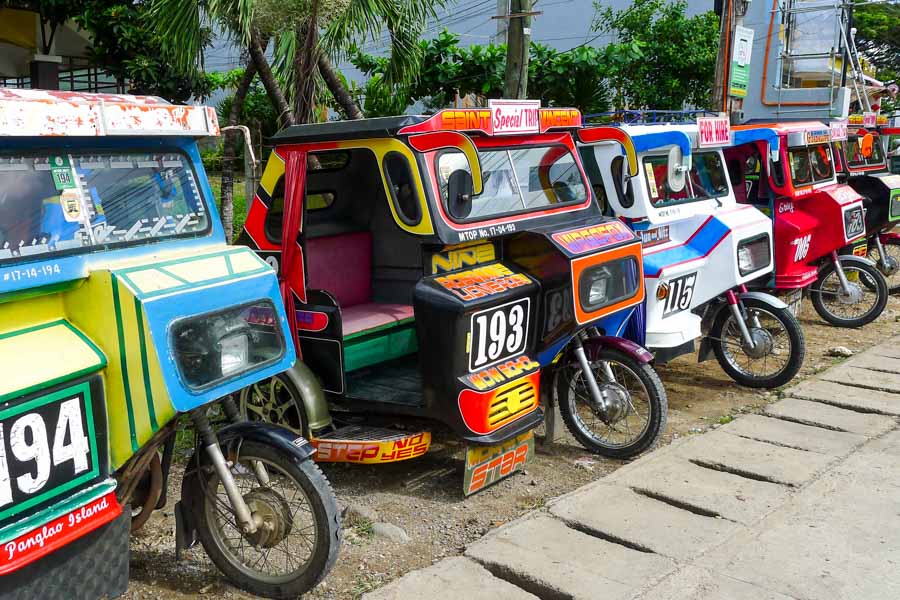
When I arrived at Tagbilaran after dark, there were only tricycles. After some back and forth, someone called a friend with a motorbike taxi, and that was more reasonable for me as a solo traveler. (And the motorbike is always more fun, let’s be real.) It worked out well, as I kept the driver’s contact info for a trip to immigration and my return back to the pier later in the week.
It takes about 45 minutes to reach Alona Beach from Tagbilaran Port. (Tubigon is almost three times the distance.)
How to get to Cabilao Island
To reach Cabilao from Panglao or Tagbilaran, you’ll need to grab a motorcycle taxi, tricycle, or jeepney up the west coast of Bohol. You’ll get off at the Sandingan Island Pier, just past the small city of Loon. From Tagbilaran, the trip should take about an hour with private transportation. On a jeepney, it will probably be 1.5 – 2 hours, but of course that depends on how many stops it makes.
If you’re coming from Tubigon port in the other direction, it will be about an hour to the south on a motorbike or tricycle.
Sandingan is connected to Bohol by road, but you will need to take a short boat ride from Sandingan to Cabilao.

Note that the dive resorts are on the opposite side of Cabilao Island from the small pier. You can catch a motorbike taxi, or you can pay extra to have the boat take you around the island directly to your accommodation.
Important note: I definitely don’t recommend showing up here without an accommodation reservation. It is not a big island, and there are not many places to stay. (I believe there are even fewer now than there were a few years ago.)
A jeepney saves the day
Getting to Cabilao is actually one of my favorite memories of the Philippines. My morning ferry from Dumaguete had been delayed for hours (a common occurrence, I learned), and I arrived at Tagbilaran late in the afternoon, exhausted and seasick. The tricycle drivers could smell blood but unfortunately for them, tired-me has even less tolerance than usual for the pushy hard sell.
I wandered over to the jeepneys and found one heading north – perfect! It was full and therefore ready to leave – even better! No but it was literally full. I asked if I could please just sit on the roof with the bags, as I’d seen so many people do over the course of my time in the Philippines. The conductor hesitated only briefly, and I enjoyed a breezy, delightful ride up the coast of Bohol at sunset, with an unobstructed view of the ocean and villages along the way.
It was a perfect and beautiful end to what had been a long, hot, frustrating day – one of those days when I’d started to think, “I’m not sure I want to do this anymore.” The universe countered with a simple but lovely ride on the top of a jeepney, waving to little kids and feeling the glorious wind on my sweaty, clammy face. And I spent the next few days in a place that I’m pretty sure is paradise on Earth.
* * *
If you’re heading over to Palawan, consider going diving in El Nido. It’s not as good as Bohol, I’ll be honest, but it’s a welcome break from the mass tourism feel of the island-hopping tours.
For a real bucket list dive, make your way to Malapascua Island to dive with thresher sharks!