Cudillero: A seaside gem in Asturias
Some links on this page may be affiliate links. That means if you follow one, see something you like, and purchase it, I may receive a small commission at no cost to you. For more information, see this site's disclosures.
If you love a good view, a slower pace, and/or a glass of cider in a sunny plaza, I think you’ll love Cudillero. Read on for what to do and how to get to this charming, colorful little town on the north coast of Spain.
Cudillero was, up until a few years ago, one of northern Spain’s best kept secrets. Tucked into the green hills of the Asturian coast, this traditional fishing village had slowly become a popular seasonal destination – but mostly among Spaniards.
People looking to escape the sweltering summer heat of Madrid and Andalucía could escape to Asturias – where, along with delightful temperatures, they’d enjoy beautiful scenery, local cider, and incredible food!

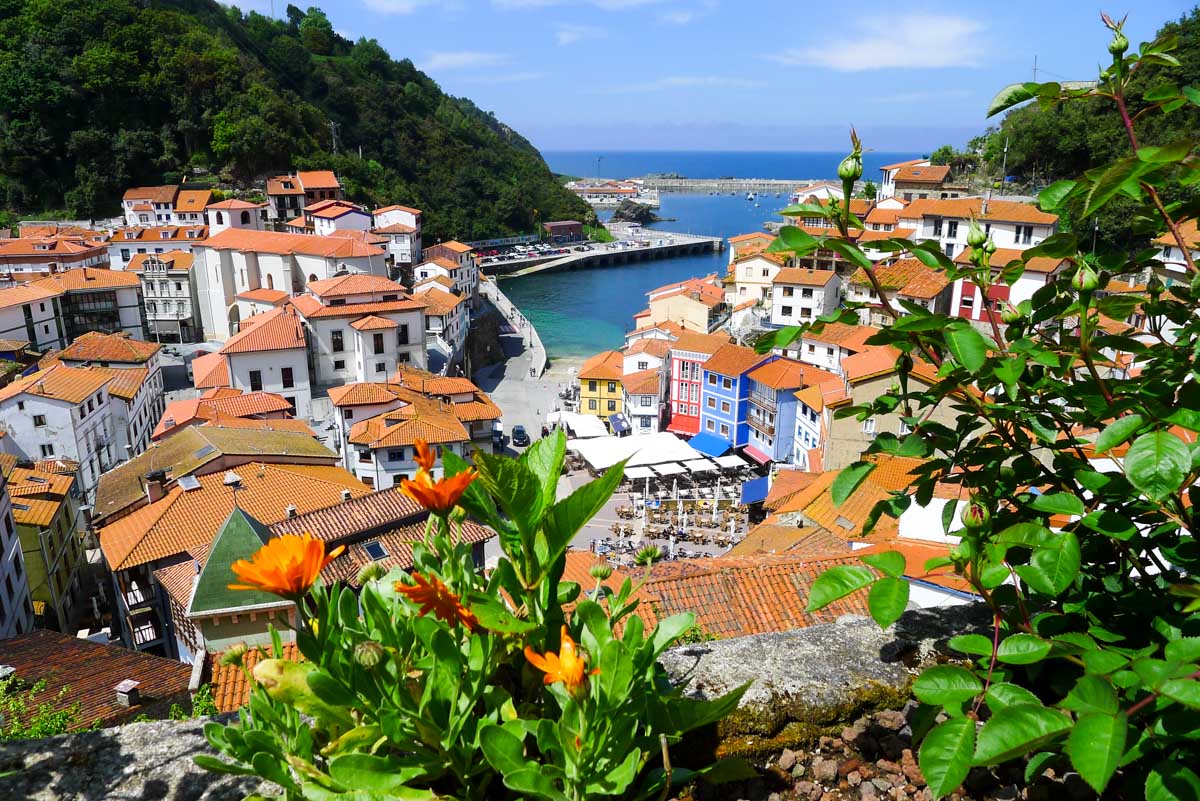
In Cudillero, colorful houses ring the harbor, overlooking the Cantabrian Sea. A network of steep, narrow alleys winds its way around the so-called “amphitheater,” with a handful of official lookout points (and countless unofficial ones). Nearby, some of Spain’s most beautiful beaches, seaside trails, and coves sit undiscovered by the selfie-snapping masses… for the moment, anyway.
Because of course, the cat is out of the bag now. Cudillero is increasingly known as one of Spain’s most picturesque villages – by international as well as domestic tourists. Google the most beautiful villages in Spain, and almost every list, by any publication, now includes little old Cudillero.
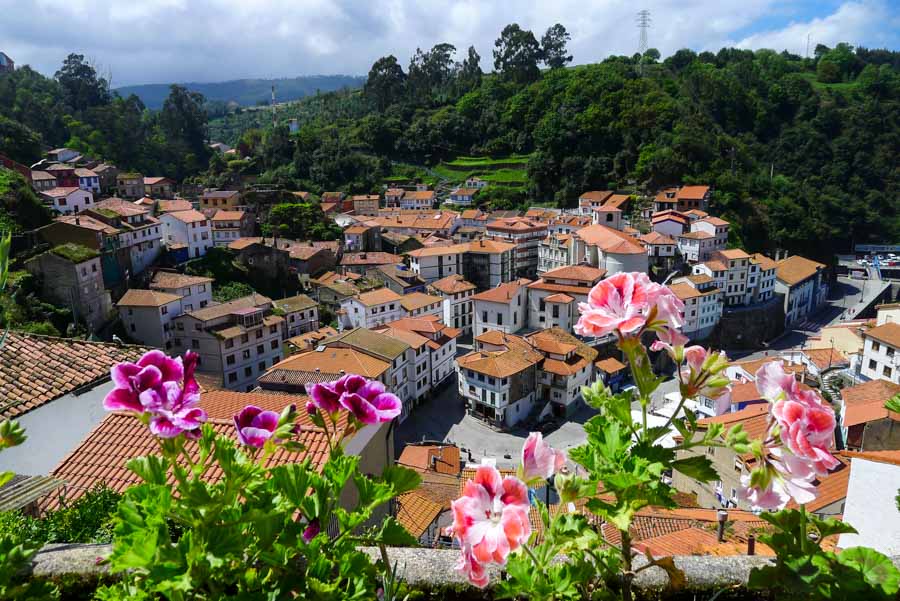
This was one of those places that made me think, “Well, I’m glad I came when I did.” I’m not saying it’s going to transform into Benidorm overnight (the population is only 5,000), but, like a lot of northern Spain, it felt refreshingly normal. Just people going about their lives in a pretty little town by the sea.
It was lovely, with nice places to eat, friendly people, and relatively affordable accommodation. There were no souvenir stalls lining the streets. Restaurants and bars did not exist only for tourists.
In a few years, I don’t know if I’ll recognize it. There were so many crumbling facades just waiting to be turned into luxury rentals with ocean views!
What to see in Cudillero
Cudillero is short on major “sights,” but long on atmosphere. The town is teeny tiny. It can take a few hours to explore it all, but that’s only because it’s such a maze.

By far, the best way to explore Cudillero is on foot. As you wind your way up and down the narrow stairs, you’ll find gorgeous views around almost every corner. Seagulls circle the anfiteatro, building nests in the nooks and crannies of old terracotta roofs. Cats stare curiously and somewhat suspiciously; they seem to know that you are not from around here.
There is a circular route, the Ruta de los miradores, that you can follow to take in the views at each of Cudillero’s official lookout points.


In my opinion, the three most impressive are the Mirador de Cimadevilla, the Mirador de la Garita, and the Mirador del Pico (also spelled Picu).
Mirador de Cimadevilla
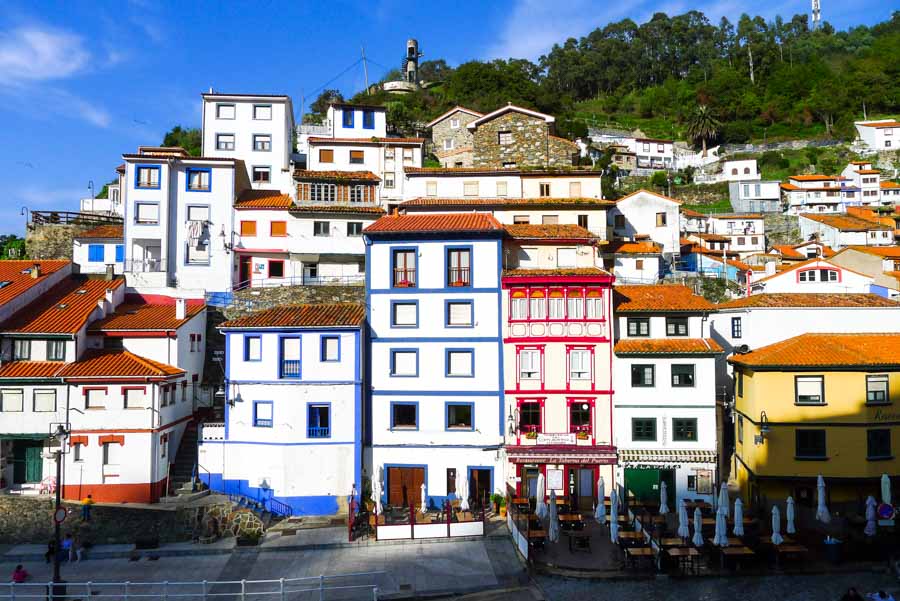
The Mirador de Cimadevilla sits on a narrow footpath carved into the hillside, opposite from the ocean. In a town of beautiful vistas, this is the one that beats them all. You have a clear view down to the plaza, with its open air tables and the backdrop of multicolored facades coated with old boat paint. Beyond that is the Old Port and the Cantabrian Sea.

Mirador de la Garita
The Mirador de la Garita is located on a hill between the town and the ocean. From the main plaza, the Plaza de la Marina, you’ll want to face the many restaurants with outdoor tables and umbrellas and start heading up from there. (Follow any of the narrow laneways or staircases to your right if you are facing the ocean.)
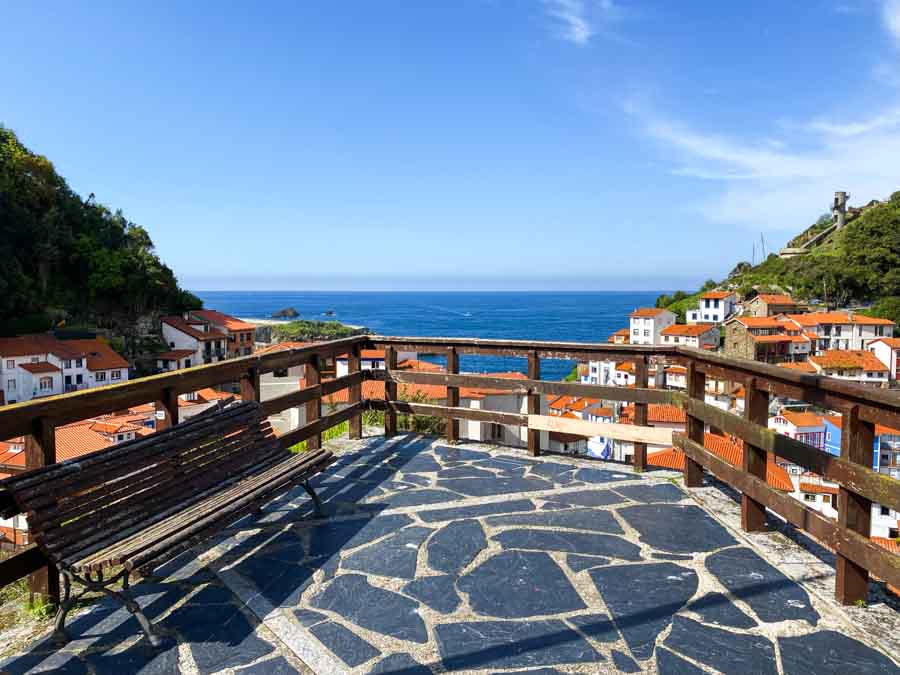
Once you get above the town’s orange rooftops, about halfway up the hill, you’ll see the viewing platform. It is located at the top of a narrow spiral staircase, giving you a bird’s eye view of Cudillero, the harbor, and the lighthouse just off the coast.
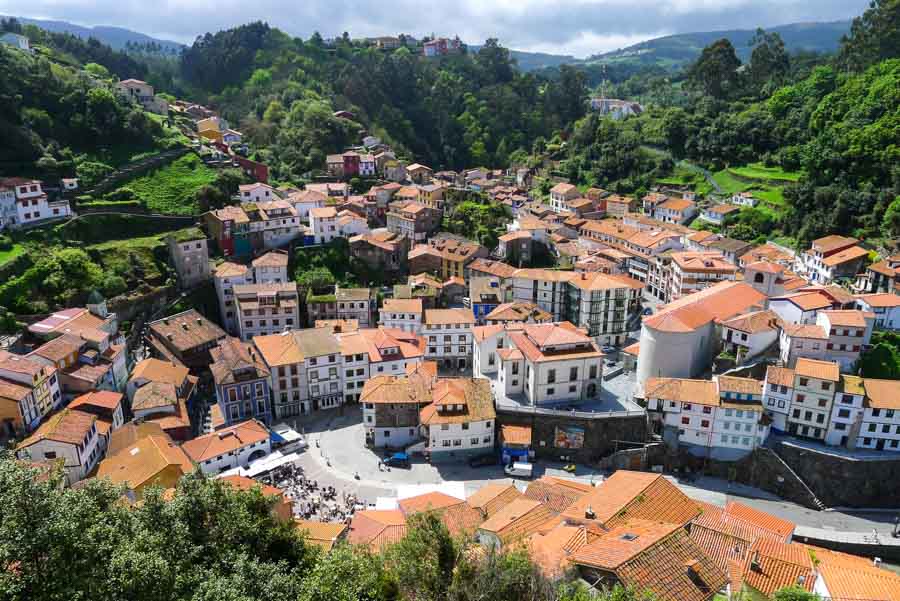
If you’re tempted to keep climbing the hill for even better views – don’t bother. I did it; the trees obscure almost everything from that far above the town. If you just want the exercise, great – make a loop around the cemetery, and you’ll arrive back in town right above the Mirador de Cimadevilla.
Mirador del Pico
The Mirador del Pico is located right in the center of Cudillero. It can even be a little tricky to find the stairs, as the lookout deck blends in so well among the town’s homes. Once you do, you’ll have a 360 degree view of the whole town – the harbor, the plaza, and the little houses nestled in the hillside behind you.
Paseo Marítimo
If you’ve had enough of the hills, you can walk Cudillero’s short seaside promenade to give you another perspective on the town. From the Plaza de La Marina, it takes just a few minutes to walk to the harbor.

Capilla del Humilladero
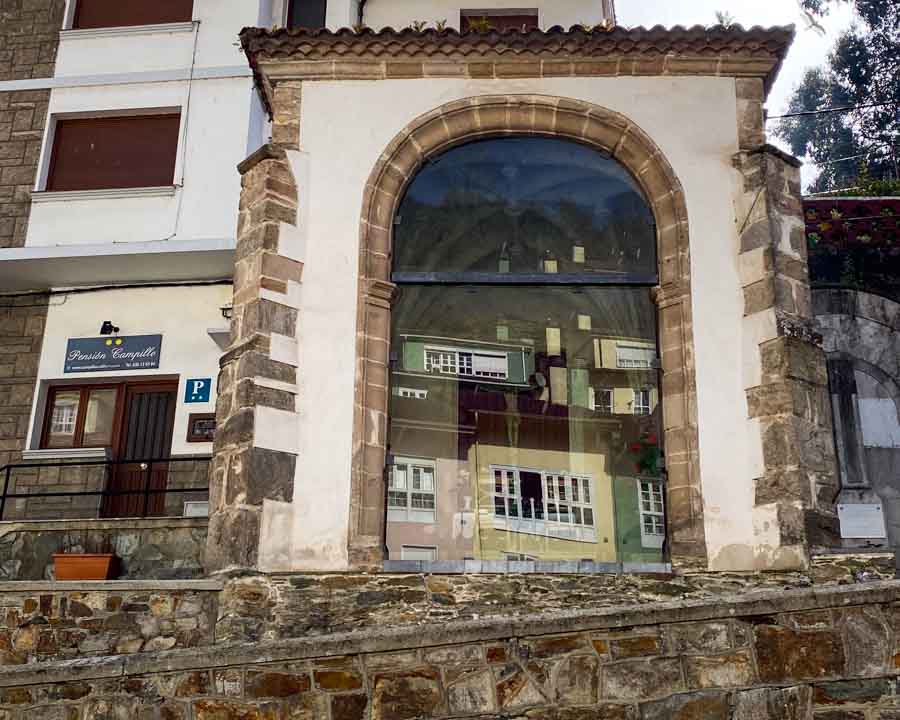
About 500 meters south of the Plaza de La Marina on the main road, keep your eye out for the Capilla del Humilladero. Dating to the 13th century, this Gothic chapel is the oldest building in Cudillero. Its impressive vaults – forgotten for hundreds of years and nearly lost to history – were rediscovered during restoration work in 2000.
Plaza de La Marina
Don’t leave Cudillero without enjoying an evening at one of the main plaza’s wonderful places to eat and drink. Unsurprisingly, the highlight here is the fresh seafood! You can also enjoy other Asturian specialties like fabada (a white bean stew), Cabrales cheese, and of course, traditional Asturian cider.
Beaches near Cudillero
If you’re using Cudillero as a base for a few days, I highly recommend checking out some of the beautiful beaches nearby. This will be easier with a rental car or a budget for taxis, but it’s also possible using your own two feet.
La Concha de Artedo Beach
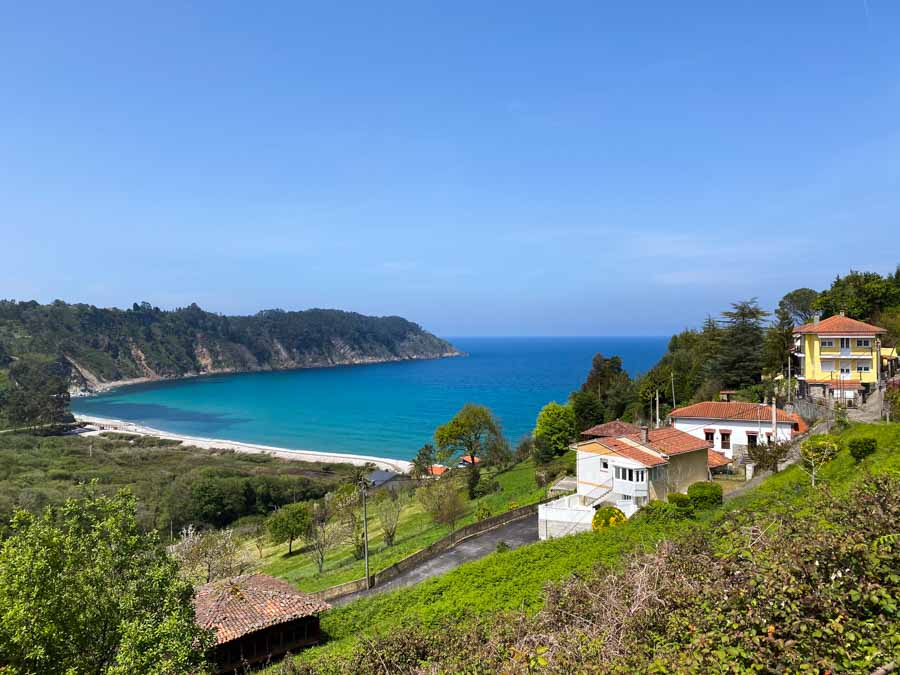
One of the most stunning beaches in the area is Playa de la Concha de Artedo, located just outside the town of Rellayo. You can walk there in about 60-90 minutes following the Camino del Norte from El Pito, if that holds any interest for you. (See the final section on getting to Cudillero for more details on navigating.)
You could also take a bus or train from Cudillero to Rellayo. Between the distance to the station and the infrequency of departures, though, you’d probably be better off just walking.
Playa del Silencio
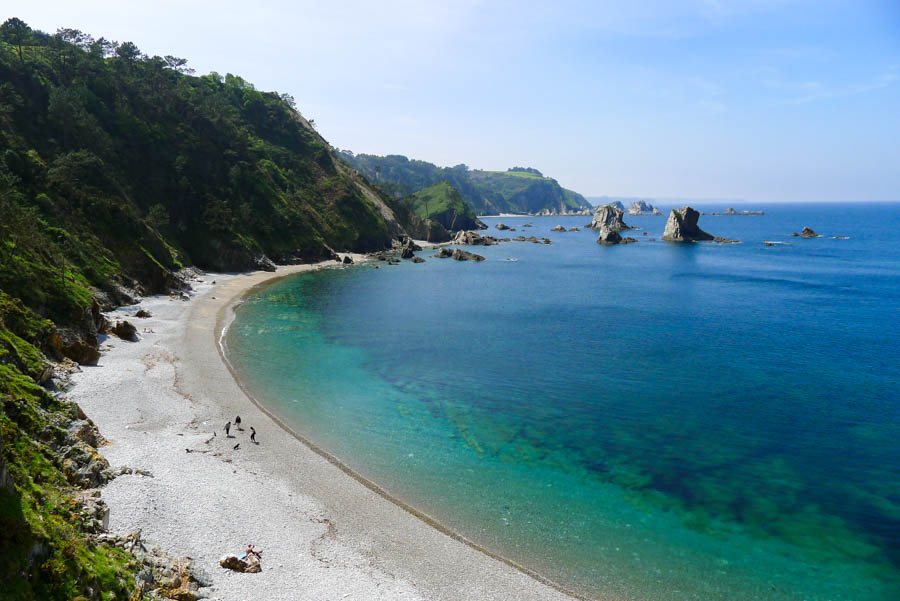
A bit further west is the incredible Playa del Silencio. This is one of the most picture-perfect beaches I’ve ever seen with my own eyes. (If you’re walking the Camino and plan to take the coastal route between Soto de Luiña and Cadavedo, ignore this – you will be there in a few days!) This is another pebble beach, located in a quiet cove, with crystal-clear water and sweeping views of rocky outcrops next to the cliffs.
The fastest way to get to Playa del Silencio from Cudillero is, of course, by car. If you’d prefer to take public transportation, keep in mind that it will also involve a fair amount of walking.
To reach Playa del Silencio, take an Alsa bus or Ferrol-Oviedo FEVE train to Novellana. (You can read more about buses and trains to Cudillero at the end of this post.)
From Novellana, you have about a half hour walk to the first mirador, where you’ll definitely want to take in the panoramic views for a bit. It’s another 10-15 minutes to descend to the beach from there. I promise it’s worth the effort.
Aguilar Beach
If you’re looking for a sandy beach, rather than a rocky one, Playa de Aguilar is likely your best bet. This beach is located about five kilometers from Cudillero to the east. Unfortunately, there is no good way to get there using public transport. Walking will take a little over an hour; a taxi will be 10-15 minutes.
When is the best time to visit Cudillero?
Like many of northern Spain’s coastal towns, the most popular (and expensive) time to visit is during the peak of summer in July and August. June and September will likely still have lovely weather and be a little calmer, but still busy.
According to weather averages, May and October are your best bet if you want fewer people but a good shot at sunny, warm days. (Of course, the weather is always a gamble in the shoulder season.)
I visited at the end of April and got lucky with gorgeous weather (as you can see). Note that it was still a little chilly inside and at night. It was also still pretty quiet at that time, which was perfect for me. November is likely to be similar.


🛏️ Where to stay
Budget
Pensión El Pozo: Simple, cozy guesthouse. Private rooms, some ensuite and some with shared bathrooms. At about a kilometer up the hill from the marina, it’s on your way if you’re relying on public transport or your own two feet.
Midrange
Hotel Casa Prendes: Charming, comfortable rooms in a perfect location just steps from the plaza.
La Casona de Pío: Another charming building full of character and right in the middle of town.
Bit of a splurge
Apartamentos La Garita: Modern, bright studio apartment with a full kitchen and washing machine. Located just above the Plaza de la Marina.
Apartamentos La Casa del Pintor: Recently renovated studio apartment right next to the Mirador de Cimadevilla. Picture-perfect views right from the room and the rooftop terrace.
How to get to Cudillero
The easiest way to get around Asturias is with your own car, but it’s also entirely possible to do this without one – as long as you’re not in a hurry!
Getting to Cudillero by bus
If you are already located in northern Spain, the easiest option is to take one of the Alsa buses running from Avilés to Cudillero. This trip costs €3.30 and takes about 45-50 minutes. It brings you closer to the center of town than any other public transport option.
You can check departure times on the Alsa website. Alsa operates all over Spain, so this is also where you can view bus schedules from other cities in the north (or elsewhere) in order to get yourself to Avilés.
If the timing doesn’t work for you or you’re coming from the west, you can also catch one of the buses running between Avilés and Ribadeo. Check the schedule to make sure the bus stops in San Juan de Piñera. (Some buses don’t stop between Piedras Blancas and Cadavedo.)
The closest stop to Cudillero on the Avilés – Ribadeo route is just in front of the Lupa Hotel in San Juan de Piñera. Note that there is a fairly steep descent into town and that the walk takes about 25-30 minutes.
If that’s too much walking for you, I’d probably try calling your accommodation ahead of time to see if it’s possible to arrange a taxi. It’s a pretty rural area, and you’re unlikely to be able to find a ride otherwise.
Getting to Cudillero by train
There is also a narrow-gauge commuter train that runs along the Asturian coast.
The Gijón – Cudillero line is one option if you’re coming from the east. It includes stops in Avilés, Piedras Blancas, and Santiago del Monte (near the Asturias airport). The route map is available on the Renfe site.
If you’re coming from the west or from Oviedo, you can take the Ferrol-Oviedo-Gijón line. Note that there are only two trains per day if you’re coming from the west. From Oviedo, there are a couple of direct trains and a bunch of options with a transfer in Pravia. (This is where the Oviedo and Gijón trains meet, and it’s just a few stops before Cudillero.) You can view the route map here.
You can check schedules on the Renfe website. Just note that Cudillero’s main plaza is about 25 minutes (downhill) from the train station on foot.
How to get to Cudillero from the Asturias airport in Oviedo
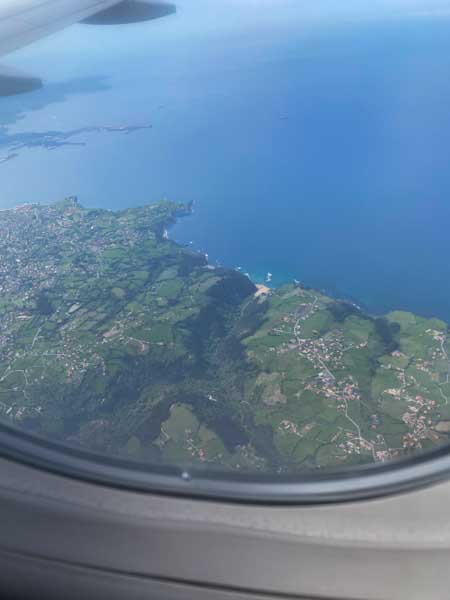
Oviedo airport is actually about 50 kilometers away from Oviedo proper. In fact, it’s right next to the coast, near the small town of Santiago del Monte. (You’ll want a window seat on this one! On landing, you’ll get a gorgeous aerial view of northern Spain’s undulating green countryside next to dramatic seaside cliffs.)
I, being on a strict budget, travelled from the Oviedo airport to Cudillero using public transportation. And I regretted it. This is one of those rare times when I highly recommend just getting a taxi (or renting a car at the airport).
It was a 35-minute walk to the bus stop in front of the BP gas station in nearby Carcedo. The bus was late, and I waited almost an hour on the side of the highway in the mid-afternoon sun. From there, it was about a 25-minute ride to the Lupa Hotel, and a half hour walk to Cudillero from there. Two and a half hours! And it would have been about 20 minutes by car.
So I don’t recommend that, unless you check the timetable and see there is a bus directly into Cudillero (not the one stopping in San Juan de Piñera) on its way. Even then, it is not a particularly nice walk to the bus stop. You could also take one of the airport buses towards Avilés, get off in Piedras Blancas, and catch a bus going the other way… but again, this is really a lot of messing about for an otherwise fairly short, fairly inexpensive taxi ride.
Following the Camino del Norte to Cudillero
There is one more possibility…
Are you traveling with just a backpack? Have you eaten properly? Do you have walking/hiking shoes? Is it still relatively early in the day?
I was itching to get back to the Camino del Norte after a weeklong break due to miserable weather. As it happens, the Camino passes right through Santiago del Monte, about 10 minutes (on foot) from the Oviedo airport. Had I eaten more than a yogurt for breakfast five hours earlier (or had there been anywhere to eat or buy food once I landed), I would have just gotten right back on the Camino and walked to Cudillero.
To follow the Camino to Cudillero, I recommend using the Buen Camino app or Gronze to navigate. You’ll want to walk until El Pito. There, you’ll split off from the path and head downhill (to your right) to Cudillero. The whole walk from the airport should be about 17 kilometers.
In Summary: If you’re planning a trip to Asturias, don’t miss Cudillero.
Cudillero is definitely worth including on your northern Spain itinerary. Between the charming houses tucked into the hillside, the friendly people, and the unique local food, this little town was one of my favorite spots in Asturias. If you’re making your way to this somewhat less-touristed part of Spain, Cudillero is definitely worth a visit!
More Spain Posts
If you love Spain as much as I do, check out the posts linked below.
An Alicante itinerary for 1, 2, or 3 days
Visiting Bermeo and “Dragonstone” (San Juan de Gaztelugatxe IRL)
Beautiful Galicia:
Top things to do in A Coruña – itinerary suggestions
How to visit northern Spain’s impressive Playa de las Catedrales
Walking the Camino del Mar along the coast from Ribadeo
The spectacular Camiño dos Faros on the Costa da Morte
Camino del Norte posts:
A beautiful hike from Irun to San Sebastián
Countryside walk from San Sebastián to Orio
Orio to Zumaia: Sun, sand, surf… and wine


