Unmissable things to do in Lisbon: A guide for first-timers
Some links on this page may be affiliate links. That means if you follow one, see something you like, and purchase it, I may receive a small commission at no cost to you. For more information, see this site's disclosures.
Oh, Lisbon. It’s got to be one of the most beautiful cities in the world, surely. When I was finally in a position to work remotely and travel, it was at the top of my list. I’d been dreaming of it forever.
That was late February 2020.
Things did not go as planned.
I had barely gotten myself settled (figured out neighborhoods, public transportation, a phone plan, the grocery store) when everything shut down. I was paying an obscene amount in rent to watch the garbage trucks trundle along the cobblestones below and slowly losing my mind thanks to the (essential?) construction workers next door.
For many, many reasons (money, visa worries, flight cancellations, health insurance, the general uncertainty and stress of those early days), it didn’t make sense to stay. For years I kicked myself for just working and living my life those first few weeks – I didn’t do a single “touristy” thing, because I thought I had time!
However! I did eventually make it back to Lisbon. And I wasted no time – I hit the pavement and explored that city like it was my job. (I mean, these days it kind of is.)
Unfortunately, I think I’ve probably missed the boat on ever being able to afford to live there. So this was just a visit, and of course there’s always more to see. But since I imagine most people on their first trip are working with similarly limited time, I hope this list will be helpful to you.

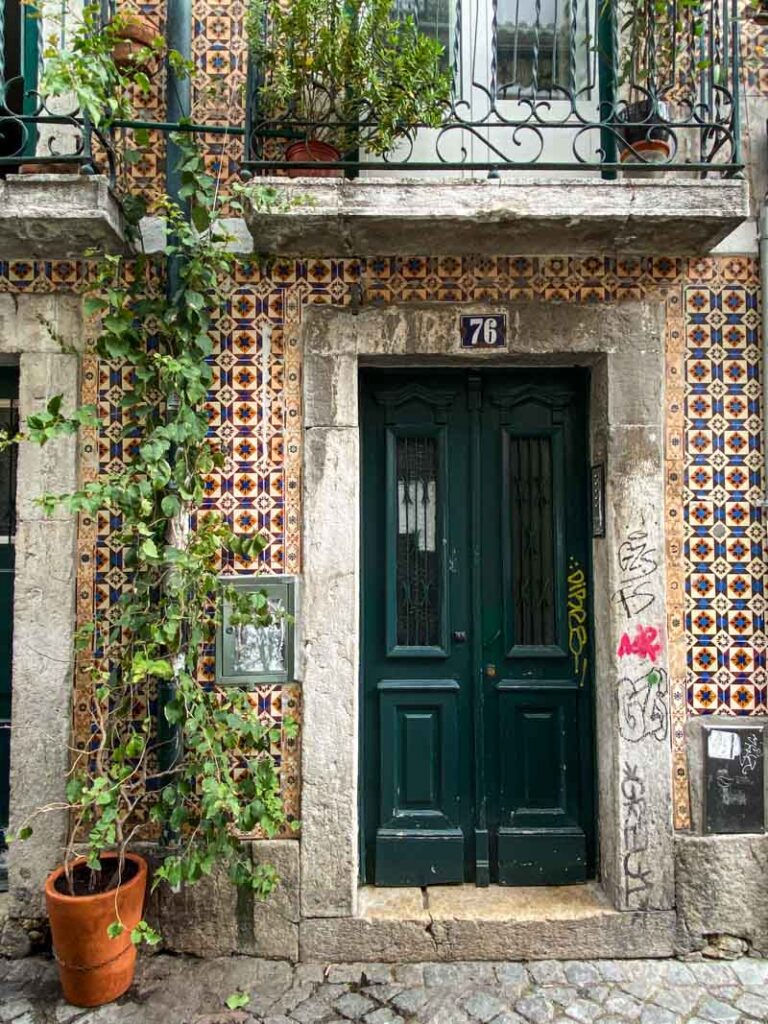
So without further ado, these are the top sights and experiences in Lisbon that I recommend you don’t miss – you literally never know what the future holds!
1 | Ride the 28E tram
A ride on the famous number 28 tram through Lisbon’s narrow, hilly streets is a quintessential experience in the city. However! I do not recommend using the 28E tram as a kind of hop on/hop off service to travel between Lisbon’s major sights. It’s simply too crowded – you’ll waste so much time waiting in line when you could just hop on a bus and be on your way.
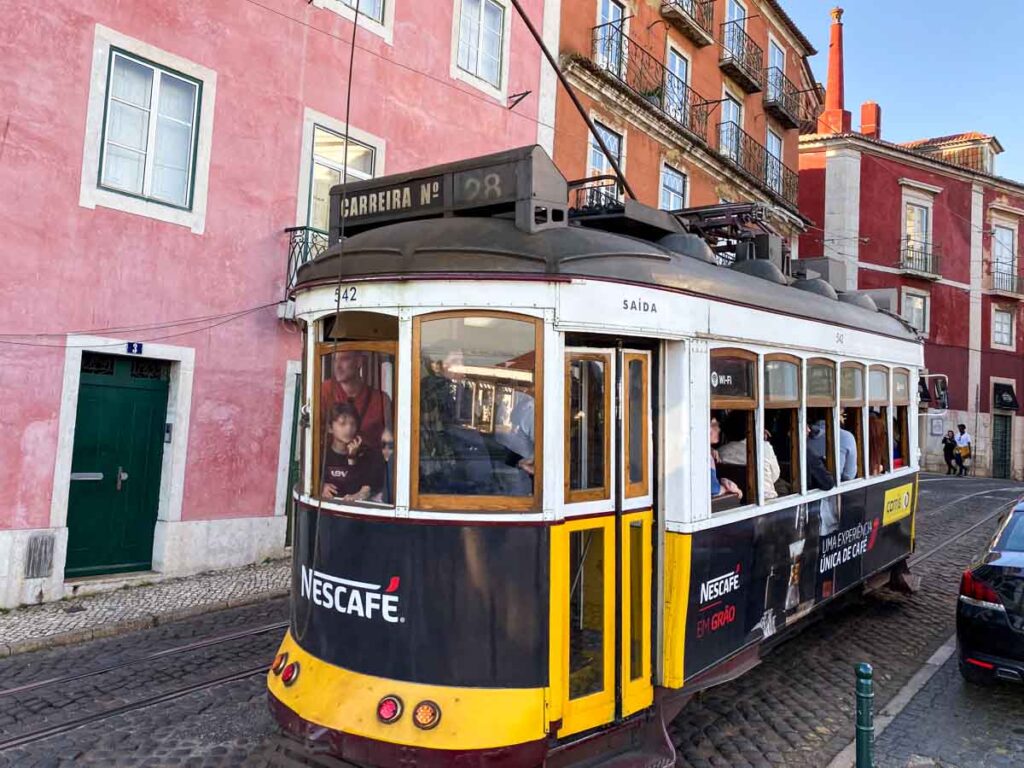
Instead, my recommendation is to take the tram from start to finish as an experience in itself. It’s a great way to orient yourself and get some perspective on Lisbon’s different neighborhoods before starting your sightseeing in earnest.
I suggest heading first thing to the Cemitério dos Prazeres. This cemetery, while pretty, is probably not what you’d call one of Lisbon’s top attractions. However, right in front of it you’ll find the Campo Ourique (Prazeres) tram stop, which happens to be the western terminus of the 28E line.
Most of the iconic streets and sights the tram passes are closer to the other end, but you’ll have a far more pleasant experience if you start here. (This is the only way you’ll have any hope of getting a seat, although that’s still far from guaranteed.)
2 | São Jorge Castle
This is probably the most famous place in Lisbon, but I have to say that it actually took me less time than expected – a little over an hour, mostly taking pictures of peacocks and watching the sunset. (Many people will tell you to go right when it opens to avoid the masses, but I found the crowd totally manageable in the evening.)
You can confirm the opening hours on the castle website, but generally it’s open from 9:00 to 18:00 during the winter (November through February) and 9:00 to 21:00 the rest of the year. The towers and paths along the castle walls can close earlier, depending on daylight at the specific time of your visit, so I wouldn’t go right before closing time. (This was the best part, in my opinion.)
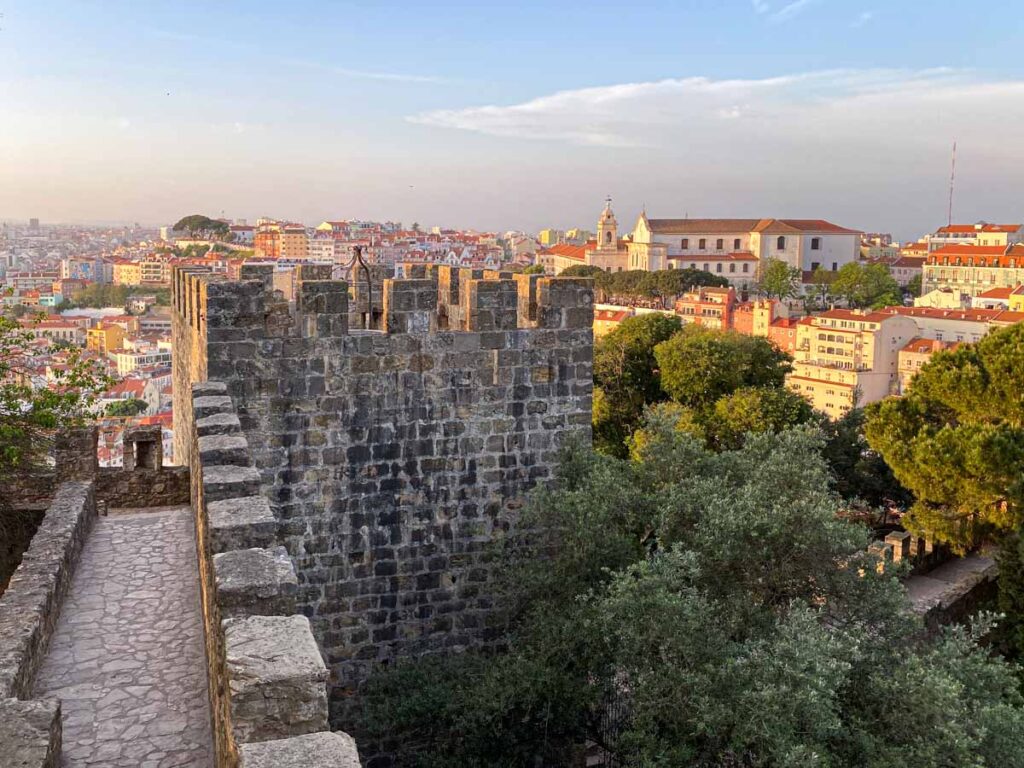
Also note that the ticket includes guided tours of the castle’s archaeological ruins and the Camera Obscura (which gives you panoramic views of the city via lenses and mirrors), but these have more limited hours. I went in the evening knowing I would be too late for the Camera Obscura but felt the tradeoff was worth it. I mean, there are panoramic views everywhere you look in this city – no lenses required! – and the sunset up there was really lovely and peaceful.
3 | Lisbon Cathedral
In a city with a whole lot of churches, this is the oldest and most famous. It was constructed almost 900 years ago, so it naturally has a lot of interesting history and a mishmash of architectural styles owing to rebuilding and renovations over the centuries.
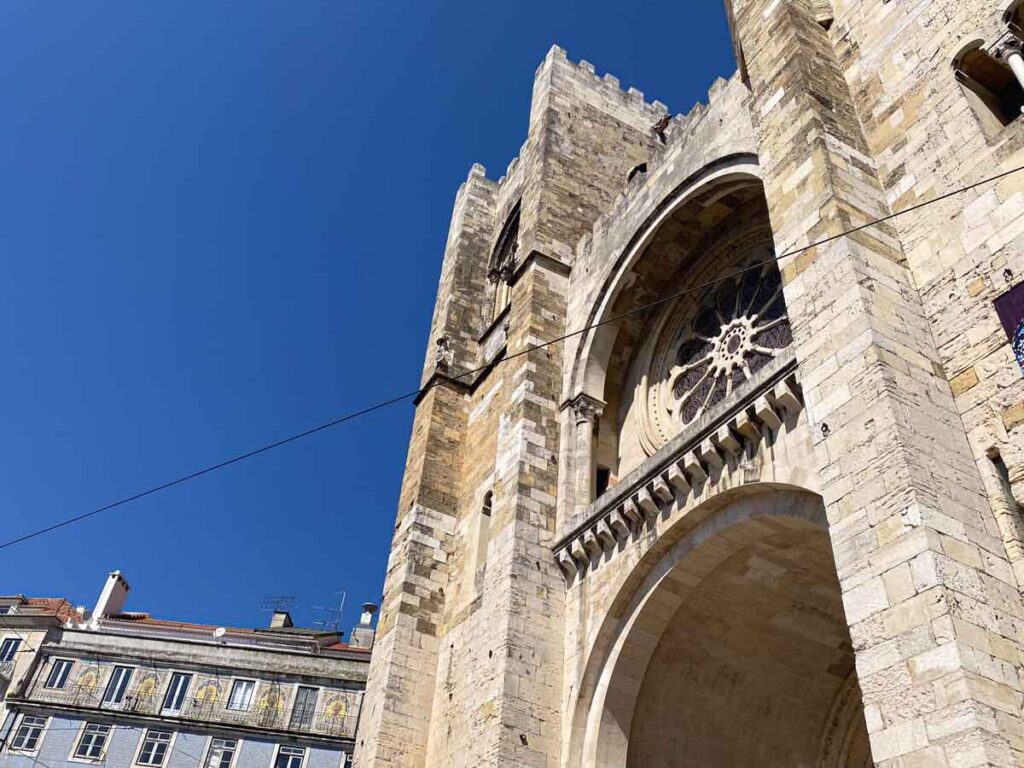
You can find it right where the flat streets of Baixa start climbing into the hills of the historic Alfama district. It’s less than 10 minutes on foot from the Rua Augusta Arch in the main plaza. Once you’ve finished your visit, a few hundred meters more up the hill will take you to a couple of gorgeous lookout points.
4 | Santa Luzia and Portas do Sol viewpoints
I’m grouping these two miradouros together because they’re about two minutes away from each other and have a pretty similar (although not identical) view.
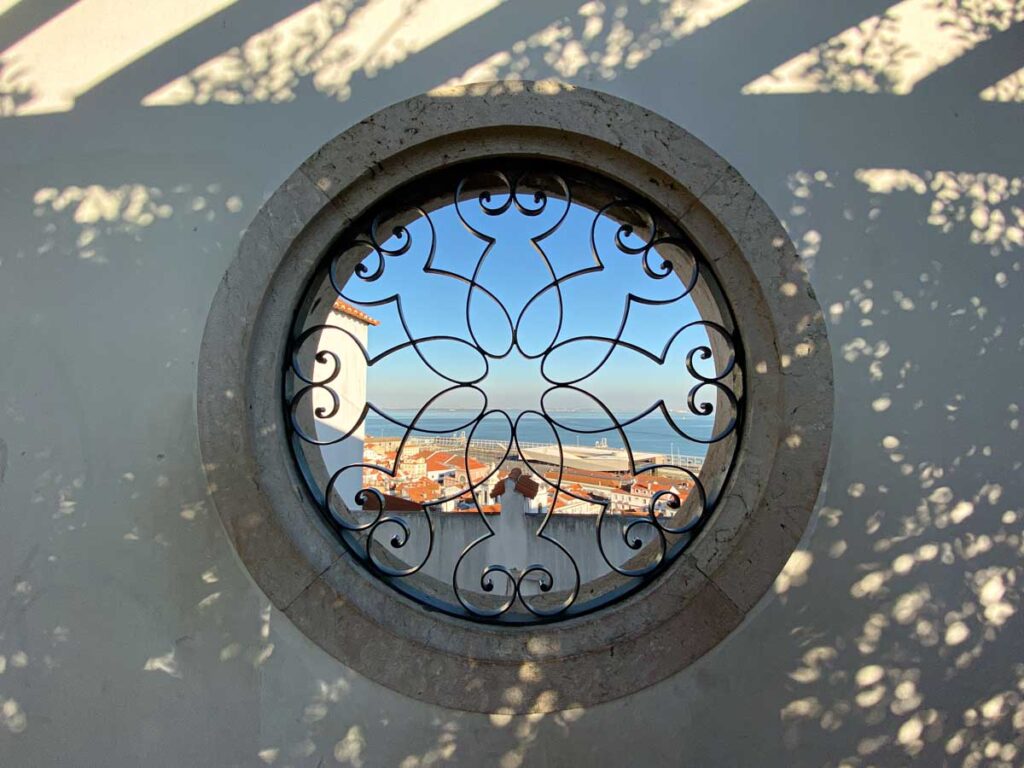
Lisbon has no shortage of beautiful lookouts, but the Miradouro de Santa Luzia is likely the one you’ve seen plastered all over social media for the last decade.
It’s one of the most picturesque, with the pillars, plants, and traditional azulejo tiles framing the blues of the river beautifully. (Combine that with being only a few minutes away from the Sé, and you unfortunately find yourself in one of the city’s most crowded tourist spots.)
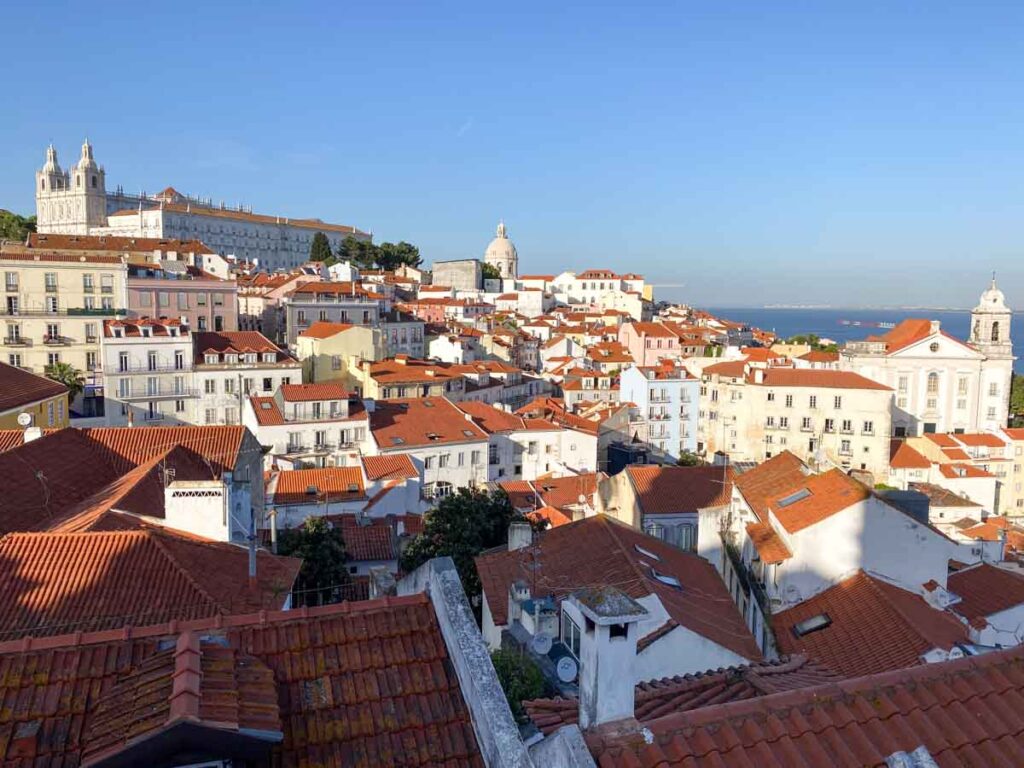
Just around the corner is the Miradouro das Portas do Sol. The gates of the sun – such an evocative name! But I actually think Santa Luzia is prettier (when you can catch a glimpse of it through all the people).
The big advantage of Portas do Sol is that there is a large café terrace here where you can grab some coffee or lunch to take in the view with a much less frenetic vibe.
5 | Rua da Bica Funicular
Another one of Lisbon’s most iconic views is the one from the top of Rua da Bica, where a classic yellow tram (the Elevador da Bica) runs up and down the steep hill between Rua de São Paulo and Largo Calhariz.
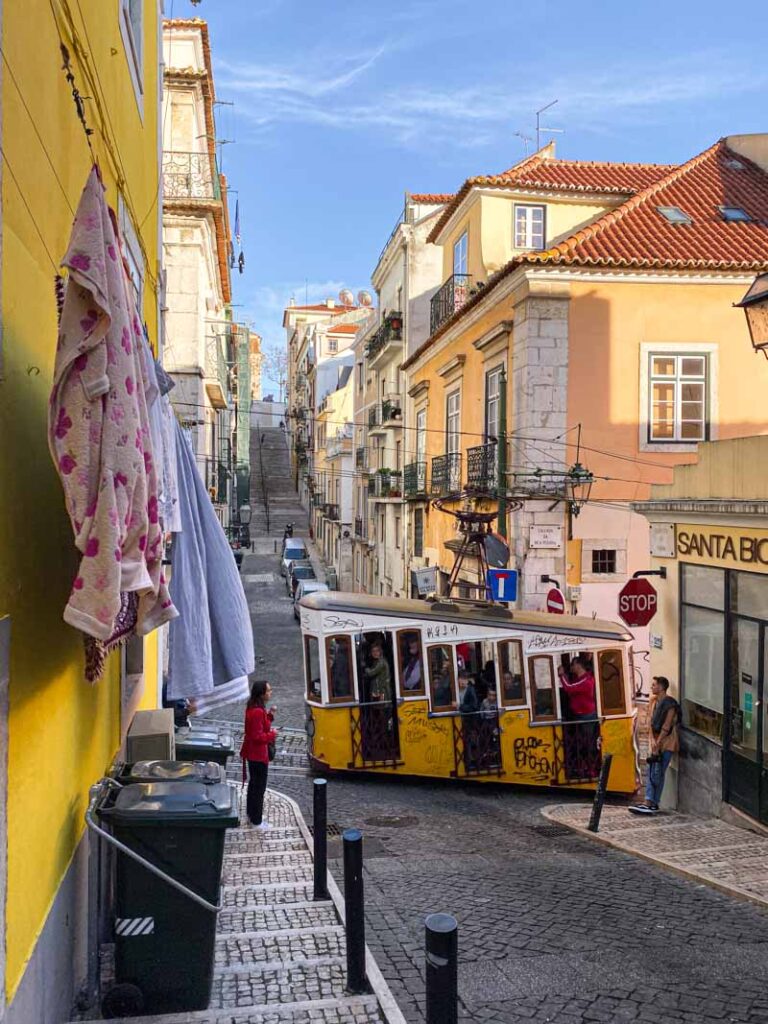

The wait for the tram can be really long, so I’m not entirely sure it’s worth actually going for a ride (which only takes a few minutes). The tracks are only a few hundred meters from the Santa Catarina garden and lookout point (next on the list), so you can easily pass by on your way without having to waste a bunch of time in line.
6 | Alto de Santa Catarina Garden
The wraparound terrace at this viewpoint is one of my favorites in the city. I just find the vibe very peaceful and relaxed.
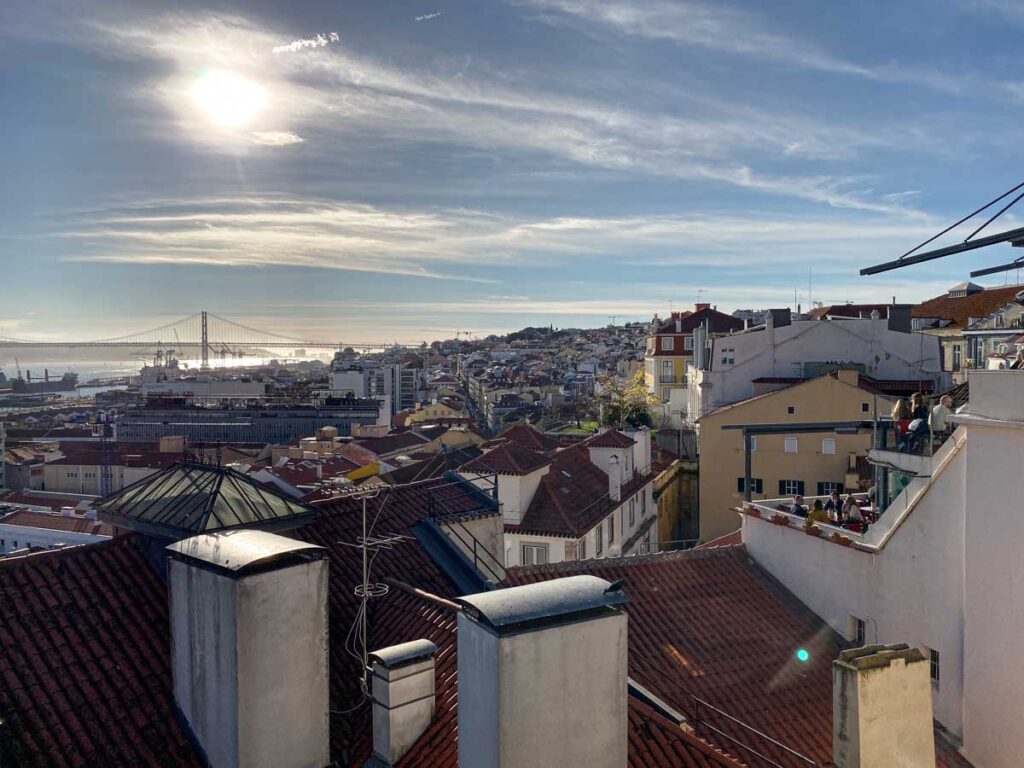
It’s quite close to the Tagus compared to some of the other miradouros in the city. That means you get a better view of the bridge across the river, although I would argue the red roofs and hilly streets are a liiittle less charming from this vantage point.
You might hear some locals refer to this viewpoint as “Adamastor.” This is a mythological Portuguese figure from a 16th-century epic poem whose image is carved into stone here in the garden.
7 | Jerónimos Monastery
The Mosteiro dos Jerónimos, located in the riverside district of Belém, is one of the most impressive examples of Manueline (Portuguese late Gothic) architecture in the country.
Construction started in the early 1500s and took an entire century to complete. Now a UNESCO World Heritage Site, the monastery and adjacent church (Igreja de Santa Maria de Belém) are definitely two of Lisbon’s major must-sees.
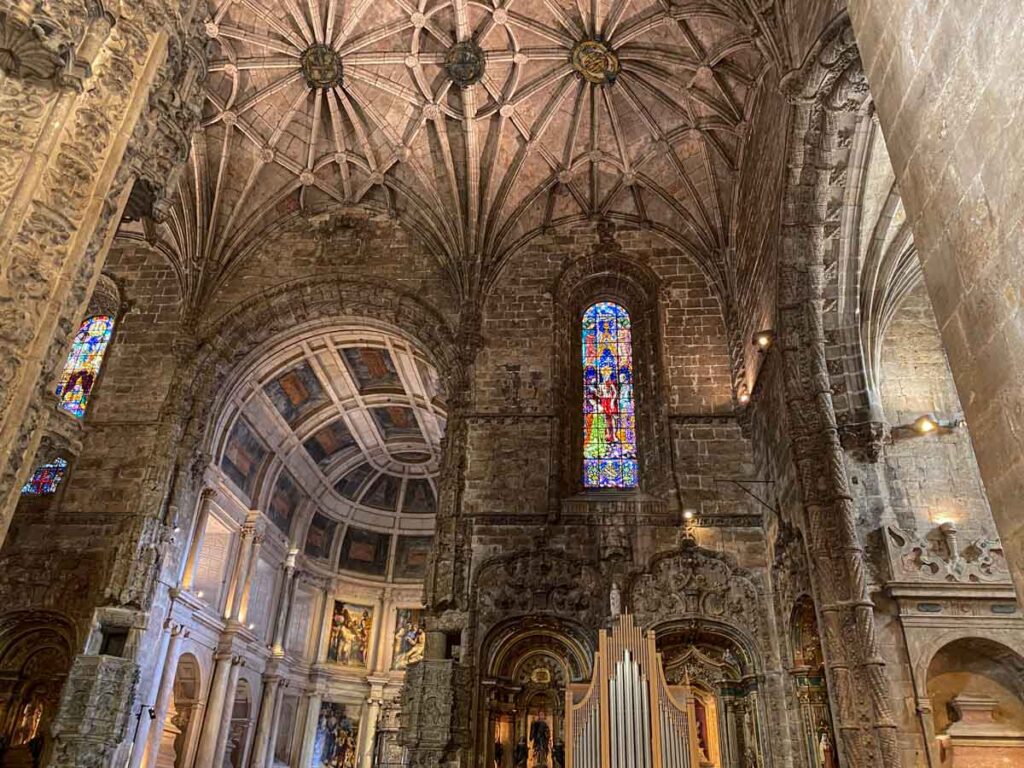
I’d read a lot about the impossibly long lines here beforehand, but between my jet lag, my accommodation across the river, and just generally not being a morning person anyway, arriving when it opened was not really in the cards. I headed there at the end of the day instead, which I figured was the second-best option, and steeled myself for a long, hot wait.
This was one of those times when I worried a ton about a problem that simply never materialized. I didn’t even wait 10 minutes. And surprisingly, even though the architecture here was incredibly beautiful and impressive, I didn’t really need as much time as I thought I would. There was very little information provided on site – the most time consuming part was waiting for a chance to take a nice photo without 30 other people in it.
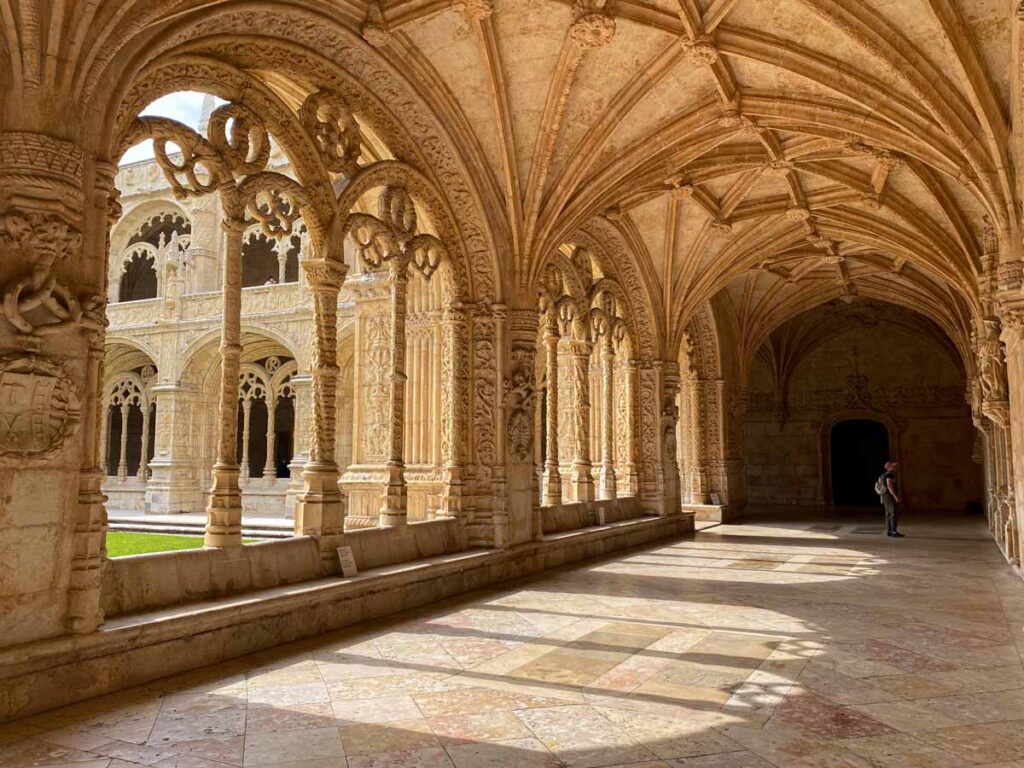
Based on what I observed (late April, for reference), I recommend heading to the church first around 16:00. (It closes at 17:00, and there is a separate, much shorter line for this.) The monastery closes at 17:30, with last entry at 17:00 – but please please double check this before you go!
There was no line at all when I left at 17:00. Again, that was shoulder season, so you might want more of a buffer in the summer. They are both closed on Mondays.
8 | Santa Justa Lift
The flat, grid-like neighborhood right at the center of Lisbon, just north of the Praça do Comércio, is Baixa. Towering over it is the Elevador de Santa Justa, a beautiful Neo-Gothic iron structure dating to the early 1900s. The engineer who designed it was a student of Gustave Eiffel, which you can definitely see in its style.
You’ll be unsurprised to learn that the lines to take the lift can be extremely long. The great news is that if you don’t care about actually taking the elevator itself, you can simply walk to the viewing platform from the other side!

A photo of the lift from head on makes it look as if it rises straight up into nothing, but it was actually built for the very practical purpose of connecting Baixa with the much higher area surrounding Carmo Square.
So naturally, there is a walkway on the other side of it connecting the upper level of the lift to this neighborhood, known as Bairro Alto. You can just walk right over, and it’s free. (Note that there is still a fee to access the top level of the observation deck. This was closed when I visited, which seems to be the case often.)
9 | Carmo Convent Archaeological Museum
I feel like a lot of people skip this one, but the former Carmo Convent is beautiful and definitely worth a visit. It’s also a two-minute walk from the top of the Santa Justa Lift, so you really may as well.

The convent here was established in 1389, but like many of Lisbon’s historic buildings (including the Sé), it was heavily damaged in the Great Lisbon earthquake of 1755 and never fully rebuilt.
Now an archeological museum, it houses artifacts from many different periods of Portuguese history. Many of these are housed in the former church adjacent to the convent, the Igreja do Carmo.
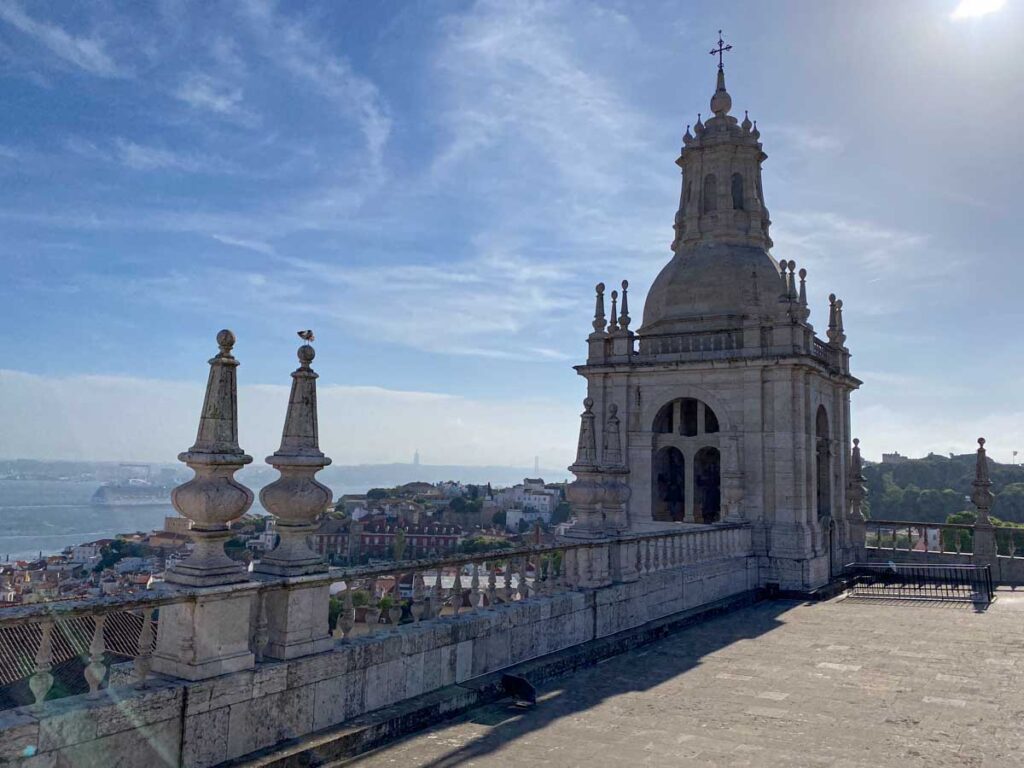
10 | São Vicente de Fora Church and Monastery
In contrast to the much more famous São Jorge Castle and Jerónimos Monastery, visiting the São Vicente de Fora church and monastery actually took me way longer than anticipated.
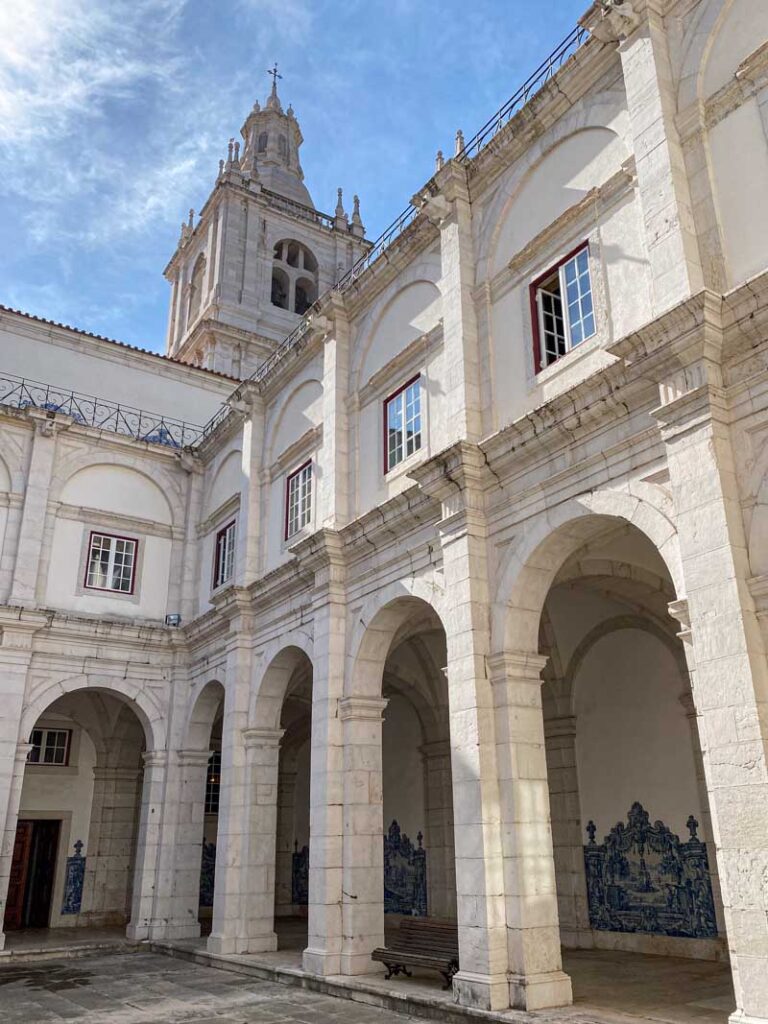
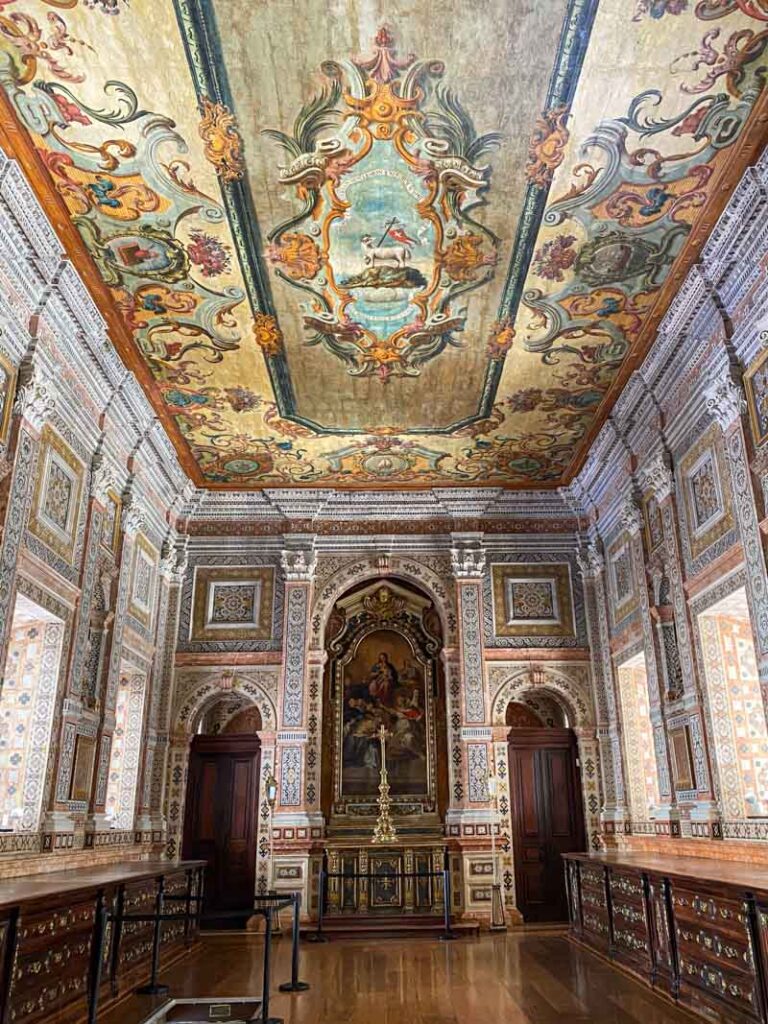
The former monastery here, built in the 12th century in Romanesque style, is covered in beautiful blue azulejo tiles depicting the history of the building as well as scenes of daily life in the 18th century. It houses a museum as well as the royal pantheon of the Braganza dynasty, one of the most famous and powerful in Portuguese history.
I would budget at least an hour for the museum, monastery, and church, plus however long you think you’ll want to spend on the terrace. (I personally never, ever tire of looking out over the Lisbon cityscape, and this view is one of the best.)
11 | Commerce Square and Rua Augusta Arch
The enormous plaza sitting right on the bank of the Tagus River in central Lisbon is the Praça do Comércio, commonly known as Terreiro do Paço.
Once upon a time, the square was home to Ribeira Palace, which was Portugal’s royal residence until it was destroyed in the 1755 earthquake. (Terreiro do Paço translates to “Palace Yard.”)

The rebuilt plaza housed a number of government ministries over the centuries. A few remain here, but most of the real estate is now occupied by event venues and tourist-oriented restaurants. There is also a museum and visitor center.
At the northern entrance to the square is the imposing stone Arco da Rua Agusta, designed to commemorate the city’s reconstruction post-earthquake. You can climb up the top of the arch for a 360-degree view of the plaza, Baixa, and the Tagus River.
12 | Senhora do Monte and Graça viewpoints
Two more lookout points for you, about half a kilometer apart, with a similar angle on Lisbon’s beautiful tiled roofs and the Tagus in the distance.
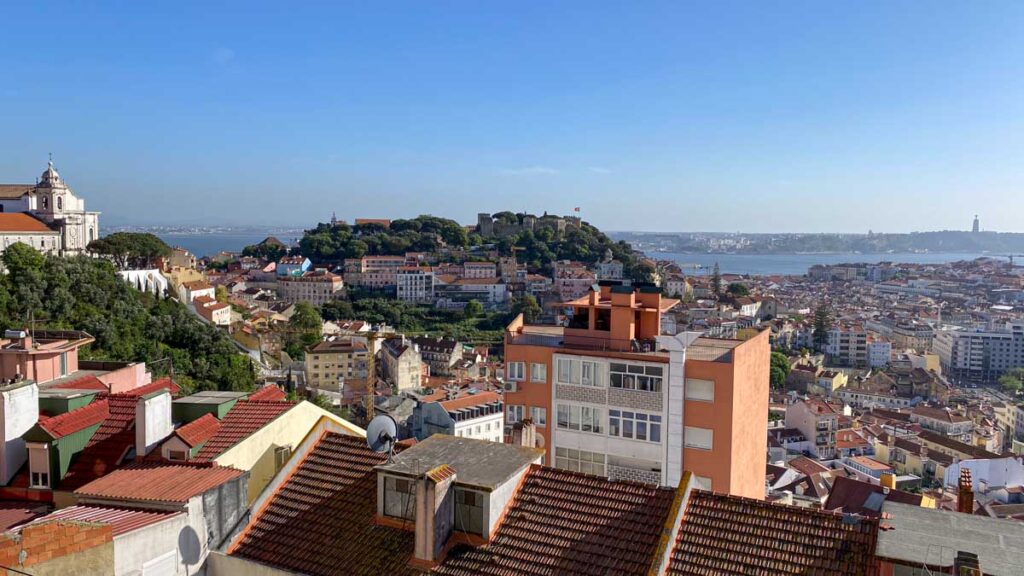
It’s a difficult call obviously, but I’d say these two miradouros are my top picks for the best views of Lisbon. They’re situated so you can see the castle, the 25 de Abril Bridge, and the Christo Rei statue across the river all at the same time.
They’re busier than some of Lisbon’s lesser-known viewpoints, but they’re large enough to still have enough space to move around and not feel overwhelmed by crowds.
13 | National Museum of Ancient Art
This is a wonderful art museum with an incredible collection of works spanning over 1000 years of history. My favorite collections here are the paintings and sculptures, especially those dating to the Middle Ages, but there are also large displays of furniture, ceramics, textiles, and other artwork.
Unfortunately, MNAA is currently closed for renovation. You can check the status of when it will reopen on the museum’s website. (You can also see some examples of the artwork you’ll find here, including the museum’s most famous pieces.)
14 | Pink Street
I’m not sure I personally consider Pink Street a must-do in Lisbon, but the colorful umbrellas overhead are such an iconic image of the city now that I feel compelled to include it.

It’s really just a small block of restaurants and bars, but it’s definitely one of Lisbon’s most popular nightlife spots – for tourists, at least.
I’d argue it’s more photogenic during the day, and it’s quite central, so you can easily just pass through and snap a few photos. It’s a (flat!) 10-minute walk from the Praça do Comércio and only a few hundred meters from the bottom of Rua da Bica in the other direction.
15 | Belém Tower
Just a short walk from the Jerónimos Monastery is the famous Torre de Belém, a fort dating to the 16th century. The tower was one of the main ports for the large Portuguese maritime expeditions of the time, and it’s a little mind melting to stand there and consider how those voyages changed the course of world history.

The tower’s architecture is of a similar style to the monastery, although you can also see Moorish and Renaissance characteristics in some of the details. It’s possible to go inside and climb up to the top level.
* * *
And there you have it! Those are the do-not-miss spots I recommend for your first visit to Lisbon. (Maybe by your second visit, I’ll have managed to finish my write-up of some of my favorite lesser-known corners. Don’t hold your breath; I am the slowest writer alive!)
Heading to Spain too? Here are some of my favorite places:
How to visit stunning Playa de las Catedrales in Galicia
Way of the Lighthouses: An epic hike on the Costa da Morte